The Ptolemaic Dynasty, established in Egypt following the death of Alexander the Great, spanned nearly three centuries from 305 BC to 30 BC. This Hellenistic dynasty was founded by Ptolemy I Soter, one of Alexander’s trusted generals, and is renowned for its cultural syncretism, architectural marvels, and the infamous Cleopatra VII. The Ptolemies ruled Egypt with a blend of Greek and Egyptian traditions, leaving a lasting legacy in art, literature, and governance.
In the article below, World History Edu delves into the ten most famous rulers of the Ptolemaic Dynasty, highlighting their reigns, achievements, and historical significance.
Ptolemy I Soter
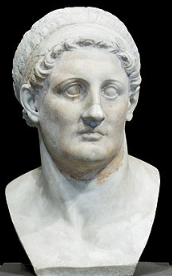
Ptolemy’s renown grew after the death of Alexander the Great. Image: Bust of Ptolemy I Soter, located at the Louvre in Paris, France
Ptolemy I Soter, a close companion and trusted general of Alexander the Great, was instrumental in the establishment of the Ptolemaic Dynasty. Following Alexander’s death in 323 BC, his empire fragmented among his generals, known as the Diadochi. In 305 BC, Ptolemy declared himself Pharaoh of Egypt, capitalizing on the region’s wealth and strategic importance.
Ptolemy I was a shrewd ruler who consolidated his power through strategic marriages and military prowess. He established Alexandria as the new capital, transforming it into a major center of Greek culture and learning. Under his reign, the Library of Alexandria was founded, which became the intellectual hub of the ancient world.
It must also be noted that Ptolemy I implemented administrative reforms, blending Greek and Egyptian traditions to stabilize his rule. He promoted economic growth by enhancing agricultural productivity and developing trade networks across the Mediterranean and Near East.

Ptolemy I’s reign laid the foundation for nearly three centuries of Ptolemaic rule in Egypt. His efforts in cultural patronage and administrative consolidation ensured the dynasty’s longevity and influence. Ptolemy I was deified after his death, reflecting the merging of Greek and Egyptian religious practices.
Why did Alexander the Great’s successors fight over his body?
Ptolemy II Philadelphus
Ptolemy II Philadelphus, the son of Ptolemy I, ascended to the throne in 283 BC. Initially co-regent with his father, he became the sole ruler following Ptolemy I’s death. His epithet “Philadelphus” means “sibling-loving,” reflecting his marriage to his sister Arsinoe II, a common practice among the Ptolemies to preserve royal bloodlines.
His reign is often considered the zenith of the Ptolemaic Dynasty’s cultural and economic prosperity. He continued his father’s policies of promoting Alexandria as a cultural beacon, supporting the arts, sciences, and literature. Under his patronage, the Library of Alexandria expanded, attracting scholars like Euclid and Archimedes.

Plaque depicting Ptolemaic dynasty couple Ptolemy II and Queen Arsinoe II from their temple at Tanis, now in the British Museum
Economically, Ptolemy II strengthened Egypt’s economy through agricultural advancements, particularly in irrigation and crop management. He also fostered trade relations with Rome, India, and other regions, enhancing Egypt’s wealth and influence.
Ptolemy II engaged in several military campaigns to secure and expand his territories, including conflicts with the Seleucid Empire. However, his reign was largely marked by diplomatic efforts, including alliances through marriage and treaties that maintained stability within the Hellenistic world.

Ptolemy II’s contributions to culture and economy set high standards for his successors. His support for the arts and sciences left an enduring legacy, making Alexandria a renowned center of knowledge and learning. Image: Bust of Ptolemy II Philadelphus – second king of the Ptolemaic. National Archaeological Museum, Naples
Ptolemy III Euergetes

Ptolemy III Euergetes, The Third King of Egypt’s Ptolemaic Dynasty
Ptolemy III Euergetes succeeded his father, Ptolemy II, in 246 BC. The epithet “Euergetes” means “Benefactor,” a title earned through his efforts to promote prosperity and welfare in Egypt.
Ptolemy III is best known for his military campaigns, particularly the Third Syrian War (also known as the Laodicean War) against the Seleucid Empire. His successful campaigns expanded Ptolemaic territories into the Levant and parts of Asia Minor, temporarily restoring the dynasty’s dominance in the region.

Temple of Horus at Edfu was built during the reign of Ptolemy III
Domestically, his reign focused on economic prosperity, enhancing agricultural productivity and trade. He continued to patronize the arts and sciences, supporting the Library of Alexandria and fostering advancements in various intellectual fields.
Ptolemy III promoted religious syncretism, blending Greek and Egyptian religious practices to solidify his rule and appease the native population. He supported the construction of temples and religious monuments, further integrating Egyptian traditions with Hellenistic influences.
Ptolemy III’s reign was marked by both military expansion and cultural patronage. His efforts in warfare and diplomacy temporarily restored Ptolemaic power in the Mediterranean, while his support for cultural and economic development ensured continued prosperity in Egypt.
Ptolemy IV Philopator

Gold octadrachm of Ptolemy IV Philopator in the British Museum
Ptolemy IV Philopator ascended to the throne in 222 BC following the death of his father, Ptolemy III. His reign began under the regency of his influential mother, Arsinoe III, who played a significant role in court politics.
One of the most notable events of Ptolemy IV’s reign was the Battle of Raphia in 217 BC against the Seleucid King Antiochus III. This decisive battle resulted in a Ptolemaic victory, securing Egypt’s control over Coele-Syria and reinforcing Ptolemaic dominance in the region.
Despite military successes, Ptolemy IV’s reign is often characterized by internal decline and mismanagement. His rule saw increased factionalism within the court and weakening central authority. Excessive taxation and economic mismanagement led to public discontent and economic strain.
Ptolemy IV continued to support the arts and architecture, commissioning various building projects in Alexandria and other cities. However, his contributions were overshadowed by the political and economic challenges that marked his reign.

Ptolemy IV Philopator’s reign represents a period of both military success and internal decline. While the Battle of Raphia showcased his ability to defend and expand his territories, the ensuing internal instability foreshadowed the eventual weakening of the Ptolemaic Dynasty. Image: Ptolemy IV depicted with the ancient Egyptian god Montu
Ptolemy V Epiphanes

Ptolemy V’s silver coin features a diademed king, Zeus’ eagle, Heracles’ club, and Greek inscription.
Ptolemy V Epiphanes became Pharaoh at a young age following the death of his father, Ptolemy IV, in 204 BC. His early reign was marked by regency under the influence of powerful courtiers and the interference of the Seleucid Empire.
One of the most significant artifacts from Ptolemy V’s reign is the Rosetta Stone, created in 196 BC. This granodiorite stele was inscribed with the same decree in three scripts—Greek, Demotic, and hieroglyphic—facilitating the eventual deciphering of Egyptian hieroglyphs.
Ptolemy V’s reign also witnessed the rise of the “Reign of Terror,” a period of intense political repression orchestrated by his regent, Agathocles. This era saw the execution and exile of many nobles and officials, leading to widespread fear and instability within the kingdom.
Despite political turmoil, Ptolemy V continued to support cultural and religious projects. The Bubastite Portal, an elaborate relief at the Karnak Temple, was commissioned to commemorate his military victories and divine favor. This monument highlights the enduring Ptolemaic tradition of integrating art and propaganda to legitimize their rule.
Ptolemy V attempted to stabilize the economy through monetary reforms and efforts to control inflation. However, ongoing internal strife and external threats limited the effectiveness of these measures, contributing to the gradual decline of centralized authority.

Ptolemy V’s reign is a pivotal period in Ptolemaic history, marked by both cultural achievements and significant political upheaval. The Rosetta Stone remains a testament to his era’s historical importance, while the internal challenges foreshadowed the dynasty’s vulnerability in the ensuing centuries. Image: Tetradrachm of Ptolemy V issued c. 200 BC
Cleopatra I Syra

Cleopatra I Syra died in 176 BC, but her legacy endured through her children and the ongoing alliance between the Ptolemaic and Seleucid dynasties. Her marriage to Ptolemy V strengthened the political alliances that were vital for the dynasty’s survival amidst the complex geopolitical landscape of the Hellenistic world. Image: Depiction based on a relief of Cleopatra I
Cleopatra I Syra was a Seleucid princess, the daughter of Antiochus III the Great, and became Queen of Egypt through her marriage to Ptolemy V Epiphanes in 193 BC. Her marriage was a political alliance aimed at strengthening ties between the Ptolemaic and Seleucid empires.
As queen consort, Cleopatra I wielded significant influence in the Ptolemaic court. She bore Ptolemy V a number of children, including Ptolemy VI Philometor, Cleopatra II, and Ptolemy VIII Physcon. Cleopatra I’s presence symbolized the union of two major Hellenistic powers, fostering diplomatic and familial bonds that were crucial for the stability of both empires.
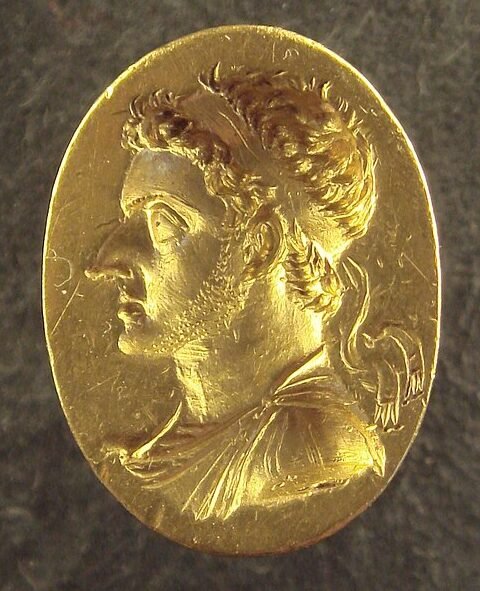
Cleopatra I bore Ptolemy V two children: Ptolemy VI Philometor and Cleopatra II. Image: Golden ring depicting Ptolemy VI wearing a Greek diadem
Queen Cleopatra I was known for her patronage of the arts and religious institutions. She supported the construction and renovation of temples, promoting the syncretic religious practices that characterized Ptolemaic Egypt. Her contributions helped reinforce the cultural and religious legitimacy of the Ptolemaic rulers.
Cleopatra II

Cleopatra II’s reign underscored the dynastic struggles that plagued the later Ptolemaic period. Her ability to navigate the treacherous political landscape demonstrated her resilience and determination, although the constant infighting weakened the dynasty’s stability and power.
Cleopatra II Philometor Soteira (c. 185–116/115 BC) reigned as queen of Ptolemaic Egypt from 175 to 115 BC. Her rule involved co-governance with her brothers, whom she also married, creating complex familial and political dynamics.
Initially, she ruled alongside her elder brother and first husband, Ptolemy VI Philometor, until 164 BC. She then continued to co-rule with him from 163 BC until his death in 145 BC. Following this, Cleopatra II married her younger brother, Ptolemy VIII Euergetes II, and jointly ruled with him and their daughter, Cleopatra III, often facing rivalry with Ptolemy VIII.
She briefly held sole power from 131 BC to 127 BC. Her final reign from 124 BC to 116/115 BC saw her again sharing power with Ptolemy VIII and Cleopatra III, solidifying her influential role in maintaining Egypt’s stability and dynastic continuity during tumultuous times.
Cleopatra III
Cleopatra III, the daughter of Ptolemy VI Philometor and Cleopatra II, became a key figure in the Ptolemaic Dynasty during her reign from 142 to 101 BC. She initially ruled alongside her husband and uncle Ptolemy VIII Euergetes, and later with her son, Ptolemy X Alexander I.
She was a masterful political strategist who navigated complex familial and political alliances to maintain her power. She played a pivotal role in the co-regencies of her son and husband, often mediating conflicts and forging alliances to stabilize the dynasty.
Her reign was punctuated by periods of conflict, including wars against her brothers and other claimants to the throne. Cleopatra III faced multiple exiles but consistently managed to reclaim her position through alliances and military support, showcasing her tenacity and political acumen.
Queen Cleopatra III continued the dynasty’s tradition of cultural patronage. She supported the arts, literature, and religious institutions, reinforcing the Ptolemaic image as divine rulers. Her contributions to temple constructions and sponsorship of festivals highlighted her commitment to maintaining the cultural heritage of Egypt.

Cleopatra III’s reign exemplifies the intricate power dynamics of the later Ptolemaic period. Her ability to maintain influence amidst constant turmoil underscores her significance as a formidable ruler, although the persistent internal conflicts ultimately contributed to the dynasty’s weakening.
Ptolemy XII Auletes
Ptolemy XII Auletes, meaning “the Flute Player,” ascended to the throne in 80 BC. His epithet reflects his patronage of the arts and possibly his personal interests in music and culture. He was the father of Cleopatra VII and played a crucial role in the final years of the Ptolemaic Dynasty.
His reign was marked by increasing Roman influence in Egypt. Facing internal dissent and economic difficulties, he sought Roman support to maintain his throne. In 58 BC, Ptolemy XII was deposed by his brother, but he regained the throne with Roman military assistance in 55 BC, paying heavy debts to Rome in the process.
Ptolemy XII attempted to stabilize Egypt’s economy through monetary reforms and efforts to boost trade. However, his reliance on Roman financial support and the imposition of heavy taxes to repay his debts led to widespread dissatisfaction among the Egyptian populace.

Ptolemy XII Auletes’ reign underscores the complexities and vulnerabilities of the Ptolemaic Dynasty in its twilight years. His efforts to maintain power through Roman alliances ultimately set the stage for the dynasty’s collapse and the integration of Egypt into the Roman Empire.
Ptolemy XII spent several years in exile in Rome, where he leveraged his connections with Roman elites to secure his return to power. His time in Rome also facilitated the strengthening of diplomatic and economic ties between Egypt and Rome, setting the stage for deeper Roman involvement in Egyptian affairs.
Ptolemy XII’s decision to involve his daughter, Cleopatra VII, in the political sphere was instrumental in her future rise to power. His favoritism towards Cleopatra helped her gain favor among the Egyptian nobility and the Roman elite, paving the way for her eventual ascendancy as the sole ruler of Egypt.
Ptolemy XII died in 51 BC, leaving the throne to his daughter, Cleopatra VII. His reign, though fraught with challenges, was pivotal in the final chapter of Ptolemaic rule, highlighting the dynasty’s dependence on external powers and the increasing intertwining of Egyptian and Roman destinies.
Why did Cleopatra’s father Pharaoh Ptolemy XII pay huge bribes to Roman politicians?
Cleopatra VII Philopator
Cleopatra VII Philopator, the most renowned ruler of the Ptolemaic Dynasty, ascended to the throne in 51 BC. Born in 69 BC, Cleopatra was the daughter of Ptolemy XII Auletes and ascended the throne alongside her younger brother Ptolemy XIII, whom she later married as per Egyptian custom.
She is famed for her intelligence, political savvy, and strategic alliances, particularly with Julius Caesar and later Mark Antony. Her relationship with Caesar helped her regain the throne after her brother’s rebellion, solidifying her position as Egypt’s sole ruler.

Cleopatra VII remains one of history’s most iconic figures, symbolizing both the grandeur and the tragic end of the Ptolemaic Dynasty. Her legacy endures through literature, art, and popular culture, embodying the complexities of power, love, and political ambition. Image: The Berlin Cleopatra is a Roman sculpture of Cleopatra wearing a royal diadem, mid-1st century BC (around the time of her visits to Rome in 46–44 BC).
Also, Cleopatra VII was a patron of the arts and sciences, continuing the Ptolemaic tradition of cultural patronage. She supported the Library of Alexandria and engaged with scholars and intellectuals, promoting Alexandria as a center of learning and culture. Her administration was marked by efforts to modernize the economy and strengthen Egypt’s infrastructure.
Cleopatra VII’s alliance with Mark Antony led to the final war of the Roman Republic. Following their defeat by Octavian (the future Emperor Augustus) at the Battle of Actium in 31 BC, Cleopatra and Antony fled to Egypt. Facing inevitable defeat, Cleopatra committed suicide in 30 BC, marking the end of the Ptolemaic Dynasty and the beginning of Roman Egypt.
Conclusion
The Ptolemaic Dynasty stands as a remarkable chapter in ancient history, characterized by its blend of Greek and Egyptian cultures, architectural grandeur, and intricate political maneuvers. The ten rulers discussed—ranging from the dynasty’s founder, Ptolemy I Soter, to the illustrious Cleopatra VII—each contributed uniquely to the dynasty’s legacy. Their reigns encapsulate the highs of cultural and economic prosperity and the lows of political strife and external pressures.

Frequently Asked Questions about the Ptolemaic Kingdom and its rulers

Wall relief of Cleopatra III, Cleopatra II and Ptolemy VIII before Horus
What was the Ptolemaic Kingdom, and when was it established?
The Ptolemaic Kingdom, also known as the Ptolemaic Empire, was an influential Ancient Greek state based in Egypt during the Hellenistic period. It was established in 305 BC by Ptolemy I Soter, a Macedonian general and close companion of Alexander the Great.
Who founded the Ptolemaic Dynasty, and what was his relationship with Alexander the Great?
The Ptolemaic Dynasty was founded by Ptolemy I Soter, a Macedonian general who was one of Alexander the Great’s most trusted generals and confidants. Ptolemy played a key role in securing Egypt for himself following Alexander’s death.
READ MORE: How Alexander the Great conquered Egypt
How did Alexandria become significant under the Ptolemaic Kingdom?
Under Ptolemy I’s leadership, Alexandria, originally founded by Alexander the Great, flourished as the kingdom’s capital. It became a vibrant hub of Greek culture, learning, and commerce, attracting scholars, artists, and traders from across the Mediterranean.
READ MORE: Most Famous Kings of Macedon and their Accomplishments
How did the Ptolemies legitimize their rule over Egypt?
The Ptolemies legitimized their rule by embracing both Greek and Egyptian customs. They adopted the traditional Egyptian title of Pharaoh alongside the Greek title of Basileus (king) and depicted themselves in Egyptian attire on public monuments. Additionally, they married within the family and participated in Egyptian religious life to gain acceptance from native Egyptians.

What efforts did the Ptolemies make to integrate Greek and Egyptian traditions?
Starting with Ptolemy II Philadelphus, the dynasty increasingly embraced Egyptian traditions by marrying within the family to align with the Osiris myth, actively participating in Egyptian religious life, constructing new temples, restoring ancient ones, and supporting the priesthood. These actions helped solidify their acceptance among native Egyptians.
During its peak, how did Ptolemaic Egypt compare to other Hellenistic states?
During the mid-third century BC, Ptolemaic Egypt emerged as the wealthiest and most powerful of Alexander’s successor states, epitomizing the zenith of Greek civilization. The kingdom expanded its territories through the Syrian Wars against the Seleucid Empire, enhancing its strategic and economic dominance.
What led to the weakening of the Ptolemaic Kingdom in the mid-second century BC?
By the mid-second century BC, the Ptolemaic Kingdom began to weaken due to internal conflicts, dynastic disputes, and continuous foreign wars. These issues undermined the stability of the dynasty and made Egypt increasingly dependent on the rising power of the Roman Republic.
How did Cleopatra VII attempt to restore Ptolemaic power, and what was the outcome?
Cleopatra VII, the last Ptolemaic ruler, sought to restore the kingdom’s fortunes by forming alliances with prominent Roman leaders such as Julius Caesar and Mark Antony. However, her efforts led to Egypt becoming entangled in the Roman civil wars, ultimately resulting in her defeat and the annexation of Egypt by Rome in 30 BC.
READ MORE: How and when did Rome conquer Egypt?
What marked the end of the Ptolemaic Dynasty and Egypt’s independence?
The Ptolemaic Dynasty ended with the death of Cleopatra VII in 30 BC, following her defeat and subsequent suicide. This event marked the annexation of Egypt by Rome, making it the last independent Hellenistic state and the beginning of Roman Egypt.
What was the legacy of the Ptolemaic Kingdom under Roman rule?
Under Roman rule, Egypt became one of the empire’s most prosperous provinces and continued to be a center of Greek culture. Greek remained the dominant language for administration and commerce until the Muslim conquest in 641 AD. Alexandria retained its status as a leading Mediterranean city well into the late Middle Ages, continuing the legacy of the Ptolemaic era.
Further Reading and References
For those interested in delving deeper into the Ptolemaic Dynasty and its rulers, the following sources provide comprehensive insights:
- “The Hellenistic Kingdoms: From Alexander to the Roman Conquest” by Peter Green – This book offers a detailed overview of the Hellenistic period, including the rise and fall of the Ptolemaic Dynasty.
- “Cleopatra: A Life” by Stacy Schiff – An in-depth biography of Cleopatra VII, exploring her political acumen, personal relationships, and enduring legacy.
- “The Ptolemaic Empire” by Aidan Dodson – A scholarly examination of the Ptolemaic rulers, their administration, and their impact on Egyptian and Hellenistic cultures.
- “Ptolemaic Alexandria” by John D. Grainger – This work focuses on Alexandria’s development as a cultural and intellectual center under Ptolemaic rule.
- “The Library of Alexandria and the Hellenistic Age” by Roy MacLeod – An exploration of the Library’s significance and its role in the intellectual life of the Ptolemaic Dynasty.





