Assyrian Army: History and Major Facts
The Assyrian Army, one of the most formidable military forces of the ancient world, played a pivotal role in establishing and maintaining the vast Assyrian Empire, which dominated the Near...
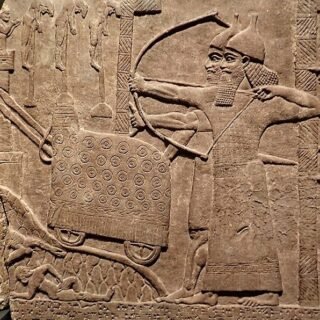
The Assyrian Army, one of the most formidable military forces of the ancient world, played a pivotal role in establishing and maintaining the vast Assyrian Empire, which dominated the Near...
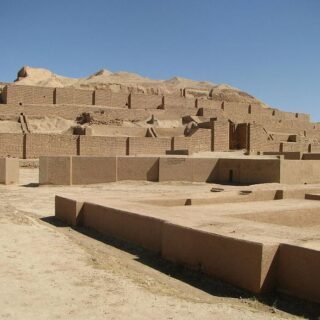
Mesopotamia, often referred to as the “cradle of civilization,” is a historical region in the eastern Mediterranean, bounded by the Tigris and Euphrates rivers. The name “Mesopotamia” comes from the...

Ancient Egypt, one of the most influential civilizations in history, boasts a rich tapestry of events that have shaped its development over millennia. From its inception around 3100 BC to...

Ancient Egypt, with its rich history spanning over three millennia, witnessed the rise and fall of many empires. The allure of Egypt’s wealth, strategic location, and fertile lands along the...

Leda is a mythological figure whose story is emblematic of the complex interplay of power, desire, and transformation that characterizes much of Greek mythology. Her narrative revolves around her seduction...

The Nile River, the longest river in the world, stretches through eleven countries in northeastern Africa, and it was pivotal in the development of ancient Egypt, a civilization that thrived...
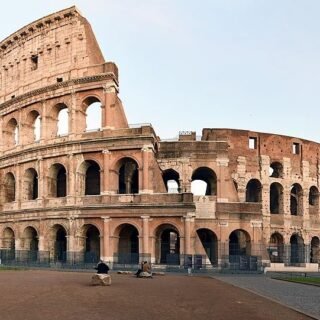
Exploring the dark side of Rome’s cultured façade involves peeling back the layers of its illustrious history to reveal the complexities and contradictions of an empire that has captivated the imagination...

The Great Pyramid of Giza, constructed around 2580-2560 BC during the reign of Pharaoh Khufu, is one of the most iconic and enduring symbols of ancient Egypt. However, its grandeur...

Polyphemus is one of the most recognized figures in Greek mythology. He is best known as the giant cyclops whom Odysseus encounters during his journey home in Homer’s epic, The Odyssey....

The Oracle of Delphi, also known as the Pythia, was one of the most significant religious institutions in the ancient world, revered for its prophetic powers and consulted by individuals...

In Greek mythology, Theseus is a celebrated hero, often placed on a pedestal akin to Heracles (Hercules in Roman mythology) for his strength, intelligence, and knack for overcoming monstrous challenges....

Julius Caesar, one of the most significant figures in the history of Rome, was known for his military prowess, political acumen, and also for the network of friends and allies...

The judgment of the dead in ancient Egyptian mythology is an intricate process that embodies the culture’s moral and ethical framework, emphasizing the importance of truth, justice, and righteousness. This...

King Tutankhamun‘s tomb, officially catalogued as KV62, is located in the Valley of the Kings near Luxor, Egypt. Discovered on November 4, 1922, by British archaeologist Howard Carter and financed...

The discovery of the tomb of Tutankhamun in 1922 by Howard Carter and George Herbert, 5th Earl of Carnarvon, marked a watershed moment in the history of Egyptology and captured...





