Events that triggered the Spartacus Revolt
The Spartacus Revolt, also known as the Third Servile War (73–71 BCE), remains one of the most notable slave uprisings in history. This conflict erupted in the Roman Republic and pitted an alliance of rebellious slaves, gladiators, and marginalized peoples against the might of Rome. It was named after Spartacus, a Thracian gladiator who emerged as the revolt’s most iconic leader. The revolt was not merely a series of battles but a profound reflection of systemic issues in Roman society, from its reliance on slavery to the socio-economic disparities fueling unrest.
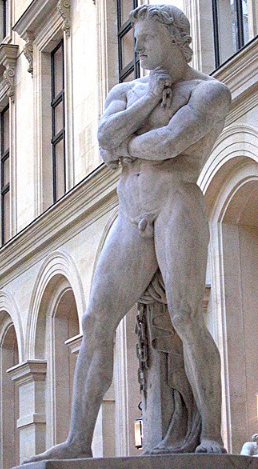
A statue of Spartacus at the Louvre
READ MORE: What foods did Roman Gladiators eat?
Historical Context of Roman Slavery
To understand the Spartacus Revolt, it is essential to examine the socio-political landscape of the Roman Republic. By the 1st century BCE, Rome’s economy heavily depended on slavery. War captives, criminals, and debtors were routinely enslaved to work in agriculture, mines, households, or gladiatorial schools (ludi). The Roman elite amassed great wealth through vast estates (latifundia) worked by slaves, perpetuating a system of exploitation.
Despite their economic importance, slaves were treated as property, subjected to harsh conditions, and denied basic rights. Escaping slavery or rebelling was met with brutal punishment, often as a deterrent to others. Earlier servile wars, such as the First (135–132 BCE) and Second Servile Wars (104–100 BCE) in Sicily, had demonstrated the volatility of the system, but the Roman Republic failed to address the root causes of slave uprisings.
The Gladiatorial Spark: Origins of the Revolt
The revolt began in Capua, a city in southern Italy, at a gladiatorial school owned by Lentulus Batiatus. Gladiators, often enslaved prisoners of war, trained to entertain Roman audiences through violent combat. Among them was Spartacus, a Thracian who had previously served as a Roman auxiliary soldier before being enslaved.
In 73 BCE, Spartacus, along with approximately 70 gladiators, orchestrated an escape. Armed initially with kitchen utensils, the rebels seized gladiatorial weapons and fled to Mount Vesuvius. The rebellion’s immediate success was due to their determination, the element of surprise, and the incompetence of local authorities.
Leadership and Organization
Spartacus quickly emerged as the revolt’s principal leader, though he shared command with other prominent figures such as Crixus and Oenomaus. Unlike earlier slave revolts, the Spartacus-led uprising exhibited remarkable military discipline and strategic planning. Drawing on his military background, Spartacus organized his forces into a cohesive unit capable of executing tactical maneuvers against Roman legions.
The revolt soon attracted a diverse following, including runaway slaves, disaffected peasants, and other marginalized groups seeking freedom. Over time, the rebel army swelled to tens of thousands, creating a formidable force capable of challenging Rome.
Early Successes Against Rome
Rome initially underestimated the rebellion, viewing it as a minor insurrection. Local militias were dispatched but suffered humiliating defeats. The rebels utilized guerrilla tactics, exploiting their knowledge of the terrain and their agility compared to Rome’s less adaptable legions. Notable early victories included the defeat of praetors Claudius Glaber and Publius Varinius, whose forces were ill-prepared to face a disciplined and motivated enemy.
These successes emboldened Spartacus and his followers. They raided towns, freed slaves, and accumulated resources. By this point, the revolt had transcended its origins as a gladiatorial uprising, becoming a broader movement for freedom and resistance against oppression.
Strategic Debates and Division
As the revolt gained momentum, its leaders faced strategic dilemmas. Spartacus reportedly sought to lead his followers out of Italy, possibly toward the Alps, where they could disperse and return to their homelands. This approach aimed to escape Roman retribution and secure lasting freedom.
Crixus’s group was ultimately defeated by Roman forces under Lucius Gellius and Gnaeus Cornelius Lentulus Clodianus.
However, divisions within the rebel leadership complicated matters. Crixus and other factions favored remaining in Italy to continue their campaign against Rome. This divergence in objectives led to a split, with Crixus leading a contingent southward while Spartacus advanced north. Crixus’s group was ultimately defeated by Roman forces under Lucius Gellius and Gnaeus Cornelius Lentulus Clodianus, but Spartacus avenged their deaths by defeating these commanders in subsequent engagements.
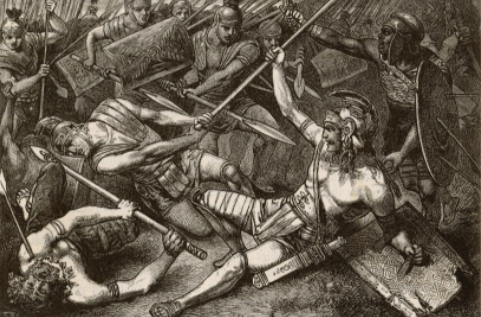
A depiction of the death of Spartacus by German painter, Hermann Vogel.
Rome’s Response: Escalation of Force
The Roman Senate, alarmed by the scale and persistence of the revolt, escalated its response. In 72 BCE, they assigned Marcus Licinius Crassus, a wealthy and ambitious patrician, to suppress the rebellion. Crassus assumed command of eight legions (approximately 40,000 troops) and implemented stringent discipline, including the brutal practice of decimation to instill fear and loyalty among his soldiers.
Crassus adopted a methodical approach, constructing fortifications to restrict Spartacus’s movements and cutting off supplies. Despite initial setbacks, his tactics gradually weakened the rebels’ position.
The Final Campaign and Defeat
In 71 BCE, Spartacus attempted to negotiate with pirate mercenaries to secure passage out of Italy. However, the pirates betrayed him, leaving his forces stranded. As Roman forces closed in, Spartacus and his army retreated to Lucania, where they prepared for a final stand.
The decisive battle took place near the river Silarus. Outnumbered and encircled, the rebel army fought valiantly but was ultimately overwhelmed by Crassus’s legions. Spartacus is believed to have died in the battle, though his body was never recovered. The surviving rebels were either killed or captured, with 6,000 crucified along the Appian Way as a grim warning to others.
Legacy and Impact
The Spartacus Revolt failed to achieve its ultimate goal of freedom, yet its significance transcends its immediate outcome. The rebellion exposed the vulnerabilities of Rome’s reliance on slavery and underscored the deep socio-economic divisions within the Republic.
For Rome, the revolt was a sobering reminder of the dangers posed by internal dissent. In the short term, it prompted stricter control over slaves and gladiatorial schools. However, it did not lead to substantive reforms, as slavery remained a cornerstone of Roman society for centuries.
Though ultimately defeated during the revolt, Spartacus and his followers left an indelible mark on history, inspiring generations to confront injustice and aspire to a more equitable world.
Spartacus himself became a symbol of resistance against oppression. While contemporary Roman accounts portrayed him as a barbarian and a criminal, later generations celebrated him as a hero. In modern times, he has inspired countless works of art, literature, and film, embodying the timeless struggle for freedom and justice.
Frequently asked questions about the Spartacus Revolt
Why was slavery important in ancient Rome?
Slavery was the foundation of Rome’s economy and society. Enslaved people worked in agriculture, mines, households, and as gladiators. They made up a significant portion of the population, especially in Italy, but had no rights and were treated harshly.
How did the Roman elite benefit from slavery?
The Roman elite used slaves to work large estates called latifundia, displacing free farmers and accumulating vast wealth. This created significant economic inequality and made Rome highly dependent on slave labor.

A 19th-century portrayal of the fall of Spartacus, created by the Italian artist Nicola Sanesi.
Who was Spartacus, and how did he become a gladiator?
Spartacus was a Thracian, either captured in war or enslaved for desertion as a Roman mercenary. His strength and physique made him a prime candidate for gladiatorial combat, and he was sold to a school in Capua for training.
How did Spartacus and his followers escape?
In 73 BCE, Spartacus and about 70 gladiators overpowered their guards using kitchen tools, seized weapons, and fled to Mount Vesuvius. Their numbers grew as other slaves joined them, seeking freedom.
What strategies did Spartacus use in his rebellion?
Spartacus demonstrated tactical ingenuity, using guerrilla warfare and the terrain to outmaneuver Roman forces. His leadership, equitable division of plunder, and ability to inspire followers made his army a formidable force.
Why did the Roman Senate escalate their response?
After initial defeats of local militias and consular armies, the Senate realized Spartacus posed a serious threat. His growing army controlled large parts of southern Italy, prompting them to appoint Marcus Licinius Crassus to suppress the rebellion.
How did Crassus defeat Spartacus?
Crassus used strict discipline, including decimation, to strengthen his troops. He constructed fortifications to trap Spartacus in southern Italy, cutting off supplies. Spartacus’ attempt to ally with pirates and escape to Sicily failed, leading to his final defeat near the river Silarus in 71 BCE.
What happened in the final battle of the revolt?
Spartacus led his army into a climactic battle against Crassus. Despite their determination, the rebels were overwhelmed by the Romans’ superior numbers and discipline. Spartacus reportedly died in combat, and 6,000 captured rebels were crucified along the Appian Way.





