Cleopatra II Philometor Soteira
Cleopatra II Philometor Soteira was a prominent figure in the Ptolemaic dynasty of Egypt, whose life and reign reflected the complex political, familial, and cultural dynamics of her time. Born around 185 BC, she played a pivotal role in the governance and intrigues of one of antiquity’s most influential kingdoms. Her story is one of resilience, strategy, and adaptability in the face of family rivalries and external threats.
READ MORE: Most Famous Ptolemaic Rulers and their Accomplishments
Early Life and Family Background
Cleopatra II was likely the daughter of Ptolemy V Epiphanes and Cleopatra I Syra, though some sources suggest the possibility of a different maternal lineage. If Cleopatra I was indeed her mother, Cleopatra II was a full sibling to her brothers Ptolemy VI Philometor and Ptolemy VIII Euergetes II, both of whom she would eventually marry.
Alternatively, she may have been their half-sister. This familial closeness defined the Ptolemaic dynasty’s political strategies, as sibling marriages were a central feature aimed at consolidating power and preserving the bloodline’s purity.
Raised in Alexandria, the intellectual and cultural hub of the Hellenistic world, Cleopatra II received an education that bridged Greek traditions and Egyptian administration. This dual cultural exposure prepared her for the dual role required of Ptolemaic rulers, who needed to appeal to both the Greek and Egyptian populations of the kingdom. Cleopatra II grew up in an era of relative stability under her parents, but this security would soon give way to significant upheaval.
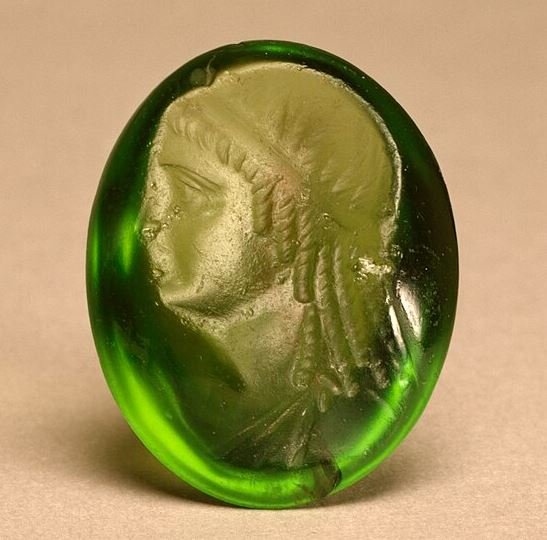
Image: Portrait of Cleopatra II.
First Co-Regency with Ptolemy VI and Ptolemy VIII (175–164 BC)
Following the death of her mother around 177/176 BC, Cleopatra II entered the political arena through her marriage to her elder brother, Ptolemy VI Philometor, around 175 BC. This union not only strengthened her position as queen but also symbolized the unity of the royal family during a turbulent period. Alongside her younger brother, Ptolemy VIII, Cleopatra II and Ptolemy VI formed a triadic co-regency.
During their early reign, the siblings faced a major crisis when their uncle, Antiochus IV of the Seleucid Empire, invaded Egypt in 169 BC. Antiochus briefly gained influence over Ptolemy VI, who joined him outside Alexandria. However, Cleopatra II and Ptolemy VIII joined forces to oppose Antiochus, eventually securing the kingdom’s independence through Roman intervention. This episode showcased Cleopatra II’s ability to navigate both internal and external political challenges.
Cleopatra II co-ruled with her brothers-husbands Ptolemy VI and Ptolemy VIII, later ruling with her daughter Cleopatra III.
In 164 BC, Ptolemy VIII temporarily deposed Cleopatra II and Ptolemy VI, taking control of Egypt. However, the couple was restored to power the following year, with Ptolemy VIII being relegated to rule Cyrene. This period marked the beginning of Cleopatra II’s exposure to the shifting alliances and rivalries that would characterize her later life.
Rule with Ptolemy VI (163–145 BC)
After their restoration in 163 BC, Cleopatra II and Ptolemy VI ruled Egypt together without the interference of Ptolemy VIII. This era was marked by relative stability and military successes, particularly in Syria, where Ptolemy VI expanded Egyptian influence. Cleopatra II played a supportive role as queen, likely focusing on internal matters, including the administration and religious ceremonies that reinforced her divine status as a ruler associated with the goddess Isis.
This period also saw Cleopatra II becoming a mother. With Ptolemy VI, she had several children, including Cleopatra Thea, who would marry into the Seleucid royal family, further strengthening ties between the two Hellenistic kingdoms. Despite these successes, their rule ended abruptly in 145 BC when Ptolemy VI died during a military campaign in Syria, leaving Cleopatra II to navigate an increasingly unstable political landscape.

Image: Ptolemy VI
Marriage to Ptolemy VIII and Rise of Conflict (145–132 BC)
Following Ptolemy VI’s death, Cleopatra II married her younger brother, Ptolemy VIII Euergetes II, in what appeared to be a strategic move to maintain stability. However, their marriage was fraught with tension from the start. According to ancient sources, Ptolemy VIII allegedly murdered Ptolemy VI’s surviving son by Cleopatra II to eliminate potential rivals, though other evidence suggests the child lived for several years before being killed.
Despite the tumultuous nature of their relationship, Cleopatra II bore Ptolemy VIII a son, Ptolemy Memphites, who became a key figure in the escalating conflicts within the royal family. Tensions reached a peak when Ptolemy VIII married Cleopatra II’s daughter, Cleopatra III, around 142 BC. This act not only deepened existing rivalries between Cleopatra II and Ptolemy VIII but also destabilized the court by introducing a competing faction centered on Cleopatra III.

Image: Ptolemy VIII
Sole Reign and Civil War (132–127 BC)
By 132 BC, Cleopatra II had reached her breaking point. She launched a rebellion against Ptolemy VIII, driving him and Cleopatra III out of Alexandria. In retaliation, Ptolemy VIII is said to have sent the dismembered body of their son, Ptolemy Memphites, to Cleopatra II as a horrific message. This gruesome act exemplified the brutality of their feud and further inflamed tensions.
During this period, Cleopatra II ruled as sole queen in Alexandria, effectively controlling the city and its surroundings. However, Ptolemy VIII retained loyalty in other parts of Egypt, gradually consolidating his power and preparing for a counteroffensive. By 127 BC, he managed to retake Alexandria, forcing Cleopatra II to flee to Syria, where she sought refuge with her daughter Cleopatra Thea and son-in-law Demetrius II Nicator.
Reconciliation and Final Years (124–116 BC)
In 124 BC, Cleopatra II and Ptolemy VIII publicly reconciled, marking the beginning of her final co-regency. This reconciliation may have been driven by pragmatic considerations, as both parties sought to stabilize the kingdom after years of civil strife. Together with Cleopatra III, they ruled Egypt until Ptolemy VIII’s death in 116 BC.
Cleopatra II’s final years were marked by efforts to heal the divisions caused by the civil war. Among the most notable acts of this period was the deification of her murdered son, Ptolemy Memphites, as the God Neos Philopator. This act served both as a tribute to her son and as a gesture of reconciliation.
After Ptolemy VIII’s death, the kingdom passed to Cleopatra III and one of her sons, chosen in consultation with the Alexandrians. Cleopatra II retained a degree of influence during this transitional period but gradually faded from the historical record, likely passing away around 116 or 115 BC.
Religious and Cultural Significance
Throughout her life, Cleopatra II leveraged religious symbolism to bolster her authority. She was associated with Isis, a key deity in both Egyptian and Hellenistic traditions, which reinforced her divine status. As a queen, she participated in religious ceremonies that emphasized the Ptolemaic dynasty’s role as the intermediary between the gods and the people.
Her titles, such as Philometor (“Mother-loving”) and Soteira (“Savior”), reflected her public image as a nurturing and protective ruler. These epithets also highlighted her role in maintaining the dynasty’s continuity through her children and her political alliances.
Legacy
Cleopatra II’s life encapsulates the complexities of Ptolemaic Egypt, where family dynamics often dictated political outcomes. Her resilience in navigating alliances, betrayals, and conflicts underscores her significance as a ruler. Despite the challenges she faced, including civil war and familial betrayals, Cleopatra II played a critical role in preserving the Ptolemaic dynasty during a tumultuous era.
Her story serves as a testament to the power of adaptability and determination in the face of adversity. Cleopatra II’s ability to wield influence, even during periods of personal and political strife, ensures her place as one of the most notable figures in the history of Hellenistic Egypt.
Frequently Asked Questions

Cleopatra II Philometor Soteira (c. 185–116/115 BC) was a Ptolemaic Egyptian queen who ruled from 175 to 115 BC, often in complex power dynamics with her siblings and daughter. Image: Relief depicting Cleopatra III, Cleopatra II, and Ptolemy VIII presenting themselves before Horus.
Who were Cleopatra II’s parents?
Cleopatra II was the daughter of Ptolemy V Epiphanes and likely Cleopatra I Syra.
What was Cleopatra II’s relationship with her brothers?
If Cleopatra I was her mother, she was a full sibling to Ptolemy VI Philometor and Ptolemy VIII Euergetes II. Otherwise, she was their half-sister.
Why did Cleopatra II marry her brother Ptolemy VI?
Her marriage to Ptolemy VI Philometor around 175 BC was a strategic alliance to consolidate power, maintain dynastic unity, and strengthen the royal family’s position.
What was the significance of sibling marriages in the Ptolemaic dynasty?
Sibling marriages aimed to preserve the purity of the bloodline and consolidate political power within the royal family.
How did Cleopatra II’s early life prepare her for rulership?
Raised in Alexandria’s intellectual and cultural environment, she gained knowledge of Greek traditions and Egyptian administration, equipping her for the complexities of co-ruling.
What challenges did Cleopatra II face after her parents’ deaths?
The deaths of her parents introduced political uncertainties, requiring Cleopatra II and her siblings to navigate their roles within a vulnerable and contentious Ptolemaic dynasty.
What role did religion play in Cleopatra II’s position?
As a Ptolemaic queen, she was associated with the goddess Isis, enhancing her divine status and authority as a ruler.
How did Cleopatra II’s upbringing reflect the dual heritage of the Ptolemaic dynasty?
She was educated in Greek culture while understanding Egyptian traditions, which helped legitimize her authority among both Greek and Egyptian subjects.
Why is Cleopatra II’s early life significant in understanding her later rule?
Her early experiences of political stability, familial alliances, and religious cultivation shaped her resilience and political acumen, laying the groundwork for her influential career in Egypt’s governance.





