Founding Father Patrick Henry
Patrick Henry (1736–1799) was an American statesman, lawyer, and orator who played a pivotal role in the early years of the United States. He is best known for his passionate defense of individual liberties and his opposition to British rule, particularly through his famous declaration, “Give me liberty, or give me death!” His contributions to the American Revolution and his involvement in shaping the early political landscape of Virginia and the United States cemented his place as one of the most significant figures in American history.
Henry’s life, marked by a fierce commitment to the cause of independence and resistance to centralized authority, offers insight into the ideological foundations of the United States. From his early struggles in business to his rise as a prominent political figure, Henry’s life was shaped by his dedication to liberty, his suspicion of government overreach, and his belief in the power of the people to govern themselves.
Early Life and Education
Patrick Henry was born on May 29, 1736, in Hanover County, Virginia, to John and Sarah Winston Henry. His father, John Henry, was a Scottish immigrant who had attended the University of Aberdeen, and his mother, Sarah, was from a prominent local family. Despite this relatively privileged background, Henry’s formal education was limited. He was primarily educated at home by his father, who instilled in him a love of classical studies, history, and literature. However, much of Henry’s early education was informal, relying heavily on self-study and observation.
As a young man, Henry initially pursued a career in business, but he found little success. He and his brother operated a general store, but the venture failed. Henry then tried his hand at farming, but this too was unsuccessful. It was during these early years of economic hardship that Henry’s natural talents for public speaking and persuasion began to emerge. He often engaged in lively discussions at local taverns, honing his skills as an orator and gradually developing an interest in law.

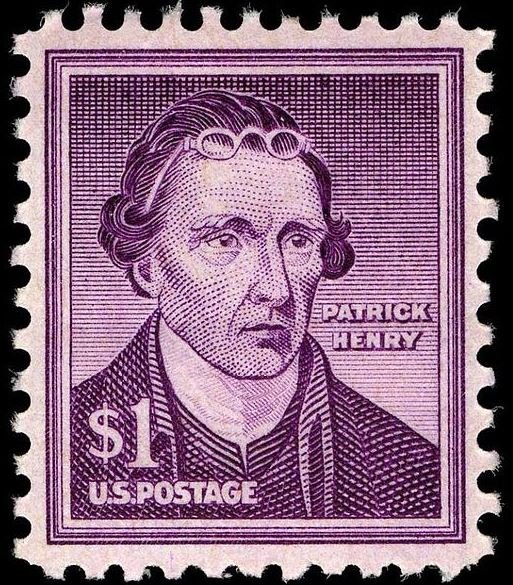
Image: An 1891 portrait of Patrick Henry.
Path to Law and Early Successes
In 1760, after a period of self-study, Henry decided to pursue a career in law. With minimal formal training, he was admitted to the Virginia bar, quickly distinguishing himself with his compelling courtroom arguments and sharp legal mind. His success as a lawyer came in large part from his ability to connect with ordinary people and articulate their concerns in ways that resonated deeply with the public. This connection with the common man became a hallmark of his political career.
One of Henry’s earliest and most notable legal victories came in 1763 with the Parson’s Cause case, which catapulted him to prominence in Virginia. The case revolved around a dispute between the colonial government and the Anglican clergy. The clergy had sued for higher wages due to changes in the valuation of tobacco, which was used to pay them. Henry, representing the colonial government, argued that the clergy’s demands were unjust and that the king’s veto of colonial legislation (which had attempted to curb the clergy’s compensation) amounted to tyranny. His argument, particularly his attack on the king’s authority, was bold and unconventional, but it resonated with the jury, which sided with Henry and awarded minimal damages to the clergy. This victory established Henry as a leading voice in the growing resistance to British rule and a rising star in Virginia’s political landscape.
Opposition to British Policies
Henry’s reputation as a staunch defender of colonial rights only grew in the years that followed. In 1765, just two years after the Parson’s Cause, Henry was elected to the Virginia House of Burgesses. It was here that he delivered one of his most famous speeches, passionately opposing the Stamp Act, a tax imposed by the British government on the colonies. The Stamp Act required that many printed materials in the colonies, including legal documents, newspapers, and playing cards, carry a tax stamp. Colonists widely resented the act, viewing it as an infringement on their rights, particularly their right to be taxed only by their own elected representatives.
Henry’s response to the Stamp Act was both fierce and inflammatory. In his speech, he introduced a series of resolutions that argued the colonies had the exclusive right to impose taxes on themselves. Henry declared that any attempt by the British government to enforce the Stamp Act was equivalent to tyranny, famously stating, “If this be treason, make the most of it.” His bold rhetoric shocked many of his contemporaries but helped galvanize resistance to the Stamp Act and made him one of the most influential leaders of the colonial opposition.
The Road to Revolution
Henry’s opposition to British policies continued to grow in the years leading up to the American Revolution. In 1774, he was elected as a delegate to the First Continental Congress, where representatives from the colonies gathered to address their grievances with the British government. At the Congress, Henry helped draft and signed the Petition to the King, a formal request to the British crown to address colonial concerns. However, the petition fell on deaf ears, and tensions between the colonies and Britain escalated.
In 1775, as the conflict between the colonies and Britain reached a boiling point, Henry delivered what is perhaps his most famous speech at the Second Virginia Convention, held in Richmond. It was here that Henry uttered the immortal words, “Give me liberty, or give me death!” in a passionate call to arms against British oppression. His speech electrified the audience and solidified his reputation as one of the most powerful orators of his time. Henry’s words helped push the colonies closer to the decision for full-scale resistance, and shortly thereafter, the American Revolution began.
Governor of Virginia and Contributions to Independence
As the Revolutionary War began in earnest, Henry continued to play a central role in Virginia’s political and military efforts. In 1776, after Virginia declared its independence from Britain, Henry was elected as the state’s first post-colonial governor. He served three consecutive one-year terms from 1776 to 1779, during which he focused on supporting the war effort by coordinating the defense of Virginia and supplying troops and resources to George Washington’s Continental Army. Henry’s leadership as governor was crucial in ensuring that Virginia remained a key player in the fight for independence.
During his time as governor, Henry also contributed to the drafting of Virginia’s new government framework. He was appointed to a committee tasked with drafting the Virginia Declaration of Rights and the state’s first constitution. The Virginia Declaration of Rights, primarily authored by George Mason, served as a model for other state constitutions and influenced the later U.S. Bill of Rights. Henry’s involvement in these efforts demonstrated his commitment to the principles of self-government and individual liberties.
After stepping down as governor in 1779, Henry continued to serve in Virginia’s House of Delegates, where he remained active in the political life of the state. In 1784, he was again elected governor of Virginia, serving two more one-year terms before retiring from the position in 1786.
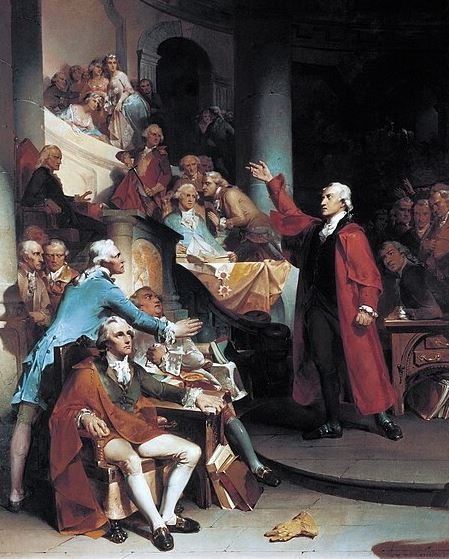
Image: Patrick Henry addressing members of the Virginia House of Burgesses. Painting by US artist Peter F. Rothermel.
Opposition to the U.S. Constitution
Despite his significant contributions to the cause of independence and his leadership during the Revolutionary War, Henry became one of the most vocal critics of the proposed U.S. Constitution in the years following the war. Like many Anti-Federalists, Henry feared that the new Constitution would create a powerful centralized government that could threaten the rights of states and individuals. His experiences during the fight for independence had made him deeply suspicious of concentrated authority, and he was particularly concerned that the Constitution lacked explicit protections for individual liberties.
Henry’s opposition to the Constitution was evident during the Virginia Ratifying Convention in 1788. He argued forcefully against its adoption, warning that it would give the federal government too much power over the states and that it could pave the way for a return to tyranny. Henry’s influence helped delay Virginia’s ratification of the Constitution, and though he ultimately lost the fight, his efforts contributed to the eventual adoption of the Bill of Rights in 1791, which addressed many of his concerns by adding explicit protections for individual freedoms.

Later Life and Legacy
In his later years, Henry largely withdrew from public life and returned to his law practice. Although he continued to be offered prestigious positions in government, including appointments as U.S. Senator, Secretary of State, and Chief Justice of the Supreme Court, Henry declined these roles. His retirement was not due to a lack of interest in politics but rather his preference for a quieter life after decades of public service.
Despite his retirement, Henry’s views on government and liberty continued to influence American political thought. His belief in the importance of individual rights and his deep suspicion of centralized authority resonated with many Americans, particularly those who feared that the new federal government might become too powerful.
Henry’s legacy is complex, especially when it comes to his views on slavery. Like many of his contemporaries, Henry was a slaveholder, and though he expressed a desire to see the institution of slavery come to an end, he never took meaningful steps to achieve that goal. He spoke out against the importation of slaves, but his personal actions and views on the matter remain a subject of historical debate.
Patrick Henry died on June 6, 1799, at his Red Hill plantation in Virginia. He was 63 years old. His death marked the end of a long and distinguished career in public service, but his legacy as one of the most influential figures of the American Revolution and a staunch defender of individual liberty endures to this day.
Major Works and Contributions by Patrick Henry
- Oratory and “Give me liberty, or give me death!” Speech: Patrick Henry’s oratory was one of his greatest contributions to the American Revolution. His ability to inspire action through his words made him a central figure in the movement for independence. The “Give me liberty, or give me death!” speech, delivered in 1775, remains one of the most famous speeches in American history and is emblematic of the revolutionary spirit that fueled the fight for independence.
- Virginia Declaration of Rights: Although not the primary author, Henry contributed to the drafting of the Virginia Declaration of Rights in 1776. This document served as a model for other state constitutions and influenced the later Bill of Rights in the U.S. Constitution. It affirmed the natural rights of individuals, including the right to a free press, trial by jury, and religious freedom, all principles that Henry championed throughout his life.
- Opposition to the U.S. Constitution and Support for the Bill of Rights: Henry’s opposition to the U.S. Constitution was rooted in his belief that it did not adequately protect individual liberties. His resistance, along with that of other Anti-Federalists, helped bring about the addition of the Bill of Rights, which addressed many of his concerns by explicitly safeguarding freedoms such as speech, religion, and the right to bear arms.
- Leadership in Virginia: As Virginia’s first post-colonial governor, Henry played a key role in supporting the American Revolution and shaping the state’s government. His leadership helped Virginia remain a vital part of the war effort, and his contributions to the state’s constitution and legal framework left a lasting impact on the future of governance in Virginia.
- The Parson’s Cause: Henry’s victory in the Parson’s Cause case in 1763 was a major turning point in his career. His argument that the king’s interference in colonial affairs amounted to tyranny foreshadowed the larger struggle for independence that would unfold in the years to come.
Conclusion
Patrick Henry’s life and major works illustrate his deep commitment to the principles of liberty, individual rights, and resistance to tyranny. His oratory skills, political leadership, and opposition to centralized government made him one of the most influential figures of the American Revolution and a key architect of the nation’s early political development. While his legacy is not without controversy, particularly regarding his views on slavery, Henry remains a towering figure in American history, celebrated for his role in securing American independence and shaping the philosophical foundations of the United States.
Frequently Asked Questions
What roles did Patrick Henry play in Virginia’s government?
Patrick Henry served as the first and sixth post-colonial Governor of Virginia. He held the position from 1776 to 1779 and again from 1784 to 1786.
How did Patrick Henry begin his legal career?
After an unsuccessful business venture, Henry studied law on his own and was admitted to the bar in 1760. He gained recognition through his victory in the Parson’s Cause case, a landmark battle against the Anglican clergy.
What was Patrick Henry’s role in opposing the Stamp Act of 1765?
Patrick Henry strongly opposed the Stamp Act, delivering fiery speeches in the Virginia House of Burgesses. His bold rhetoric compared King George III to a tyrant, helping galvanize colonial resistance against British taxation.
What contributions did Patrick Henry make to the First Continental Congress?
Patrick Henry was a delegate to the First Continental Congress in 1774, where he helped draft and signed the Petition to the King, urging the British monarch to address colonial grievances.
What was the Gunpowder Incident, and how did it affect Patrick Henry’s reputation?
The Gunpowder Incident occurred in 1775 when British authorities seized colonial munitions. Henry led militia forces to march on Williamsburg, demanding compensation. His leadership during this crisis bolstered his reputation as a defender of colonial rights.
What role did Patrick Henry play in drafting Virginia’s founding documents?
Henry was appointed to a committee that drafted the Virginia Declaration of Rights and the state’s first constitution. These documents helped establish Virginia’s legal framework and influenced the U.S. Bill of Rights.
How did Patrick Henry contribute to the American Revolutionary War effort?
As governor of Virginia, Henry coordinated the defense of the state and provided essential supplies and reinforcements to George Washington’s Continental Army.
Why did Patrick Henry oppose the U.S. Constitution?
Patrick Henry opposed the U.S. Constitution because he feared it granted too much power to the federal government and lacked a Bill of Rights to protect individual freedoms and state sovereignty.
What was Patrick Henry’s stance on centralized power, and how did it affect his political views?
Henry was deeply suspicious of centralized authority and preferred a government that protected states’ rights and individual liberties. This led him to oppose the Constitutional Convention and ratification of the Constitution.
Though he was unsuccessful in blocking the Constitution’s ratification, Henry’s vocal opposition helped lay the groundwork for the addition of the Bill of Rights in 1791 to safeguard individual liberties.
What positions in the federal government did Patrick Henry decline in his later years?
Patrick Henry declined several prestigious federal positions, including a seat in the U.S. Senate, appointments as Secretary of State, and Chief Justice of the Supreme Court.
What was Patrick Henry’s stance on slavery?
Patrick Henry was a lifelong slaveholder who expressed a desire to see slavery end but did not offer any concrete plans to achieve that goal.





