Sir William Gell
British classical archeologist and illustrator Sir William Gell became widely recognized for his detailed depictions of archaeological findings, particularly at Pompeii. His most famous work, Pompeiana; the Topography, Edifices and Ornaments of Pompeii, was published in multiple volumes from 1817 to 1832.
Through these publications, Gell provided valuable insights into the architecture and artifacts of ancient Pompeii, making him a prominent figure in early classical archaeology.
In the article below, World History Edu explores the life and major accomplishments of Sir Wiliam Gell.
Early Life and Background
Sir William Gell was born on March 29, 1777, in Hopton, Derbyshire, England. He was born into a family with deep historical roots that could be traced back to the early 13th century.
The Gell family had a long-standing tradition of service, encompassing various prestigious fields such as the military, politics, and the church. Gell’s father, Philip Gell, and his mother, Dorothy Milnes, were notable figures in their own right. Dorothy Milnes was the daughter of William Milnes of Aldercar Park, a wealthy and influential landowner.
Sir William’s great-grandfather, Sir John Gell, was a parliamentarian during the English Civil War, while his uncle, Admiral John Gell, achieved distinction in naval service. This illustrious family background would later shape William Gell’s own contributions to British intellectual and cultural life.

Image: William Gell
Education and Early Career
William Gell’s early education took place at Derby School, a prestigious institution that prepared him for further studies at Emmanuel College, Cambridge. He entered Cambridge in 1793 and earned his Bachelor of Arts (BA) in 1798.
By 1804, he had completed his Master of Arts (MA) and was elected as a fellow of Emmanuel College. His years at Cambridge nurtured Gell’s intellectual interests, particularly in the classical world, laying the foundation for his later work as an archaeologist and illustrator.
At the age of 24, in 1801, Gell was dispatched on his first diplomatic mission to Greece, signaling the beginning of his exploration into classical antiquity. His early exposure to Greece marked the start of a lifelong fascination with ancient ruins, landscapes, and archaeological excavations.
He traveled widely, visiting Greece, the neighboring islands, and coastal Asia Minor from 1804 to 1806. These travels fueled his first significant scholarly contribution: the publication of The Topography of Troy and Its Vicinity in 1804. In this work, Gell controversially proposed that the ancient city of Troy was located at Bournabashi, a site several miles south of what is now widely accepted as Troy’s actual location at Hisarlik.
Gell based his argument on a combination of personal observations and the work of earlier scholars such as Jean Baptiste LeChevalier. Despite some unresolved issues in his theory, this publication solidified his reputation as a serious classical topographer.
Friendship with Prominent Literary Figures
During his career, William Gell developed close relationships with several prominent literary and cultural figures of the time. He was particularly friendly with Thomas Moore, Walter Scott, and Lord Byron, who were all fascinated by his explorations and artistic work. These friendships not only boosted Gell’s standing within scholarly circles but also connected him to a broader network of intellectuals and artists.
Society of Dilettanti and the Royal Society
In 1807, Gell’s contributions to classical archaeology and exploration were further recognized when he was elected a member of the Society of Dilettanti, an elite group of British gentlemen dedicated to the study and preservation of classical antiquity. In the same year, he was made a Fellow of the Royal Society (FRS), a significant honor that highlighted his growing stature within British scholarly circles.
By 1811, the Society of Dilettanti had commissioned Gell to embark on another exploratory mission, this time focusing on Greece and Asia Minor. The travels that followed led to several important publications, including Geography and Antiquities of Ithaca (1807) and Itinerary of Greece (1810).
In Itinerary of Greece, Gell provided a detailed commentary on the works of Pausanias and Strabo, ancient authors who had written extensively about the geography and history of Greece. His publications, often illustrated with his own detailed drawings, established Gell as one of the leading classical topographers of his era.
Service to Princess Caroline and Controversy
In 1814, William Gell was appointed as one of Princess Caroline’s chamberlains during her time in Italy. Caroline was the estranged wife of the Prince Regent (later George IV), and her court was known for its somewhat scandalous reputation. Gell’s involvement in her household brought him into the orbit of royal intrigue.
During the infamous trial of Queen Caroline in 1820, Gell provided evidence on her behalf, denying any improper conduct between the Queen and her courtier, Bartolomeo Pergami. Although Gell testified that he left Caroline’s service due to health reasons—specifically, a bout of gout—letters written by him under pseudonyms in 1815 and 1816 revealed that he was well aware of the controversies surrounding the Queen’s behavior.
Despite the scandal, Gell was knighted in May 1814, further solidifying his position within elite circles. He remained close to many influential figures throughout his life, including Keppel Richard Craven, with whom he traveled through Italy.
Later Life and Work in Rome and Naples
From 1820 until his death in 1836, Gell divided his time between Rome and Naples. Despite suffering from crippling gout, which limited his mobility in his later years, Gell remained an active and engaged figure in the world of classical archaeology.
He welcomed many visitors to his homes, including Sir William Drummond, John Auldjo, and Lady Blessington. One of his most famous guests was Sir Walter Scott, whom Gell personally guided through the excavations at Pompeii, despite his physical limitations. Gell later documented their conversations, and portions of this account were included in Lockhart’s Life of Scott.
Pompeiana and Gell’s Most Influential Works
Gell’s most renowned contribution to archaeology is Pompeiana: The Topography, Edifices, and Ornaments of Pompeii, which was published in multiple volumes between 1817 and 1832. This work offered one of the first comprehensive accounts of the ruins of Pompeii, which had begun to attract scholarly and public interest after their rediscovery in the mid-18th century. Gell’s careful descriptions and detailed illustrations of the ancient city’s structures, artifacts, and layouts provided invaluable information to both scholars and enthusiasts of classical antiquity.
In addition to Pompeiana, Gell produced several other significant works during his lifetime. The Topography of Rome and Its Vicinity, published in 1834, was another influential study that examined the ancient geography and ruins of the Roman Empire’s capital.
Gell also wrote The Itinerary of the Morea (1817), which detailed his travels in the Peloponnese, as well as Narrative of a Journey in the Morea (1823).
His earlier works, such as The Geography and Antiquities of Ithaca and The Topography of Troy and Its Vicinity, continued to be referenced by scholars well into the 20th century, even as new archaeological discoveries rendered some of his conclusions obsolete.
Though some critics of the time regarded Gell as more of a dilettante than a serious scholar—perhaps because of his aristocratic background and tendency to socialize with elite circles—his contributions to classical topography were widely respected.
His meticulous drawings, many of which are preserved in the British Museum, remain important historical records. Gell’s attention to detail and his ability to combine artistic skill with scholarly inquiry earned him a lasting place in the study of classical archaeology.
Legacy and Death
Sir William Gell died on February 4, 1836, in Naples, where he was buried in the city’s English Cemetery. Upon his death, he left his personal belongings to his close friend Keppel Craven. Though his health had deteriorated in his later years, his work continued to influence future generations of scholars, particularly in the field of classical topography.
Gell’s legacy extends beyond his publications and illustrations. His work laid the groundwork for later scholars, including Thomas Ashby, who undertook important topographical studies in the early 20th century. Gell’s detailed records of ancient ruins and landscapes were invaluable for these later archaeological efforts, offering insights into the condition of ancient sites long before they became more widely studied and excavated.
Questions and Answers

Where was Sir William Gell born, and who were his parents?
Sir William Gell was born at Hopton in Derbyshire. His parents were Philip Gell and Dorothy Milnes, the daughter and co-heir of William Milnes of Aldercar Park.
What is the significance of the Gell family’s history?
The Gell family had a long-standing tradition of service in the Army, Navy, Parliament, and the Church, dating back to 1209 during the reign of King John.
His great-grandfather was Sir John Gell, a parliamentarian, and his uncle was Admiral John Gell.
Where did Gell receive his education?
He was educated at Derby School and Emmanuel College, Cambridge, where he earned his BA in 1798 and his MA in 1804. He was later elected a fellow of Emmanuel College.
What was Sir William Gell’s first diplomatic mission, and when did it take place?
His first diplomatic mission was to Greece in 1801, at the age of 24.
What was Gell’s contribution to the study of Troy?
Gell proposed that the site of ancient Troy was located at Bournabashi, about six miles from the modern consensus site at Hisarlik. He based this claim on his observations and earlier scholars’ work, publishing his findings in The Topography of Troy and Its Vicinity in 1804.
Which famous literary figures was Gell associated with?
Gell was friends with Thomas Moore, Walter Scott, and Lord Byron.
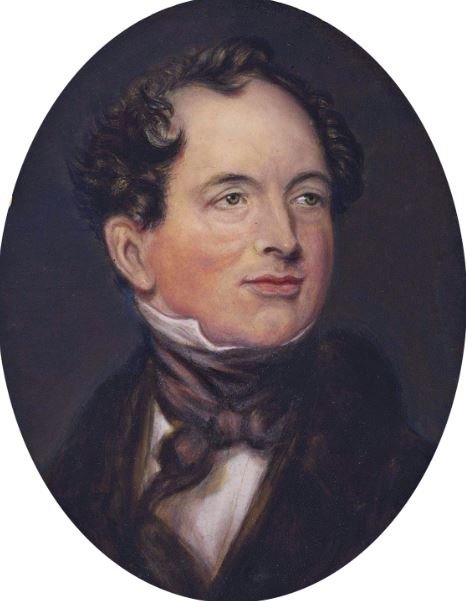
Image: Thomas Moore
What significant publications did Gell produce as a result of his exploration of Greece and Asia Minor?
His travels resulted in publications such as Geography and Antiquities of Ithaca and Itinerary of Greece, with commentaries on Pausanias and Strabo.
How did Gell contribute to Sir Walter Scott’s visit to Pompeii?
Despite suffering from gout, Gell guided Sir Walter Scott through the excavations at Pompeii and later recorded their conversations, some of which were included in Lockhart’s Life of Scott.
What were some of Gell’s most influential archaeological works?
Gell’s most famous work was Pompeiana; The Topography, Edifices and Ornaments of Pompeii, published between 1817 and 1832. He also authored The Topography of Rome and Its Vicinity and other studies on ancient sites, including The Itinerary of the Morea and The Topography of Troy and Its Vicinity.
What was Gell’s legacy in the field of classical archaeology?
Despite being viewed as more of a dilettante by some, Gell’s topographical works became recognized as authoritative, laying the groundwork for later archaeological studies, especially those by Thomas Ashby in the 20th century.
When did Sir William Gell pass away, and where was he buried?
Gell passed away in 1836 in Naples and was buried in the city’s English Cemetery.
The British scholar left all his personal belongings to his close friend, British nobleman and traveller Keppel Craven.





