Founding Father Robert R. Livingston
Robert R. Livingston (1746–1813), often referred to as “The Chancellor,” was a prominent lawyer, politician, diplomat, and Founding Father of the United States.
Livingston played a crucial role in shaping the early American Republic through his contributions to the Declaration of Independence, territorial expansion, and advancements in transportation.
His legal and diplomatic skills, combined with his enduring legacy as one of America’s key architects, made him a pivotal figure in the nation’s formative years.
Early Life and Education
Robert R. Livingston was born on November 27, 1746, in the Hudson River Valley, New York, to Judge Robert Livingston and Margaret Beekman Livingston. He was the eldest of nine children in one of the most prominent and wealthy families in colonial New York. His family’s influence was rooted in their ownership of Clermont Manor, a sprawling estate, and their connections to other elite Hudson Valley families.
Livingston’s siblings married into prominent families, further intertwining the Livingston family with key figures of the time. For example:
- Edward Livingston, Robert’s younger brother, served as U.S. Minister to France.
- Gertrude Livingston married New York Governor Morgan Lewis.
- Janet Livingston married Revolutionary War hero Richard Montgomery.
Despite his family’s wealth, Livingston was known for frequent disputes with his relatives, reflecting his strong-willed and independent nature.
Educated at King’s College (now Columbia University), Livingston graduated in 1765 and was admitted to the bar in 1773. His legal expertise would later underpin his political and diplomatic career.
Career Highlights
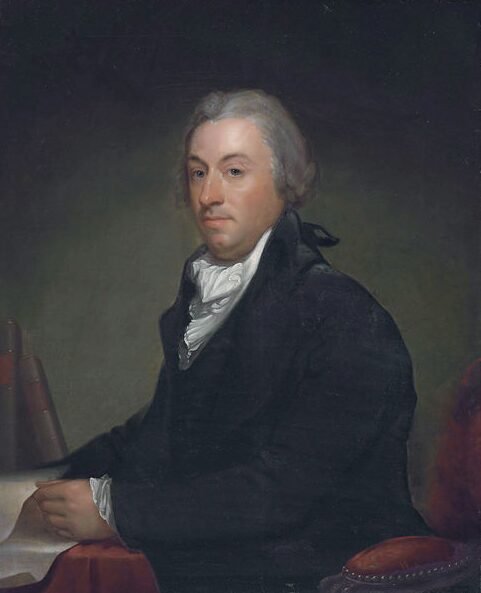
Robert R. Livingston played a key role in drafting the Declaration of Independence, negotiating the Louisiana Purchase, and advancing steamboat technology. Portrait of Livingston by Gilbert Stuart.
Recorder of New York City
In 1773, Livingston was appointed Recorder of New York City, a prestigious legal position. However, his alignment with the anti-colonial Whig Party—which advocated for American independence—led to his replacement a few months later by John Watts Jr., a loyalist.
Chancellor of New York
In 1777, Livingston became New York’s first Chancellor, the state’s highest judicial officer. He served in this role for 24 years, earning him the nickname “The Chancellor,” a title of respect he retained even after leaving office. As Chancellor, Livingston oversaw critical legal cases and solidified his reputation as a leading legal authority.
Key accomplishments during his tenure include:
- Administering George Washington’s Oath of Office: On April 30, 1789, Livingston administered the first presidential oath of office to George Washington at Federal Hall in New York City.
- United States Secretary of Foreign Affairs: From 1781 to 1783, Livingston served as the nation’s first Secretary of Foreign Affairs under the Articles of Confederation, a precursor to the modern role of Secretary of State.
Contributions to the Declaration of Independence
In 1776, Livingston was appointed to the Committee of Five, a group tasked with drafting the Declaration of Independence. The committee, which included Thomas Jefferson, Benjamin Franklin, John Adams, and Roger Sherman, outlined the principles of American liberty and governance.
Although Livingston helped shape the Declaration, he was recalled by New York before its signing. His cousin, Philip Livingston, signed in his place, marking a notable footnote in the document’s history. Another cousin, William Livingston, later signed the U.S. Constitution.

Image: Thomas Jefferson
Diplomatic Achievements: The Louisiana Purchase
In 1801, President Thomas Jefferson appointed Livingston as U.S. Minister to France, a role in which he achieved one of the greatest diplomatic successes in U.S. history: the Louisiana Purchase.
During his tenure (1801–1804), Livingston negotiated with French officials, including Napoleon Bonaparte, to acquire the Louisiana Territory. The agreement, finalized in 1803, doubled the size of the United States and secured control over the Mississippi River, a critical trade route.
Livingston’s famous declaration upon signing the agreement underscores its significance:
We have lived long, but this is the noblest work of our whole lives.
While in France, Livingston also collaborated with inventor Robert Fulton to develop the North River Steamboat, which revolutionized transportation. The steamboat’s maiden voyage in 1807 from New York City to Albany demonstrated its potential to transform commerce and travel along America’s waterways.
Political Affiliations and Rivalries
Livingston was a prominent Jeffersonian Republican, opposing Federalist policies such as the Jay Treaty. He formed alliances with political figures like Aaron Burr and George Clinton, but his relationship with Federalists, including Alexander Hamilton and John Jay, was strained.
In 1798, Livingston ran for governor of New York as a Democratic-Republican but was defeated by John Jay. Despite this setback, he remained a significant political force, influencing state and national policies.
Most influential intellectuals of the American Revolution Era
Freemasonry and the Society of the Cincinnati
Livingston was deeply involved in Freemasonry, serving as the first Grand Master of the Grand Lodge of New York from 1784 to 1801. He used the Masonic Bible to administer George Washington’s presidential oath, a tradition that continues to this day during certain inaugurations.
As a member of the Society of the Cincinnati, an organization for Revolutionary War veterans, Livingston aligned himself with leaders dedicated to preserving the principles of the American Revolution.
Personal Life and Family
In 1770, Livingston married Mary Stevens, the daughter of Continental Congressman John Stevens. The couple built Arryl House on the family estate, a home renowned for its grandeur and sophistication. Unfortunately, the British burned the estate during the Revolutionary War, but Livingston later rebuilt it, making it one of the most commodious homes in America.
Robert and Mary Livingston had two daughters:
- Elizabeth Stevens Livingston, who married Lt. Governor Edward Philip Livingston.
- Margaret Maria Livingston, who married Robert L. Livingston.
Legacy and Honors
Livingston’s contributions to America’s founding, territorial expansion, and technological progress left an enduring legacy. His work significantly influenced the legal, diplomatic, and economic frameworks of the United States.
Honors and Memorials
- Livingston Counties: Counties in Kentucky and New York are named in his honor, reflecting his impact on the nation.
- National Statuary Hall: A statue of Livingston, created by Erastus Dow Palmer, resides in the U.S. Capitol as part of the National Statuary Hall Collection.
- Jefferson Memorial: Livingston is featured on the pediment sculpture of the Jefferson Memorial, commemorating his role in the Committee of Five.
- Masonic Library: The Chancellor Robert R. Livingston Masonic Library in New York City is named after him, celebrating his contributions to Freemasonry and the nation.
Death and Final Resting Place
Robert R. Livingston passed away on February 26, 1813, at the age of 66. He was interred in the family vault at St. Paul’s Church in Tivoli, New York, alongside other members of the Livingston family. His legacy as a Founding Father and a key figure in American history remains influential to this day.
Conclusion
Robert R. Livingston’s life was marked by significant achievements that shaped the early United States. From drafting the Declaration of Independence and administering George Washington’s oath of office to negotiating the Louisiana Purchase and advancing steamboat technology, Livingston’s contributions were pivotal to the nation’s development. His influence extended across legal, political, and technological domains, cementing his place as one of America’s most accomplished Founding Fathers.
Frequently Asked Questions
What was Livingston’s family background?
Livingston was born into the wealthy and influential Livingston family of the Hudson River Valley. His parents were Judge Robert Livingston and Margaret Beekman Livingston. His siblings married prominent figures, further cementing the family’s elite status.
Where did Robert R. Livingston receive his education?
He graduated from King’s College (now Columbia University) in 1765 and was admitted to the bar in 1773, launching his legal career.
What was Livingston’s role as the Recorder of New York City?
In 1773, Livingston was appointed Recorder of New York City but was replaced after aligning with the anti-colonial Whig Party, which supported American independence.
Why was Livingston called “The Chancellor”?
Livingston served as New York’s first Chancellor, the state’s highest judicial officer, from 1777 to 1801. His long tenure earned him the enduring title “The Chancellor.”
What was Livingston’s involvement in the Declaration of Independence?
Livingston was part of the Committee of Five tasked with drafting the Declaration of Independence in 1776. However, he was recalled by New York before its signing, and his cousin Philip Livingston signed it in his place.

Image: “Declaration of Independence”, an artwork by John Trumbull.
What were Livingston’s accomplishments as U.S. Minister to France?
As U.S. Minister to France (1801–1804), Livingston negotiated the Louisiana Purchase, doubling the size of the United States. He also collaborated with Robert Fulton to develop the North River Steamboat.
How did Livingston contribute to technological advancements?
Livingston partnered with Robert Fulton to create the North River Steamboat, the first viable steamboat, revolutionizing transportation with its successful voyage up the Hudson River in 1807.
What political affiliations and rivalries did Livingston have?
Livingston was a Jeffersonian Republican who opposed Federalist policies, including the Jay Treaty. He allied with Aaron Burr and George Clinton but clashed with Alexander Hamilton and John Jay, losing a gubernatorial bid against Jay in 1798.
What was Livingston’s role in Freemasonry?
He was the first Grand Master of the Grand Lodge of New York (1784–1801) and used the Masonic Bible to administer George Washington’s presidential oath, a tradition still observed today.

Image: George Washington (1732 – 1799)
What personal challenges did Livingston face during the Revolutionary War?
Livingston’s residence, Arryl House, was burned by the British during the Revolutionary War. He rebuilt it afterward, creating one of the most commodious homes in America.
How is Robert R. Livingston remembered today?
He is honored through memorials, including counties named after him in Kentucky and New York, a statue in the U.S. Capitol, and a feature on the Jefferson Memorial pediment sculpture. The Chancellor Robert R. Livingston Masonic Library in New York City also commemorates his legacy.





