Founding Father Roger Sherman: Life, Political Career and Major Accomplishments
Roger Sherman (1721–1793) stands as one of the most influential yet understated Founding Fathers of the United States. His contributions to the nation’s formation spanned decades, reflecting his intellect, pragmatism, and commitment to governance.
Sherman’s role in drafting, debating, and signing the foundational documents of the United States underscores his central importance in shaping the country. Notably, he remains the only individual to sign all four of America’s great state papers: the Articles of Association, the Declaration of Independence, the Articles of Confederation, and the Constitution.
In the article below, WHE American historians explore Sherman’s life, political career, and his most significant contributions to the United States.

Roger Sherman (1721–1793) was a Founding Father, lawyer, and statesman who uniquely signed all four major U.S. founding documents: the Continental Association, Declaration of Independence, Articles of Confederation, and Constitution. Image: Portrait of Sherman.
Early Life and Education
Roger Sherman was born on April 19, 1721, in Newton, Massachusetts, to William and Mehetabel Sherman, a family of modest means who worked as farmers. Despite limited access to formal education, Sherman demonstrated an early aptitude for learning. His education was primarily self-guided, with resources from his father’s personal library and grammar school. A key figure in his intellectual development was Rev. Samuel Dunbar, a Harvard-educated minister who mentored Sherman and encouraged his academic pursuits.
In 1743, following the death of his father, Sherman moved with his mother and siblings to New Milford, Connecticut. There, he partnered with his brother to open the town’s first store, which also included a cobbler’s shop. As a practical and industrious individual, Sherman quickly gained a reputation for reliability and intelligence.
In 1745, he was appointed county surveyor, allowing him to build financial stability and establish himself in local affairs. Around this time, Sherman began publishing almanacs featuring astronomical calculations, further demonstrating his versatility and intellectual breadth.
Without formal legal training, Sherman pursued self-directed study in law and successfully passed the bar in 1754, launching a legal career that would become the foundation of his political life.
Family Life
Sherman’s personal life was marked by resilience and familial responsibility. He married twice and fathered 15 children, 13 of whom survived to adulthood. His first wife, Elizabeth Hartwell, passed away in 1760, and in 1763, Sherman married Rebecca Prescott. His descendants intertwined with other influential families, further enhancing Sherman’s legacy as a patriarch of a prominent lineage.
Early Political Career and Connecticut Leadership
Sherman’s political career began at the local level, where he quickly became a respected figure in New Milford. He served as town clerk, justice of the peace, and county surveyor, earning a reputation for fairness and diligence.
In 1766, Sherman was elected to the Connecticut General Assembly, where he played an instrumental role in crafting legislation and addressing the challenges facing colonial governance. That same year, he was appointed as a judge of the Connecticut Superior Court, a position he held until 1789. His judicial service underscored his commitment to law, order, and equity.
Born in Massachusetts, Roger Sherman built a legal career in Connecticut and served in the Connecticut House and Superior Court.
Sherman’s leadership extended to the Congregational Church, where he was a devout member. He engaged in theological debates with some of the leading thinkers of his time, further solidifying his reputation as a man of principle and intellect.
Continental Congress and Independence
Sherman’s national political career began in earnest when he was elected as a delegate to the First Continental Congress in 1774. He signed the Articles of Association, which implemented an economic boycott of British goods in response to oppressive colonial policies. As tensions escalated, Sherman became a leading advocate for independence.
During the Second Continental Congress, Sherman was appointed to the Committee of Five, tasked with drafting the Declaration of Independence alongside Thomas Jefferson, John Adams, Benjamin Franklin, and Robert R. Livingston. Although Sherman was not a prominent speaker, his pragmatic insights and steady demeanor made him a valued contributor to the drafting process. His signature on the Declaration marked his commitment to the cause of liberty.
Articles of Confederation
Sherman also played a key role in drafting the Articles of Confederation, the first governing document of the United States. A staunch advocate for state sovereignty, Sherman proposed a unicameral legislature where each state would have equal representation. Although the Articles ultimately proved insufficient for governing the new nation, Sherman’s work laid the groundwork for the debates that would lead to the Constitution.
The Constitutional Convention
Sherman was a pivotal figure at the 1787 Constitutional Convention, where delegates convened to address the weaknesses of the Articles of Confederation. Initially skeptical of replacing the Articles with a new constitution, Sherman believed that amendments to the existing system might suffice. However, as debates unfolded, he became one of the most active and pragmatic delegates, advocating for compromises that balanced federal and state interests.
The Connecticut Compromise
Sherman’s most significant contribution to the Convention was the Connecticut Compromise (or Great Compromise), co-proposed with Oliver Ellsworth. This proposal resolved a critical dispute between large and small states over legislative representation:
- The House of Representatives would feature proportional representation based on state populations, addressing the concerns of larger states.
- The Senate would provide equal representation for all states, with each state allotted two senators, satisfying smaller states.
The Connecticut Compromise became a cornerstone of the U.S. Constitution, ensuring its acceptance by states with divergent interests. Sherman’s ability to mediate and propose balanced solutions highlighted his statesmanship and commitment to unity.
Economic and Political Philosophy
Sherman’s conservative views on governance influenced his contributions to the Constitution. He opposed the issuance of paper money, fearing inflation and economic instability, and advocated for strict limits on federal power to preserve state sovereignty. While he initially resisted the inclusion of a Bill of Rights, he ultimately accepted its necessity to ensure the Constitution’s ratification.
On the contentious issue of slavery, Sherman opposed the institution but supported compromises to maintain unity among states. He believed slavery would gradually decline over time and sought to avoid divisive conflicts that could jeopardize the Convention’s success.
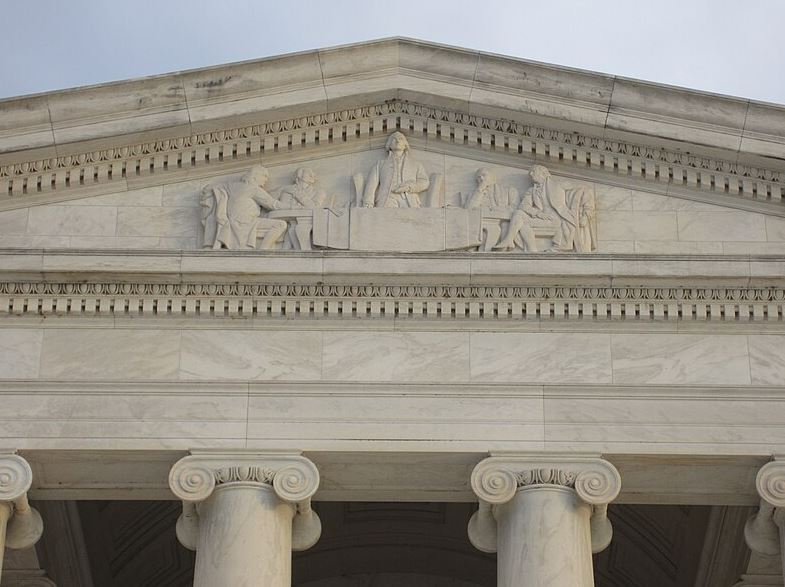
Adolph Alexander Weinman’s sculpture on the Jefferson Memorial pediment features the Committee of Five, including Sherman.
Later Career and Federal Service
After the ratification of the Constitution, Sherman continued to serve the new nation with distinction. He was elected as a Representative in the First Congress (1789–1791) and later as a Senator (1791–1793). In these roles, Sherman contributed to the establishment of federal institutions and the passage of foundational legislation.
Roger Sherman represented Connecticut in Congress and the Senate until his death.
Sherman and Richard Law also undertook the task of revising Connecticut’s legal code, modernizing its statutes to reflect the principles of the new republic.
Religious Beliefs and Community Engagement
Sherman’s faith was central to his life and work. A devout Puritan, he viewed public service as a moral obligation and aligned his political philosophy with his religious principles. Sherman served as treasurer of Yale College, supporting its development and the construction of a chapel. His engagement with theological debates reflected his commitment to intellectual and spiritual pursuits.
Death and Legacy
Roger Sherman died on July 23, 1793, in New Haven, Connecticut, after a brief illness. He was initially buried in New Haven Green but was later reinterred at Grove Street Cemetery. His funeral sermon, delivered by Jonathan Edwards Jr., praised Sherman’s piety, intellect, and contributions to his family, town, and country.
Sherman’s legacy is enduring, marked by numerous honors:
- The town of Sherman, Connecticut, is named in his honor.
- His role in the Committee of Five is commemorated on the Jefferson Memorial pediment.
- His distinction as the only individual to sign all four major founding documents underscores his unparalleled contributions to the nation’s formation.
Conclusion
Roger Sherman’s life exemplifies the virtues of pragmatism, dedication, and service. From his humble beginnings in rural Massachusetts to his pivotal role in drafting and shaping America’s founding documents, Sherman’s contributions were instrumental in forging a nation. His ability to mediate complex debates, his steadfast commitment to principle, and his deep understanding of governance solidify his place as one of the most influential Founding Fathers in U.S. history.
Frequently Asked Questions
What was Sherman’s early life like, and how did he begin his career?
Born in Newton, Massachusetts, Sherman was the son of farmers and educated through his father’s library, grammar school, and mentorship by Rev. Samuel Dunbar. After moving to New Milford, Connecticut, he opened a store, became a county surveyor, and self-studied law, passing the bar in 1754.
How many children did Sherman have, and what is notable about his family life?
Sherman was married twice and had 15 children, 13 of whom survived to adulthood. His family became intertwined with other prominent families, further enhancing his legacy.
What were Sherman’s contributions to Connecticut’s leadership?
He served as town clerk, justice of the peace, and a judge of the Connecticut Superior Court. He was also elected to Connecticut’s General Assembly, where he established himself as a principled and respected leader.
What role did Sherman play in drafting the Declaration of Independence?
As a delegate to the Second Continental Congress, Sherman served on the Committee of Five that drafted the Declaration of Independence. His pragmatism and wisdom earned him respect, though he was not a prominent orator.
What was Sherman’s involvement in the Articles of Confederation?
He helped draft the Articles of Confederation and advocated for a unicameral legislature with equal representation for states. He signed the Articles and supported their implementation, despite recognizing their limitations.
What was the Connecticut Compromise, and why is it important?
The Connecticut Compromise, co-proposed by Sherman and Oliver Ellsworth, established a bicameral legislature with proportional representation in the House and equal representation in the Senate. This agreement resolved disputes between large and small states, ensuring the Constitution’s acceptance.
How did Sherman address the issue of slavery during the Constitutional Convention?
He opposed slavery but supported compromises to maintain unity among states. He believed slavery would decline naturally over time and sought to avoid conflicts that could derail the Convention.
What were Sherman’s views on paper money and federal authority?
Sherman opposed the issuance of paper money and advocated for limiting federal powers to preserve state sovereignty. His conservative views emphasized strong legislative authority and cautious executive power.
What roles did Sherman play in Congress after the Constitution’s ratification?
He served in the First Congress as a Representative (1789–1791) and later in the Senate (1791–1793). He helped draft legislation, modernized Connecticut’s legal code, and contributed to the organization of the federal government.
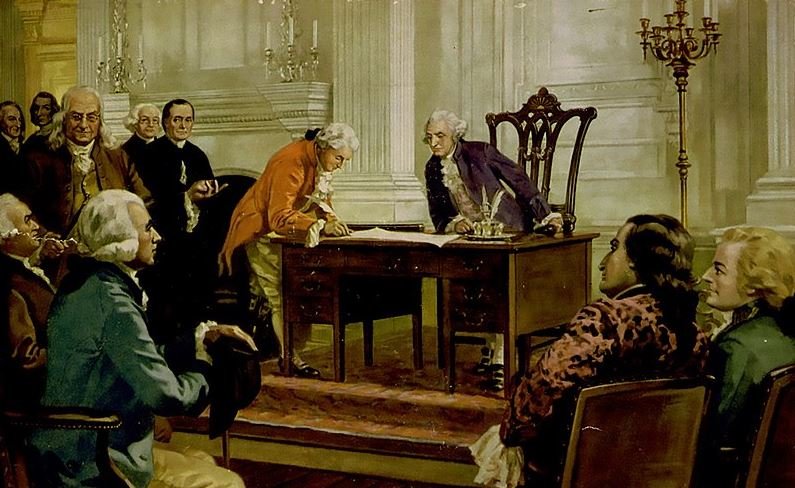
Image: “Foundation of the American Government”, a 1925 painting by Swiss-American artist John Henry Hintermeister. In this illustration, Sherman stands right behind Morris, depicted signing the Constitution.
What were Sherman’s religious beliefs, and how did they influence his public service?
A devout Puritan, Sherman believed in moral governance and viewed public service as a duty aligned with his faith. He was actively engaged in theological debates and served as treasurer of Yale College, supporting its development.
How is Roger Sherman honored today?
Roger Sherman is commemorated through the town of Sherman, Connecticut, and his inclusion on the Jefferson Memorial pediment. His distinction as the only person to sign all four major founding documents underscores his central role in American history.





