George Clinton – 4th Vice President of the United States
George Clinton was born on July 26, 1739, in Little Britain, New York, to Charles Clinton, an Irish immigrant and prominent colonial figure, and Elizabeth Denniston. The family settled in New York, where Charles became a significant landowner and public official, exposing young George to public service early on. Growing up in the Hudson Valley, Clinton was influenced by his father’s dedication to education and civic duty.
Clinton’s early education was grounded in practical skills and law, and he apprenticed with a lawyer in New York City. During the French and Indian War (1754–1763), Clinton joined the colonial militia, rising to the rank of lieutenant. His military experience provided him with leadership skills and connections that would later serve him in his political career. After the war, Clinton returned to New York, began practicing law, and gained recognition for his legal acumen and public service.
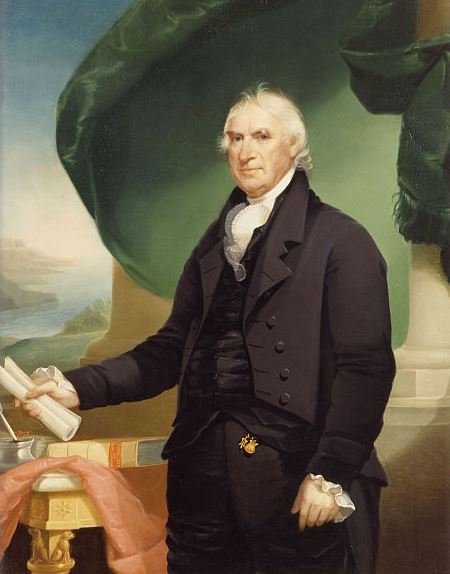
Image: An 1814 portrait of George Clinton.
Early Political Roles
Clinton’s entry into politics began with his election to the New York Provincial Assembly in 1768. Representing Ulster County, he aligned himself with the growing sentiment for independence from British rule. Clinton’s dedication to colonial rights during the turbulent years leading to the American Revolution earned him a reputation as a resolute and principled leader.
Clinton became an active supporter of the Revolutionary cause as tensions with Britain escalated. In 1775, he was elected to the Second Continental Congress, where he contributed to discussions about independence and governance. However, he soon left the Congress to focus on New York’s military and political affairs.
Governorship of New York
Clinton was elected the first governor of New York in 1777, a position he held until 1795. His tenure was marked by his leadership during the American Revolutionary War, where he balanced the dual roles of governor and military commander. Clinton worked closely with George Washington and other military leaders, coordinating the defense of New York against British forces. Despite the challenges of war, Clinton proved an effective and resilient leader.
Clinton’s governorship saw the creation of New York’s first state constitution in 1777, which he helped draft. The document laid the foundation for governance in New York, emphasizing a strong executive branch, which Clinton used to manage the state’s affairs during wartime. His commitment to the Revolution was evident in his direct involvement in military campaigns, including efforts to defend the strategically vital Hudson River Valley.
After the war, Clinton’s leadership continued to shape New York’s development. He was re-elected multiple times, demonstrating his popularity and effectiveness as a leader. Clinton advocated for the protection of New York’s interests, particularly in disputes over land claims, including opposition to Vermont’s admission to the Union, which he believed encroached on New York’s territory.
Opposition to the Constitution and Rise as an Anti-Federalist
As the United States moved toward adopting a new federal constitution, Clinton emerged as a prominent Anti-Federalist, opposing the proposed document without significant amendments. He feared the Constitution concentrated too much power in the federal government at the expense of states’ rights and individual liberties. Clinton’s stance was rooted in his belief in a decentralized government that preserved the sovereignty of the states.
Clinton’s opposition was instrumental in advocating for the addition of the Bill of Rights, a series of amendments designed to protect individual freedoms and address Anti-Federalist concerns. While the Constitution was ultimately ratified, Clinton’s efforts left a lasting impact on American governance.
Return to the Governorship and Transition to National Politics
After stepping down as governor in 1795, Clinton returned to politics in 1801, once again serving as New York’s governor until 1804. This second tenure reinforced his reputation as a steadfast and experienced leader. During this period, Clinton aligned himself with the emerging Democratic-Republican Party, which opposed Federalist policies and championed the rights of the common man.
In 1804, Clinton transitioned to national politics when he was chosen as the Democratic-Republican vice-presidential candidate alongside Thomas Jefferson. Jefferson replaced his controversial first-term vice president, Aaron Burr, with Clinton, who brought experience and stability to the ticket. Clinton’s role as vice president marked a significant shift in his political career, expanding his influence beyond New York.
Accomplishments of George Clinton
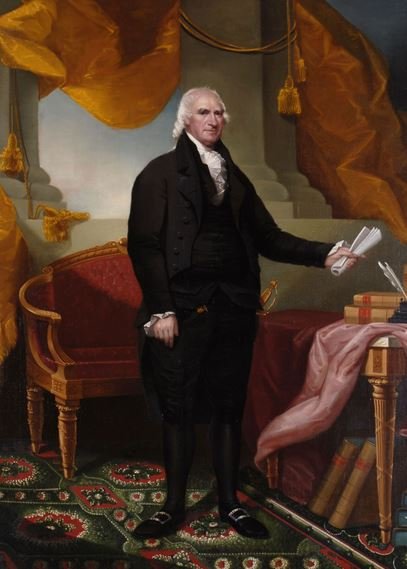
An Anti-Federalist, Clinton opposed the Constitution’s ratification without a Bill of Rights and later helped shape the Democratic-Republican Party. He died in office in 1812, becoming the first U.S. vice president to do so, leaving a significant political legacy. Image: A portrait of Clinton by American painter Ezra Ames.
Revolutionary Leadership
One of Clinton’s most significant accomplishments was his leadership during the American Revolutionary War. As governor, he not only governed New York but also played an active role in its defense. His collaboration with George Washington in protecting key areas like the Hudson River Valley was crucial to the American war effort. Clinton’s ability to manage both military and political challenges during this time underscored his commitment to the Revolutionary cause.
Longest-Serving Governor in U.S. History (at the Time)
Clinton’s tenure as governor of New York, spanning 18 years (1777–1795 and 1801–1804), made him the longest-serving governor in U.S. history until Terry Branstad surpassed his record in 2015. His longevity in office reflected his widespread popularity and effectiveness as a leader. Clinton’s governance laid the foundation for New York’s political and economic growth during its formative years.
Advocacy for States’ Rights and the Bill of Rights
Clinton’s opposition to the federal Constitution without amendments was pivotal in securing the Bill of Rights, a cornerstone of American democracy. His leadership among the Anti-Federalists helped ensure that individual liberties and state sovereignty were protected, influencing the balance of power in the U.S. government.
Vice Presidency and National Influence
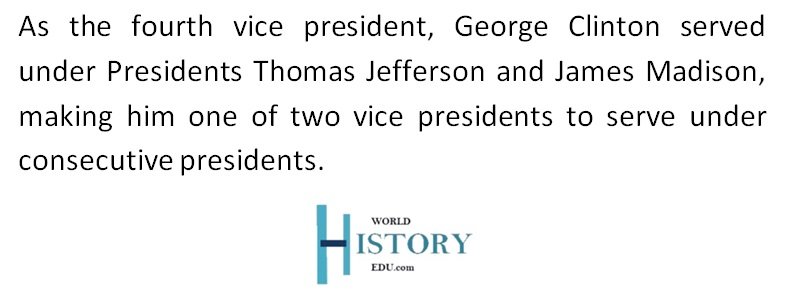
Clinton’s election as vice president in 1804 under Thomas Jefferson highlighted his national prominence. During his tenure, he provided stability to the Jefferson administration while advocating for Democratic-Republican ideals. Clinton’s re-election as vice president in 1808 under James Madison made him one of only two vice presidents to serve under consecutive presidents, showcasing his enduring influence.
Despite his declining health and opposition to Madison’s policies, particularly regarding the War of 1812, Clinton remained committed to his principles. His death in 1812 during his vice presidency made him the first U.S. vice president to die in office, marking the end of a distinguished career.
Opposition to Vermont’s Admission
Clinton’s stance against Vermont’s statehood reflected his dedication to defending New York’s territorial claims. While Vermont eventually entered the Union, Clinton’s opposition demonstrated his commitment to protecting his state’s interests and maintaining its political influence.
Establishing a Political Legacy
Clinton’s legacy extended beyond his lifetime through the Clinton political dynasty. His nephew, DeWitt Clinton, followed in his footsteps, serving as New York governor and playing a pivotal role in the construction of the Erie Canal, a project that transformed the state’s economy and infrastructure. The Clintons’ contributions to New York’s development underscore the enduring impact of George Clinton’s leadership.
Death and Legacy
George Clinton passed away on April 20, 1812, while serving as vice president. His death left the office vacant for the first time in U.S. history, highlighting the challenges of succession planning in the early republic. Clinton’s contributions to the Revolutionary War, New York governance, and the establishment of the Democratic-Republican Party cemented his place as a key figure in American history.
Clinton’s life and career embodied the complexities of the early United States, from the struggle for independence to the debates over federalism and the balance of power. His commitment to states’ rights, individual freedoms, and democratic governance left an indelible mark on the nation’s political landscape. Although his opposition to certain policies, such as Vermont’s statehood, attracted criticism, his overall contributions to the development of the United States remain significant.
Through his military service, governance, and advocacy for constitutional protections, George Clinton demonstrated a dedication to the principles of liberty and equality that defined the American experiment. His legacy as a Revolutionary leader, statesman, and vice president continues to be remembered as a foundational chapter in the nation’s history.
Frequently Asked Questions
When and where was George Clinton born?
George Clinton was born on July 26, 1739, in Little Britain, New York.
What early experience prepared Clinton for leadership?
Clinton served as a lieutenant in the colonial militia during the French and Indian War, gaining military leadership skills and connections.
What role did Clinton play in the American Revolution?
As the first governor of New York (1777–1795), he coordinated the defense of New York, supported the Continental Army, and contributed to the war effort by balancing political and military responsibilities.
What was Clinton’s stance on the United States Constitution?
Clinton opposed the Constitution’s ratification without a Bill of Rights, fearing it gave too much power to the federal government. He was a leading Anti-Federalist.
What notable position did Clinton hold in New York’s government?
Clinton served as the longest-serving governor in U.S. history at the time, holding office for a total of 18 years (1777–1795, 1801–1804).
What was Clinton’s role in national politics?
Clinton became the 4th vice president of the United States, serving under Thomas Jefferson (1805–1809) and James Madison (1809–1812).

Image: James Madison
Why is Clinton’s vice presidency historically significant?
Clinton was one of only two vice presidents to serve under consecutive presidents, and he was the first vice president to die in office in 1812.
What accomplishments marked Clinton’s tenure as governor?
He helped draft New York’s first state constitution, opposed Vermont’s admission to the Union over land disputes, and supported Revolutionary War efforts.
What political party did Clinton help shape?
Clinton was an early leader of the Democratic-Republican Party, advocating for states’ rights and limited federal government.
How did Clinton’s legacy continue after his death?
Clinton’s political legacy endured through his nephew, DeWitt Clinton, who served as New York governor and spearheaded the construction of the Erie Canal, furthering the Clinton family’s influence on the state’s development.