“God the Son” in Christian Theology
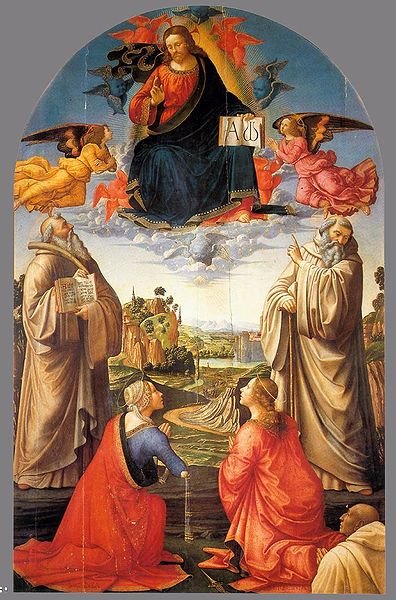
*Christ in Glory with Four Saints and a Donor* (c. 1492) by Italian painter Ghirlandaio depicts God the Son seated in Heaven.
God the Son is the second Person of the Trinity in Christian theology. This theological concept asserts that God the Son, incarnated in Jesus Christ, is the eternal divine Logos (Word) through whom all things were created. While the specific term “God the Son” is absent from the Bible, it serves as a theological designation to describe Jesus as a distinct yet unified Person of the Trinity, alongside God the Father and God the Holy Spirit. This doctrine has been foundational to Christian faith and has shaped theological discourse for centuries.
Biblical and Theological Sources
Although the exact term “God the Son” does not appear in the Bible, it is derived from various New Testament passages that emphasize Jesus’ divine nature and preexistence. In John 1:1, Jesus is identified as the Logos: “In the beginning was the Word, and the Word was with God, and the Word was God.” This verse establishes the idea that Jesus, as the divine Logos, was not only present at creation but was also fully divine.
Another key passage, John 3:16, describes Jesus as the “only begotten Son of God,” reinforcing his unique divine status. Additionally, in Matthew 28:19, the Great Commission explicitly mentions the three Persons of the Trinity: “Go, therefore, and make disciples of all nations, baptizing them in the name of the Father, and of the Son, and of the Holy Spirit.” These biblical references provide the foundation for later theological developments regarding God the Son.
Early Church Writings and Creeds
The concept of God the Son gained prominence in early Christian writings and doctrinal formulations. The Athanasian Creed, a key Trinitarian document, states: “So the Father is God, the Son is God, and the Holy Spirit is God.” This creed distinguishes “Deus Filius” (God the Son) from “filius Dei” (Son of God), highlighting the theological distinction between Jesus’ divine essence and his filial relationship with the Father.
Church Fathers such as Augustine of Hippo further elaborated on the doctrine of the Trinity. In his work On the Trinity, Augustine wrote about the Son’s obedience to the Father: deo patri deus filius obediens (“God the Son obedient to God the Father”). This perspective was crucial in shaping Western Trinitarian theology.
The Role of God the Son in Creation and Salvation
According to Christian doctrine, God the Son played a central role in both creation and redemption. John 1:3 affirms, “Through him all things were made; without him, nothing was made that has been made.” This underscores Jesus’ active participation in creation, a belief echoed in Colossians 1:16: “For in him all things were created: things in heaven and on earth, visible and invisible.”
In addition to creation, God the Son is essential to the salvation of humanity. Christians believe that Jesus’ incarnation, life, death, and resurrection were necessary for the redemption of sin. Philippians 2:6-8 describes his humility in taking human form and his obedience to death on the cross. This salvific work is at the heart of Christian belief, affirming Jesus as the mediator between God and humanity.
Theological Interpretations of the Trinity
The doctrine of the Trinity asserts that God exists as three co-equal, co-eternal Persons: the Father, the Son, and the Holy Spirit. Despite being distinct, these three Persons share one divine essence. This paradoxical concept has been debated and refined throughout church history.
While the specific term “God the Son” does not appear in Scripture, it serves as a useful theological construct to articulate the relationship between Jesus, the Father, and the Holy Spirit.
Trinitarian theology maintains that the Son is “begotten, not made,” distinguishing him from created beings. This distinction is crucial in differentiating orthodox Christian beliefs from heretical views such as Arianism, which argued that the Son was a created being subordinate to the Father. The Council of Nicaea (325 AD) affirmed the full divinity of Christ, stating that he is “of the same essence” (homoousios) as the Father.
Controversies and Dissenting Views
Not all Christian groups accept the designation “God the Son.” Various theological traditions reject this terminology while still acknowledging Jesus’ divinity.
- Jehovah’s Witnesses reject the term “Trinity” and do not recognize Jesus as “God the Son,” instead viewing him as a distinct and subordinate being.
- Oneness Pentecostals affirm Jesus’ divinity but avoid the term “God the Son,” emphasizing that Jesus is fully God rather than a distinct Person of the Trinity.
- The Church of Jesus Christ of Latter-day Saints (LDS) teaches that God the Father, Jesus Christ, and the Holy Ghost are three separate beings, rather than three Persons of one essence.
- The New Philadelphia Church of Christ avoids the term “God the Son,” preferring to use exclusively biblical language.
The Title “Son of God” vs. “God the Son”
While “Son of God” is a biblical term used frequently to describe Jesus, “God the Son” is a theological expression developed to articulate the relationship between Jesus and the Trinity. The distinction between these two terms is significant. “Son of God” emphasizes Jesus’ divine filiation, his unique relationship to the Father, and his fulfillment of messianic prophecies. “God the Son,” on the other hand, conveys his full divinity and his eternal coexistence with the Father.
Influence on Christian Worship and Doctrine
The recognition of Jesus as God the Son has profoundly influenced Christian worship, doctrine, and liturgy. Prayers, hymns, and theological reflections often incorporate this understanding. For example, the Nicene Creed, recited in many Christian denominations, explicitly states: “We believe in one Lord, Jesus Christ, the only Son of God, eternally begotten of the Father.”
Christian art and iconography also reflect this belief. Byzantine mosaics and Renaissance paintings frequently depict Christ enthroned in divine glory, emphasizing his co-equality with the Father. Theologians such as Thomas Aquinas further explored the implications of Christ’s divine nature in works like Summa Theologica.
Frequently Asked Questions
Is the term “God the Son” found in the Bible?
No, the exact phrase “God the Son” does not appear in the Bible. It is a theological term used to express Jesus’ divine nature as part of the Trinity.
What is the difference between “God the Son” and “Son of God”?
“Son of God” (ὁ υἱός τοῦ Θεοῦ) is a biblical title for Jesus, while “God the Son” (ὁ Θεός ὁ υἱός) is a doctrinal term emphasizing his divine nature within the Trinity.
How does the New Testament support the divinity of Christ?
Verses like John 1:1 (“the Word was God”), John 8:58 (“before Abraham was, I AM”), and Matthew 28:19 (baptismal formula) are used to affirm Jesus’ divinity and his role in the Trinity.
How did early Christian writings use the term “God the Son”?
Church fathers like Augustine and creeds such as the Athanasian Creed used “God the Son” to express the belief in Jesus’ divine nature alongside the Father and the Holy Spirit.
Why do some Christian groups reject the term “God the Son”?
Jehovah’s Witnesses and Oneness Pentecostals reject it as unbiblical, while groups like the Church of Jesus Christ of Latter-day Saints believe in three separate divine beings rather than a Trinity.
What role does the doctrine of the Trinity play in this concept?
The Trinity doctrine states that the Father, Son, and Holy Spirit are distinct Persons but of one essence, making “God the Son” an essential theological affirmation of Jesus’ divinity.
How does John 3:16 relate to “God the Son”?
John 3:16 describes Jesus as the “only begotten Son,” affirming his unique divine sonship while being distinct from the Father within the Trinity.





