11 Major Ottoman wars in Europe
The Ottoman Empire, one of the most powerful empires in history, engaged in numerous military conflicts across Europe from the 14th century to the early 20th century. These wars were...
The Ottoman Empire stands as one of history’s most durable and expansive empires. Originating in the 13th century, it spanned three continents and lasted over 600 years. Its history can be understood in three primary phases: its rise, zenith, and decline.
The story of the Ottoman Empire begins with a small Anatolian beylik founded by Osman I around 1299. Located in what is now modern-day Turkey, Osman’s state was one of many small Turkish principalities that arose after the decline of the Seljuk Sultanate of Rum. The name “Ottoman” derives from Osman’s name.
Osman and his successors capitalized on the weakening Byzantine Empire, continuously expanding their territories. Their early military success can be attributed to the use of Ghazi warriors, light cavalry, and infantry archers. These forces would lay siege to Byzantine cities, capitalizing on political and economic disturbances.
The turning point for the empire was the conquest of Constantinople in 1453 by Sultan Mehmed II (often called Mehmed the Conqueror). This conquest effectively ended the Byzantine Empire and turned the Ottoman state into an empire. The city, renamed Istanbul, became the empire’s capital and a center for culture, commerce, and administration.
Under the leadership of Mehmed II and his successors, particularly Suleiman the Magnificent (reigned 1520-1566), the empire expanded considerably. The Ottomans integrated newly acquired territories through a systematic administrative apparatus, with local leaders often incorporated into the Ottoman system. They developed a centralized bureaucracy and established the Janissaries, an elite infantry unit, which became an essential arm of the empire’s military might.
Culturally, this period saw a flourishing of arts, architecture, and literature. Structures like the Suleymaniye Mosque in Istanbul stand as a testament to the empire’s architectural grandeur.
Post-Suleiman, the empire faced challenges on multiple fronts. The once unbeatable Ottoman military began to experience defeats. This period witnessed increased corruption within the Janissaries and inefficiencies in the administrative system. Economically, European nations’ discovery of sea routes to Asia reduced the Ottoman Empire’s control over land trade routes.
These issues didn’t mean the empire was collapsing; it was more of a stagnation or slowing down. Yet, it laid the groundwork for the challenges of the next phase.
The treaty of Karlowitz in 1699, where the empire ceded significant territories, can be pinpointed as the beginning of its decline. By the 18th century, European powers were advancing in science, military technology, and commerce, while the Ottomans were lagging.
During the 19th century, internal problems compounded. The Janissaries, initially a force of innovation, became conservative and were eventually abolished after a revolt in 1826. Ethnic and religious uprisings, along with the nationalist movements within the empire’s vast territories, further strained the empire.
Externally, the empire was dubbed the “Sick Man of Europe.” European powers, sensing its vulnerability, aimed to claim parts of its territory. The empire faced territorial losses in wars with Russia, Austria, and others.
Attempts were made to reform and modernize during the Tanzimat period (1839-1876) and later under Sultan Abdulhamid II. These reforms, however, often faced opposition internally and didn’t halt the empire’s decline.
World War I proved to be the empire’s death knell. Allying with the Central Powers, the empire was on the losing side. Its territories were occupied, and by the end of the war, the empire was partitioned by the Treaty of Sèvres in 1920.
Mustafa Kemal Atatürk led a national movement against both the occupying forces and the sultanate, eventually leading to the establishment of the Republic of Turkey in 1923. The empire officially ended when the sultanate was abolished in November 1922.
The Ottoman Empire’s legacy is complex. Its long history saw it at the crossroads of civilizations, fostering a rich tapestry of cultures, religions, and traditions. From its modest beginnings in Anatolia, it grew into a force that shaped world events for over six centuries. Its decline, spread over multiple centuries, was a result of both internal inefficiencies and external pressures. Today, its influence can be seen in the regions it once ruled, and it stands as a testament to the ebb and flow of empires in world history.
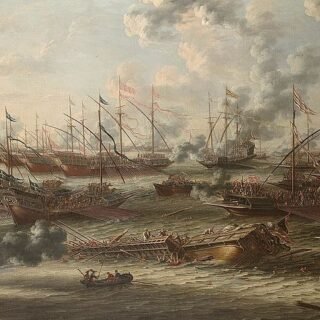
The Ottoman Empire, one of the most powerful empires in history, engaged in numerous military conflicts across Europe from the 14th century to the early 20th century. These wars were...
The conquest of Adrianople was a landmark event in Ottoman and Balkan history. It marked the consolidation of Ottoman power in Europe, leading to the eventual collapse of Byzantine control...

Kameriye Malhun Hatun, also referred to as Mal Hatun or Mala Hatun, was the second legal wife of Osman I, the founder of the Ottoman dynasty. She played a crucial...
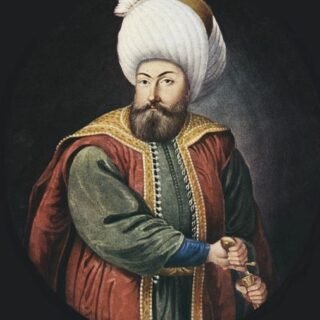
Osman I was the founder of the Ottoman Empire, initially leading a small Turkoman principality in Anatolia that later expanded into a vast empire. Early Life and Ancestry Osman I,...

Orhan Ghazi was the second sultan of the Ottoman Empire, ruling from 1323/4 until his death in 1362. He was born in Söğüt as the son of Osman I, the...
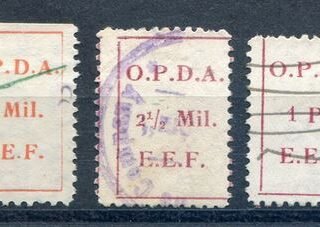
The Ottoman Public Debt Administration (OPDA) was a European-controlled organization established in 1881 to manage and collect payments on the Ottoman Empire’s public debt. This debt primarily stemmed from loans owed...
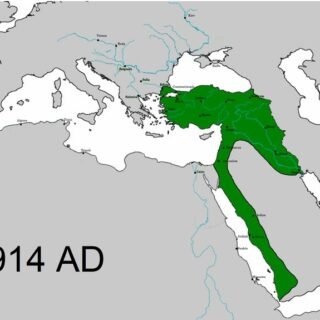
The Late Ottoman period was defined by a convergence of internal reform, external intervention, and far-reaching societal changes. It was an era of ambition and turmoil: administrators hoped to strengthen...
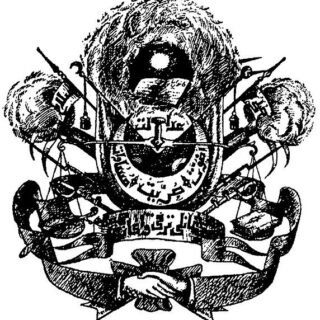
The Committee of Union and Progress (CUP), known in Ottoman Turkish as İttihad ve Terakki Cemiyeti, was a political organization active from 1889 to 1926. Summary The Ottoman Committee of...
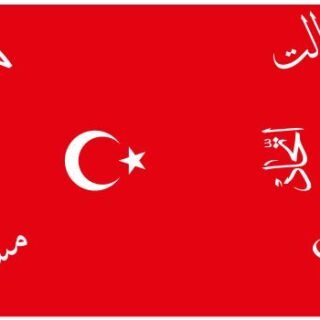
The Young Turks were a diverse political movement in the late Ottoman Empire that opposed the absolutist regime of Sultan Abdul Hamid II (r. 1876–1909). They played a pivotal role...
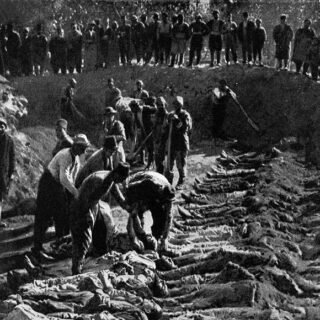
The Hamidian massacres, often referred to as the Armenian massacres, marked a period of intense brutality against Armenians under Sultan Abdul Hamid II in the Ottoman Empire during the mid-1890s....
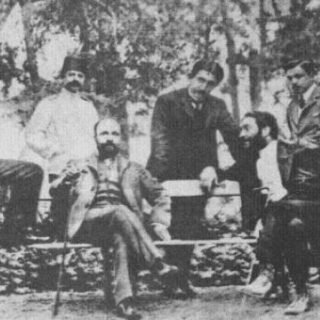
The Young Ottomans, a secretive society formed in 1865, emerged during the Tanzimat reform period of the Ottoman Empire. Dissatisfied with the reforms’ scope, the society’s members sought a constitutional...
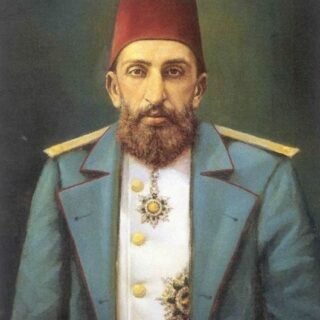
Abdul Hamid II was the 34th sultan of the Ottoman Empire. Reigning from 1876 to 1909, his tenure marked the last phase in which a sultan wielded substantial authority over...
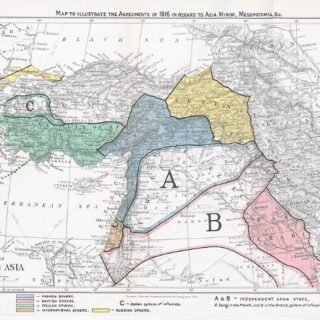
The partition of the Ottoman Empire at the close of World War I represented a watershed moment, altering political boundaries and reshaping the Middle East and nearby regions. By the...

The Young Turk Revolution of July 1908 dramatically shifted the political landscape of the Ottoman Empire. Sparked by a cadre of reform-minded military officers and intellectuals who came to be...

Born into a lineage of conquerors and statesmen, Ottoman Sultan Murad III inherited an empire at its zenith but faced pressures that tested his political skill and moral character. Throughout...





