History of Nubia: How significant was the region in ancient times?
Nubia is a region along the Nile River that spans the areas of modern-day southern Egypt and northern Sudan. It encompasses the confluence of the Blue and White Niles near Khartoum and extends to the first cataract of the Nile, south of Aswan. This region is characterized by its division into Upper, Middle, and Lower Nubia, with “Lower” referring to the downstream areas in the north and “Upper” to the upstream areas in the south.
Early Civilizations and the Kerma Culture (2500–1500 BCE)
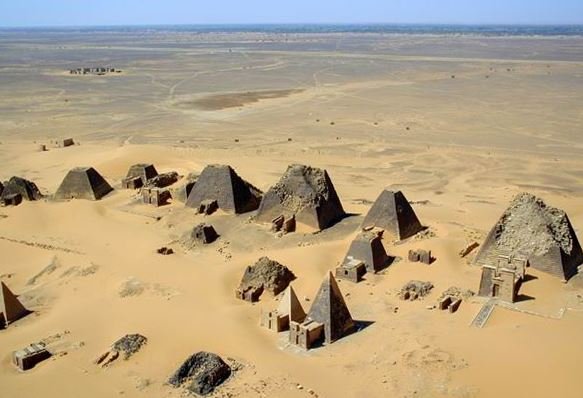
An aerial view of Nubian pyramids.
Nubia was home to one of Africa’s earliest civilizations, the Kerma culture, which thrived around 2500 BCE. Kerma was a complex society marked by its advanced urban centers, monumental architecture, and wealth from trade. The culture maintained significant interactions with ancient Egypt, including trade relations and conflicts. The Kerma kingdom’s power waned after its conquest by Egypt during the reign of Pharaoh Thutmose I, around the middle part of the second millennium BCE.
The Kingdom of Kush
The Kingdom of Kush rose to prominence after the decline of Kerma. It was centered in Upper Nubia and became a major power in northeastern Africa. The Kushite kings, notably Piye, expanded their influence into Egypt, establishing the 25th Dynasty around the 8th century BCE. This period, known as the “Kushite Dynasty,” saw the reunification of Egypt under Nubian rule and significant cultural and religious contributions, including the revival of pyramid construction.
Nubia under Greek and Roman Rule (3rd Century BCE–3rd Century CE)
Following the collapse of Kush’s dominance in Egypt, northern Nubia was invaded and annexed by successive empires, including the Ptolemies and Romans. Known as Dodekaschoinos in the Greco-Roman period, this region became a critical frontier zone. Roman forts and settlements were established, and trade networks were maintained, but conflicts persisted, particularly with the southern Kingdom of Kush.
Christian Nubia and the Rise of Christian Kingdoms
The decline of the Kingdom of Kush in the 4th century CE paved the way for the emergence of three Christian Nubian kingdoms: Nobatia, Makuria, and Alodia. These kingdoms adopted Christianity around the 6th century CE, influenced by missionaries from Byzantium. Nobatia merged with Makuria, which became the dominant Christian kingdom in Nubia, maintaining peace with Islamic Egypt through the Baqt treaty for centuries.
Islamization and Arabization
Beginning in the 7th century CE, Arab traders and settlers introduced Islam to Nubia. Over time, the region underwent significant cultural and religious changes, particularly after the decline of the Christian kingdoms in the 14th century. By the 16th century, Nubia was divided between the Ottoman Empire in the north and the Sennar Sultanate in the south, marking the region’s transition to a predominantly Islamic and Arabized society.
Modern Nubia: Colonial and Post-Colonial Periods
During the 19th century, Nubia was reunited under the Khedivate of Egypt and later became part of Anglo-Egyptian Sudan. The construction of the Aswan High Dam in the 20th century led to the displacement of many Nubians, as their ancestral lands were submerged under Lake Nasser. Today, Nubia is split between Egypt and Sudan, with its people striving to preserve their unique cultural heritage.

Statues of a number of Nubian rulers, located at Kerma Museum in Sudan.
Nubian Languages and Identity
Historically, Nubians spoke various languages within the Nubian subgroup of the Nilo-Saharan family, including Nobiin and Dongolawi. The Kerma culture’s linguistic identity remains debated, with some scholars suggesting a Cushitic origin and others positing Eastern Sudanic roots. Despite pressures from Arabization, modern Nubians continue to speak their languages alongside Arabic, preserving their distinct identity.
Archaeological Discoveries and Nubiology
The study of Nubia, or Nubiology, has revealed significant archaeological insights. Sites such as Kerma, Meroë, and Qustul showcase Nubia’s rich history, from its early urban centers to its role in the ancient world. Discoveries like the Nubian pyramids and the artifacts of the 25th Dynasty highlight Nubia’s cultural and political achievements.
Questions and Answers

Why is Nubia historically significant?
Nubia hosted some of Africa’s earliest civilizations. The Kingdom of Kush ruled Egypt as its 25th Dynasty, and Nubians were known for their skills in archery, trade, and cultural contributions.
What civilizations arose in Nubia?
The Kerma culture (2500–1500 BC) was one of the earliest, followed by the Kingdom of Kush, which thrived during the Napatan and Meroitic periods. Later Christian kingdoms like Nobatia, Makuria, and Alodia emerged after Kush’s decline.
What was the relationship between Egypt and Nubia?
Nubia and Egypt had a complex relationship involving trade, warfare, and cultural exchange. Nubia provided resources like gold and ivory, while Egypt influenced Nubian culture and ruled parts of Nubia during various periods.
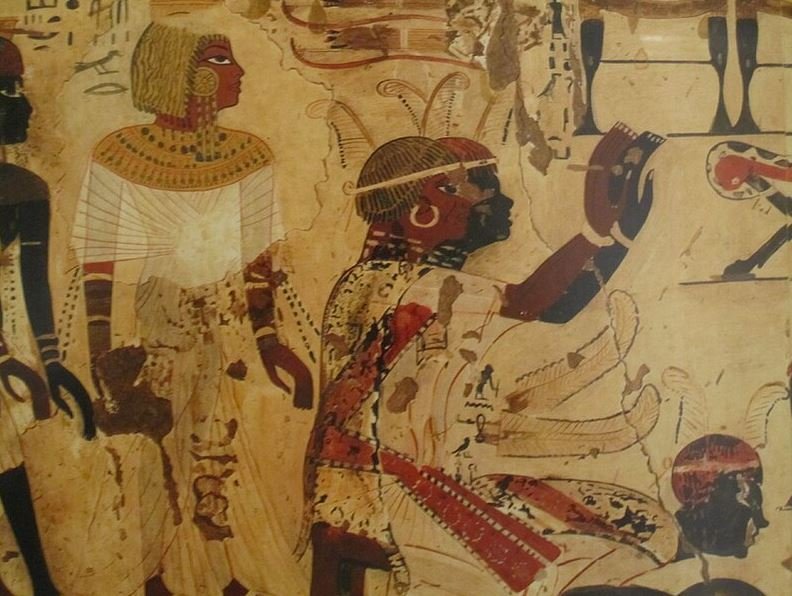
Heqanefer’s tribute to King Tutankhamun.
What languages were spoken in Nubia?
Ancient Nubians spoke languages in the Eastern Sudanic branch of the Nilo-Saharan family, transitioning to Nubian languages like Nobiin. The Meroitic script also developed during the Meroitic period.
What led to the decline of ancient Nubian kingdoms?
Kush fell due to invasions by the Ethiopian Aksumite kingdom and shifts in trade routes. Christian Nubian kingdoms declined due to Islamic conquests, internal fragmentation, and Arabization.

An overview of Nubia.
What remains of Nubian heritage today?
Modern Nubians live in Egypt and Sudan, retaining distinct cultural traditions despite Arabization. Nubian archaeological sites, including pyramids at Meroë, highlight their ancient legacy.





