What triggered the 1952 Egyptian revolution?
The Egyptian Revolution of 1952, also referred to as the 23 July Revolution, was a transformative event that reshaped Egypt’s political, economic, and social landscape. It marked the end of the monarchy and colonial dominance, initiated under the leadership of the Free Officers Movement, spearheaded by Mohamed Naguib and Gamal Abdel Nasser.
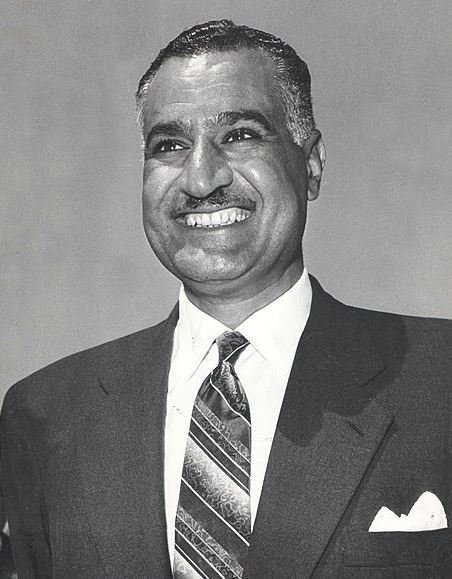
Image: A 1962 picture of Gamal Abdel Nasser
Historical Background
Egypt’s history under the Muhammad Ali dynasty was characterized by ambitious modernization and a struggle against foreign influence. Leaders like Muhammad Ali Pasha laid the foundation for Egypt’s transformation into a powerful state. However, foreign debt incurred under Isma’il Pasha led to the loss of sovereignty over the Suez Canal, creating widespread resentment and nationalist fervor.
The British occupation of Egypt in 1882 reduced the country to a pawn of imperial powers, despite nominal rule by the Khedive. The veiled protectorate gave Britain control over key institutions like the military and the Suez Canal, marginalizing Egyptian leaders and stoking nationalist sentiment.
Causes of the Revolution
The Egyptian monarchy, under King Farouk, was widely criticized for corruption and inefficiency. Farouk’s failure to address the growing demands of the population and his extravagant lifestyle alienated many Egyptians.
The economic structure, dominated by wealthy landlords and foreign interests, marginalized Egypt’s peasantry. The agrarian crisis and the exploitation of workers deepened the socioeconomic divide.
Egypt’s military humiliation in the 1948 Arab-Israeli War exposed corruption and mismanagement within the armed forces, further discrediting the monarchy and motivating nationalist officers.
The Free Officers, led by a mix of junior and mid-level military personnel, sought to eliminate foreign domination, establish social justice, and modernize Egypt. Their clandestine organization laid the groundwork for the coup.

A 1953 picture of the Free Officers receiving applauds from the crowd on the streets of Cairo.
Key Events of the Revolution
The revolution began with a swift military coup that seized control of government institutions. King Farouk was forced to abdicate and went into exile. The Revolutionary Command Council (RCC) was established to govern Egypt during its transitional period.
Declaration of Revolutionary Goals
The RCC outlined six objectives:
- Elimination of imperialism and collaborators.
- Abolition of feudalism.
- End of monopolistic practices.
- Promotion of social justice.
- Formation of a strong national army.
- Establishment of a democratic system.
Challenges and Responses
The nationalization of the Suez Canal by Nasser provoked a military response from Britain, France, and Israel, known as the Tripartite Aggression. Although Egypt suffered military losses, the crisis was a political triumph, affirming Egypt’s sovereignty over the canal and boosting Nasser’s prestige.
Political suppression became a hallmark of the post-revolutionary regime. The Muslim Brotherhood, leftist groups, and remnants of the monarchy faced crackdowns as the RCC sought to consolidate power.
Land reform policies limited individual land ownership and redistributed land to peasants, aiming to dismantle the feudal system. The regime also initiated industrialization projects and centralized economic planning, ushering in an era of Arab socialism.
Suez Canal – History, Construction, Significance, Map, Crisis, & Facts
Broader Impacts of the Revolution
The revolution inspired anti-colonial movements across the Arab world and Africa. It played a critical role in the rise of Arab nationalism, positioning Egypt as a leader in the Non-Aligned Movement during the Cold War.
The legacy of the 1952 Egyptian revolution extended beyond Egypt, influencing the broader Arab world and global decolonization efforts.
The abolition of aristocratic titles and the expansion of education symbolized a break from Egypt’s colonial past. Women gained the right to vote in 1956, marking progress toward gender equality.
Decline of Revolutionary Ideals
The RCC’s fear of counter-revolution and external threats justified the banning of political parties and the establishment of a one-party state. Over time, Nasser’s government became increasingly authoritarian.
After Nasser’s death in 1970, Anwar Sadat dismantled many of the socialist policies and pursued economic liberalization, signaling a departure from revolutionary ideals.

Questions and Answers

A photo showing a post-coup meeting of the members of the Free Officers.
Who led the 1952 Egyptian Revolution?
The Free Officers Movement, headed by Mohamed Naguib and Gamal Abdel Nasser.
What were the main goals of the revolution?
Abolishing the monarchy, ending British occupation, achieving Sudanese independence, and establishing a nationalist, anti-imperialist agenda focused on Arab unity and socialism.

Photo of Mohamed Naguib during the mid 1950s.
What role did the Suez Crisis play?
The Suez Crisis (1956) strengthened Egypt’s political position after the nationalization of the Suez Canal and subsequent invasion by Britain, France, and Israel, which ultimately ended with Egypt retaining control of the canal.
How did the revolution impact land ownership?
Land reform policies capped ownership at 200 feddans, redistributing land to reduce inequality and promote rural development.
How did the revolution affect political opposition?
It banned political parties, suppressed opposition, and restricted political freedoms to prevent counter-revolutions and maintain control.
What was the global influence of the revolution?
It inspired anti-colonial movements in the Arab world and beyond, promoting Third World solidarity and Arab nationalism during the Cold War.