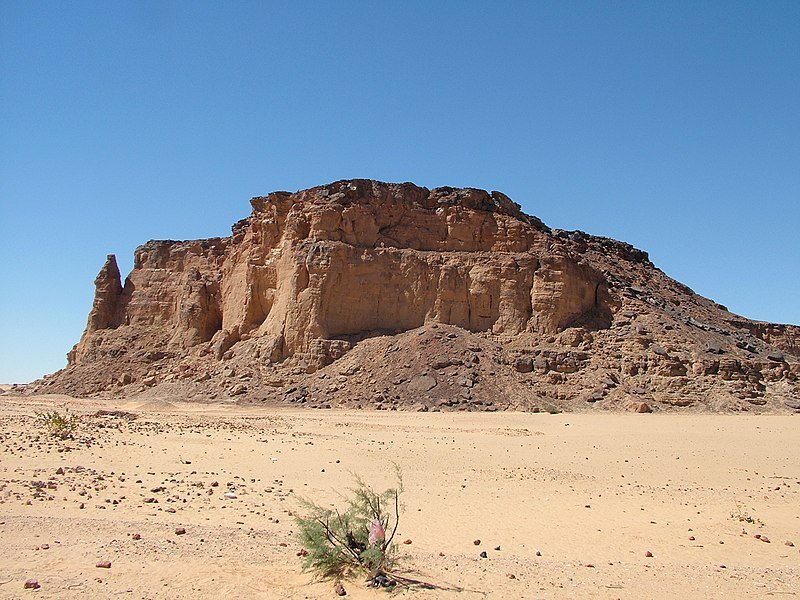
Jebel Barkal
Jebel Barkal is a flat-topped mesa situated approximately 400 km north of Khartoum, near Karima in Sudan’s Northern State. It rises to a height of 103 meters and lies along the Nile River in the Nubian region. Renowned for its religious and cultural significance, Jebel Barkal was central to both ancient Kushite and Egyptian civilizations. Recognized by UNESCO in 2003 as part of a World Heritage Site, it encompasses archaeological remains from ancient Napata. Additionally, the site features the Jebel Barkal Museum, which houses valuable artifacts.
Early Occupation and Egyptian Influence
The earliest evidence of settlement at Jebel Barkal dates to the Kerma culture (Kush), marked by scattered pottery fragments. Around 1450 BCE, Egyptian Pharaoh Thutmose III established a fortified outpost there, defining it as the southernmost boundary of the Egyptian Empire. Known as Napata, the site became an essential religious and administrative hub. The Egyptians constructed a temple complex dedicated to Amun of Napata, a regional manifestation of their chief deity. However, after the New Kingdom’s collapse in 1169 BCE, activity at Jebel Barkal declined.

READ MORE: How did the Nile make Egypt a great ancient civilization?
The Kushite Revival and Napata’s Glory
Jebel Barkal regained prominence around 800 BCE when the Kingdom of Kush emerged as a powerful entity. Napata became the capital of Kush and played a significant role during the 25th Dynasty, with Kushite pharaohs such as Kashta, Piankhy (Piye), and Taharqa expanding and enhancing its monumental structures. Even after the Assyrian conquest of Egypt in the 7th century BCE, Jebel Barkal remained a key center for the Kushite Kingdom.
Meroitic Period and Continued Significance
By 270 BCE, the royal burial grounds shifted to Meroë, marking the start of the Meroitic period. Nevertheless, Jebel Barkal remained vital, with palaces and temples continuing to be built and renovated. During the 1st century BCE to the 1st century CE, eight royal pyramids were constructed at the site, possibly reflecting local elite influence.
Later Occupations
Following the decline of the Kushite Kingdom in the 4th century CE, Jebel Barkal persisted as a settlement during the Christian period of Nubia, evidenced by architectural remains and burial inscriptions.
The Temples of Jebel Barkal
Jebel Barkal is home to at least 13 temples built over 1,500 years. The most significant structures include:
- The Temple of Amun: Originally built during the New Kingdom, this temple was greatly expanded by Kushite rulers. Even today, it holds spiritual significance for locals.
- The Temple of Mut: Known for its vividly painted chambers, this temple features depictions of Kushite royalty and the lion-headed deity Apedemak.
Other notable temples, such as Temple B700, played ceremonial roles, including housing the sacred barque of Amun and hosting coronation rituals for Napatan kings. The walls of Temple B700, decorated by King Senkamanisken, depict him triumphing over enemies, underscoring his divine authority.
Amun: Origin Story, Family, Meaning, Symbols, Power, & Facts
The Pyramids of Jebel Barkal
Jebel Barkal served as a royal necropolis during the Meroitic period. Several pyramids, such as those belonging to Queen Nawidemak and King Teriqas, were constructed at the site. These tombs provide insight into Kushite burial practices and their artistic traditions. The southern pyramid group, along with earlier burial sites at Nuri, further illustrates the region’s historical continuity.
Archaeological Excavations
The site of Jebel Barkal has seen limited but significant archaeological activity. European explorers began documenting its temples and artifacts in the early 19th century, with Frédéric Cailliaud and Karl Richard Lepsius providing early illustrations. Scientific excavations began in 1916 under George Reisner, who unearthed Meroitic palaces and temples. Subsequent efforts in the 1970s by the University of Rome La Sapienza and the Boston Museum revealed more structures, offering deeper insights into Napata’s urban and religious landscape.
Key Artifacts
Artifacts from Jebel Barkal reflect its historical and cultural richness. Prominent examples include:
- The Stele of Piye: Found at Jebel Barkal, this stele records Piye’s military conquests and devotion to Amun.
- Colossal Statues: Statues of rulers like Taharqa and Aspelta demonstrate the grandeur of Kushite art.
- Golden Jewelry: Items such as bracelets from royal tombs highlight the craftsmanship of the Meroitic period.
Many of these artifacts are housed in museums worldwide, including the Cairo Museum and the Boston Museum of Fine Arts.
Cultural and Religious Role
Jebel Barkal held profound religious significance as a center of worship for Amun. The mountain itself was considered a manifestation of the god, symbolizing his power and connection to the land. The temples served as spaces for rituals and royal ceremonies, reinforcing the divine authority of Kushite and Egyptian rulers. Iconography at the site reflects the fusion of Egyptian and Kushite religious traditions, emphasizing themes of kingship and divine favor.
Modern Recognition
In 2003, UNESCO designated Jebel Barkal and the surrounding archaeological sites as a World Heritage Site. This recognition underscores its importance as a cultural and historical treasure. The Jebel Barkal Museum further supports conservation efforts, offering visitors insights into the site’s ancient history.

Frequently Asked Questions
Why was Jebel Barkal significant in ancient times?
It was a religious and political center for the Kingdom of Kush and ancient Egypt. The site housed temples dedicated to Amun and was later central to the Kushite kings who ruled Egypt as the 25th Dynasty.
What is the historical connection between Jebel Barkal and Thutmose III?
Around 1450 BCE, Pharaoh Thutmose III conquered the area, establishing it as the southern limit of the Egyptian empire and constructing a temple complex dedicated to Amun of Napata.
How did the Kingdom of Kush utilize Jebel Barkal?
After 800 BCE, it became the capital of Kush during its resurgence. The Kushite kings expanded temples and used the site for coronation ceremonies and royal burials until the 3rd century BCE.
What notable architectural features exist at Jebel Barkal?
The site includes at least 13 temples, such as the Temple of Amun and Temple of Mut, featuring intricate carvings, painted chambers, and standing pillars. Palaces and pyramids are also present.
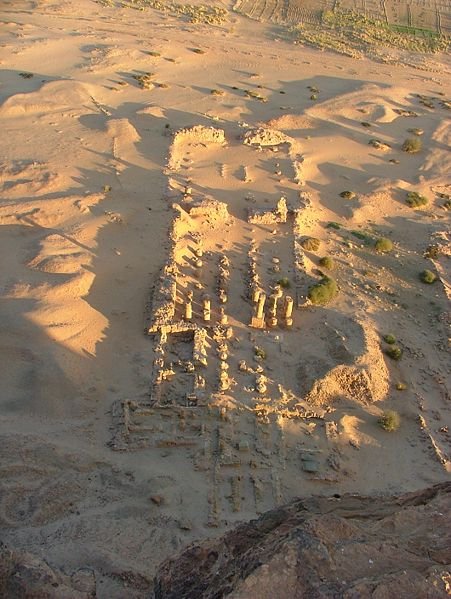
The remains of the Temple of Amun at Jebel Barkal.
Egyptian Goddess Mut – Origin Story, Family, Symbol, & Importance
Who were the prominent Kushite rulers associated with Jebel Barkal?
Kings such as Piye, Taharqa, and Aspelta renovated and expanded the site. Piye’s stele and other artifacts from their reigns highlight their achievements.
What is the role of the pyramids at Jebel Barkal?
The site served as a royal cemetery during the Meroitic Kingdom, with pyramids dating back to the 3rd century BCE. Eight royal burials were uniquely conducted here during the 1st century BCE–1st century CE.
How has Jebel Barkal been studied and preserved?
Modern exploration began with European explorers in the 19th century, followed by significant excavations by George Reisner in 1916. Continued work by teams from Rome and Boston has uncovered temples, inscriptions, and artifacts now displayed in global museums.





