Most Famous Kings of Sparta
The kings of Sparta played pivotal roles in shaping its history, from its early consolidation as a city-state to its eventual decline. Figures like Leonidas I embody Spartan courage, while reformers like Cleomenes III and Nabis sought to adapt Sparta to changing circumstances. Their legacies reflect the unique dual kingship system and the dynamic challenges faced by Sparta across centuries.
In the article below, World History Edu presents a detailed exploration of 10 of the most famous kings of Sparta, their reigns, and their significant accomplishments, highlighting their impact on Spartan history and Greek politics.
Agis I (Reign: c. 930–900 BC) – Founder of the Agiad Dynasty
Agis I is credited as the progenitor of one of Sparta’s two royal lines, the Agiad dynasty, named after him. His lineage traced back to the legendary Heracles.
King Agis I is traditionally associated with early efforts to organize and strengthen Sparta, laying the foundation for its militaristic society.
Agis reportedly led successful campaigns against neighboring territories, solidifying Sparta’s dominance in Laconia.
Though much of his history is rooted in legend, Agis I represents the origins of Sparta’s dual kingship and its link to heroic ancestry.
Eurypon (Reign: c. 900–870 BC) – Founder of the Eurypontid Dynasty
Eurypon established Sparta’s second royal line, the Eurypontid dynasty, named in his honor. Ancient sources credit him with reducing the autocratic tendencies of the monarchy, promoting harmony within Spartan society.
Eurypon’s reign likely saw the development of diplomatic relations with neighboring Greek city-states.
His legacy lies in establishing a royal tradition alongside the Agiads and fostering a system of shared governance.
Lycurgus (Traditional Dates: c. 820–730 BC) – Creator of Spartan Laws
Although Lycurgus may not have been a king in the traditional sense, he is often considered the legendary lawgiver of Sparta, shaping its constitution and societal structure.
Lycurgus established the Agoge, Sparta’s rigorous educational and military training system, which defined its militaristic culture.
He reportedly introduced the use of iron currency to discourage wealth accumulation and corruption.
Also, he emphasized social equality among Spartan citizens, creating the syssitia, or communal dining system.
While his historical existence is debated, Lycurgus’ reforms are central to Sparta’s enduring image as a disciplined and militaristic society.

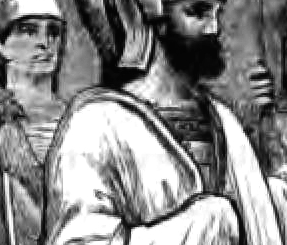
The 1791 painting Lycurgus of Sparta by Jean-Jacques-François Le Barbier depicts Lycurgus relinquishing his kingship to an infant.
Leonidas I (Reign: 489–480 BC) – Hero of Thermopylae
Leonidas I, an Agiad king, is one of the most celebrated figures in Greek history for leading 300 Spartans and their allies at the Battle of Thermopylae during the Persian invasion of Greece in 480 BC.
His sacrifice exemplified Spartan valor and commitment to their code of honor, inspiring later generations.
Leonidas played a crucial role in uniting Greek forces against the Persian Empire under Xerxes I. His legacy as a warrior-king immortalized him as a symbol of selflessness and bravery.

Image: Statue of Leonidas I.
Archidamus II (Reign: c. 469–427 BC)
Archidamus II, a Eurypontid king, is known for his diplomatic approach during the early stages of the Peloponnesian War.
The first phase of the Peloponnesian War (431–421 BC) is named after him. He advocated for caution and preparation before engaging in large-scale conflict with Athens.
Archidamus fortified Sparta’s military and ensured its readiness for prolonged warfare.
His leadership demonstrated the importance of strategy and prudence in warfare.

Image: Archidamus II
Agesilaus II (Reign: 400–360 BC)
Spartan King Agesilaus II, an Agiad, had one of the longest reigns in Spartan history and was a prominent military leader.
He led campaigns in Asia Minor against the Persian Empire, attempting to assert Spartan influence beyond Greece.
Agesilaus sought to stabilize Spartan society amidst internal challenges, including a decline in citizen numbers.
Despite his campaigns against Persia, Agesilaus later allied with the Persians during the Corinthian War to counter Athens and Thebes.
Agesilaus was a dynamic leader whose actions showcased both military ambition and political adaptability.

Image: In 395 BC, Spartan king Agesilaus (left) and Pharnabazus II (right) met, during which Agesilaus consented to withdraw from Hellespontine Phrygia.
Cleomenes I (Reign: c. 520–490 BC)
Cleomenes I, an Agiad king, was instrumental in extending Sparta’s dominance across the Peloponnesus.
He intervened in Athenian affairs, deposing the tyrant Hippias and supporting the establishment of democracy under Cleisthenes.
Cleomenes defeated Argos at the Battle of Sepeia, securing Spartan hegemony in the Peloponnese.
Known for his bold and often controversial strategies, Cleomenes reshaped the geopolitical landscape of Greece.
Hailing from the Agiad dynasty, Cleomenes’ reign marked a period of assertive Spartan diplomacy and military success.
Agis III (Reign: 338–331 BC)
Agis III, a Eurypontid king, opposed Macedonian domination under Alexander the Great and his father Philip II.
Agis led a coalition of Greek city-states against Alexander’s forces. Although he was defeated and killed in battle, his resistance symbolized the enduring spirit of Greek independence.
Despite his loss, Agis III is remembered for challenging the overwhelming power of Macedon.

Nabis (Reign: 207–192 BC) – Last Independent Spartan King:
Nabis is considered the final ruler of an independent Sparta, reigning during its decline in the Hellenistic era. He implemented controversial reforms, redistributing land and wealth to lower classes, earning support among the poor.
Nabis defended Sparta against external threats, including attacks from the Roman Republic and its allies. He strengthened Sparta’s defenses and undertook infrastructure projects to modernize the city.
Though seen as a usurper by some, Nabis’ efforts reflect his determination to preserve Spartan independence in a changing world.

Image: Tetradrachm of Nabis
Cleomenes III (Reign: 235–222 BC)
Cleomenes III introduced sweeping changes to Spartan society, including abolishing debt, redistributing land, and restoring the Agoge.
He reformed the Spartan army, making it more competitive against larger Hellenistic powers. He led Sparta in wars against the Achaean League, achieving notable victories before suffering a major defeat at the Battle of Sellasia in 222 BC.
Despite his efforts, Cleomenes’ defeat marked the decline of Sparta as a major power.

Frequently Asked Questions

What made Sparta’s system of governance unique among Greek city-states?
Sparta was distinct for its dual kingship, where two kings ruled simultaneously. This political structure persisted through the Archaic, Classical, and Hellenistic periods and combined strong monarchical traditions with innovative governance practices.
What were the origins of Sparta’s dual kingship?
Sparta’s dual kingship originated from two royal families, the Agiad and Eurypontid dynasties. These lines were traditionally said to descend from Eurysthenes and Procles, twin descendants of the hero Heracles, who supposedly conquered Sparta two generations after the Trojan War.
The Agiad dynasty was regarded as senior to the Eurypontid dynasty. This gave it greater prestige and influence within Spartan society.

Why were Spartan kings associated with Heracles?
Spartan kings were linked to Heracles to legitimize their rule through divine or heroic ancestry. This connection was part of a broader Greek tradition of associating rulers with mythological heroes.
What were the primary roles and responsibilities of Spartan kings?
- Military Leadership: Kings served as commanders-in-chief of the Spartan army, though later only one king would lead campaigns while the other governed at home.
- Religious Duties: Kings acted as intermediaries between the gods and the state, performing key religious ceremonies.
- Judicial Authority: Kings presided over cases involving inheritance and public affairs.
How did the dual kingship help prevent tyranny?
By dividing power between two kings from different dynasties, Sparta’s dual kingship created a balance of power, reducing the likelihood of one king becoming tyrannical.
What was the purpose of posthumous hero cults for Spartan kings?
After their deaths, Spartan kings were venerated through hero cults, reflecting their divine ancestry and reinforcing their legacy. This practice elevated their status and integrated political and religious life.

Image: A silver tetradrachm featuring the image of Cleomenes III.
Were heirs to the Spartan throne required to undergo the Agoge?
Heirs-apparent were exempt from the Agoge, Sparta’s rigorous military training system. However, they could choose to participate voluntarily, and doing so enhanced their prestige and demonstrated their commitment to Spartan ideals.
What was the legacy of Sparta’s dual kingship?
Sparta’s dual kingship exemplified shared governance and stability. While other Greek city-states transitioned to democracy or oligarchy, Sparta maintained its monarchy, blending it with the Gerousia (council of elders) and ephors (elected officials) to create a mixed constitution.