Most Famous Works By Ancient Greek Tragedian Sophocles
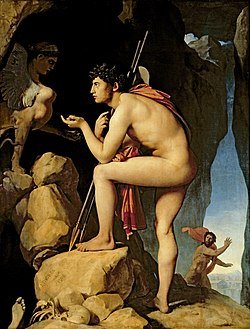
Sophocles, one of the prominent ancient Greek tragedians, produced numerous plays during his lifetime. Of the 120 plays he is believed to have written, only seven have survived in their entirety. His most famous works, often studied and performed today, are: Oedipus Rex, Electra, and Ajax. Image: Oedipus and the Sphinx by French Neoclassical artist Jean-Auguste-Dominique Ingres.
Sophocles was one of the most influential and celebrated playwrights of ancient Greece, and his works have had a profound impact on Western literature and drama. As one of the three great tragedians of Athens, along with Aeschylus and Euripides, Sophocles’ contributions to the genre of tragedy are both numerous and significant. His plays often explored complex moral and philosophical issues, and his characters were richly drawn, reflecting the human condition with depth and nuance.
Sophocles is credited with writing over 120 plays during his lifetime, though only seven complete tragedies have survived. These surviving works are some of the most famous and enduring pieces of ancient Greek literature, studied and performed to this day. In this comprehensive exploration, we will delve into the most famous works by Sophocles, examining their themes, characters, and the lasting legacy they have left on drama and literature.
Oedipus Rex (Oedipus the King)

Oedipus Rex (Oedipus the King) is a tragedy that tells the story of Oedipus, the King of Thebes, who inadvertently fulfills a prophecy that he would kill his father and marry his mother. Image: Dutch actor Louis Bouwmeester as Oedipus in a Dutch production of Oedipus Rex, c. 1896
“Oedipus Rex,” also known as “Oedipus the King,” is perhaps the most famous of all Sophocles’ works and a cornerstone of ancient Greek tragedy. Written around 429 BC, the play is part of Sophocles’ Theban Cycle, which also includes “Antigone” and “Oedipus at Colonus.”
Plot Summary:
The play tells the story of Oedipus, the King of Thebes, who is determined to rid his city of a plague. The oracle reveals that the plague will not end until the murderer of the former king, Laius, is brought to justice. Oedipus vows to find the killer, unaware that he himself is the culprit. As the investigation unfolds, Oedipus discovers that he is the son of Laius and Jocasta, and that he had unwittingly killed his father and married his mother, fulfilling a terrible prophecy. The realization leads to Jocasta’s suicide and Oedipus’ self-inflicted blindness, as he exiles himself from Thebes.
Themes:
“Oedipus Rex” explores themes of fate, free will, and the nature of human suffering. The play raises profound questions about whether humans have control over their destinies or if they are merely pawns of the gods. Oedipus’ tragic flaw, or hamartia, is often seen as his hubris (excessive pride) and his determination to defy the prophecy, which ultimately leads to his downfall.
Legacy:
“Oedipus Rex” is widely regarded as one of the greatest tragedies ever written. It has influenced countless works of literature, philosophy, and psychology, most notably Sigmund Freud’s theory of the Oedipus complex. The play’s exploration of fate and identity continues to resonate with audiences, making it a timeless masterpiece.
Antigone
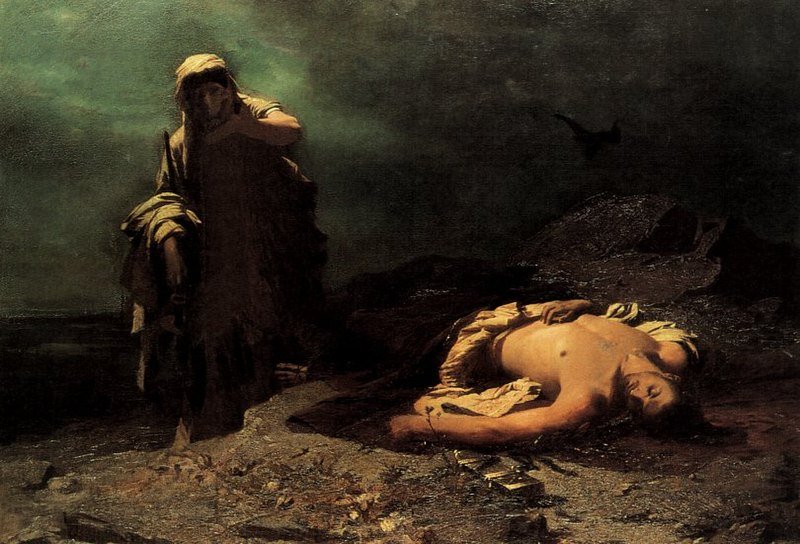
Through his surviving tragedies, Sophocles has provided profound insights into the nature of suffering, the limits of human power, and the enduring quest for meaning in a world governed by both divine and human laws. His work Antigone is a continuation of the Theban saga. The play revolves around the conflict between King Creon and Antigone over the burial of her brother Polynices. Image: Antigone in front of the dead Polynices by Nikiforos Lytras 1865
“Antigone,” written around 441 BC, is another of Sophocles’ most famous tragedies and the first play chronologically in the Theban Cycle, though it was written after “Oedipus Rex.”
Plot Summary:
The play centers on Antigone, the daughter of Oedipus, who defies the edict of King Creon, her uncle, by burying her brother Polynices, who was deemed a traitor. Creon has decreed that Polynices’ body should be left unburied as a punishment, but Antigone believes that divine law and familial duty supersede the laws of the state. She is arrested and condemned to death for her actions. Despite the pleas of Creon’s son, Haemon, who is also Antigone’s fiancé, Creon remains resolute. In the end, Antigone takes her own life, Haemon kills himself in grief, and Creon’s wife, Eurydice, also commits suicide, leaving Creon to face the consequences of his stubbornness and pride.
Themes:
“Antigone” explores themes of civil disobedience, the conflict between individual conscience and state law, and the consequences of hubris. The play questions the limits of power and the moral obligations of individuals in the face of unjust laws. Antigone is often seen as a symbol of resistance against tyranny, while Creon’s downfall illustrates the dangers of inflexible authority.
Legacy:
“Antigone” has been a powerful influence on literature, political thought, and social justice movements. The character of Antigone has been interpreted as a proto-feminist figure, and the play has been adapted and reinterpreted in various cultural contexts to address issues of authority, justice, and human rights.
Oedipus at Colonus
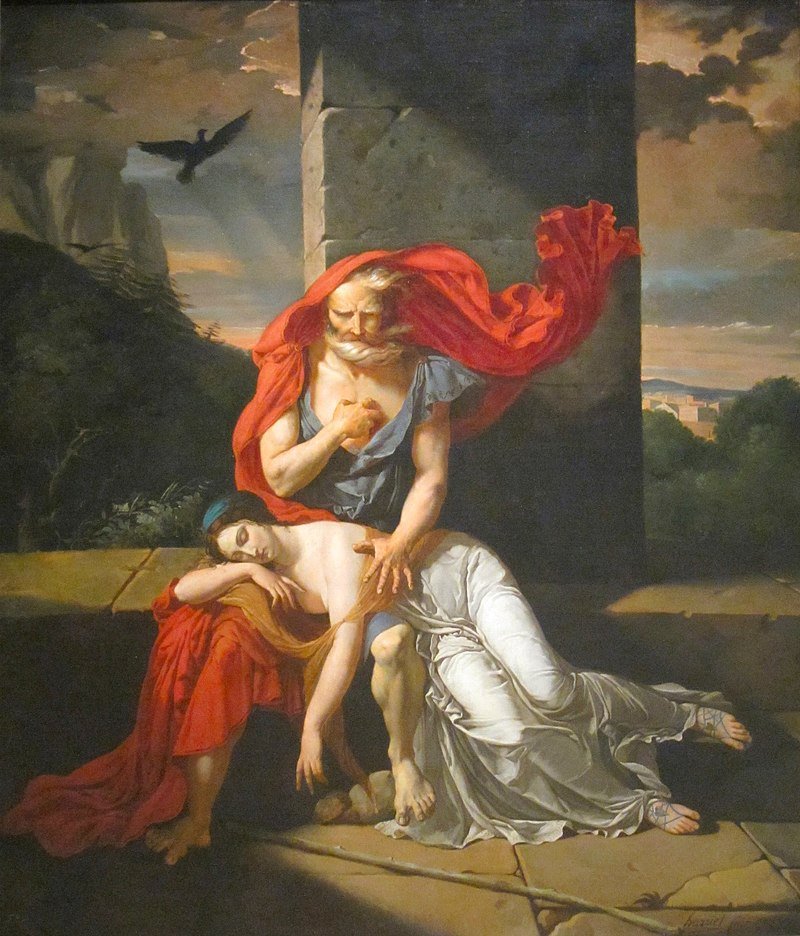
Oedipus at Colonus is a play by Sophocles. It is the last in the Oedipus trilogy and chronicles the end of Oedipus’s life while in exile. Image: Oedipus at Colonus by Fulchran-Jean Harriet
“Oedipus at Colonus,” written shortly before Sophocles’ death in 406 BC, is the final play in the Theban Cycle, though it is set after the events of “Oedipus Rex” and before “Antigone.”
Plot Summary:
The play follows the blind and aged Oedipus as he wanders in exile with his daughter Antigone. They arrive at the village of Colonus, near Athens, where Oedipus seeks a place to die in peace. The local king, Theseus, offers Oedipus sanctuary, and Oedipus reveals that his death will bring a blessing to the land where he is buried. However, Creon and Polynices, now at war with each other, seek to exploit Oedipus’ death for their own gain. Oedipus curses his sons and, with the help of Theseus, finds his final resting place, disappearing mysteriously into the earth.
Themes:
“Oedipus at Colonus” explores themes of redemption, reconciliation, and the concept of a hero’s death. The play presents Oedipus as a tragic hero who, despite his past sins, finds a measure of peace and dignity in his final days. The theme of suffering leading to wisdom is central to the play, as Oedipus gains insight and understanding through his trials.
Legacy:
Though less well-known than “Oedipus Rex” and “Antigone,” “Oedipus at Colonus” is a powerful exploration of the end of life, the search for forgiveness, and the idea of a hero’s journey coming full circle. It has been praised for its lyrical beauty and philosophical depth.
Electra
“Electra,” written around 410 BC, is one of Sophocles’ most famous plays and is based on the well-known myth of the House of Atreus, focusing on the character of Electra and her quest for revenge against her mother, Clytemnestra.
Plot Summary:
The play begins with the return of Orestes, Electra’s brother, who has been living in exile since their mother, Clytemnestra, and her lover, Aegisthus, murdered their father, Agamemnon. Electra has been consumed by grief and anger, longing for revenge. Orestes, with the help of Electra, plots to kill Clytemnestra and Aegisthus. The play culminates in the murder of Clytemnestra by Orestes, with Electra’s complicity, and the completion of their revenge.
Themes:
“Electra” explores themes of revenge, justice, and the consequences of familial betrayal. The play delves into the psychological complexities of its characters, particularly Electra, who is portrayed as a figure consumed by grief and a desire for retribution. The morality of revenge and the cycle of violence are central themes, as the characters grapple with the consequences of their actions.
Legacy:
“Electra” has been praised for its intense emotional power and its exploration of the darker aspects of human nature. The play has influenced numerous adaptations and retellings in various forms of art, including opera, literature, and film. The character of Electra has become an enduring symbol of vengeance and the destructive power of grief.
Ajax

Ajax is a work that centers on the events following the Trojan War hero Ajax’s humiliation and his descent into madness. Image: Exekias’s vase (ca. 540 BC) depicting the suicide of Greek hero Ajax
“Ajax,” one of Sophocles’ earlier plays, written around 444 BC, is a tragedy that focuses on the Greek hero Ajax, one of the greatest warriors of the Trojan War.
Plot Summary:
The play begins after the death of Achilles, when Ajax, the second greatest warrior, is enraged that the armor of Achilles is awarded to Odysseus instead of him. Humiliated and dishonored, Ajax plots to kill the Greek leaders but is driven mad by Athena, who makes him slaughter livestock, believing them to be his enemies. When Ajax realizes what he has done, he is overcome with shame and decides to take his own life. The play concludes with a debate over whether Ajax should be given a proper burial, with Odysseus ultimately arguing in favor of honoring him despite their past enmity.
Themes:
“Ajax” explores themes of honor, pride, and the tragic consequences of a hero’s downfall. The play examines the psychological turmoil of a warrior who feels betrayed and dishonored, as well as the tension between personal glory and the needs of the community. The theme of suicide and its implications are also central to the play.
Legacy:
“Ajax” is notable for its portrayal of a hero’s psychological disintegration and its exploration of the consequences of excessive pride, or hubris. The play has been studied for its insights into the nature of heroism and the Greek warrior ethos. It has also been interpreted as a commentary on the effects of war on the human psyche.
The Women of Trachis (Trachiniae)
“The Women of Trachis,” also known as “Trachiniae,” is one of Sophocles’ lesser-known plays, written around 450-425 BCE. The play is centered on the tragic fate of Heracles (Hercules) and his wife, Deianira.
Plot Summary:
The play begins with Deianira, the wife of Heracles, anxiously awaiting her husband’s return from his latest adventure. Fearing that Heracles has fallen in love with another woman, Iole, Deianira sends him a robe dipped in what she believes is a love potion but is actually the poisoned blood of the centaur Nessus, who had tricked her. When Heracles wears the robe, it causes him unbearable pain, leading to his eventual death. The play concludes with Heracles instructing his son Hyllus to marry Iole and Deianira’s suicide out of guilt.
Themes:
“The Women of Trachis” explores themes of love, jealousy, and the unintended consequences of actions. The play highlights the vulnerability of human relationships and the tragic results of deception and misunderstanding. The suffering of Heracles, a hero of immense strength, underscores the idea that even the greatest of heroes are not immune to fate and suffering.
Legacy:
Though not as famous as Sophocles’ other works, “The Women of Trachis” is valued for its exploration of the tragic dimensions of love and the complexities of human emotions. The play offers a poignant commentary on the limits of human power and the inevitability of suffering, themes that resonate with the broader tragic tradition.
Philoctetes

The themes of fate, justice, and the consequences of human actions that run through his works continue to resonate with audiences today. One such example is Philoctetes. The play explores the story of Philoctetes, abandoned on an island by the Greeks during the Trojan War because of a festering wound, and his eventual return to the war. Image: Philoctetes by French historical painter Jean-Germain Drouais
“Philoctetes,” written in 409 BC, is one of Sophocles’ later plays and is notable for its exploration of moral and ethical dilemmas.
Plot Summary:
The play is set during the Trojan War and follows the story of Philoctetes, a Greek warrior who has been abandoned on the island of Lemnos due to a festering wound. The Greeks, having learned from a prophecy that they cannot win the war without Philoctetes and his bow (a gift from Heracles), send Odysseus and Neoptolemus, the son of Achilles, to retrieve him. The play focuses on the conflict between the cunning Odysseus and the honorable Neoptolemus, who eventually decides to help Philoctetes rather than deceive him. In the end, Heracles appears as a deus ex machina, convincing Philoctetes to go to Troy, where he will be healed and achieve glory.
Themes:
“Philoctetes” explores themes of pain, betrayal, and the struggle between personal ethics and the demands of duty. The play raises questions about the nature of heroism and the moral choices that individuals must make in difficult situations. The tension between deceit and honesty is central to the drama, as Neoptolemus grapples with his conscience.
Legacy:
“Philoctetes” has been praised for its psychological depth and its exploration of moral dilemmas. The play’s emphasis on individual choice and integrity has made it a powerful and enduring work, influencing later literature and thought. It has been interpreted as a commentary on the nature of leadership and the ethics of war.

Oedipus’ legacy as one of the greatest playwrights of all time is secure, and his works remain a vital part of the literary and cultural heritage of the Western world.





