Orhan Ghazi: Second Sultan of the Ottoman Empire
Orhan Ghazi was the second sultan of the Ottoman Empire, ruling from 1323/4 until his death in 1362. He was born in Söğüt as the son of Osman I, the founder of the Ottoman dynasty. His reign was marked by significant territorial expansion, military innovations, and strategic alliances, particularly with the Byzantines. Orhan played a crucial role in shaping the early Ottoman state, consolidating its power in northwestern Anatolia and establishing a foothold in Europe.

Venetian painter Paolo Veronese’s depiction of Orhan Ghazi.
READ MORE: 10 Greatest Ottoman Sultans and their Accomplishments
Early Reign and Consolidation of Power
Following the death of Osman I in either 1323 or 1324, Orhan ascended the throne. According to Ottoman tradition, Orhan proposed sharing power with his brother, Alaeddin, who declined, affirming that their father had chosen Orhan as sole ruler. Alaeddin instead accepted revenues from a single village near Bursa.
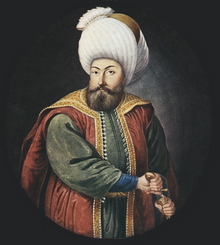
The name of the Ottoman Empire came from the nomadic Turkmen chief called Osman I (known in Arabic as ʿUthmān). Sultan Osman I is regarded as the founder of the Ottoman dynasty (House of Osman) in the late part of the 13th century. Osman was also the father of Orhan Ghazi. Image: 19th-century depiction of Osman, by Ottoman court Greek painter Konstantin Kapıdağlı
Orhan Ghazi’s reign was a critical period in Ottoman history, setting the foundation for its transformation from a small beylik into a formidable empire.
One of Orhan’s early achievements was the expansion of Ottoman control over northwestern Anatolia. He successfully conquered regions previously under Byzantine rule, including Bursa, Mudanya, and Nicomedia. The decisive Battle of Pelekanon in 1329 against Emperor Andronikos III Palaiologos demonstrated the military strength of the Ottomans and marked a turning point in their expansion efforts.

Military Reforms and the Establishment of the Janissaries
One of the most significant aspects of Orhan’s rule was his military reorganization. Under the guidance of his brother Alaeddin and the influential vizier Kara Khalil Çandarlı, Orhan established a standing army. Prior to this, Ottoman forces primarily consisted of vassal warriors who would return to their homes after campaigns. To ensure continuous military preparedness, he formed the Yaya (infantry) and Piyade (light cavalry), laying the foundation for a professional military structure.
Orhan Ghazi’s military conquests, administrative reforms, and strategic alliances shaped the early Ottoman state, ensuring its survival and expansion.
A critical development was the creation of the Janissary corps, a formidable military institution that later became a key pillar of the Ottoman army. The Janissaries were primarily recruited from Christian children through the Devshirme system, where boys were converted to Islam and trained in military and administrative roles. This innovation provided the Ottomans with a highly disciplined and loyal force that contributed to their long-term military dominance.
Territorial Expansion and Strategic Alliances
During Orhan’s reign, the Ottomans significantly expanded their territory through both military conquests and political alliances. His most notable territorial acquisitions included:
- Capture of Bursa (1326): Bursa was a key Byzantine stronghold and became the first major Ottoman capital. The conquest of Bursa solidified Ottoman power in northwestern Anatolia.
- Siege of Nicaea (1331): The Ottomans took the important city of Nicaea (modern İznik) after a prolonged siege, further weakening Byzantine influence.
- Conquest of Nicomedia (1337): Nicomedia (modern İzmit) fell into Ottoman hands, securing control over vital trade routes and ports.
- Annexation of Karesi Principality (1345): Unlike previous conquests against Byzantines, Orhan expanded Ottoman rule over fellow Muslim Turks by annexing the Karesi Beylik. This acquisition provided the Ottomans with naval access and allowed them to launch campaigns into Europe.
Apart from military expansion, Orhan leveraged strategic marriages to secure alliances. His marriage to Theodora Kantakouzene, the daughter of Byzantine Emperor John VI Kantakouzenos, facilitated an alliance that benefited both empires. This relationship allowed Orhan to intervene in Byzantine civil wars, furthering Ottoman interests.
READ MORE: 10 Most Famous Byzantine Emperors and Empresses
Establishment of a European Foothold
Orhan’s greatest strategic achievement was the Ottoman incursion into Europe. The Byzantine civil wars provided an opportunity for Ottoman forces to be employed as mercenaries. In return for their support, Orhan secured Çimpe Castle (1352) on the Gallipoli Peninsula. This was a turning point, marking the first permanent Ottoman presence in Thrace, setting the stage for future conquests in the Balkans.
The establishment of a standing army, the introduction of the Janissary corps, and the consolidation of European holdings positioned the Ottomans for future dominance.
A devastating earthquake in Gallipoli (1354) prompted Orhan’s son, Süleyman Pasha, to occupy the region. The Byzantine inability to reclaim the land meant that the Ottomans had successfully established a stronghold in Europe, allowing them to gradually expand westward.
Political and Economic Developments
Beyond military conquests, Orhan focused on strengthening governance and economic infrastructure. His reign saw the development of Bursa as an administrative and commercial hub. Mosques, madrasas (Islamic schools), and public buildings were constructed, fostering intellectual and cultural growth.
Key administrative reforms included:
- The introduction of standardized coinage independent of Seljuk authority.
- The establishment of legal codes and regulations governing various subjects, including trade and taxation.
- Strengthening internal security by employing a standing police force.
These reforms not only stabilized the empire but also enhanced its attractiveness to migrants, traders, and scholars.
Relations with the Byzantine Empire and Decline of Byzantium
During Orhan’s reign, the Byzantine Empire continued its decline. The empire, already weakened by internal strife and conflicts with Italian maritime states, suffered further due to civil wars between John V Palaiologos and John VI Kantakouzenos. Orhan frequently intervened, shifting his support based on Ottoman interests.
The Venetian-Genoese conflicts also played into Ottoman hands. Orhan allied with Genoa against Venice, further consolidating Ottoman naval strength and trade routes. The increasing weakness of Byzantium paved the way for the eventual Ottoman conquest of Constantinople in the following century.
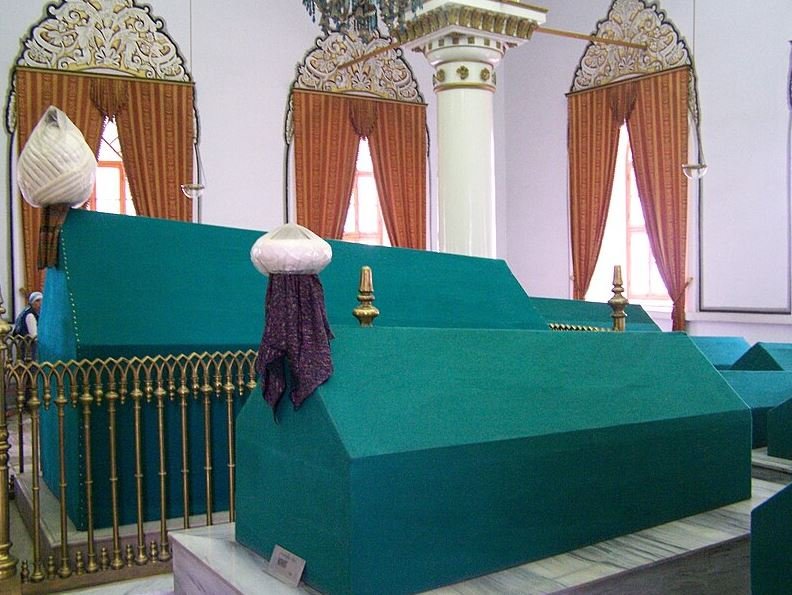
The interior of Orhan Gazi’s türbe at Bursa in Turkey.
Later Years and Legacy
In his later years, Orhan withdrew from active military campaigns, entrusting governance to his son Murad I. A significant personal crisis occurred when his younger son, Halil Bey, was kidnapped by Genoese pirates in 1356. Byzantine Emperor John V ultimately secured Halil’s release, but the incident highlighted the challenges of Ottoman expansion into maritime domains.
Orhan Ghazi’s legacy lived on through his son Murad I, who built upon Orhan’s achievements to further the Ottoman expansion into the Balkans.
Orhan suffered a significant personal loss in 1357 when his eldest and most capable son, Süleyman Pasha, died from injuries sustained in a horse-riding accident. This event reportedly had a profound emotional impact on Orhan. Shortly afterward, in 1362, Orhan himself passed away in Bursa, where he was buried in the Gümüşlü Kumbet türbe.
Family and Succession

Murad I, detail of a miniature painting, 16th century; in the Topkapı Palace Museum, Istanbul, Turkiye.
Orhan had multiple wives and children, including:
- Nilüfer Hatun: The mother of Murad I and of Byzantine descent.
- Theodora Kantakouzene: Daughter of John VI Kantakouzenos and mother of Halil Bey.
- Efendize Hatun: Mother of Süleyman Pasha, Orhan’s favored son and military commander.
Upon Orhan’s death, his son Murad I ascended the throne, continuing Ottoman expansion into Europe and institutionalizing many of Orhan’s reforms.
Frequently Asked Questions

A 16th-century miniature work depicting Ottoman sultan Orhan Ghazi
What were Orhan Ghazi’s key military achievements?
He captured key Byzantine cities, including Bursa (1326), Nicaea (1331), and Nicomedia (1337). He also annexed the Karesi principality (1345) and gained a foothold in Europe by occupying Gallipoli (1354).
How did Orhan Ghazi reform the Ottoman military?
He established a standing army, including the Yaya (infantry) and Piyade (light cavalry). He also initiated the Janissary corps, composed of Christian children converted to Islam and trained as elite soldiers.
What was the significance of Orhan’s marriage to Theodora Kantakouzene?
The marriage to the daughter of Byzantine Emperor John VI Kantakouzenos secured an alliance that allowed the Ottomans to intervene in Byzantine civil wars, expanding their influence in Thrace.
Under Orhan, the Ottomans transitioned from a minor Turkish principality to a major power that would soon challenge the established European and Islamic empires.
How did Orhan Ghazi establish Ottoman presence in Europe?
During the Byzantine civil war, he secured Çimpe Castle (1352), providing the Ottomans with their first permanent stronghold in Europe, which later facilitated further conquests in the Balkans.
What were Orhan Ghazi’s contributions to governance and administration?
He introduced legal codes, standardized coinage, built mosques and madrasas, and strengthened internal security. Bursa became an administrative and economic center under his rule.
Ottoman Sultan Orhan’s contributions to governance, military strategy, and state-building marked the beginning of the Ottoman Empire’s rise as a global power.
What role did Orhan Ghazi play in the decline of the Byzantine Empire?
By supporting different factions in Byzantine civil wars, he weakened the empire further. The occupation of Gallipoli and continuous Ottoman pressure significantly reduced Byzantine control in the region.
Who succeeded Orhan Ghazi, and what was his legacy?
His son, Murad I, succeeded him, continuing territorial expansion into Europe. Orhan’s military and administrative reforms positioned the Ottoman state for future growth and long-term dominance.





