The Admonitions of Ipuwer
The Admonitions of Ipuwer is an ancient Egyptian literary text that has intrigued scholars for centuries. This text, preserved on a single papyrus housed in the Dutch National Museum of Antiquities...

The Admonitions of Ipuwer is an ancient Egyptian literary text that has intrigued scholars for centuries. This text, preserved on a single papyrus housed in the Dutch National Museum of Antiquities...

The Duat, also referred to as Amenthes in Greek or Te in Coptic, is the underworld in ancient Egyptian mythology. Represented by the hieroglyph (a star within a circle), the...

Horemheb, whose name means “Horus is in Jubilation,” was the final pharaoh of Egypt’s 18th Dynasty, ruling from 1319 BCE to 1292 BCE. Unlike many of his predecessors, he was...
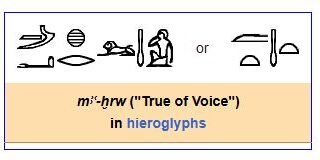
“Maa Kheru” (Ancient Egyptian: mꜣꜥ ḫrw) is a profound phrase in ancient Egyptian culture, embodying the concepts of righteousness, justification, and rightful acclaim. Translated as “true of voice,” “justified,” or...

The Moirai, often known as the Fates in Greek mythology, are among the most intriguing and mysterious deities in ancient Greek religion. These three goddesses—Clotho, Lachesis, and Atropos—were believed to...

The Field of Reeds, also known as Aaru or Sekhet-Aaru, is one of the most important aspects of ancient Egyptian religion, representing their vision of paradise and the afterlife. Aaru...
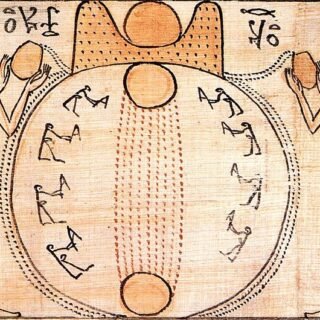
The ancient Egyptian mythology is rich with stories of gods, goddesses, and cosmic events that explain the origin of the world. Unlike many other mythologies that present a single creation story, ancient...

The judgment of the dead in ancient Egyptian mythology is an intricate process that embodies the culture’s moral and ethical framework, emphasizing the importance of truth, justice, and righteousness. This...

In ancient Egyptian religion and mythology, the underworld, commonly referred to as the Duat or Amenti, was a complex realm of the dead. It was intricately described with regions of...

The Hall of Truth (often referred to as the “Hall of Maat” or “Hall of Two Truths”) is a central concept in Ancient Egyptian afterlife beliefs and mythology. It’s the...

With the head of a crocodile, the torso of a lioness or leopard, and the lower body and hind legs of a hippopotamus, Ammit was indeed one of the fiercest...

Apep was an ancient Egyptian deity of unbridled anarchy and sheer evil. A staunch opponent of Ma’at (order), Apep often appeared in the form of a gargantuan snake (or a...

The goddess Ma’at was an ancient Egyptian omega-level deity responsible for keeping the universe as we know balanced. She epitomized concepts of divine order, morality, justice and truth. It is...





