Pharaoh Hotepsekhemwy of the 2nd Dynasty of Egypt
Pharaoh Hotepsekhemwy was the founder of Egypt’s Second Dynasty, a period marked by transition and consolidation following the challenges of the First Dynasty‘s decline.
His reign represents a crucial point in early Egyptian history, as he worked to stabilize and unify the kingdom after apparent political turmoil.
Hotepsekhemwy’s name, meaning “the two powers are reconciled” or “pleasing in powers,” reflects his role as a reconciliatory figure, suggesting efforts to restore harmony between Upper and Lower Egypt or the deities Horus and Seth. These themes highlight the challenges he faced in consolidating his authority and ensuring the continuity of Egyptian civilization.
Hotepsekhemwy’s rule followed the First Dynasty’s conclusion, during which Egypt had experienced internal strife and instability. His ability to restore order is evidenced by the inscriptions and artifacts bearing his name found at Saqqara, Badari, Giza, and Abydos. These items include clay seals, stone vessels, and bone cylinders, many of which also mention his successor, Raneb, underscoring the continuity of the royal line.
The Conflict between Horus and Seth over the Throne of Ancient Egypt
Family of Hotepsekhemwy
Little is known about Hotepsekhemwy’s family, reflecting the limited records of this early period. His wife’s identity remains a mystery, as no inscriptions or artifacts have been discovered that explicitly mention her. However, a figure named Perneb, described as a “son of the king” and “priest of Sopdu,” may have been his child.

Raneb (also known as Nebra) was one of the First Dynastic kings to inject real divinity into the royal office. Image: The cartouche name of Pharaoh Raneb in the Abydos King List
The evidence linking Perneb to Hotepsekhemwy is uncertain since the tomb where Perneb’s name appears is also associated with Raneb (also known as Nebra), Hotepsekhemwy’s successor. This ambiguity makes it challenging to confirm familial relationships or establish a clear lineage.
The scant familial details highlight the broader difficulties of interpreting early dynastic history, where records are sparse, and archaeological evidence is often fragmented.

Image: Serekh of Hotepsekhemwy on an ancient bone cylinder.
Reign of Hotepsekhemwy
Hotepsekhemwy’s reign is believed to have lasted fewer than 30 years, as no evidence of a Sed festival—a ceremony marking a ruler’s 30th anniversary—has been discovered. Ancient Egyptian historian Manetho referred to him as “Boëthôs” and noted a natural disaster, specifically a chasm opening near Bubastis, during his reign. While Manetho’s accounts were written over two millennia after Hotepsekhemwy’s rule, the region’s seismic activity lends some credibility to this report.
Scholars generally estimate Hotepsekhemwy’s reign lasted 25 to 29 years, though precise details remain elusive, reflecting the challenges of interpreting early Egyptian historical records.
The political context of his reign suggests a period of consolidation after the chaos of the First Dynasty. The plundering of King Qa’a‘s tomb, likely during the dynastic transition, underscores the instability he inherited. Scholars believe Hotepsekhemwy’s conciliatory name and actions indicate efforts to restore order and legitimacy to the throne.
His reign may also have involved suppressing rival claimants to the throne, such as the ephemeral kings Horus Bird and Sneferka, whose struggles for power are thought to have contributed to the First Dynasty’s collapse.
Accomplishments of Hotepsekhemwy

Pharaoh Hotepsekhemwy restored order to Egypt’s royal necropolis, repairing King Qa’a’s tomb, which was plundered during the transition from the First to Second Dynasty. Image: Bedjau, cartouche name of Hotepsekhemwy in the Abydos King List (cartouche no. 9)
Hotepsekhemwy undertook significant construction projects that symbolized his authority and religious devotion. Among these was the establishment of a new royal residence called “Horus the shining star,” showcasing his connection to the divine protector of kingship. He also constructed a temple dedicated to the deity Netjer-Achty in Buto and founded the “Chapel of the White Crown,” a structure symbolizing Upper Egypt’s sovereignty. These projects not only reinforced his political power but also reflected his role as a unifier of the two lands.
A notable development during Hotepsekhemwy’s reign was the tradition of recording both the Horus name and Nebty name in the same manner. This practice suggests a philosophical shift in the perception of kingship, emphasizing the divine and symbolic meanings of these titles. The adoption of the Horus name upon ascending the throne may indicate a deliberate effort to align with traditional religious and political values while promoting unity.
Hotepsekhemwy is credited with restoring order to Egypt’s royal necropolis. Evidence of his restoration efforts includes the repair of King Qa’a’s tomb, which had been plundered during the transition from the First to the Second Dynasty. These actions not only honored his predecessors but also legitimized his rule by demonstrating respect for Egypt’s royal heritage.
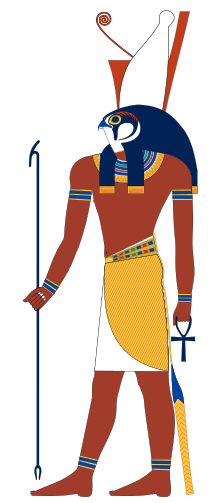
Egyptian god Horus depicted as a man with a falcon head, adorned with the double crown of Egypt, or pschent, representing the pharaoh’s rule over both Lower and Upper Egypt.
Burial of Hotepsekhemwy
The location of Hotepsekhemwy’s tomb remains uncertain, though scholars widely associate it with Gallery Tomb A at Saqqara’s Unas necropolis. This massive underground structure contains numerous seal impressions bearing his name, supporting the theory that it served as his final resting place. However, some artifacts from the tomb also bear the name of his successor, Raneb, suggesting the possibility of a shared burial site.
READ MORE: Life and Reign of Fifth Dynasty Pharaoh Unas
The ambiguity surrounding his tomb reflects the broader complexities of early Egyptian archaeology, where overlapping evidence can lead to multiple interpretations. Regardless, the grandeur of Gallery Tomb A highlights the importance of Hotepsekhemwy’s reign and the reverence in which he was held.

Legacy of Hotepsekhemwy
Hotepsekhemwy’s legacy lies in his role as a stabilizing force during a turbulent period in Egypt’s history. His efforts to unify the kingdom, restore royal traditions, and establish architectural and religious innovations set the stage for the prosperity of the Second Dynasty. By reconciling the “two powers” symbolized in his name, he demonstrated the enduring strength of centralized authority and divine kingship.
Despite the limited records of his life and reign, Hotepsekhemwy’s accomplishments continue to provide valuable insights into the challenges and achievements of early Egyptian rulers. His ability to navigate political strife and implement lasting reforms highlights his significance as a foundational figure in the history of ancient Egypt.
Frequently Asked Questions about Pharaoh Hotepsekhemwy
What artifacts bear his name, and where have they been found?
His name appears on clay seals, stone vessels, and bone cylinders found at Giza, Badari, Saqqara, and Abydos.
What does the name “Hotepsekhemwy” mean, and what does it signify?
It means “the two powers are reconciled” or “pleasing in powers,” symbolizing political harmony, possibly between Upper and Lower Egypt or the deities Horus and Seth.
What is the significance of his Horus name?
His Horus name marked the beginning of a tradition of pairing the Horus and Nebty names in the same manner, suggesting a philosophical or symbolic intent.
What do we know about his family?
His wife’s name is unknown, and Perneb, possibly his son, is ambiguously linked to both Hotepsekhemwy and his successor Raneb.

Image: Pharaoh Hotepsekhemwy’s serekh on a stove vase.
How is Hotepsekhemwy referenced in ancient records?
He is identified with names like Bedjau, Bedjatau, and Netjer-Bau in king lists, though these may be transcription errors.
What was the political context of his reign?
He ruled after a turbulent period marked by the plundering of King Qa’a’s tomb, restoring order and stabilizing the dynasty.
What construction projects are attributed to him?
He built a new royal residence, “Horus the shining star,” a temple for Netjer-Achty in Buto, and the “Chapel of the White Crown.”
How long did he reign, and is there evidence of a Sed festival?
His reign likely lasted fewer than 30 years, as no evidence of a Sed festival, typically held after 30 years, has been found.
Where is Hotepsekhemwy’s burial site believed to be?
His burial site is uncertain, but many scholars propose Gallery Tomb A at Saqqara’s Unas necropolis, possibly shared with Raneb.





