Ancient Egyptian Pharaoh Raneb
Raneb, also known as Nebra, is an early Egyptian pharaoh whose Horus name signifies his association with the celestial and divine roles of kingship. As the second ruler of Egypt’s 2nd Dynasty, Raneb’s reign is shrouded in uncertainty due to limited archaeological evidence and discrepancies in historical records. His contributions to early dynastic Egypt include religious developments, administrative reforms, and cultural symbolism that laid the foundation for subsequent rulers.

Inscriptions from Raneb’s time mention events such as the “Erecting of the pillars of Horus,” indicating administrative and ceremonial activities. Image: The cartouche name of Raneb in the Abydos King List
Reign of Pharaoh Raneb
The exact length of Raneb’s reign remains debated among Egyptologists due to damage to critical historical sources like the Turin Canon. While Manetho, a historian from the Ptolemaic period, suggested a 39-year reign, scholars argue this figure might result from misinterpretation or exaggeration. Modern Egyptologists estimate a significantly shorter reign, ranging between 10 and 14 years, based on available evidence and comparisons with his predecessor, Hotepsekhemwy.

Serekh of Pharaoh Hotepsekhemwy on an ancient bone cylinder.
Attestations
Artifacts bearing Raneb’s name have been found primarily on stone vessels made of schist, alabaster, and marble. These inscriptions, discovered at sites like Abydos, Giza, and Saqqara, often depict cultic structures, deities such as Bastet, Neith, and Seth, and references to religious festivals. Notably, Raneb’s name frequently appears alongside those of his predecessor, Hotepsekhemwy, or his successor, Nynetjer, suggesting continuity or shared religious practices.
Raneb (also known as Nebra) was among the earliest dynastic kings to introduce the concept of divine authority into the royal office.
Clay seal impressions found beneath the causeway of the Pyramid of Unas and within a gallery tomb at Saqqara also bear Raneb’s name. Interestingly, these impressions are often associated with Hotepsekhemwy, leading to debates about the tomb’s ownership. Some scholars propose it belonged to Hotepsekhemwy, while others suggest it could have been constructed for Raneb.
Did you know…?
In 2012, archaeologists Pierre Tallet and Damien Leisnay uncovered three rock inscriptions bearing Raneb’s Horus name in the southern Sinai Peninsula. Found in wadis historically associated with mining expeditions, these inscriptions align with trade and resource extraction routes established during Egypt’s early dynasties.
READ MORE: Life and Reign of Fifth Dynasty Pharaoh Unas
Name and Religious Significance
Raneb’s serekh name, written with the Sun symbol, presents challenges in translation and interpretation. The name is often rendered as “Ra is my lord” (Raneb) or “Lord of the sun (of Horus)” (Nebra). The latter translation aligns with the view that Raneb’s reign marked early conceptualizations of solar worship, though the Sun had not yet become an independent deity.
During Raneb’s time, Egyptian religious practices centered on maintaining the duality of Horus and Seth. The Sun was perceived as a celestial body under their control, and explicit solar worship emerged only in later dynasties, starting with King Djoser and gaining prominence under King Radjedef. Scholars speculate that Raneb’s use of the Sun hieroglyph signifies a precursor to the solar theology that would dominate Egypt in subsequent periods.
Family and Succession
Raneb’s familial relationships are largely unknown. A potential son, Perneb, is mentioned in seal impressions from the Saqqara gallery tomb. However, uncertainty persists regarding Perneb’s lineage, as the tomb is associated with both Raneb and Hotepsekhemwy. The lack of concrete evidence complicates efforts to trace Raneb’s descendants or immediate family.
READ MORE: 10 Major Events in Ancient Egyptian History
Identity and Historical Interpretations
Raneb is often identified with Kakau, a cartouche name recorded in Ramesside-era king lists. Manetho associated Kakau with the introduction of animal deities like Apis, the Mendes goat, and Menevus. However, modern scholars question this association, as evidence suggests these cults predated Raneb’s reign.
Artifacts from Raneb’s reign, such as stone bowls and seal impressions, reflect a society deeply invested in religious rituals and the veneration of deities.
A theory proposed by Egyptologist Jochem Kahl links Raneb with the enigmatic figure Weneg-Nebti, based on a fragmentary vessel inscription. This inscription, found in King Peribsen’s tomb, appears to associate the weneg-flower with Raneb. The interpretation remains debated due to the inscription’s damaged state.
Some scholars, including Jürgen von Beckerath, suggest Raneb might be the same individual as Nubnefer. However, this identification is contentious, as it hinges on the naming conventions of the 2nd Dynasty, where rulers often used their Horus names interchangeably with their birth names.
Tomb
The exact location of Raneb’s burial remains unknown. A gallery tomb beneath the causeway of the Pyramid of Unas at Saqqara is often associated with Raneb due to the abundance of artifacts bearing his name found there. However, the tomb’s connection to Hotepsekhemwy complicates definitive attribution.
Frequently Asked Questions about Pharaoh Raneb
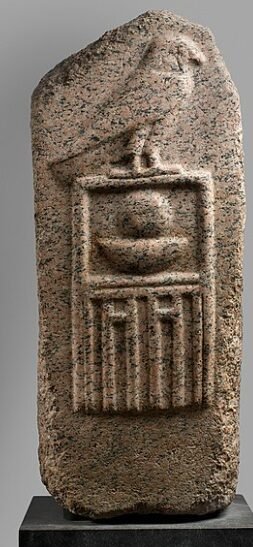
Under Raneb’s reign, significant religious developments occurred, including the earliest known depiction of the goddess Bastet. His use of the Sun hieroglyph hints at nascent solar symbolism, foreshadowing later dynasties’ emphasis on solar theology. Image: Tomb stela of Raneb, Metropolitan Museum of Art, New York
What artifacts attest to Raneb’s existence?
Artifacts include stone vessels and seal impressions found in Abydos, Giza, Saqqara, and the Sinai Peninsula, often bearing his name alongside his predecessor Hotepsekhemwy or successor Nynetjer.
Why is Raneb’s name translation debated?
The translation “Ra is my lord” (Raneb) suggests early solar worship, but Egyptologists propose “Lord of the sun (of Horus)” (Nebra), reflecting that the Sun was under Horus or Seth’s control at the time.
The Conflict between Horus and Seth over the Throne of Ancient Egypt
What is the debate about Raneb’s tomb?
His tomb’s location is unclear; many scholars believe it is gallery tomb B near the Pyramid of Unas in Saqqara, where most artifacts bearing his name were found.
How long did Pharaoh Raneb reign?
Estimates vary widely, from 10 to 14 years, contrasting with Manetho’s claim of 39 years, likely an exaggeration.
What evidence links Raneb to religious changes?
Raneb’s name features early solar symbolism, possibly reflecting an evolving view of the Sun’s role, though Ra’s worship became prominent only in later dynasties.
Who might have been Raneb’s family?
Raneb’s wife is unknown, but Perneb, a “son of the king” and “priest of Sopdu,” might have been his son, though this is debated due to unclear tomb ownership.
What other identities are attributed to Pharaoh Raneb?
Some scholars equate Raneb with Kakau or the mysterious kings Weneg-Nebti and Nubnefer, though interpretations remain contested due to damaged and ambiguous records.





