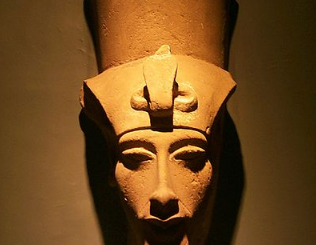
Pharaoh Merenre Nemtyemsaf I
by World History Edu · January 27, 2025
Merenre Nemtyemsaf I, meaning “Beloved of Ra, Nemty is his protection,” was the fourth pharaoh of Egypt’s Sixth Dynasty, ruling circa 2279 BCE during the Old Kingdom‘s waning years. As the son of Pepi I and Queen Ankhesenpepi I, his reign was notable for administrative reforms, trade expeditions, and an enduring influence on Egyptian governance.
Parentage and Siblings
Merenre was born to Pepi I and Ankhesenpepi I, a noblewoman whose titles underline her significance, such as “Mother of the King of Upper and Lower Egypt.” Ankhesenpepi was related to Abydos‘ elite, a region that played a significant political role during this period. Merenre’s full sister, Princess Neith, was a prominent figure, though her exact relationship with Merenre as a possible consort remains debated.

The cartouche of Merenre as recorded on the Abydos King List.
Consorts and Descendants
Merenre married Ankhesenpepi II, his aunt and former wife of Pepi I. This union potentially secured political alliances. Their child, Pepi II, succeeded Merenre, though some historians question whether Pepi II was his son or half-brother.
Some evidence suggests a co-regency between Merenre and Pepi I to secure dynastic stability, but this remains debated among Egyptologists.
Administrative Reforms
Under Merenre, significant changes reshaped Egypt’s administration.
One notable point worth mentioning is that power shifted to provincial leaders as local governors gained control over tax collection and resource management.
For the first time, viziers and nomarchs began building lavish tombs in their local regions instead of near Memphis, reflecting growing regional autonomy.
Furthermore, Merenre promoted officials like Weni and Harkhuf, who oversaw military, trade, and quarrying operations, further integrating provinces into the state framework.
Foreign Policy and Trade
Merenre strengthened ties with Nubia, initiating trade expeditions that brought incense, ivory, and exotic goods to Egypt. He also commissioned the construction of a canal near the First Cataract to facilitate navigation and trade.
Egypt’s interaction with the Levant continued under Merenre, focusing on obtaining luxury items like lapis lazuli, tin, and cedar wood. Artifacts from his reign suggest robust commercial networks extending into Syria and Palestine.
Military and Diplomatic Activities
Evidence of diplomacy and conflict management in Nubia indicates Merenre’s efforts to stabilize Egypt’s southern frontier. He received the submission of Nubian chiefs, as depicted in rock reliefs, and employed local leaders like Harkhuf to oversee resource-gathering missions.

A depiction of a relief from Aswan illustrating Merenre accepting the submission of chieftains from Lower Nubia.
Pyramid Complex
Merenre’s pyramid, “Khanefermerenre” (“The Appearance of the Perfection of Merenre”), was built in South Saqqara. It featured:
- Inscribed Pyramid Texts, highlighting the king’s divine ascension.
- A basalt sarcophagus, still housing a mummy when first excavated, though its identification remains uncertain.
Though partially completed at his death, the pyramid stands as a testament to Old Kingdom architectural achievements. Reliefs in the mortuary temple depict deities welcoming Merenre into the afterlife.
Legacy and Cult
Merenre’s cult persisted through the Old Kingdom, with priests and officials continuing rituals at his pyramid complex. Provincial inscriptions from later dynasties suggest his memory endured in regions like Elkab and Abydos.
During the New Kingdom, Merenre’s name appeared on the Karnak King List, underscoring his enduring historical significance.
Frequently Asked Questions

Remains of the pyramid of Merenre.
What is Merenre Nemtyemsaf’s full name and its meaning?
Merenre Nemtyemsaf’s full name means “Beloved of Ra, Nemty is his protection.”
When did Merenre rule Egypt, and what dynasty was he part of?
Merenre ruled for about 5 years around 2279 BC during the Sixth Dynasty of the Old Kingdom.
Who were Merenre’s parents, and who succeeded him?
His parents were Pepi I Meryre and Queen Ankhesenpepi I. He was succeeded by Pepi II Neferkare, likely his son or possibly his brother.
What were the key administrative reforms during Merenre’s reign?
He decentralized the government, increasing the number of provincial administrators while reducing the central administration’s size, leading to greater local autonomy and economic power for provincial officials.
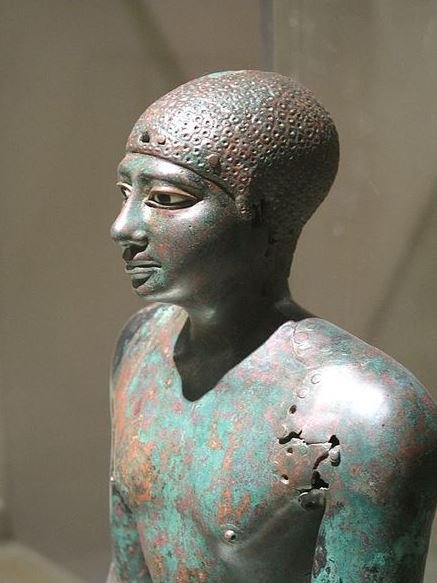
A statue presumed to be that of Merenre.
What were Merenre’s major trade and exploration activities?
He sent expeditions to Nubia for goods like incense, ebony, and ivory, dug a canal at the First Cataract, and traded with the Levant for lapis lazuli, silver, and tin.
What was significant about Merenre’s pyramid complex?
His pyramid, Khanefermerenre, was built in Saqqara and inscribed with Pyramid Texts. A mummy found in its sarcophagus might belong to him, though its identification is uncertain.
What was Merenre’s relationship with Nubia?
He established strong trade ties and received the submission of Nubian chieftains, marking significant Egyptian influence in the region.
FACT CHECK: At World History Edu, we strive for utmost accuracy and objectivity. But if you come across something that doesn’t look right, don’t hesitate to leave a comment below.