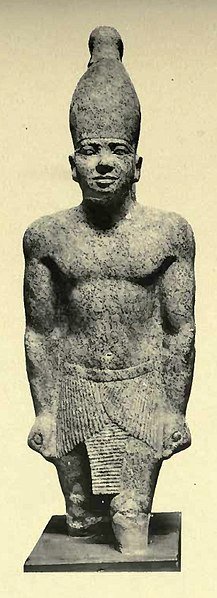
King Teti’s statue, found near his pyramid at Saqqara, is displayed in the Egyptian Museum of Cairo.
Teti, also referred to as Othoes and sometimes called Tata, Atat, or Athath in outdated sources, was a pharaoh of the Sixth Dynasty of Egypt. ruling around 2334 BC, his reign marked the beginning of significant changes in Egyptian governance and society.
Teti’s contributions and the controversies surrounding his death make him a notable figure in ancient Egyptian history. He was buried at Saqqara, the royal necropolis of Memphis. Though the exact duration of his reign has been lost on the Turin King List, evidence suggests he ruled for approximately 12 years.
READ MORE: Most Famous Pharaohs of Ancient Egypt
Royal Lineage and Marriages
Teti was married to several queens, each of whom played a role in cementing his reign and legacy. His primary wives were:
- Iput: The daughter of Unas, the last king of the Fifth Dynasty, and the mother of Pepi I, Teti’s successor.
- Khuit: Possibly the mother of Userkare, a ruler who briefly reigned after Teti’s death.
- Khentkaus IV and Naert: Two other queens who contributed to his large family.
Children of Teti
Teti fathered numerous children, including at least three sons and possibly ten daughters. His sons were:
- Pepi I: Succeeded Teti as pharaoh.
- Tetiankhkem: Another of Teti’s known sons.
- Nebkauhor (Idu): Referred to as the “king’s eldest son of his body.” His burial within the funerary complex of his maternal grandfather, Vizier Akhethetep, provides evidence of his high status.

A statue of Pepi I
Teti’s Daughters and Their Significance
Teti’s daughters were also significant figures. Nine daughters bore the name Seshseshet, after Teti’s mother, which helps historians trace familial connections. Among them:
- Seshseshet Waatetkhéthor: Married to Vizier Mereruka and regarded as the “king’s eldest daughter of his body.”
- Seshseshet Idut: Died young and was buried in the mastaba of Vizier Ihy.
- Seshseshet Nubkhetnebty: Likely the daughter of Iput, she was married to Vizier Kagemni.
- Seshseshet Sathor: Married Isi, the governor of Edfu, and held the title of vizier.
Other daughters included Seshseshet Sheshit, Seshseshet Sheshti, and Seshseshet Merout. Some of Teti’s daughters held roles as wives of prominent officials, signifying alliances that strengthened his reign.
Reign and Achievements
Teti’s Horus name, Sehoteptaoui (“He who pacifies the Two Lands”), reflects efforts to unify and stabilize Egypt. Military campaigns or diplomatic initiatives likely occurred early in his reign to ensure the country’s security.
During Teti’s reign, Egypt saw a decentralization of wealth and power. High-ranking officials, including viziers, began constructing grand funerary monuments. For example, Mereruka’s mastaba tomb at Saqqara, with its 33 intricately decorated rooms, highlights the growing influence of non-royal elites.
This redistribution of wealth marked the early stages of a societal shift that would culminate in the decline of the Old Kingdom. The erosion of centralized power under Teti’s reign set the stage for future challenges.
Possible Assassination
Ancient accounts, particularly those of the Egyptian priest Manetho, suggest that Teti was assassinated in a harem conspiracy orchestrated by his palace bodyguards. This dramatic event, if true, underscores the internal strife within the royal court. Following Teti’s death, Userkare briefly seized the throne before Pepi I restored the dynasty’s continuity.
Burial, Monuments and Artifacts
Teti’s pyramid complex at Saqqara includes his pyramid, the mastabas of his officials, and associated structures. Though the pyramid now lies in ruins, it originally featured intricate pyramid texts, the earliest known corpus of Egyptian religious inscriptions. These texts aimed to ensure the king’s safe passage to the afterlife.
Near Teti’s pyramid are subsidiary structures, including one attributed to his mother, Queen Sesheshet. In 2008, archaeologists led by Egyptologist Zahi Hawass uncovered the remains of her 4,300-year-old pyramid, which originally stood 14 meters tall. Its discovery provided valuable insights into the role of royal women during this period.
Artifacts bearing Teti’s cartouche, such as limestone blocks and sistrums, have been found at various sites. These objects provide glimpses into the artistic and cultural practices of his reign. Additionally, documents like the South Saqqara Stone and Hatnub Graffito No. 1 corroborate his 12-year reign.
Legacy and Discoveries
Teti’s reign is remembered for its transitional nature. The increasing power of local officials and the evolving role of the pharaoh as a central figure marked a turning point in Egypt’s political landscape.
From the grandeur of his pyramid complex to the enduring significance of his children, Teti’s impact on Egypt’s history is undeniable.
In January 2021, the Egyptian Ministry of Tourism and Antiquities announced significant findings near Teti’s pyramid at Saqqara. These included:
- Over 50 wooden sarcophagi from the New Kingdom period.
- A 13-foot-long papyrus inscribed with texts from the Book of the Dead.
- The funerary temple of Queen Neith, a previously unknown wife of Teti.
Frequently Asked Questions
What is known about the length of Pharaoh Teti’s reign?
The exact length of Teti’s reign is unclear due to the damaged Turin King List, but it is generally believed to have lasted about 12 years.
Who were Teti’s wives, and what roles did they play?
Teti had several wives, including Iput (daughter of Unas and mother of Pepi I), Khuit (possibly the mother of Userkare), and others. Their marriages helped strengthen political alliances.
What children did Teti have, and why are they significant?
He fathered at least three sons, including Pepi I, and likely ten daughters. His daughters, many named Seshseshet after his mother, married influential officials, reinforcing ties with the elite.

What notable structures and texts are associated with Teti’s reign?
Teti’s pyramid at Saqqara contains early Pyramid Texts. His vizier Mereruka’s richly decorated mastaba reflects the shifting wealth from the central court to officials.
How did Teti’s reign contribute to the decline of the Old Kingdom?
During Teti’s reign, high officials began constructing grand tombs, signaling the decentralization of power and wealth, which eventually led to the Old Kingdom’s decline.
What do historical accounts suggest about Teti’s death?
The historian Manetho claims Teti was assassinated by his bodyguards in a palace conspiracy, possibly involving a harem plot.
What recent discoveries have been linked to Teti’s reign?
Archaeologists have uncovered more than 50 wooden sarcophagi, a funerary temple for Queen Neith (Teti’s wife), and papyri containing Book of the Dead texts near his pyramid at Saqqara.





