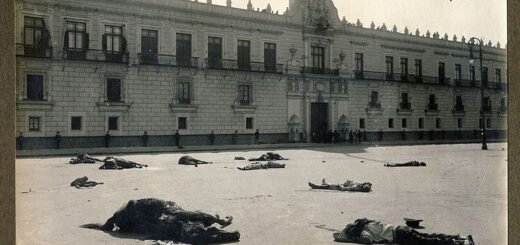
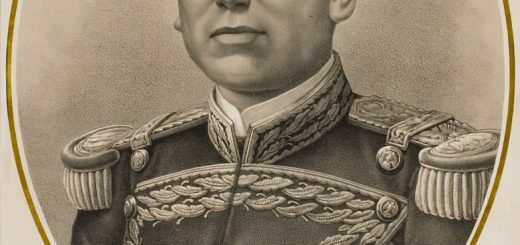
President of Mexico Antonio López de Santa Anna
Antonio de Padua María Severino López de Santa Anna y Pérez de Lebrón, commonly known as Antonio López de Santa Anna, was born on February 21, 1794, in Xalapa, Veracruz, Mexico.
Santa Anna grew up in a relatively privileged family of Spanish descent, which allowed him to receive some formal education, though he was not particularly drawn to academics. Instead, he pursued a career in the military, where he saw an opportunity to rise through the ranks and gain influence. His early life and career set the stage for his future role as one of Mexico’s most prominent and controversial leaders.
At the age of 16, in 1810, Santa Anna enlisted in the Spanish colonial army during the Mexican War of Independence. Like many other young men of his time, he initially fought on the side of the Spanish crown against the Mexican rebels seeking independence.
He served under the royalist commander José Joaquín de Arredondo, who became a significant influence on him. Under Arredondo’s tutelage, Santa Anna learned the tactics of counterinsurgency, helping to suppress insurgent movements in various regions of Mexico. His early experience in military campaigns forged his identity as a soldier and laid the foundation for his later political career.
However, as the tide of the independence movement shifted, so did Santa Anna’s loyalties. In 1821, he switched sides and supported Agustín de Iturbide, one of the key figures in Mexico’s fight for independence.
This opportunistic shift helped Santa Anna advance his military and political career, earning him recognition as a rising figure in post-independence Mexico. Mexico officially achieved independence from Spain in 1821, and Santa Anna played a key role in the establishment of the new nation.
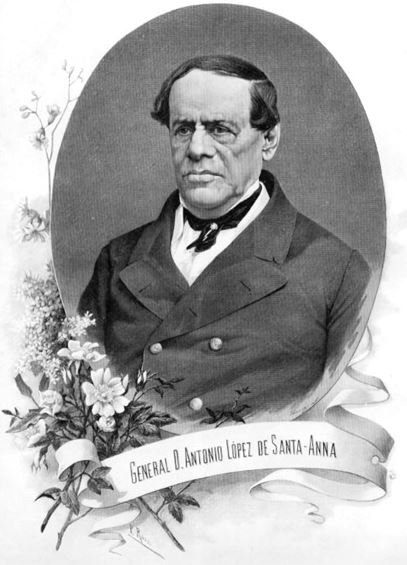
Antonio López de Santa Anna’s career was marked by political opportunism, military ambition, and a controversial legacy that continues to resonate in the history of Mexico. Image: Santa Anna in 1840s.
Early Political Career and the Fall of the First Mexican Empire
Following Mexico’s independence, Santa Anna aligned himself with Iturbide, who declared himself Emperor of Mexico in 1822, establishing the First Mexican Empire. Initially, Santa Anna supported Iturbide’s empire, but he soon became disillusioned with Iturbide’s autocratic style of governance.
Sensing an opportunity to further his own ambitions, Santa Anna joined the opposition forces led by General Guadalupe Victoria, who sought to overthrow Iturbide and establish a republican government.
In 1823, Santa Anna played a pivotal role in the overthrow of Iturbide’s empire, marking his first significant involvement in the political upheavals that would characterize much of his career. After the fall of Iturbide, Mexico transitioned to a republic, with Guadalupe Victoria serving as the first president. Santa Anna’s role in the empire’s downfall cemented his reputation as a power broker in Mexican politics.
The Rise of Santa Anna and the Presidency
Throughout the 1820s, Santa Anna continued to serve in various military and political roles. His ability to navigate the shifting political landscape and his talent for forging alliances allowed him to consolidate his power. By the early 1830s, Santa Anna had become a key figure in Mexican politics, and in 1833, he was elected president of Mexico for the first time. His election marked the beginning of a political career that would see him serve as president multiple times over the next two decades, often in short, non-consecutive terms.
Santa Anna’s rise to power coincided with a period of great instability in Mexico. The country was grappling with the challenges of building a new government, managing internal divisions, and defending itself from external threats. Santa Anna’s leadership during this tumultuous time reflected his opportunistic nature, as he frequently switched between liberal and conservative factions depending on what would serve his interests at the moment.
Santa Anna’s First Presidency (1833)
In 1833, Santa Anna assumed the presidency as a liberal, but he quickly showed his inclination toward authoritarianism.
During his first term, he shared power with Valentín Gómez Farías, a prominent liberal statesman who pushed for progressive reforms, including the separation of church and state and the reduction of military power.
However, Santa Anna’s commitment to liberal ideals was short-lived. He soon became uncomfortable with Gómez Farías’ reforms, which threatened his power base, particularly his ties to the military and the church.
Santa Anna responded by shifting his allegiance to the conservative faction, aligning himself with the forces that opposed Gómez Farías. In a move typical of his political opportunism, Santa Anna dissolved Congress, repealed the liberal reforms, and overthrew Gómez Farías. This marked the beginning of Santa Anna’s pattern of vacillating between liberal and conservative ideologies, depending on the political climate and his personal interests.
Centralization of Power and Dictatorship (1834–1836)
After consolidating his power, Santa Anna established himself as the de facto ruler of Mexico, although he often installed puppet presidents while retaining control behind the scenes.
One of his most significant moves during this period was the abandonment of the liberal Constitution of 1824 and the creation of a new, more centralized government.
In 1835, Santa Anna replaced the federalist system with a centralized republic, known as the Centralist Republic of Mexico, which concentrated power in the hands of the central government and reduced the autonomy of the states.
The shift to centralization sparked unrest in various regions of Mexico, particularly in the northern territories, where many local leaders favored federalism and resisted Santa Anna’s authoritarian rule. This resistance ultimately led to the Texas Revolution.
The Texas Revolution (1835–1836)
One of the most defining events of Santa Anna’s career was his role in the Texas Revolution. In 1835, the predominantly Anglo-American settlers in the Mexican territory of Texas, who were frustrated by the centralization of power under Santa Anna’s regime, launched a rebellion to seek independence from Mexico. Santa Anna responded with force, leading a large Mexican army into Texas to suppress the revolt.
The Texas Revolution culminated in two major events: the Battle of the Alamo and the Battle of San Jacinto. In March 1836, Santa Anna’s forces successfully besieged and captured the Alamo, a mission in San Antonio where a group of Texan defenders had taken refuge.
Although the Mexican army’s victory at the Alamo was a significant military achievement, Santa Anna’s decision to execute the survivors galvanized Texan resistance.
A few weeks later, in April 1836, Santa Anna’s forces were decisively defeated by Texan rebels under the command of Sam Houston at the Battle of San Jacinto. Santa Anna was captured during the battle and forced to sign the Treaties of Velasco, which granted Texas its independence. Although the Mexican government later refused to recognize the treaties, Santa Anna’s defeat at San Jacinto marked the beginning of the end of Mexican control over Texas.
The loss of Texas was a major blow to Santa Anna’s reputation and to Mexico’s territorial integrity. Despite this setback, Santa Anna would continue to play a prominent role in Mexican politics in the years to come.
The Pastry War and Return to Power (1838–1846)
Following his defeat in Texas, Santa Anna temporarily retreated from the political scene, but he would soon make a dramatic comeback. In 1838, France launched a military intervention in Mexico over unpaid debts, an event known as the Pastry War. Santa Anna took advantage of the crisis to position himself as the defender of Mexican sovereignty, leading Mexican forces against the French.
During the conflict, Santa Anna suffered a severe injury, losing part of his leg. He famously used his injury to bolster his image as a patriotic hero, even holding elaborate public ceremonies to bury his amputated leg. The Pastry War allowed Santa Anna to rehabilitate his political image, and he returned to power in the early 1840s.
Throughout the 1840s, Santa Anna continued to play a central role in Mexican politics, alternating between periods of power and exile. His leadership during this period was characterized by a series of short-lived administrations, political instability, and mounting tensions with the United States.
The Mexican-American War (1846–1848)
Santa Anna’s role in the Mexican-American War (1846–1848) was another pivotal moment in his career. The war erupted over territorial disputes between the United States and Mexico, particularly regarding the annexation of Texas by the United States in 1845. Santa Anna, who had been living in exile in Cuba, saw the conflict as an opportunity to return to power and restore his political fortunes.
In 1846, Santa Anna made a deal with U.S. President James K. Polk, promising to negotiate a peaceful settlement if he were allowed to return to Mexico. However, once back in Mexico, Santa Anna double-crossed the Americans and took control of the Mexican army, leading the defense against the U.S. invasion.
Despite his efforts, Santa Anna’s military leadership during the war was marked by a series of defeats. The U.S. forces, under the command of General Winfield Scott and General Zachary Taylor, successfully captured key Mexican cities, including Monterrey, Veracruz, and eventually Mexico City.
Santa Anna’s inability to repel the U.S. invasion culminated in the signing of the Treaty of Guadalupe Hidalgo in 1848, which ceded vast territories, including California, New Mexico, and Arizona, to the United States.
The Mexican-American War was a disaster for Mexico, and Santa Anna’s leadership during the conflict only deepened his unpopularity. The war’s outcome led to the loss of nearly half of Mexico’s territory, a humiliation that further damaged Santa Anna’s reputation.
Later Years: The Gadsden Purchase and Final Exile
Despite his failures in the Mexican-American War, Santa Anna returned to power once again in 1853, this time as a conservative dictator. During his final term, he sought to strengthen his rule by assuming the title “His Most Serene Highness” and governing with an increasingly autocratic style.
However, his return to power did little to stabilize Mexico, which continued to suffer from internal divisions and external pressures.
One of the most controversial acts of Santa Anna’s final presidency was the Gadsden Purchase. In 1853, Santa Anna sold a strip of land in northern Mexico to the United States for $10 million. The land, which is now part of southern Arizona and New Mexico, was intended to facilitate the construction of a southern transcontinental railroad in the United States. While the sale provided Mexico with much-needed funds, it further eroded Santa Anna’s standing, as many Mexicans viewed the transaction as a betrayal of national interests.
In 1855, Santa Anna was finally overthrown and exiled once again, following the liberal Plan of Ayutla. This marked the end of his political career, although he would attempt several unsuccessful comebacks in the years that followed. After his final exile, Santa Anna spent much of his later life in obscurity, living in Cuba, the United States, and other countries.
Final Return and Death
In 1874, an elderly and largely forgotten Santa Anna was allowed to return to Mexico by President Sebastián Lerdo de Tejada. Although he was no longer a significant political figure, Santa Anna hoped to regain some measure of influence in his homeland. However, he remained on the sidelines of Mexican politics during the final years of his life.
Santa Anna died on June 21, 1876, in Mexico City at the age of 82. By the time of his death, he had become a largely reviled figure in Mexican history, remembered for his opportunism, his shifting allegiances, and the disastrous losses Mexico suffered during his time in power.
Legacy and Controversy
The legacy of Antonio López de Santa Anna is one of controversy and complexity. He is often viewed as one of Mexico’s most polarizing figures, and his political career is marked by a series of contradictions.
On one hand, Santa Anna was a skilled military leader and a master of political survival, able to navigate the turbulent waters of 19th-century Mexican politics and return to power multiple times.
On the other hand, his opportunism, authoritarianism, and involvement in the loss of significant Mexican territories, including Texas and the lands ceded in the Treaty of Guadalupe Hidalgo, have made him one of the most criticized figures in Mexican history.
Santa Anna’s reputation in Mexico is overwhelmingly negative, and he is often blamed for the country’s territorial losses and political instability during the 19th century. Historians and many Mexicans rank him as one of the key figures who failed the nation, contributing to its decline during a critical period of its history.
At the same time, Santa Anna’s life and career reflect the broader challenges faced by Mexico in the decades following its independence. The country struggled to establish a stable government, define its national identity, and defend its territorial integrity in the face of external threats.
Questions and Answers about Antonio López de Santa Anna
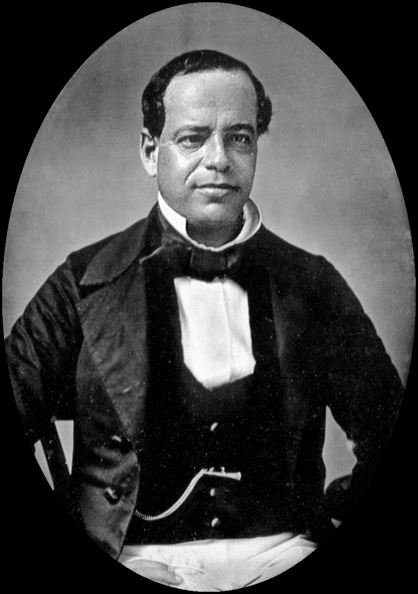
Antonio López de Santa Anna was a soldier, politician, and caudillo who played a pivotal role in shaping the course of Mexican history during the 19th century. Image: An early 1850s image of Santa Anna.
When and where was Antonio López de Santa Anna born, and when did he die?
Santa Anna was born on February 21, 1794, and died on June 21, 1876.
What was Santa Anna’s role in Mexican politics during the 19th century?
Santa Anna was a prominent and controversial figure in Mexican politics, serving multiple terms as Mexico’s president between 1833 and 1855. He also served as vice president from 1837 to 1839.
Why do historians refer to the period after Mexican independence as the “Age of Santa Anna”?
Historians refer to this period as the “Age of Santa Anna” because of his dominant influence over Mexican politics for three decades following independence.
How did Santa Anna first gain prominence?
Santa Anna first gained prominence in 1821 when he was in charge of the garrison at Veracruz during Mexico’s fight for independence.
What key events in Mexican history was Santa Anna involved in?
Santa Anna played key roles in the fall of the First Mexican Empire, the Texas Revolution, the Mexican-American War, and the Gadsden Purchase.
How did Santa Anna switch political alliances during his career?
Santa Anna frequently switched between the Liberal and Conservative parties, discarding the liberal Constitution of 1824 in 1835 but later restoring it in 1847. He also overthrew his liberal ally, Valentín Gómez Farías, on two occasions.
What was Santa Anna’s leadership style, and what title did he adopt?
Santa Anna was known for his dictatorial style, often using the military to dissolve Congress. He referred to himself with the honorific title “His Most Serene Highness.”
What were the major consequences of Santa Anna’s rule?
Santa Anna’s rule resulted in the loss of Texas, military failures in the Mexican-American War, and the Mexican Cession. He later ceded more land to the U.S. through the Gadsden Purchase.
What event led to Santa Anna’s overthrow and exile in 1855?
Santa Anna was overthrown and exiled following the liberal Plan of Ayutla in 1855.
When was Santa Anna allowed to return to Mexico, and what happened afterward?
Santa Anna was allowed to return to Mexico in 1874 by President Sebastián Lerdo de Tejada, and he died in relative obscurity in 1876.
How many times did Santa Anna serve as president?
Historians debate the exact number of times Santa Anna served as president. Some say six or five terms, while others count eleven times, though many were short terms.
How is Santa Anna’s legacy viewed in Mexican history?
Santa Anna’s legacy is widely viewed as negative. He is blamed for contributing to Mexico’s struggles, territorial losses, and instability during the 19th century, making him one of Mexico’s most controversial figures.