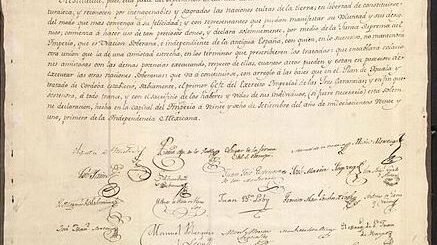
Venustiano Carranza: Life, Political Career & Assassination
Venustiano Carranza was a central figure in the Mexican Revolution and the establishment of constitutional governance in Mexico. His life and political career, spanning from the late 19th century to the early 20th century, were marked by his efforts to bring stability and order to a country undergoing tremendous social and political upheaval.
As a politician, revolutionary leader, and eventual president of Mexico, Carranza played a pivotal role in drafting the Constitution of 1917, which laid the groundwork for modern Mexican political and social structures. His legacy, though contested, reflects both his strengths as a leader and his limitations in implementing the far-reaching reforms envisioned by the revolutionaries.
Early Life and Political Beginnings
Venustiano Carranza was born on December 29, 1859, in Cuatro Ciénegas, Coahuila, to a prominent landowning family. His father, Jesús Carranza, was a wealthy rancher and a veteran of Mexico’s Reform War, a conflict that pitted liberals, who sought to reduce the power of the Catholic Church and military, against conservatives who wanted to preserve traditional privileges.
Growing up in a family deeply involved in political and social affairs, Carranza was exposed to the ideas of liberalism and reform from a young age. This environment played a significant role in shaping his future political career.
Carranza was educated in the state capital of Saltillo and later attended the prestigious National Preparatory School in Mexico City, where he was influenced by the liberal ideas of the time. He eventually returned to Coahuila, where he pursued a career in local politics. In 1887, Carranza became the municipal president (mayor) of Cuatro Ciénegas, marking his entry into public life.
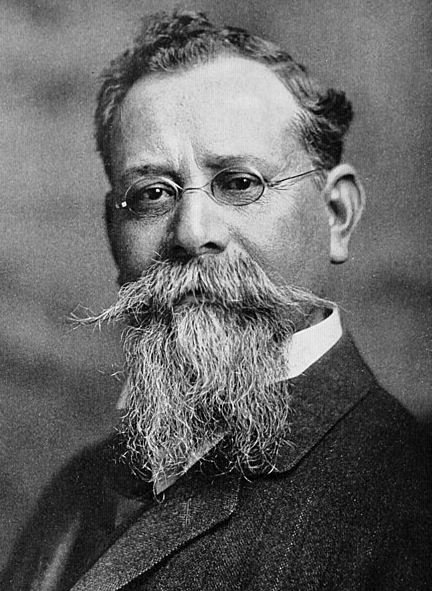
Image: Venustiano Carranza’s portrait by Harris & Ewing.
Career During the Porfiriato
During the long dictatorship of Porfirio Díaz, known as the Porfiriato (1876–1911), Carranza served as a senator for Coahuila. Díaz’s regime, though credited with bringing economic modernization and relative stability to Mexico, was also characterized by authoritarianism, repression, and deep social inequality. Like many Mexican liberals, Carranza initially supported Díaz, but he grew increasingly disillusioned with the regime’s refusal to enact democratic reforms and address the social and economic grievances of the Mexican people.
By the early 20th century, Carranza had joined the growing opposition to Díaz’s rule, aligning himself with Francisco Madero, a reform-minded landowner and political activist. Madero’s challenge to Díaz in the 1910 presidential election marked the beginning of the Mexican Revolution. When Díaz rigged the election and imprisoned Madero, Carranza supported Madero’s call for rebellion.
The Mexican Revolution and the Plan of Guadalupe
The Mexican Revolution, which began in 1910, was a complex and multifaceted conflict involving a wide array of political and social factions. After Díaz’s resignation in 1911 and Madero’s subsequent election as president, Carranza was appointed governor of Coahuila. However, Madero’s presidency was short-lived. In 1913, a coup led by General Victoriano Huerta resulted in Madero’s assassination during the infamous Ten Tragic Days (La Decena Trágica). Huerta established a military dictatorship, which plunged the country back into political turmoil.
In response to Huerta’s coup, Carranza drafted the Plan of Guadalupe on March 26, 1913. This manifesto rejected Huerta’s government as illegitimate and called for a return to constitutional order. Carranza positioned himself as the leader of the Constitutionalist Army, a coalition of revolutionary forces primarily from northern Mexico. The Plan of Guadalupe did not outline any specific social or economic reforms but focused on the restoration of the 1857 Constitution, a document that emphasized liberal democratic governance.
Carranza’s leadership of the Constitutionalist faction made him one of the most prominent figures in the struggle against Huerta’s regime. His forces, which included notable commanders such as Álvaro Obregón and Pancho Villa, gradually gained the upper hand. By July 1914, Huerta had been forced to resign and flee the country. Carranza entered Mexico City as the de facto head of state but refrained from declaring himself provisional president in order to maintain the legality of future elections.
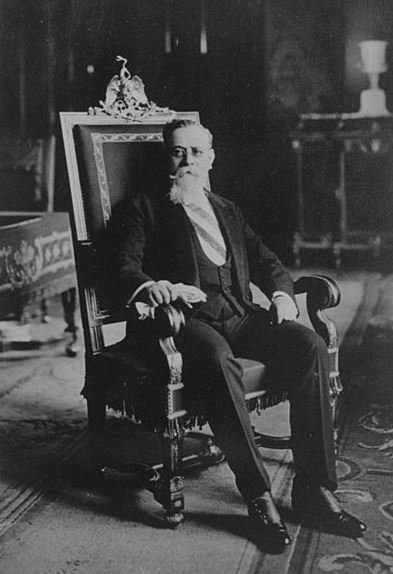
Image: Carranza seated in the Presidential Chair, adorned with the presidential sash.
Power Struggles and the Division of Revolutionary Forces
After Huerta’s defeat, internal divisions among the revolutionary leaders began to surface. While Carranza sought to restore constitutional order and maintain central authority, other revolutionary figures, particularly Villa and Emiliano Zapata, pushed for more radical social reforms, including land redistribution and labor rights.
In 1914, the Convention of Aguascalientes was convened to determine the future direction of the revolution. However, the convention exposed the deep rift between Carranza and the more radical factions led by Villa and Zapata. The Conventionists, as Villa and Zapata’s forces were called, supported immediate land reform and opposed Carranza’s more moderate policies. Carranza refused to recognize the authority of the convention, leading to a split between the Constitutionalist forces and the Conventionists.
Civil war ensued between Carranza’s army, led by Obregón, and Villa’s forces in the north and Zapata’s peasant army in the south. By 1915, Obregón had decisively defeated Villa in a series of battles, including the pivotal Battle of Celaya. Carranza’s government solidified its control over Mexico, and in 1915, the United States recognized his government as the legitimate authority in Mexico.
The Constitution of 1917
One of Carranza’s most enduring legacies was his role in drafting the Mexican Constitution of 1917. The new constitution, which was ratified on February 5, 1917, was a response to the demands of the revolution and aimed to address the social, political, and economic inequalities that had plagued Mexico for decades. It was one of the most progressive constitutions of its time and included several groundbreaking provisions, including:
- Land reform: Article 27 of the constitution allowed the government to redistribute land, a response to the long-standing demand for agrarian reform. This provision aimed to break up the large estates (haciendas) that had dominated the Mexican countryside and to return land to peasant communities.
- Labor rights: Article 123 guaranteed workers’ rights, including the right to organize, strike, and receive fair wages. It also established an eight-hour workday and provided protections for women and children in the workforce.
- Education: The constitution made education a fundamental right and emphasized the importance of secular public education.
- Limitation on the power of the Catholic Church: The constitution sought to reduce the influence of the Catholic Church in Mexican politics and society by enacting measures that limited the church’s ownership of property and its involvement in education.
Carranza was elected president under the new constitution in 1917. However, despite the progressive nature of the document, Carranza’s administration did not fully implement many of the social reforms it promised. Carranza, a conservative liberal, believed in restoring order and stability, and he was cautious about pursuing the more radical reforms advocated by figures like Zapata and Villa.
Internal Conflicts and Assassination
As president, Carranza’s main focus was on maintaining internal security and consolidating his power. He worked to suppress peasant uprisings, particularly in the south, where Zapata’s forces continued to resist central authority. In 1919, Zapata was assassinated on Carranza’s orders, dealing a significant blow to the peasant movement.
Carranza also sought to neutralize his former allies, including Villa, who had been weakened by his military defeats. In 1920, Villa accepted a settlement with Carranza’s government that provided him with land and a pension in exchange for his withdrawal from public life.
Carranza’s downfall came during the 1920 presidential election. Since he could not succeed himself, Carranza attempted to impose a relatively unknown civilian politician, Ignacio Bonillas, as his successor. This decision alienated the powerful revolutionary generals from the state of Sonora, including Álvaro Obregón, Plutarco Elías Calles, and Adolfo de la Huerta, who had expected one of their own to be chosen as Carranza’s successor. These generals rose in rebellion against Carranza under the Plan of Agua Prieta in April 1920.
Facing rebellion, Carranza fled Mexico City with a group of loyalists and a portion of the national treasury, intending to establish a rival government in Veracruz. However, on May 21, 1920, Carranza was assassinated in the village of Tlaxcalantongo, Puebla, under mysterious circumstances. His death marked the end of his political career and the beginning of a new phase in the Mexican Revolution, with Obregón assuming control of the government.
Legacy and Historical Significance
Carranza’s legacy is complex and contested. On the one hand, he is credited with restoring constitutional government to Mexico and playing a key role in drafting the progressive Constitution of 1917, which remains the foundation of Mexico’s political and legal system. The constitution’s provisions for land reform, labor rights, and education were groundbreaking and reflected the demands of the revolution.
However, Carranza has also been criticized for his failure to fully implement the social reforms outlined in the constitution. His conservative approach to governance, his suppression of peasant uprisings, and his focus on maintaining stability often put him at odds with the more radical elements of the revolution. His assassination in 1920 marked the end of his political career, and for a time, his contributions were overshadowed by the subsequent leadership of figures like Obregón and Calles.
Despite these criticisms, Carranza’s role in shaping the course of the Mexican Revolution and his contributions to the creation of modern Mexican political institutions cannot be overlooked. His burial in the Monument to the Revolution in Mexico City, alongside other key revolutionary figures, is a testament to his importance in Mexican history.
In conclusion, Venustiano Carranza was a pivotal figure in the Mexican Revolution, leading the Constitutionalist faction to victory and overseeing the drafting of the 1917 Constitution. While his presidency was marked by internal conflicts and challenges, his efforts to restore constitutional government and lay the foundation for modern Mexico have left an indelible mark on the country’s history.
Frequently Asked Questions

What role did Carranza play in the Mexican Revolution?
Carranza played a crucial role in the Mexican Revolution by drafting the Plan of Guadalupe, which called for the removal of Victoriano Huerta and the restoration of constitutional government. He led the Constitutionalist faction, aiming to restore democracy in Mexico.
How did Carranza rise to prominence during the revolution?
Carranza rose to prominence after the assassination of President Francisco Madero in 1913. He organized militias into the Constitutionalist Army, which ultimately defeated Huerta’s forces in 1914.
What was the significance of the Mexican Constitution of 1917?
The Mexican Constitution of 1917, drafted under Carranza’s leadership, was groundbreaking as it was the first in the world to guarantee social rights, including provisions for land redistribution and labor rights.
Why did Carranza’s leadership face opposition after Huerta’s defeat?
After Huerta’s defeat, Carranza’s authority was challenged by revolutionary leaders like Pancho Villa and Emiliano Zapata, who sought greater land reform and peasant rights. They formed the Conventionalists to oppose Carranza.
How did Carranza consolidate his power after the revolution?
He incorporated many of the demands of Villa and Zapata into the 1917 Constitution, including labor and land reforms. Despite these concessions, he focused more on maintaining internal stability than fully implementing social reforms.
What led to Carranza’s downfall in the 1920 election?
In the 1920 election, Carranza attempted to impose a relatively unknown politician, Ignacio Bonillas, as his successor. This angered powerful revolutionary generals, including Álvaro Obregón, who rebelled against him under the Plan of Agua Prieta.
How did Carranza’s life end, and what impact did his death have?
Carranza fled Mexico City during the rebellion but was assassinated on May 21, 1920, in Tlaxcalantongo, Puebla. His death marked the end of his political career and the rise of revolutionary leaders like Obregón.
What is Carranza’s legacy in Mexican history?
Carranza is remembered for restoring constitutional government and drafting the 1917 Constitution, which remains a foundational document in Mexico’s political history. However, he is also criticized for not fully implementing the social reforms promised in the constitution. His legacy remains significant in Mexico’s revolutionary history, with his contributions recognized posthumously.