Quentin Roosevelt
Quentin Roosevelt, the youngest son of President Theodore Roosevelt, lived a brief but remarkable life, filled with adventure, intellect, and a commitment to service that culminated in his tragic death during World War I.
Born into one of America’s most famous families, Quentin was known for his lively personality, mischief, and later, his sense of duty to his country. Despite his youth, he made a lasting impact on those who knew him and became a symbol of the sacrifice made by a generation of young men during the First World War.
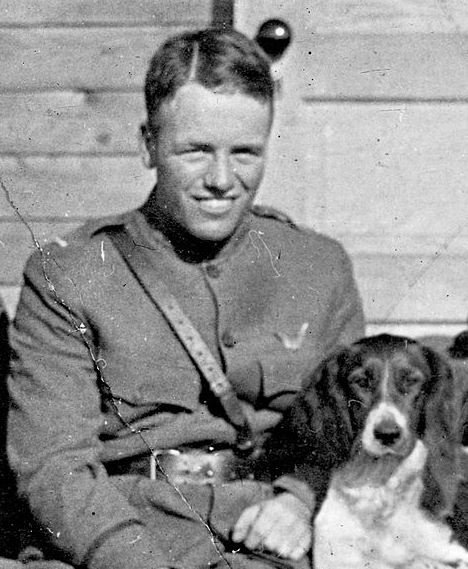
Quentin Roosevelt, youngest son of President Theodore Roosevelt, served as a pursuit pilot in the U.S. Army Air Service during World War I. Image: Roosevelt during his time in the 95th Aero Squadron.
Early Life and Childhood
Quentin Roosevelt was born on November 19, 1897, in Washington, D.C., the youngest of Theodore and Edith Roosevelt’s six children. He grew up in a household that included his siblings Alice (his half-sister), Theodore III (Ted), Kermit, Ethel, and Archie. From a young age, Quentin exhibited a bright, lively spirit, quickly becoming known for his mischievous nature and boundless energy.
Quentin’s childhood was unique in many ways. In 1901, when he was just three years old, his father, Theodore Roosevelt, became President of the United States after the assassination of President William McKinley. As a result, Quentin spent much of his formative years in the White House. While growing up in such a prestigious environment might have weighed on some children, Quentin embraced the adventure. Known as “the favorite child” in the Roosevelt household, Quentin’s exploits, especially with the “White House Gang,” a group of his friends, became legendary.
The “White House Gang,” consisting of Quentin and his companions, frequently got into trouble, much to the amusement (and occasional frustration) of the Roosevelt family. Quentin’s pranks included carving a baseball diamond into the White House lawn without permission and hurling spitballs at official portraits. He even baked potatoes using a makeshift brick chimney he built behind the White House, much to the alarm of the Secret Service, who thought there was a fire. Alongside Charlie Taft, the son of future President William Howard Taft, Quentin famously rode atop the White House elevator, much to the dismay of adults. These mischievous acts were viewed with a mix of admiration and exasperation by Quentin’s parents, with his mother, Edith Roosevelt, referring to him as a “fine bad little boy.”
Perhaps one of Quentin’s most famous and endearing stunts involved his brother Archie. When Archie fell ill, Quentin, with the help of the White House coachman, brought Archie’s pony, Algonquin, up to his brother’s room in the White House elevator, believing it would make Archie smile. Such stories captured Quentin’s playful and caring spirit, as well as his determination to make the most of his extraordinary childhood.
Education and Academic Prowess
Though Quentin was a playful and mischievous child, he was also highly intelligent, much like his father. He began his education at Force Elementary School in Washington, D.C., and later attended several prestigious institutions, including the Episcopal High School in Alexandria, Virginia, the Evans School for Boys, and Groton School in Massachusetts. At Groton, Quentin developed his intellectual talents, excelling in his studies while also maintaining his sense of humor and adventurous spirit.
Quentin followed in his father’s footsteps by attending Harvard College in 1915. At Harvard, he earned high marks and showed great promise as a writer, much like his father. Despite his academic success, Quentin’s time at Harvard was short-lived due to the outbreak of World War I and his engagement to Flora Payne Whitney, the daughter of wealthy industrialists. Flora’s father, Harry Payne Whitney, disapproved of the Roosevelt family and Theodore Roosevelt’s liberal Republican politics, creating tension between the two families. Despite this, Quentin and Flora’s relationship endured, and they became engaged before Quentin left Harvard to join the military.
The Road to War
As war raged in Europe, Quentin, like many Americans, was initially neutral. Both Quentin and his father were hesitant to become involved in what seemed like a distant European conflict. However, the sinking of the RMS Lusitania by a German U-boat in 1915, which resulted in the deaths of 128 Americans, deeply angered Theodore Roosevelt and marked a turning point in his stance on the war. By 1916, Theodore Roosevelt was campaigning vigorously for U.S. intervention in the conflict, a position that Quentin eventually came to support as well.
In early 1917, Quentin wrote to Flora from Harvard, expressing his growing belief that America could not remain passive while England and France fought their battles. Shortly after, the United States officially entered World War I in April 1917, and Quentin, feeling a strong sense of duty, decided to leave Harvard and join the Army Air Service.
Military Service and Aviation
Like his brothers, Quentin had received military training before the U.S. entered the war, participating in a summer camp organized by Major General Leonard Wood in 1915. This training prepared him for his role in the military, but Quentin’s real interest lay in aviation. Believing that his mechanical skills would be most useful in the newly formed air service, Quentin joined the 1st Reserve Aero Squadron, which was America’s first air reserve unit. He trained at an airfield on Long Island, New York, which would later be renamed Roosevelt Field in his honor.
In early 1918, Quentin was deployed to France, where he served with distinction as part of the 95th Aero Squadron, a unit within the 1st Pursuit Group. Initially, Quentin’s duties included helping set up a large Air Service training base at Issoudun, where he served as a supply officer and later ran one of the training airfields. However, he eventually transitioned to active flying duty and became a combat pilot. Quentin’s enthusiasm and courage in the skies quickly earned him a reputation among his fellow pilots. He achieved one confirmed kill of a German aircraft during the German Spring Offensive, a testament to his skill and bravery as a pilot.
Captain Eddie Rickenbacker, a famed American flying ace and commander of the 94th Aero Squadron, praised Quentin in his memoirs, noting that despite being the son of a former president, Quentin was down-to-earth, likable, and immensely popular among his fellow pilots. Rickenbacker admired Quentin’s bravery, though he also noted that Quentin’s fearlessness sometimes bordered on recklessness. His fellow pilots often cautioned him to be more careful, fearing that his daring nature could lead to disaster.
Tragic Death in the Second Battle of the Marne
Quentin’s sense of duty and love for flying, however, ultimately led to his untimely death. On July 14, 1918, just a few weeks before his 21st birthday, Quentin was killed during a large aerial engagement at the beginning of the Second Battle of the Marne. He was shot down while flying his Nieuport 28 over French territory that had been occupied by the Germans. Two machine-gun bullets struck him in the head, killing him instantly. His plane crashed near the village of Chamery in northern France.
The German military, impressed by Quentin’s courage and aware of his famous family, buried him with full battlefield honors. They used parts of his aircraft to fashion a cross for his grave. Although the Germans made a propaganda postcard of Quentin’s death, the act was met with respect in Germany, where Theodore Roosevelt was still held in high esteem. Quentin’s death was a profound loss for the United States and deeply affected those who knew him.
Impact on Theodore Roosevelt and the Family
Quentin’s death was a devastating blow to his father, Theodore Roosevelt. Having been a strong advocate for American involvement in the war, Roosevelt encouraged all four of his sons to serve, and Quentin’s death weighed heavily on him. It is said that Theodore Roosevelt never fully recovered from the loss of his youngest son, and within six months of Quentin’s death, Roosevelt himself passed away on January 6, 1919.
The entire Roosevelt family grieved Quentin’s loss, but his death also became a symbol of the broader sacrifices made by American families during World War I. Quentin’s death resonated with many in the United States and abroad, as it illustrated the personal costs of the war, even for the most privileged of families. His death became a poignant reminder of the loss suffered by a generation of young men during the war.
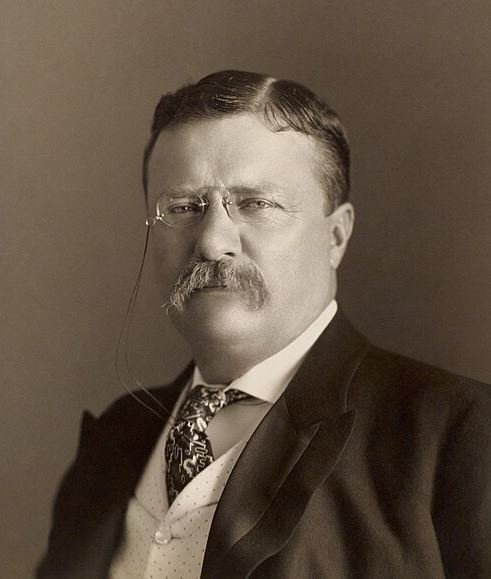
Image: A photograph of Roosevelt in 1904.
Legacy and Remembrance
After World War I, Quentin’s gravesite became a pilgrimage site for American soldiers. His resting place near Chamery was a symbol of the sacrifices made during the war, and many Americans visited his grave to pay their respects. In 1955, Quentin’s remains were exhumed and moved to the Normandy American Cemetery in Colleville-sur-Mer, France, where he was reinterred next to his older brother, Theodore “Ted” Roosevelt Jr., who had died in 1944 shortly after leading troops during the D-Day landings in World War II. Quentin’s original gravestone was moved to Sagamore Hill, the Roosevelt family estate on Long Island, as a cenotaph.
Quentin Roosevelt’s legacy endures to this day through various memorials and tributes. In New York, Roosevelt Field, once the airfield where Quentin trained and now a shopping mall, was named in his honor. In France, several memorials commemorate Quentin’s service and sacrifice, and streets in both the United States and France bear his name. His letters, published by his brother Kermit in Quentin Roosevelt: A Sketch with Letters, offer a personal glimpse into Quentin’s life, thoughts, and deep bond with his family.
Questions and Answers
What was Quentin’s reputation as a child in the White House?
Quentin was known for his boisterous behavior and playful antics, often getting into trouble with his group of friends, the “White House Gang.” He carved a baseball diamond into the White House lawn, threw spitballs at official portraits, and once baked potatoes in a makeshift chimney behind the White House.
What schools did Quentin attend?
Quentin attended several prestigious schools, including the Episcopal High School in Alexandria, Virginia, the Evans School for Boys, and Groton School, before enrolling at Harvard College in 1915.
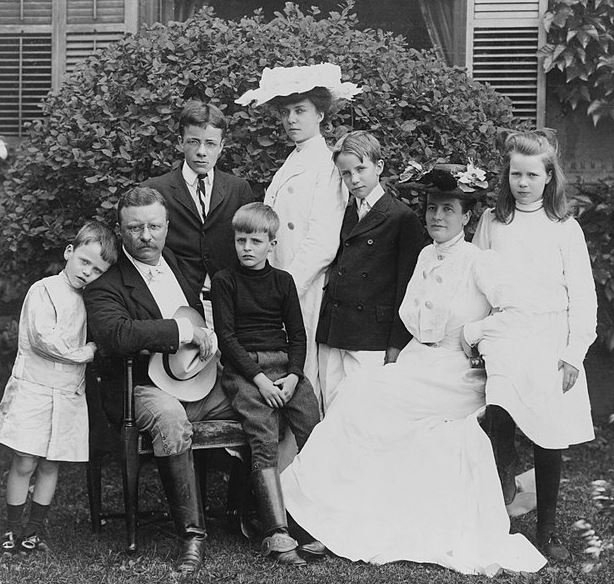
Image: A 1903 picture of the Roosevelt family, with Quentin at the far left.
How did Quentin’s academic career compare to his father’s?
Like his father, Quentin excelled academically and showed promise as a writer. He was a bright student at Harvard, but his academic career was cut short by his engagement and his decision to join the military during World War I.
Why did Quentin leave Harvard?
Quentin left Harvard in 1917, following the United States’ entry into World War I, to join the Army Air Service. He felt a sense of duty to serve in the war, much like his father and brothers.
What role did Quentin play during World War I?
Quentin became a pilot in the 95th Aero Squadron. He trained at an airfield on Long Island, which was later named Roosevelt Field in his honor, and served in France, where he achieved one confirmed kill of a German aircraft.
Quentin was admired for his likability, humility, and bravery. His commanding officer, Captain Eddie Rickenbacker, praised him for fitting in well despite his famous background. However, his fellow pilots often worried about his recklessness in combat.
What happened to Quentin during the Second Battle of the Marne?
Quentin was shot down and killed during a large aerial engagement on July 14, 1918. His Nieuport 28 aircraft was hit by machine gun fire over French territory held by the Germans.
How did the Germans treat Quentin after his death?
The Germans, impressed by Quentin’s courage and the fact that he was the son of a former U.S. president, buried him with full military honors near the village of Chamery, France.
How did Quentin’s death affect his father, Theodore Roosevelt?
Quentin’s death deeply affected Theodore Roosevelt. Having encouraged his sons to serve in the war, he was devastated by Quentin’s loss and never fully recovered from the grief. Theodore himself passed away within six months of Quentin’s death.
Where is Quentin Roosevelt buried?
Quentin was initially buried in France, but his remains were later moved to the Normandy American Cemetery in Colleville-sur-Mer, France, to rest next to his brother Ted, who had died during World War II. Quentin’s original gravestone was moved to Sagamore Hill as a cenotaph.
Roosevelt Field Mall in New York stands on the site of the airfield where Quentin trained. His letters, compiled by his brother Kermit, also provide a lasting record of his life and thoughts during the war.
What did Quentin’s letters reveal about him?
Quentin’s letters, compiled in Quentin Roosevelt: A Sketch with Letters, reveal his personal growth from a mischievous child to a thoughtful young man. They also document his close relationships with his father and fiancée, Flora Payne Whitney, and his evolving views on the war.