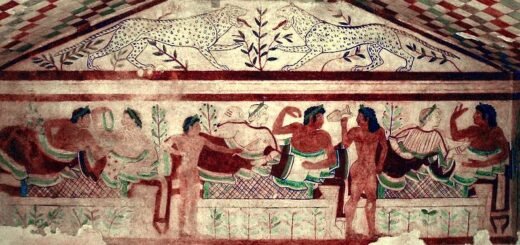
Regolini-Galassi Tomb
The Regolini-Galassi Tomb is one of the most significant archaeological discoveries of the 19th century, offering invaluable insight into the wealth, artistry, and funerary customs of early Etruscan civilization. Dating to the Orientalizing period (circa 650 BCE), this elaborate tomb, located in Cerveteri (ancient Caere) in central Italy, contains a treasure trove of artifacts that highlight the influence of Eastern Mediterranean cultures on the Etruscans. The burial, likely belonging to an aristocratic woman of high status, is a testament to the power and sophistication of Etruscan society during this formative period.
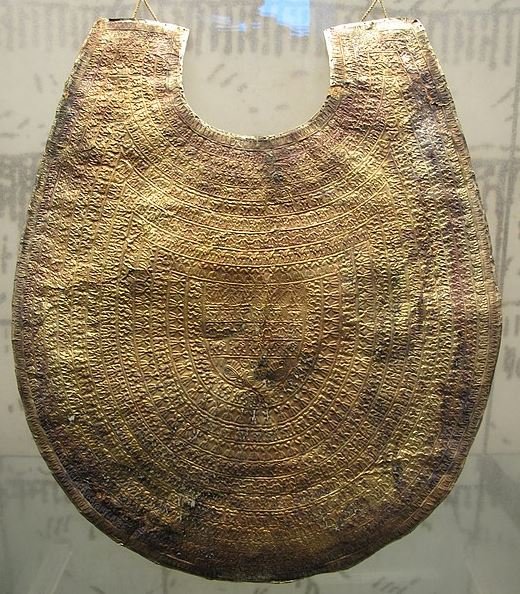
Gold chest ornament from the Regolini-Galassi burial, circa 650 BCE
Discovery and Excavation
The tomb was uncovered in 1836 by General Vincenzo Galassi and the cleric Alessandro Regolini, whose names it bears. It was found within the Banditaccia necropolis, one of the largest burial sites of the Etruscan civilization. The structure of the tomb itself was remarkably well-preserved, and its contents were largely undisturbed, making it one of the most intact examples of an elite Etruscan burial.
Upon excavation, the tomb revealed an abundance of luxury items, including gold jewelry, silverware, bronze vessels, and richly decorated furniture. The wealth of the burial immediately suggested the interment of a person of high rank, possibly an aristocratic woman or a priestess. The grave goods exhibited stylistic and technical influences from the Eastern Mediterranean, particularly Phoenician, Egyptian, and Greek cultures, emphasizing the Etruscans’ extensive trade networks and openness to foreign artistic traditions.
Tomb Architecture
The Regolini-Galassi Tomb is a corridor-style (dromos) tomb, constructed from large blocks of tufa stone. Its architectural design consists of a long passageway leading to a main burial chamber, with additional side rooms. This layout resembles contemporary tumulus tombs in other Etruscan cities, though it shows significant Greek and Near Eastern influence.
The burial chamber, which housed the primary interment, was carefully designed to accommodate an elaborate funerary ritual. The walls of the tomb were left unadorned, but its structure ensured the preservation of its precious contents. The entrance was sealed with a large stone slab, which effectively protected the tomb from looting for centuries.
The tomb’s structure is an example of early Etruscan engineering and reflects the increasing social stratification of Etruscan society. The existence of such grand tombs indicates the emergence of a powerful elite class that sought to display its wealth and status in death, much as in life.
The Burials and Their Significance
Inside the tomb, archaeologists discovered the remains of at least two individuals. The most significant burial, positioned in the main chamber, belonged to a high-ranking woman, identified by the presence of extravagant jewelry and ceremonial objects. Her skeletal remains were found adorned with a wealth of gold, including a breastplate, bracelets, rings, and a large fibula (brooch) decorated with intricate repoussé work, a technique in which metal is hammered from the reverse side to create elaborate designs.
A secondary burial, possibly that of a male warrior or charioteer, was found nearby. This individual was interred with weapons, including a bronze shield and a chariot, suggesting that he may have been a member of the Etruscan military aristocracy. The presence of a chariot in the tomb underscores the importance of warfare and elite mobility in early Etruscan society.
The combination of these burials indicates a familial or ritual connection between the deceased, possibly a noblewoman and a male relative or consort. The distinction between their grave goods highlights the gendered nature of Etruscan funerary practices, where women were often buried with jewelry and domestic items, while men were associated with weapons and symbols of power.
Grave Goods and Their Artistic Significance
One of the most striking aspects of the Regolini-Galassi Tomb is the extraordinary wealth of its grave goods. These artifacts provide a rare glimpse into Etruscan craftsmanship and the artistic influences that shaped their material culture.
The gold jewelry found in the tomb is among the finest examples of early Etruscan metalwork. The large fibula, adorned with rows of tiny granulated spheres and stylized animal motifs, showcases the Etruscans’ mastery of granulation, a technique likely borrowed from Near Eastern artisans. Other jewelry items, such as necklaces, earrings, and bracelets, exhibit a fusion of Phoenician, Egyptian, and Greek styles, reflecting the cosmopolitan nature of Etruscan society.
Silverware and bronze vessels discovered in the tomb further attest to the wealth and refinement of the deceased. These objects, often decorated with intricate engravings, were likely imported from or influenced by Greek and Eastern Mediterranean workshops. Some bronze cauldrons bear depictions of mythological creatures, suggesting a blend of indigenous and foreign artistic traditions.
One particularly notable find was a set of ceremonial objects, including a bronze throne and a chariot, which indicate the high status of the deceased. The presence of a chariot suggests that the woman buried in the tomb may have held an important role in religious or public ceremonies, as chariots were often associated with elite display and ritual processions.
In addition to metalwork, the tomb contained painted pottery, which provides insight into the development of Etruscan ceramic traditions. Many of these vessels were decorated in a style reminiscent of Greek Geometric and Orientalizing pottery, highlighting the extent of cultural exchange between the Etruscans and their Mediterranean neighbors.
Cultural and Historical Context
The Regolini-Galassi Tomb dates to a period of significant transformation in Etruscan society, known as the Orientalizing period (circa 700–600 BCE). This era saw increased contact between the Etruscans and the civilizations of the eastern Mediterranean, including the Phoenicians, Egyptians, and Greeks. These interactions led to the adoption of new artistic styles, religious practices, and social structures, which are evident in the tomb’s grave goods.
The prominence of the woman buried in the tomb is particularly noteworthy, as it suggests that elite Etruscan women may have held considerable social and religious influence. Unlike in many contemporary Greek societies, where women had limited public roles, Etruscan women appear to have participated in public life and religious ceremonies. This is supported by depictions of women in Etruscan art, which often show them dining alongside men or engaged in ritual activities.
The wealth of artifacts, architectural sophistication, and cultural significance make the Regolini-Galassi Tomb an enduring subject of study and fascination.
The presence of both indigenous and foreign elements in the tomb’s artifacts underscores the role of the Etruscans as intermediaries in Mediterranean trade networks. Caere, the city where the tomb was discovered, was a major trading hub, facilitating the exchange of goods, ideas, and artistic techniques between Italy and the eastern Mediterranean.
The elaborate nature of the tomb also reflects the hierarchical nature of Etruscan society. By the 7th century BCE, Etruscan city-states were ruled by powerful aristocratic families who sought to legitimize their authority through displays of wealth and religious patronage. Monumental tombs like the Regolini-Galassi served not only as resting places for the dead but also as statements of social prestige, reinforcing the status of the elite even in death.
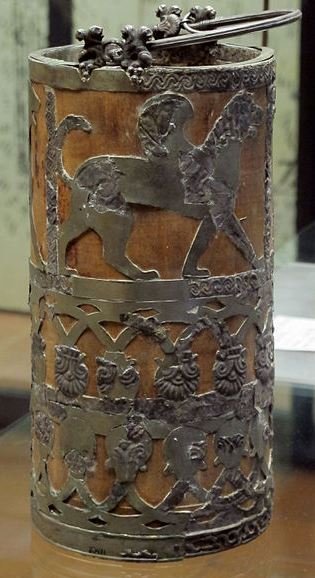
Silver vessel from the Regolini-Galassi tomb
Legacy and Modern Interpretations
The discovery of the Regolini-Galassi Tomb was a landmark moment in the study of Etruscan civilization. The artifacts from the tomb are now housed in the Vatican Museums, where they continue to be studied and admired for their artistic and historical significance.
Modern archaeologists and historians view the tomb as a key source of information about early Etruscan society, particularly in terms of gender roles, trade connections, and funerary practices. The remarkable preservation of the tomb has allowed scholars to reconstruct aspects of Etruscan life that would otherwise be lost to history.
In contemporary discussions, the Regolini-Galassi Tomb is often cited as evidence of the dynamic and interconnected nature of the ancient Mediterranean world. It demonstrates how the Etruscans, far from being an isolated civilization, actively engaged with and adapted influences from their neighbors. This challenges earlier perceptions of the Etruscans as a mysterious and enigmatic people, instead presenting them as sophisticated players in a broader cultural and economic network.
The tomb also raises questions about the role of women in Etruscan society. The presence of a richly adorned female burial suggests that elite women may have wielded significant influence, a notion that is supported by other Etruscan tombs and inscriptions. This stands in contrast to the more restrictive roles of women in many contemporary ancient cultures, highlighting the unique aspects of Etruscan social organization.
Questions and answers
Where was the Regolini-Galassi Tomb discovered?
It was discovered in the Sorbo necropolis, just outside Cerveteri, a major Etruscan city known for its rock-cut tombs from the 7th to 4th centuries BCE.
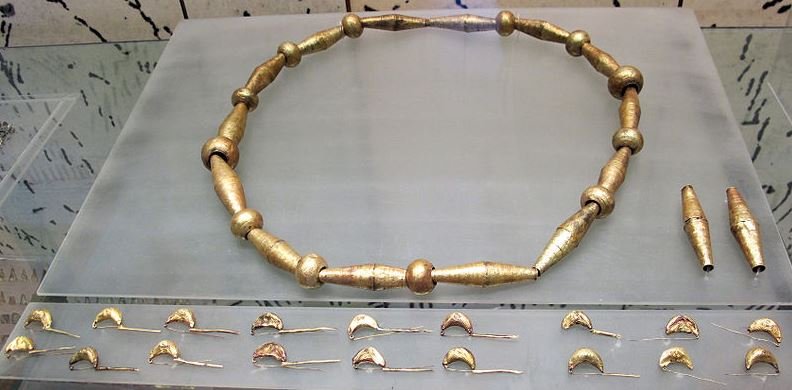
A necklace discovered from the tomb.
What made the discovery of the tomb significant?
Unlike previously excavated tombs that had been looted, this burial was untouched for over two millennia. Its preservation and wealth of grave goods provided valuable insights into Etruscan burial customs and aristocratic life.
Who discovered the Regolini-Galassi Tomb?
The tomb was discovered in 1836 by Italian priest Alessandro Regolini and General Vincenzo Galassi, who had been excavating tombs in the area.
What damage occurred during excavation?
Regolini and Galassi entered from above, causing the roof to collapse. This damaged some furniture inside, and their focus on gold led them to disregard many pottery finds.
What is the architectural design of the tomb?
The tomb is a rock-cut chamber with a long, gabled rectangular corridor leading to a main burial chamber at the far end. It also has two oval side chambers.
Who was buried in the main chamber?
An aristocratic woman named Larthia was buried in the main chamber, identified by her exquisite jewelry and an inscribed silver service set. She may have been a queen, princess, or priestess.
What jewelry did Larthia wear?
She wore an elaborate 42 cm-wide gold pectoral with miniature animals and plants, a gold belt with a fibula decorated with lions and ducks, two wide gold bracelets featuring dancing female figures, two gold necklaces, spiral rings, earrings, and pins.
Was Larthia buried alone?
No. One of the side chambers contained the ashes of a male placed inside a pottery funerary urn set in a wall niche. The second side chamber, contrary to early accounts, had no human remains but did contain silver-gilt bowls.
What luxury items were found in the tomb?
The tomb contained a bronze latticework couch, eight round bronze shields, a throne with embossed decorations, bronze incense burners, cauldrons with lion and griffin-head protomes, and silver cups, vases, and dishes.
What evidence of Near Eastern influence was found?
Several objects, including a gilded silver bowl decorated with a lion hunt and warrior procession, demonstrated clear connections to the Near East. Other artifacts, such as ivory boxes and intricate bronze designs, also reflected foreign artistic influences.
What kinds of pottery and writing artifacts were discovered?
Bucchero ware, including bowls, pitchers, and beakers, was found, along with over 30 effigy figures of mourners. A bucchero bottle inscribed with a complete Etruscan alphabet provided insight into early Etruscan writing.
What vehicles were included in the burial?
A four-wheeled bed-carriage, likely used for laying Larthia in state, and a two-wheeled biga chariot, used for ceremonies, were found in the tomb.
What everyday items were placed in the tomb?
Iron tools, large terracotta vases containing wheat, oil, honey, and eggs, an ivory die, and a bronze stand for the Greek drinking game kottabos were included, reflecting feasting and leisure in the afterlife.
Where can the artifacts from the Regolini-Galassi Tomb be seen today?
The artifacts are displayed in the Museo Gregoriano Etrusco within the Vatican Museums, providing a glimpse into Etruscan aristocratic life and burial traditions.