Most Renowned Roman Jurists and their Accomplishments
Roman law is one of the most influential legal traditions in history, forming the foundation of many modern legal systems. This legal framework was shaped significantly by Roman jurists—legal scholars who interpreted, developed, and systematized Roman law. Their writings and legal opinions helped refine Roman jurisprudence, guiding both contemporary legal practice and later European legal traditions.
Below, World History Edu explores some of the most renowned Roman jurists, detailing their contributions and lasting impact.
Gaius (c. 130–180 AD)
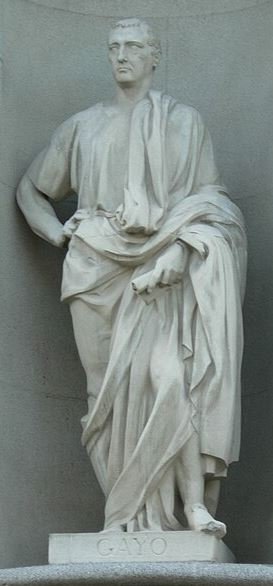
Statue of Gaius.
Gaius was one of the most influential jurists of the Roman classical period. He is best known for his work Institutiones (Institutes), which provided a systematic overview of Roman law. This text became a foundational legal manual, used for legal education and referenced in later legal compilations, including the Corpus Juris Civilis of Justinian.
Accomplishments
- Created a systematic legal structure: Gaius divided Roman law into three major categories—personae (persons), res (things), and actiones (legal actions). This classification provided a logical and accessible framework for understanding legal principles.
- Influenced later legal codifications: His Institutiones were later used as a model for Justinian’s Institutes in the 6th century AD.
- Provided detailed commentary on procedural law: His writings on contract law, property rights, and succession were instrumental in shaping the development of Roman legal doctrine.
Papinian (c. 142–212 AD)

Statue of Papinian at the Palace of Justice of Rome in Italy.
A jurist of exceptional reputation, Papinian was active during the reigns of emperors Septimius Severus and Caracalla. He served as the Praefectus Praetorio (Praetorian Prefect), a role that combined legal and administrative authority. His works include Quaestiones and Responsa, which dealt with complex legal issues.
Accomplishments
- Established principles of justice and equity: Papinian emphasized fairness and moral integrity in his legal opinions.
- Influenced the development of legal reasoning: His writings became essential references for later jurists and were included in the Corpus Juris Civilis.
- Provided interpretations on criminal law: He dealt extensively with penal law and the legal consequences of different forms of liability.
Praetorian Guard: Origin Story, Formation, Influence, Assassination Plots, & Demise
Ulpian (c. 170–223 AD)
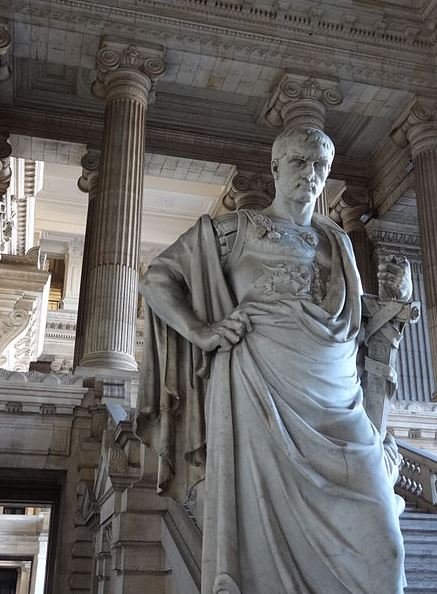
Statue of Ulpian at the Palais de Justice in Brussels, Belgium.
Ulpian was one of the most prolific Roman jurists, with a vast body of legal writings. He served as a legal adviser under Emperor Septimius Severus and later as Praetorian Prefect under Alexander Severus. His works include Ad Edictum and Libri Regularum.
Accomplishments
- Extensive contributions to Roman administrative and constitutional law: Ulpian’s writings clarified legal principles regarding the powers of the emperor, magistrates, and the rights of citizens.
- Defined legal maxims: His phrase “Iustitia est constans et perpetua voluntas ius suum cuique tribuendi” (Justice is the constant and perpetual will to give each his due) became a cornerstone of Western legal philosophy.
- Major influence on Justinian’s legal reforms: His legal opinions were extensively incorporated into the Digest of Justinian.
Paulus (c. 2nd–3rd century AD)
Julius Paulus was another major Roman jurist whose works covered nearly all areas of Roman law, from criminal law to property and contract law. His commentaries were widely referenced in later legal codifications.
Accomplishments
- Authored extensive legal commentaries: He wrote over 300 books on legal matters, making significant contributions to case law and procedural law.
- Developed principles of contract law: He clarified rules governing obligations and agreements, laying the groundwork for later legal thought on contractual relations.
- Codified existing laws: His legal opinions and rulings became authoritative sources of Roman law, shaping the legal landscape for centuries.
Modestinus (c. 3rd century AD)
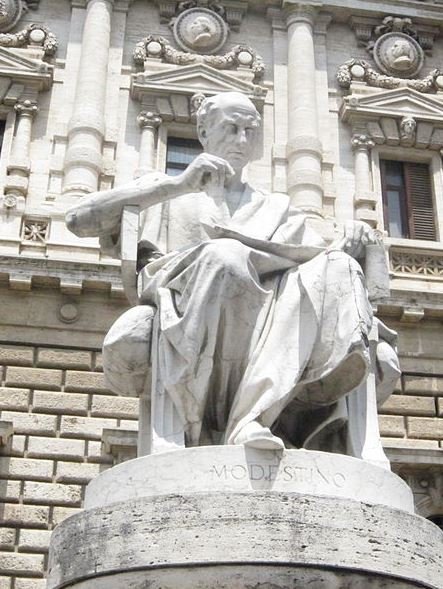
Statue of Herennius Modestinus
Herennius Modestinus was a student of Ulpian and one of the last great classical Roman jurists. He compiled several legal treatises and helped shape late Roman legal traditions.
Accomplishments
- Contributed to legal education: His works were used to teach aspiring jurists and law students in the later Roman Empire.
- Developed principles of family law: He wrote extensively on issues like guardianship, marriage, and succession.
- Provided clarity on citizenship laws: His writings helped define who qualified as a Roman citizen and the legal rights associated with citizenship.
Cato the Elder (234–149 BC)

Cato the Elder
Although more famous as a statesman and historian, Cato the Elder also contributed to early Roman legal thought. He was a staunch defender of traditional Roman values and played a role in shaping legal customs.
Accomplishments
- Codified early Roman legal practices: His writings helped preserve traditional Roman legal procedures.
- Promoted simplicity in legal interpretation: He resisted foreign legal influences, advocating for straightforward legal rulings.
- Influenced later Roman legal education: His views on legal ethics and civic duty resonated with later Roman jurists.
Scaevola (c. 140–82 BC)
Quintus Mucius Scaevola was a highly influential jurist of the late Republic, credited with systematizing Roman legal principles.
Accomplishments
- Wrote a comprehensive legal treatise: His De Iure Civili was one of the earliest systematic works on Roman law.
- Formalized Roman legal terminology: He helped standardize legal definitions and concepts.
- Influenced future jurists: His work provided a basis for later legal scholars, including those of the classical period.
The last king of Rome before the establishment of the Roman Republic
Salvius Julianus (c. 100–170 AD)

Statue of Salvius Julianus at the Palazzo di Giustizia in Rome, Italy
Salvius Julianus was a leading jurist under Emperor Hadrian and played a key role in drafting the Edictum Perpetuum.
Accomplishments
- Codified the Praetorian Edict: He systematized existing legal edicts into a permanent framework, reducing inconsistencies in legal decisions.
- Developed procedural law: His work helped refine judicial processes, influencing how cases were handled in Roman courts.
- Contributed to later legal codifications: His principles were incorporated into Justinian’s Digest.
Frequently Asked Questions
What is a jurist?
A jurist is an expert in law who analyzes and comments on legal matters, often with formal legal education and professional experience.
How does the meaning of “jurist” differ between the UK and the US?
In the UK, “jurist” typically refers to legal academics, while in the US, it may also apply to judges.
What is the role of a jurist in Roman law?
In Roman law, a jurist (iurisconsultus) was a legal expert who provided opinions and interpretations of the law, influencing legal development.
How does the definition of “jurist” vary in European countries?
In many European countries, “jurist” refers to anyone with a professional law degree, including judges, attorneys, and legal scholars.
How does a jurist differ from a lawyer or attorney?
A jurist may analyze and interpret law without practicing it, whereas a lawyer or attorney is typically licensed to represent clients in legal proceedings.
Did you know…?
- In Germany, a “full jurist” informally refers to someone who has passed both state law examinations, qualifying them to practice law.
- In countries like Norway, “jurist” is a protected title, reserved for those with a qualifying professional law degree.
- While some jurists are qualified to practice law in all jurisdictions, others focus on legal scholarship or advising rather than representing clients.





