Roman Emperor Galerius
Galerius (full name: Galerius Valerius Maximianus) was a Roman emperor from 305 to 311, known for his military campaigns, opposition to Christianity, and eventual issuance of the Edict of Toleration in 311.
Early Life and Rise to Power
Galerius Valerius Maximianus, commonly known as Galerius, was born around 258 AD in the Danube provinces of the Roman Empire. His birthplace is debated, with some sources pointing to Serdica (modern Sofia, Bulgaria) and others suggesting Felix Romuliana (present-day Gamzigrad, Serbia), a palace he later built in honor of his mother, Romula.
His father was of Thracian origin, and his family had migrated from Roman Dacia (modern Romania) due to the Carpians’ invasions. Before entering military service, Galerius worked as a herdsman, earning the nickname “Armentarius” (Latin for “herdsman”). Originally named Maximinus, he later changed his cognomen to Maximianus upon becoming Caesar.
Galerius rose through the military ranks, serving under emperors Aurelian and Probus. When Emperor Diocletian restructured the empire under the Tetrarchy in 293, Galerius was appointed as Caesar alongside Constantius Chlorus. Diocletian also gave Galerius his daughter, Galeria Valeria, in marriage and entrusted him with governing the Illyrian provinces. In the following years, he campaigned against the Sarmatians and Goths along the Danube before being reassigned to the empire’s eastern front.

Aureus of Roman Emperor Galerius.
Campaigns Against Persia
Initial Defeat
In 294 AD, Narseh, a son of Shapur I who had been overlooked for the Persian throne, ascended to power in the Sassanian Empire. Unlike his predecessors, who had maintained peaceful relations with Rome, Narseh sought to reclaim Persian territories lost in previous wars.
In 295 or 296, he launched an invasion into Roman-controlled Armenia and Mesopotamia. Galerius, serving as commander of the eastern legions, faced Narseh in battle between Carrhae and Callinicum. The Persians inflicted a crushing defeat on Galerius, forcing him into retreat.
Diocletian publicly humiliated Galerius in Antioch, making him walk a mile ahead of his chariot in his imperial robes. Scholars interpret this as either a punishment for military failure or a symbolic reaffirmation of discipline and hierarchy.
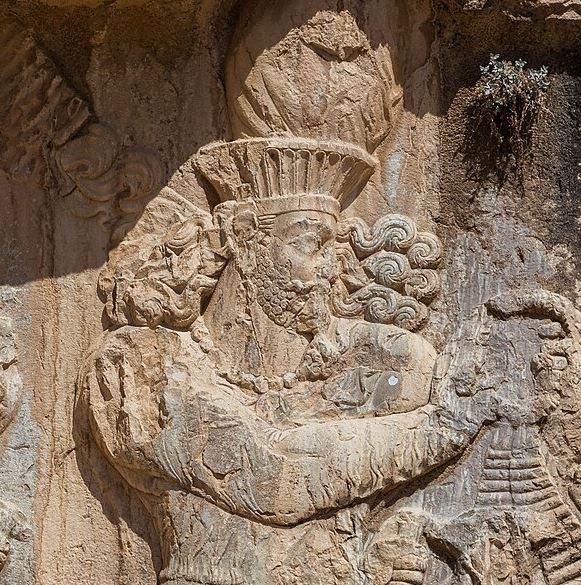
Rock relief depicting Narseh.
Roman Counteroffensive and Victory
In the spring of 298, Galerius regrouped with reinforcements from the Danubian provinces. Learning from past mistakes, he launched a strategic counterattack through Armenia rather than Mesopotamia, gaining the high ground against Persian cavalry.
In a decisive battle near Satala, Galerius’ forces defeated Narseh, capturing his treasury, harem, and even his wife. Continuing his advance, Galerius marched into Media and Adiabene, securing further victories near Theodosiopolis (modern Erzurum, Turkey). Some historians speculate he even sacked the Persian capital, Ctesiphon, though no direct sources confirm this.
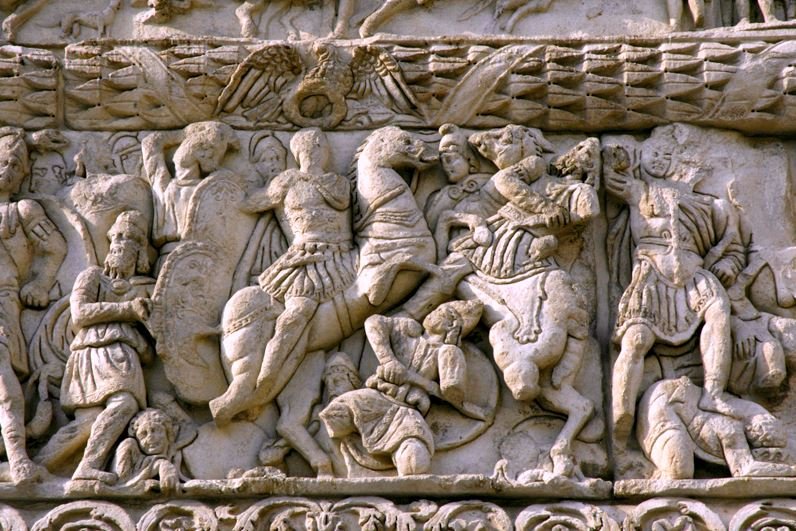
Detail from the Arc of Galerius depicting his attack on Narseh.
Treaty of Nisibis
Following his losses, Narseh sued for peace. Galerius, likely recalling the humiliating treatment of Emperor Valerian by Persian forces in the 260s, initially rejected Narseh’s ambassadors but later relented. The resulting Peace of Nisibis (299 AD) heavily favored Rome.
The agreement established the Tigris River as the new border, with Armenia and Iberia (modern Georgia) returning to Roman control. Rome also gained control of five satrapies between the Tigris and Armenia, securing key mountain passes. Nisibis was designated as the sole trade hub between the empires, strengthening Roman economic control.
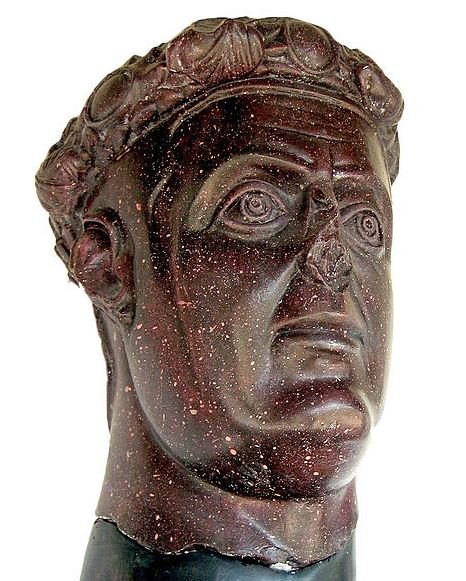
Bust of Galerius, located at the National Museum Zaječar in Serbia.
Rule as Augustus
Consolidation of Power
When Diocletian and Maximian retired in 305 AD, Galerius and Constantius Chlorus became the senior Augusti. Galerius took advantage of the transition by appointing two loyal supporters, Maximinus Daza and Severus, as Caesars, thereby extending his influence over three-quarters of the empire. However, the unexpected death of Constantius in 306 disrupted Galerius’ plans.
Conflict with Constantine and Maxentius
Upon Constantius’ death, his son Constantine (i.e. Constantine the Great) was proclaimed Augustus by the western legions. Galerius, surprised and initially furious, eventually compromised, granting Constantine the title of Caesar instead of Augustus. Around the same time, Maxentius, the son of the retired emperor Maximian, declared himself Augustus in Rome, opposing Galerius’ authority. In response, Galerius sent Severus to suppress Maxentius, but the campaign failed when Severus’ troops defected. Severus was captured and executed.
Realizing the need for direct action, Galerius personally led an invasion of Italy in 307 AD. However, Maximian’s forces resisted effectively, forcing Galerius to retreat. As his troops withdrew, they looted the countryside, an act that further alienated the Italian population.
By 308, an imperial conference at Carnuntum attempted to stabilize the political landscape, appointing Licinius as Augustus in the West. Despite these efforts, continued power struggles among Constantine, Maximinus, Maxentius, and Licinius would eventually lead to civil war.
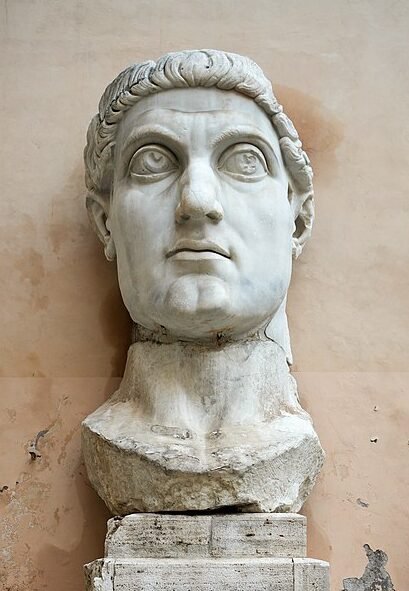
Head of the Colossus of Constantine at the Capitoline Museums in Rome, Italy.
Persecution of Christians
Initiation of the Persecution
Galerius was a staunch advocate of Rome’s traditional pagan religion and played a key role in the Diocletianic Persecution of Christians. Though Christians had been largely tolerated during Diocletian’s early reign, Galerius reportedly influenced the emperor to take a harsher stance.
In 303 AD, a series of edicts ordered the destruction of Christian churches and scriptures, banned Christian assemblies, and mandated sacrifices to the Roman gods.
Some sources suggest that Galerius orchestrated an arson attack on Diocletian’s palace in Nicomedia, blaming Christians to justify harsher crackdowns. Executions and imprisonments followed across the empire, particularly in the eastern provinces under Galerius’ control.
The Edict of Toleration
By 311, Galerius’ health was deteriorating due to a painful and disfiguring disease, likely bowel cancer or gangrene. Facing death, he abandoned his previous stance and issued the Edict of Toleration from Serdica (modern Sofia). This decree officially ended the persecution, acknowledging that attempts to eradicate Christianity had failed. The edict permitted Christians to worship freely, provided they prayed for the emperor’s well-being and the stability of the empire.
Though Galerius’ death marked the decline of the Tetrarchy, his impact on Roman administration, military strategy, and religious policy endured beyond his lifetime.
Final Days and Death
Galerius died in April or May of 311 AD, succumbing to his illness. Lactantius and Eusebius, both Christian writers, describe his death in gruesome detail, portraying it as divine punishment for his persecution of Christians.
Following his death, his territories were divided among Maximinus Daza, Licinius, and Constantine. His influence quickly waned, and within two years, Constantine and Licinius issued the Edict of Milan (313 AD), fully legalizing Christianity and paving the way for its rise within the empire.
Architectural and Cultural Contributions
Galerius’ most notable architectural legacy is his palace complex at Felix Romuliana, which included a mausoleum and a temple dedicated to himself and his mother. Today, the site is a UNESCO World Heritage location. Additionally, the Arch of Galerius in Thessaloniki commemorates his victories over the Persians and remains a major historical landmark.
READ MORE: Most Famous UNESCO World Heritage Sites
Controversial Reputation
Galerius’ legacy is complex. He was a skilled military leader who secured Rome’s eastern borders and reinforced the Tetrarchy, yet his aggressive policies and hostility toward Christianity made him a deeply controversial figure. Christian sources, particularly Lactantius, depict him as an anti-Roman tyrant who sought to rename the empire after his Dacian ancestors. However, other historical records emphasize his effectiveness as a ruler and his eventual concession to religious tolerance.
Honors and Memorials
Despite his divisive reputation, Galerius’ influence is recognized in historical and archaeological contexts. Galerius Peak in Antarctica is named in his honor, reflecting his lasting imprint on world history. His reign, marked by military triumphs, political intrigue, and religious persecution, remains a significant chapter in the late Roman Empire’s history.

Timeline of Roman Emperor Galerius
- c. 258: Born in the Danube provinces, possibly at Felix Romuliana (modern Serbia).
- Early Career: Served under Emperors Aurelian and Probus.
- 293: Appointed Caesar under Diocletian, marrying his daughter Valeria.
- 295-296: Suffered defeat against Persian king Narseh.
- 298: Defeated Narseh at the Battle of Satala, securing Roman victory.
- 299: Negotiated the Peace of Nisibis, expanding Roman influence.
- 305: Became Augustus after Diocletian’s abdication.
- 306: Accepted Constantine as Caesar; faced Maxentius’ rebellion.
- 308: Held the Carnuntum conference to restore order.
- 303-311: Led Christian persecutions but issued the Edict of Toleration in 311.
- 311: Died from a painful disease, possibly cancer.
- Burial: Laid to rest at Gamzigrad-Romuliana.
- Legacy: Remembered for military success, persecution of Christians, and administrative influence.
Frequently Asked Questions
What were Roman Emperor Galerius’ major military achievements?
He defeated the Sassanian Empire at the Battle of Satala (298), possibly sacked Ctesiphon, and successfully campaigned against the Carpi and other Danubian tribes.
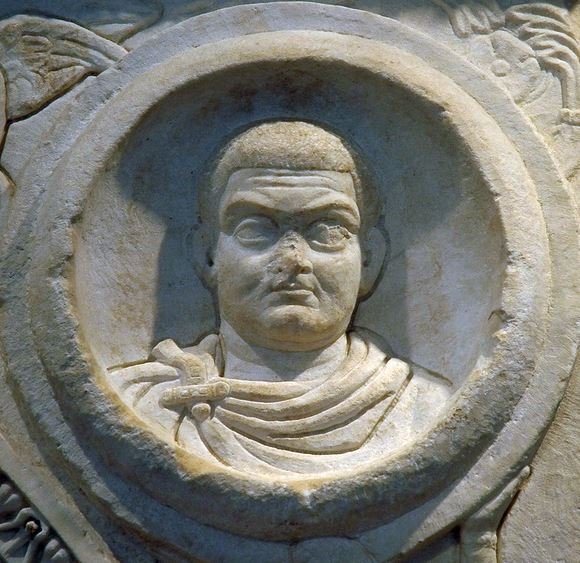
A portrait of Galerius on the Arch of Galerius
Where was Galerius born?
He was born in the Danube provinces, either near Serdica or at Felix Romuliana (modern Gamzigrad, Serbia), the palace named after his mother.
How did he influence the Tetrarchy?
As Augustus, he appointed loyal allies as Caesars, strengthening his authority but failing to maintain stability, leading to multiple rival emperors.
What role did Emperor Galerius play in Christian persecution?
He was a key figure in the Diocletianic Persecution but later ended it with the Edict of Toleration in 311, admitting its failure.
Why did he invade Italy?
He sought to depose the usurper Maxentius but failed due to Maximian’s support for his son and the defection of his own troops.
How did Emperor Galerius die?
He suffered from a painful and gruesome disease, possibly gangrene or cancer, and died in 311.
Emperor Galerius’ rule marked both military success and political instability, and he is remembered for his persecution of Christians, later reversed with the Edict of Toleration.





