Roman God Tiberinus
Tiberinus, a significant deity in Roman mythology, embodies the divine essence of the Tiber River, one of Rome’s most crucial natural landmarks. As the river god, Tiberinus holds a pivotal place in myths tied to Rome’s founding and the broader narratives of Roman culture and history. His role as a guardian and guide highlights the ancient Romans’ reverence for their natural surroundings and their integration of geography with religious beliefs.
Origins and Identity
Tiberinus is one of the many river deities believed to be the offspring of Oceanus and Tethys, primordial gods representing the world’s waters in Greco-Roman mythology.
As the genius loci (spirit) of the Tiber River, Tiberinus was more than a geographical embodiment; he was a divine force governing the river’s influence on Roman civilization. The Tiber was central to Rome’s development, providing water, transportation, and a natural barrier for defense.
The significance of Tiberinus extends beyond his association with the river. He also symbolizes the intricate connection between divine will and human destiny, serving as a mediator between mortals and the gods.
Mythological Significance

Altar depicting Tiberinus (bottom right) revealing Romulus and Remus.
Role in Virgil’s Aeneid
Tiberinus appears prominently in Virgil’s Aeneid (Book VIII), a cornerstone of Roman literature. His intervention in the journey of Aeneas, the Trojan hero destined to found Rome, underscores his role as a divine guide and protector.

Aeneas defeats Turnus, by Luca Giordano, 1634–1705. The genius of Aeneas is shown ascendant, looking into the light of the future, while that of Turnus is setting, shrouded in darkness
After Aeneas reaches Italy, Tiberinus appears to him in a dream, reassuring him that he has arrived at his destined homeland. The god advises Aeneas to seek an alliance with Evander, the leader of Pallene, to strengthen his position in the war against Turnus and his allies. Tiberinus’ advice proves crucial in shaping the eventual course of Aeneas’ mission, demonstrating his alignment with divine fate.
Tiberinus also calms the river’s currents, allowing Aeneas’ ships to navigate safely to their destination. This act highlights Tiberinus’ protective nature, underscoring his role as a facilitator of divine will and a guardian of those aligned with destiny.
Naming of the Tiber River
The name “Tiber” has mythological roots tied directly to Tiberinus. According to the historian Livy in Ab Urbe Condita, the Tiber River was originally called Albula, named for its bright, white waters.
It was renamed after Tiberinus Silvius, an early king of Alba Longa, who drowned in its currents. This tragic event transformed the king into the river’s divine guardian and immortalized his name, embedding his legacy into the geography and mythology of the Roman world.

View of the Tiber River facing Vatican City in Rome.
Protector of Romulus and Remus
Tiberinus is central to the foundational myth of Romulus and Remus, the twin brothers credited with the founding of Rome. When the infants were abandoned and set adrift in the Tiber River, Tiberinus ensured their survival by guiding their basket safely to the riverbank. He then entrusted the twins to Lupa, the she-wolf who famously nursed them. This act of protection underscores his role as a divine nurturer and guardian of Rome’s future.
In another version of the myth, Tiberinus rescues Rhea Silvia, the twins’ mother, who was a Vestal Virgin sentenced to death for breaking her vow of chastity. After saving her, Tiberinus marries her, further intertwining his legacy with Rome’s founding lineage.
Fatherhood and Legacy
Tiberinus is also linked to other significant mythological figures. He is said to have fathered Ocnus, a mythological founder of Mantua, with Manto, a seeress. This connection ties him to other Italic cities and reinforces his influence in shaping the cultural and geographical identity of ancient Italy.
Worship and Cultural Practices
Tiberinus was one of the most revered river gods in Roman religion, reflecting the importance of the Tiber River to the city’s survival and prosperity. Romans performed rituals and offerings to honor Tiberinus, especially during times of drought, flooding, or other river-related challenges.
One of the most notable rituals associated with Tiberinus was the Argei ceremony, performed every May. In this ritual, twenty-seven straw dummies were cast into the Tiber River as offerings. The dummies symbolized appeasement and gratitude, ensuring the river’s continued benevolence and protection. This act also reflected the Roman belief in maintaining harmony with nature through religious observance.
Through rituals like the Argei and his memorialized presence in the river’s name, Tiberinus remained a central figure in Roman worship and culture.
The Romans frequently made offerings to the Tiber River to seek Tiberinus’ favor. These offerings, particularly during times of extreme weather, symbolized their dependence on the river’s stability. The duality of Tiberinus as both a nurturing and potentially destructive force mirrored the unpredictable nature of rivers.
Symbolism and Legacy
Tiberinus embodies the Tiber River as more than a physical landmark; he represents its spiritual and symbolic significance. The river, a lifeline for the Roman state, becomes a divine entity through Tiberinus, emphasizing the Romans’ deep respect for the natural world and its role in their success.
Through his involvement in the stories of Aeneas, Romulus, and Remus, Tiberinus is firmly embedded in Rome’s cultural identity. His actions directly influence the survival and success of Rome’s legendary founders, reinforcing the idea that the city’s destiny was divinely ordained.
Tiberinus’ calming of the river for Aeneas and his protection of Romulus and Remus highlight the river’s role as a nurturing force. These myths emphasize the river as a guiding and protective element in Rome’s rise to greatness.
Representation in Roman Art and Literature
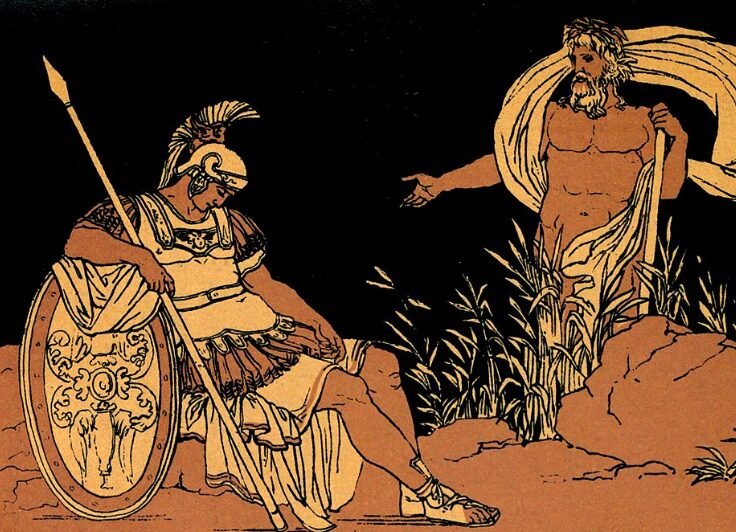
Aeneas and Tiberinus by Italian artist Bartolomeo Pinelli
Tiberinus is frequently depicted in Roman art and literature as a personification of the Tiber River. He is often shown as a bearded figure reclining on the ground, symbolizing his connection to the earth and water. His depictions sometimes include a cornucopia, representing abundance and fertility, or a rudder, highlighting his role in navigation and guidance.
In literature, Tiberinus appears as a divine figure who bridges the mortal and celestial realms, aligning human actions with divine will. His presence in texts like Virgil’s Aeneid underscores his significance in Roman cultural and spiritual life.
Modern Interpretations and Relevance
Tiberinus’ mythological significance continues to resonate in modern interpretations of Roman mythology. His role as the god of a vital waterway reflects timeless themes of humanity’s relationship with nature and the divine. The stories of his protection and guidance highlight the interconnectedness of geography, spirituality, and human destiny.
In modern scholarship, Tiberinus is often studied as a symbol of how the Romans integrated natural features into their religious framework. His enduring legacy as a protector, guide, and divine force reflects the importance of rivers in shaping civilizations.
Conclusion
Tiberinus, the Roman god of the Tiber River, occupies a central place in Roman mythology and cultural identity. As the protector of Aeneas, Romulus, and Remus, he embodies the Tiber’s nurturing and guiding qualities, critical to Rome’s foundation and growth. Through rituals, offerings, and myths, Tiberinus symbolizes the Romans’ respect for their natural surroundings and their belief in the divine’s role in shaping human destiny. His legacy as a river god continues to inspire reflections on the relationship between nature, humanity, and spirituality.
Frequently Asked Questions
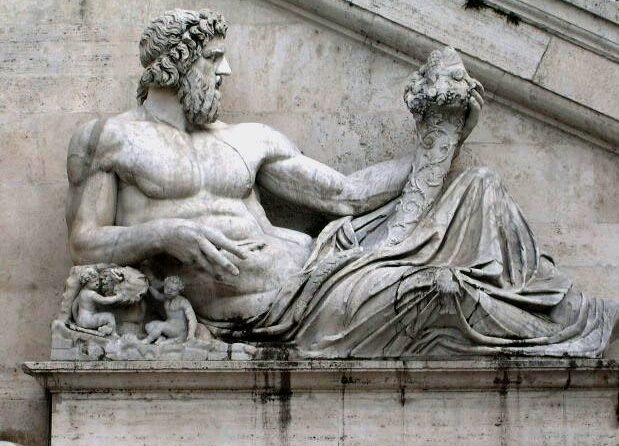
Tiberinus was the Roman god of the Tiber River, a significant waterway for Rome. He was one of the river deities, believed to be among the 3,000 offspring of Oceanus and Tethys, representing the divine personification of the Tiber. Image: Tiberinus (statue from the Campidoglio, Rome).
What role did Tiberinus play in Virgil’s Aeneid?
In Book VIII of the Aeneid, Tiberinus appears in a dream to Aeneas, assuring him that he has reached his destined homeland. He advises Aeneas to seek an alliance with Evander of Pallene to prepare for the war against Turnus and his allies. Tiberinus also calms the river’s waters to allow Aeneas’ boat to safely reach its destination.
How did the Tiber River get its name according to Roman mythology?
According to Livy in Ab Urbe Condita, the Tiber River was originally called Albula, named for its bright waters. It was renamed after Tiberinus, a king of Alba Longa, who drowned in its currents. The river’s name serves as a memorial to him.
What role did Tiberinus play in the story of Romulus and Remus?
Tiberinus guided the basket carrying the infant twins Romulus and Remus to safety on the riverbank. He then entrusted them to Lupa, the she-wolf who nursed them. In another version, Tiberinus rescued their mother, Rhea Silvia, and later married her.

Romulus and his twin brother Remus from a 15th-century frieze, Certosa di Pavia
Who were the children of Tiberinus, and what is their significance?
Tiberinus is said to have fathered Ocnus with the seeress Manto. Ocnus is often associated with the founding of Mantua, tying Tiberinus to other important Italic cities.
How was Tiberinus worshipped in Roman religion?
Tiberinus was honored with offerings and rituals linked to the Tiber River. His worship reflected the river’s importance for transportation, agriculture, and commerce. Seasonal offerings and rituals like the Argei were performed to appease and honor him.
What was the Argei ritual, and how did it honor Tiberinus?
The Argei ritual involved casting twenty-seven straw dummies into the Tiber River every May as offerings to Tiberinus. This act symbolized gratitude and was believed to ensure the river’s continued protection and benevolence.
What was the significance of seasonal offerings to Tiberinus?
Seasonal offerings were made, especially during times of drought or flooding, to seek Tiberinus’ favor and intervention. These practices highlighted his dual nature as both a nurturing and potentially destructive force.
How does Tiberinus reflect the relationship between nature, the divine, and human life?
Tiberinus embodies the Romans’ respect for natural elements and their dependence on them for survival and growth. As a river god, he symbolizes the connection between nature, divine will, and human endeavors.
What does Tiberinus’ calming of the river for Aeneas symbolize?
It symbolizes his role as a guardian deity who facilitates journeys and aligns human endeavors with divine will. It also highlights the nurturing aspect of the Tiber River in supporting Rome’s destiny.
How does Tiberinus’ role in mythology highlight the importance of the Tiber River?
Through his actions—protecting Aeneas, guiding Romulus and Remus, and fostering Rhea Silvia—Tiberinus represents the Tiber as a divine force central to Rome’s founding, growth, and survival.

The Capitoline Wolf (La Lupa Capitolina), an iconic she-wolf statue, traditionally considered Etruscan, may date to the 13th century, with Renaissance-era additions.





