Second Persian invasion of Greece: History and Major Facts
The Second Persian Invasion of Greece (480–479 BC) stands as one of the most significant military campaigns in ancient history. Orchestrated by King Xerxes I of Persia, this invasion marked a pivotal moment in the Greco-Persian Wars, shaping the course of Western civilization.
Below, World History Edu explores the historical context, key military leaders, major battles, and the enduring significance of this monumental conflict.

Image: Map of the Greek world during the time of the Persian invasion.
Historical Background
Prelude to Invasion
The Second Persian Invasion was a direct response to the earlier conflict known as the Ionian Revolt (499–494 BC), where Greek city-states in Asia Minor, supported by mainland Greece, rebelled against Persian rule. The revolt was ultimately suppressed by Persian forces led by Darius I, but it ignited hostilities between Greece and the Persian Empire. Darius sought to punish the Greek cities that had supported the revolt and to expand Persian influence into the independent and often fractious Greek city-states.
In 490 BC, Darius launched the First Persian Invasion of Greece, culminating in the famous Battle of Marathon. Despite being outnumbered, the Athenians achieved a decisive victory, forcing the Persians to retreat. Darius’s death in 486 BC delayed further Persian ambitions, but his son, Xerxes I, vowed to complete the conquest of Greece.
Planning the Invasion
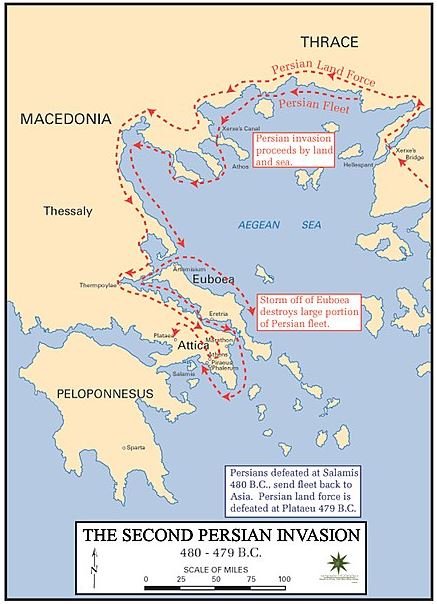
Xerxes meticulously planned the Second Persian Invasion, recognizing the need for both land and naval superiority. He amassed an enormous army and fleet, reportedly consisting of millions of soldiers and over a thousand warships, though modern historians suggest these numbers were likely exaggerated. Xerxes also undertook significant engineering projects, including pontoon bridges across the Hellespont (modern-day Dardanelles) and the construction of a canal through Mount Athos, aiming to facilitate the movement of his vast forces into Europe.
The Persian Empire, at its zenith, was a multicultural behemoth comprising diverse peoples and vast territories. This diversity, while a strength in terms of manpower, posed logistical challenges in terms of supply lines and coordination. Nevertheless, Xerxes was determined to subjugate Greece, viewing it as both a strategic and symbolic conquest.

Key Military Leaders
Persian Leaders
King Xerxes I
Xerxes I, the son of Darius I, was the principal architect of the Second Persian Invasion. His ambition to conquer Greece was driven by a desire to avenge his father’s defeat at Marathon and to assert Persian dominance over the region. Xerxes demonstrated significant organizational skills, overseeing the construction of pontoon bridges and mobilizing a vast, multinational army and fleet. However, his leadership also exhibited overconfidence, particularly in naval engagements, which ultimately contributed to Persian setbacks.
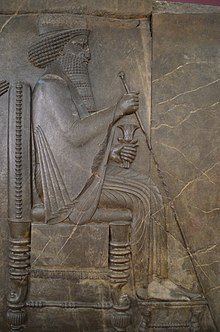
Image: A relief of Xerxes the Great.
General Mardonius
Mardonius was one of Persia’s most capable generals and played a crucial role during the invasion. Tasked with leading the Persian forces in Greece after Xerxes retreated, Mardonius aimed to press the advantage and secure Persian control. His strategic decisions at battles like Plataea were pivotal, although his efforts ultimately failed to secure a lasting Persian victory.
Greek Leaders
King Leonidas I of Sparta
Leonidas I is one of history’s most celebrated Spartan kings, renowned for his heroic stand at the Battle of Thermopylae. Leading a small contingent of Spartans and other Greek allies, Leonidas exemplified Greek bravery and tactical acumen. His decision to hold the narrow pass against overwhelming Persian numbers became a symbol of resistance and sacrifice.
Themistocles of Athens
Themistocles was a visionary Athenian statesman and general whose strategic foresight was instrumental in the Greek victory at Salamis. Recognizing the importance of naval power, Themistocles advocated for the expansion of the Athenian fleet, understanding that control of the sea would be crucial in countering Persian ambitions. His cunning tactics at Salamis, including the strategic lure into the narrow straits, were decisive in crippling the Persian navy.
Pausanias of Sparta
Pausanias was the Spartan regent and commander at the Battle of Plataea. His leadership was vital in uniting the Greek city-states and coordinating the largest hoplite army assembled up to that time. Pausanias’s ability to maintain cohesion among the diverse Greek forces was a key factor in the decisive victory over the Persians.
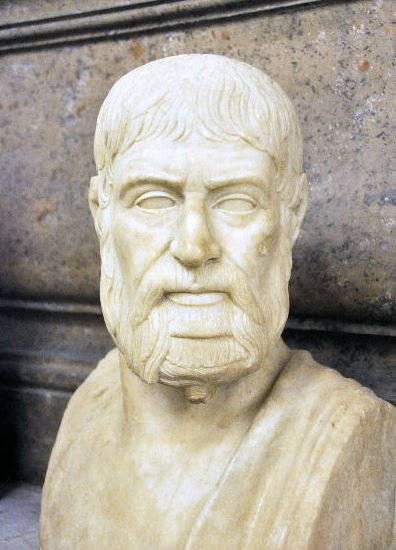
Image: Bust of Pausanias.
Major Battles
Battle of Thermopylae (August 480 BC)
The Battle of Thermopylae is one of the most iconic engagements of the Second Persian Invasion. A small Greek force, led by King Leonidas I of Sparta, defended the narrow pass of Thermopylae against the vast Persian army. For three days, the Greeks repelled numerous Persian assaults, showcasing the effectiveness of the Greek phalanx formation against the more numerous Persian infantry. However, betrayal by a local named Ephialtes revealed a hidden mountain path, allowing Xerxes to outflank the Greek forces. Leonidas dismissed the majority of the Greek army, remaining with his 300 Spartans and a few hundred allies to cover the retreat. Although the Persians ultimately breached the defenses, the battle demonstrated Greek resilience and strategic use of terrain.
Battle of Artemisium (August 480 BC)
Simultaneously with Thermopylae, the Battle of Artemisium took place in the straits of Artemisium, involving the Greek and Persian navies. Led by Themistocles, the Greek fleet engaged the Persians over three days, inflicting significant damage despite suffering substantial losses. The battle ended inconclusively as the Greek forces withdrew following the fall of Thermopylae, recognizing that their land defenses had been compromised.
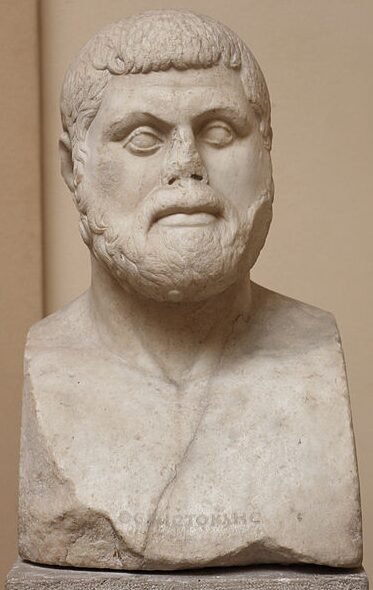
Image: Bust of Themistocles.
Destruction of Athens (September 480 BC)
Following the Persian victory at Thermopylae, Xerxes moved to capture and burn Athens. With the Greek fleet withdrawing to Salamis, the Persian army advanced, capturing and demolishing most of Greece. The Acropolis of Athens was stormed and razed, including the destruction of the Old Temple of Athena and the Parthenon. However, the strategic defense of the Isthmus of Corinth by Peloponnesian allies limited further Persian advances into the Peloponnesus, setting the stage for a naval confrontation.
Battle of Salamis (September 480 BC)
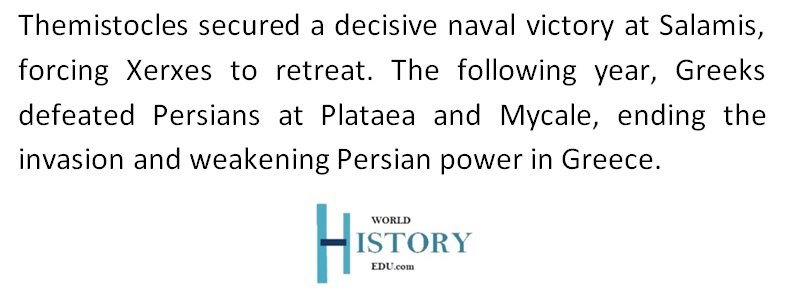
The Battle of Salamis was a turning point in the Second Persian Invasion. Themistocles, understanding the strategic importance of naval supremacy, lured the Persian fleet into the narrow Straits of Salamis. The confined waters neutralized the Persian numerical advantage, allowing the more maneuverable Greek triremes to inflict heavy losses on the disorganized Persian ships. Themistocles’s tactical brilliance resulted in a decisive Greek victory, significantly weakening Persian naval power and forcing Xerxes to retreat to Asia, leaving General Mardonius to continue the campaign with reduced forces.
Battle of Plataea (August 479 BC)
The Battle of Plataea marked the final land engagement of the Second Persian Invasion. As Xerxes had withdrawn, Mardonius led the remaining Persian forces in Greece. The Greek alliance, led by Pausanias of Sparta, assembled the largest hoplite army ever seen at that time. Employing disciplined phalanx formations, the Greeks engaged the Persians near Plataea. Despite initial Persian cavalry harassment, the Greek infantry proved superior in close-quarters combat, resulting in a decisive victory. Mardonius was killed in battle, leading to the collapse and rout of the Persian forces.
Battle of Mycale (August 479 BC)
On the same day as Plataea, the Battle of Mycale took place on the coast of Ionia. The Allied navy, bolstered by the victory at Salamis, attacked the remnants of the Persian fleet anchored at Mycale. The Greeks achieved a swift and decisive victory, destroying the Persian navy and ensuring that Persian power in the Aegean was severely diminished. This simultaneous defeat at Plataea and Mycale effectively ended the Persian invasion.
Significance of the Second Persian Invasion
Preservation of Greek Independence
The successful defense against the Persian invasion preserved the independence of the Greek city-states. This victory allowed Greece to continue developing its unique political systems, most notably Athenian democracy, which became a cornerstone of Western political thought. The unity displayed by the Greek allies, despite their frequent internal conflicts, demonstrated the effectiveness of collective defense against a common enemy.
Cultural and Intellectual Flourishing
The preservation of Greek independence facilitated a period of unprecedented cultural and intellectual growth. Athens, in particular, became a center of art, philosophy, and science, laying the foundations for Western civilization. Figures such as Socrates, Plato, and Aristotle emerged during this era, profoundly influencing subsequent generations.
Military Innovations and Tactics
The Second Persian Invasion underscored the effectiveness of the Greek phalanx formation and the strategic use of terrain and deception in warfare. The success of heavily armored hoplites against the more diverse and less disciplined Persian forces highlighted the importance of tactical cohesion and training. These military innovations influenced warfare for centuries, setting precedents for infantry tactics and battlefield organization.
Shift in Persian Policy
The failure of the Second Persian Invasion marked a significant shift in Persian imperial policy. The empire moved away from overt expansion into Europe, instead focusing on consolidating and defending its existing territories. This retreat from aggressive expansionism allowed the Persian Empire to stabilize and maintain control over its vast and diverse domains.
Foundation of the Delian League
In the aftermath of the invasion, Athens led the formation of the Delian League, an alliance of Greek city-states aimed at deterring future Persian aggression and liberating Greek-held territories in Asia Minor. This alliance laid the groundwork for the rise of Athenian power and the eventual conflicts of the Peloponnesian War, which further shaped the political landscape of ancient Greece.
Symbolism of Greek Resistance
The Second Persian Invasion became a powerful symbol of resistance and unity in Greek culture. The heroic stand at Thermopylae and the strategic victories at Salamis and Plataea were celebrated in literature and art, reinforcing ideals of bravery, sacrifice, and strategic ingenuity. These narratives have endured through the ages, inspiring countless generations in the pursuit of freedom and resilience against oppression.
Impact on Western Historical Narrative
Herodotus’s detailed accounts of the Second Persian Invasion established a foundational narrative for Western historiography. His emphasis on empirical evidence and critical inquiry set standards for historical writing. Despite initial criticisms and debates over the accuracy of certain details, Herodotus’s work has been instrumental in shaping the understanding of ancient history and the complexities of cross-cultural conflicts.

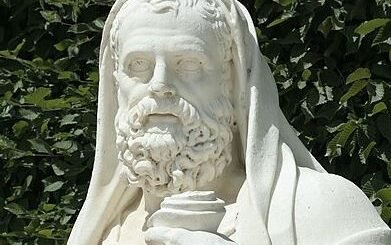
Image: Herodotus (c. 484 BC – c. 425 BC)
Long-term Geopolitical Consequences
The Greek victory in the Second Persian Invasion altered the balance of power in the ancient world. Greece emerged as a dominant cultural and military force in the Mediterranean, influencing neighboring regions through colonization and trade. The retreat of Persian influence into Asia allowed for the flourishing of Greek states and the eventual rise of the Macedonian Empire under Philip II and Alexander the Great, who would further spread Greek culture across the known world.
Lessons in Alliance and Leadership
The Greek coalition’s ability to unite disparate city-states against a formidable enemy offers timeless lessons in alliance-building and leadership. The coordination between Sparta and Athens, despite their differing political systems and mutual suspicions, was crucial in achieving victory. Effective leadership from figures like Leonidas, Themistocles, and Pausanias exemplified the importance of strategic vision and the ability to inspire and mobilize diverse forces toward a common objective.
Influence on Modern Military Strategy
The battles of the Second Persian Invasion, particularly Thermopylae and Salamis, continue to be studied in military academies worldwide. The strategic use of terrain, the importance of intelligence and deception, and the effective deployment of naval forces are key lessons drawn from these ancient engagements. These historical examples inform contemporary military strategy and doctrine, demonstrating the enduring relevance of classical warfare principles.
Psychological Impact on Greek Unity
The shared struggle and subsequent victories against Persia fostered a sense of pan-Hellenic identity among the Greek city-states. This psychological unity, forged in the crucible of war, contributed to the eventual collaboration that would lead to the establishment of powerful alliances like the Delian League. The collective memory of resistance against a common foe reinforced the importance of solidarity and mutual support in the face of external threats.
Conclusion
The Second Persian Invasion of Greece was a defining moment in ancient history, characterized by monumental battles, strategic brilliance, and the resilience of the Greek city-states. Led by influential figures such as Xerxes I, Leonidas I, Themistocles, and Pausanias, the conflict showcased the interplay of leadership, military innovation, and alliance-building. The Greek victories at Thermopylae, Salamis, Plataea, and Mycale not only thwarted Persian expansion but also preserved the cultural and political foundations that would underpin Western civilization.
Frequently Asked Questions
Who was Herodotus and what was his contribution to the Great Greco-Persian Wars?
Herodotus, born in 484 BC in Halicarnassus under Persian rule, is known as the ‘Father of History.’ He authored “The Histories” around 440–430 BC, providing a comprehensive account of the Great Greco-Persian Wars. His work aimed to uncover the origins and events of the wars through verifiable explanations, setting a new standard for historical documentation.
How did Herodotus’s methodologies differ from previous historical accounts?
Herodotus introduced a novel approach by emphasizing verifiable explanations over mythical or divine attributions. He systematically traced the origins and events of the Greco-Persian Wars based on personal investigations and eyewitness reports, rather than relying on legends or the whims of gods.
What criticisms did Herodotus face from subsequent historians?
Herodotus faced criticism for allegedly favoring “barbarians.” Notably, Plutarch accused him of being a “Philobarbaros” (barbarian-lover). Despite these critiques, his work was largely continued by historians like Thucydides, who respected his accounts enough to build upon them without extensive corrections.
How have modern perspectives on Herodotus’s accounts evolved?
Initially met with skepticism, especially during Renaissance Europe, Herodotus’s credibility was later bolstered by 19th-century archaeological discoveries that confirmed many of his claims. Today, historians generally regard his “Histories” as remarkably accurate, though they caution against accepting specific details like troop numbers and dates without question.
What role did other ancient historians play in documenting the Greco-Persian Wars?
Ancient historians such as Diodorus Siculus, Plutarch, and Ctesias provided additional accounts of the Greco-Persian Wars, often aligning with Herodotus’s narratives. Archaeological evidence, like the Serpent Column, also supports several of Herodotus’s claims, reinforcing the historical foundation of his work.
What was the Ionian Revolt and how did it lead to the Greco-Persian Wars?
The Ionian Revolt (499–494 BC) involved Greek city-states like Athens and Eretria opposing Persian domination. This revolt highlighted the fragility of the young Persian Empire, prompting Darius I to seek revenge and expand Persian control into Greece, ultimately sparking the Greco-Persian Wars.
How did Darius I respond to the Ionian Revolt and what were his objectives?
Darius I aimed to consolidate his empire and punish those who supported the Ionian Revolt by extending Persian control into Greece. In 491 BC, he demanded submission from all Greek city-states through the offering of “earth and water.” While most complied, Athens and Sparta resisted, effectively declaring war.
What were the key events of Darius I’s campaign against Greece?
In 490 BC, Darius I targeted key Greek cities, successfully besieging and destroying Eretria. His forces then marched to Marathon, where the Athenians achieved a significant victory against the Persians, forcing their retreat. Darius’s death in 486 BC halted further Persian advances until his successor, Xerxes I, resumed the campaign.
How did Xerxes I prepare for the second Persian invasion of Greece?
Xerxes I meticulously planned the second invasion by assembling a massive army and navy, reportedly including up to 2.5 million military personnel and over 1,200 triremes, though modern scholars believe these numbers were exaggerated. He orchestrated engineering feats like pontoon bridges across the Hellespont and a canal around Mount Athos, and amassed diverse contingents from 46 nations within the empire.
What are the modern scholarly perspectives on the reported size of Xerxes’s army and fleet?
Modern scholars argue that Herodotus’s figures are exaggerated due to logistical constraints. Estimates suggest Xerxes’s army likely ranged between 200,000 to 500,000 men, and the fleet around 600 warships, rather than the millions and thousands reported by ancient sources. These revised numbers account for supply lines and the challenging Greek terrain.
How did the Greek city-states organize their defense against the Persian invasion?
Recognizing the imminent threat, Athens, led by Themistocles, built a formidable navy. Approximately 70 city-states formed a fragile coalition at Corinth in 481 BC, relying primarily on Sparta and Athens for leadership. This alliance coordinated military efforts despite internal rivalries and the absence of a standing army, preparing to defend against the Persian forces.
What were the outcomes and significance of the key battles: Thermopylae, Salamis, and Plataea?
- Thermopylae (480 BC): A small Greek force led by King Leonidas I of Sparta held off the vast Persian army for three days before being outflanked and defeated.
- Salamis (480 BC): The Greek navy, under Themistocles, won a decisive victory by luring the Persian fleet into the narrow straits, crippling Persian naval power.
- Plataea (479 BC): The largest Greek hoplite army defeated the Persians, killing General Mardonius and ending the invasion.
These victories not only thwarted Persian ambitions but also preserved Greek independence, fostering the development of democracy, philosophy, and the arts, which became foundational to Western civilization.