Sir William Temple, 1st Baronet: Life and Major Works
Sir William Temple, 1st Baronet (1628–1699), was an influential English diplomat, writer, and politician known for his diplomatic skill, advocacy of governmental reform, and literary contributions. Temple’s life was marked by political service, a devotion to the aesthetic and intellectual life, and a retirement focused on writing and horticulture. Although less well-known today, Temple’s legacy was significant in shaping the political, literary, and cultural landscape of Restoration England.
In the article below, World History Edu explores his early life, major diplomatic achievements, contributions to government reform, later life, and literary impact.
Early Life and Background
Born in London on April 25, 1628, Sir William Temple was the eldest son of Sir John Temple, an Irish judge, and Master of the Rolls. Temple came from an affluent family with strong Puritan affiliations, yet his upbringing was also deeply tied to the English gentry
Educated at Emmanuel College, Cambridge, Temple demonstrated early intellectual prowess and a keen interest in literature and European culture. After his formal education, Temple traveled throughout Europe, a journey that significantly broadened his political knowledge and understanding of European affairs. He eventually entered the Irish Parliament, serving as a representative and beginning his political career.
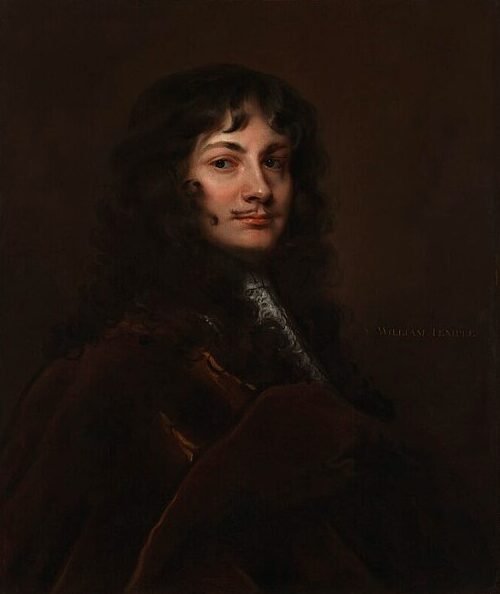
Image: A portrait of Sir William Temple.
Diplomatic Career and the Triple Alliance
Temple’s entry into English diplomatic service marked the beginning of his influence on European politics. His most notable achievement came in 1668 with the negotiation of the Triple Alliance, a defensive treaty between England, Sweden, and the Dutch Republic. At the time, European politics were complex, with France under Louis XIV exerting considerable power and attempting to dominate the continent. The Triple Alliance was designed to curtail French ambitions, particularly regarding the Spanish Netherlands. The alliance succeeded in balancing power in Europe and was celebrated as a triumph of English diplomacy.
Temple’s work in negotiating the Triple Alliance earned him the trust of Charles II, as well as a prominent place in the court. He was praised for his political skill, his ability to navigate diplomatic challenges, and his grasp of international dynamics. The Triple Alliance remained a model of Temple’s pragmatic approach to diplomacy, valuing stability and peace over the expansionist ambitions that were popular among other European powers.
Marriage of the Prince of Orange and Princess Mary
In 1677, Temple facilitated the marriage between Prince William of Orange and Princess Mary, daughter of James, Duke of York (later James II). This marriage had a significant impact on English and Dutch relations, ultimately leading to William’s accession to the English throne during the Glorious Revolution in 1688. Temple’s role in securing this alliance further solidified his reputation as a skilled diplomat with a long-term vision. The marriage helped establish a Protestant alliance against the Catholic rulers of Europe, contributing to the balance of power Temple sought to achieve.
The Privy Council Ministry and Government Reform
Despite his successes, Temple’s relationship with the monarchy became strained due to differences in political philosophy. In 1679, Charles II, facing political pressure from anti-Catholic factions and internal crises, sought Temple’s advice on how to restructure the government. Temple proposed creating a Privy Council Ministry, which would act as a cabinet-style advisory body, giving influential nobles a voice in government decisions. This proposal, though innovative, was seen as a threat to royal authority, as it effectively reduced the king’s unilateral decision-making power.
Temple’s vision for a Privy Council Ministry was an early precursor to the modern Cabinet system, reflecting his interest in balancing power between the monarchy and the ruling elite. Although Charles II gave the idea a brief trial, he ultimately rejected it as infringing on his royal prerogative. This event marked a turning point in Temple’s career, as he realized the limits of his influence over the king. Disillusioned with the political climate and the direction of the monarchy, Temple chose to retire from public service, preferring a life of intellectual pursuit.
Retirement at Sheen and More Park
Following his departure from the political sphere, Temple initially retired to Sheen, a property near London. However, in 1686, he moved to Compton Hall in Farnham, renaming it More Park after Moor Park, an estate he admired for its beauty and tranquility. At More Park, Temple devoted himself to gardening, writing, and philosophical reflection. His estate became a space of both intellectual and horticultural experimentation, reflecting his love for the arts and natural beauty.
More Park also became the setting for Temple’s mentorship of Jonathan Swift, the future satirist and author of Gulliver’s Travels. Temple employed Swift as his secretary, and the two shared a close relationship, with Swift gaining valuable experience and connections through his association with Temple. It was at More Park that Swift met Esther Johnson, also known as Stella, who would become a lifelong companion and muse. Although rumors circulated that Stella was Temple’s illegitimate daughter, evidence suggests that she was likely the daughter of a companion to Temple’s sister.
Garden Philosophy and the Concept of Sharawadgi
Temple’s writings on gardening, most notably in his essay “Upon the Gardens of Epicurus” (1685), reveal his philosophical approach to horticulture. Temple championed the idea of sharawadgi, a term he used to describe an appreciation for irregular and naturalistic beauty in garden design, inspired by descriptions of Chinese gardens he had read about but never seen. This concept diverged from the formal, symmetrical garden layouts popular in Europe at the time, suggesting an early inclination toward what would later be known as the English landscape garden style.
Temple’s emphasis on irregularity and harmony with nature influenced English garden design, encouraging an appreciation for the natural landscape over rigid symmetry. Although Temple’s writings on gardening were modest in scope, his ideas about sharawadgi left a lasting mark on British horticultural aesthetics, promoting a style that blended formal structure with natural beauty.
Literary Contributions and Influence on Prose Style
Temple’s literary work spanned essays and observations on various subjects, including politics, philosophy, and society. His prose was admired for its clarity, rhythmic quality, and conversational tone, setting a standard for English prose in his era. Samuel Johnson praised Temple’s prose for its cadence, while Thomas Babington Macaulay highlighted its musicality and coherence. Temple’s writing style was marked by a simplicity that made complex ideas accessible, reflecting his desire to communicate effectively with both learned and general audiences.
Among Temple’s notable literary works is Miscellanea, a collection of essays that was published in several volumes throughout the 1690s. These essays covered diverse topics, including government, diplomacy, and gardening, showcasing Temple’s intellectual range and reflective nature. His essay on the Dutch Republic, Observations upon the United Provinces of the Netherlands, offered insights into Dutch society, governance, and trade, reflecting his fascination with the political and economic systems of other countries.
Temple’s writing had a lasting influence on English literature and was admired by his contemporaries and future writers alike. Jonathan Swift, in particular, held Temple’s work in high regard, frequently referring to him as a model of wit and style. Temple’s influence on Swift’s prose style is evident, as both writers shared an affinity for clear expression and thoughtful reflection.
The Glorious Revolution and Temple’s Later Life
The Glorious Revolution of 1688, which saw the Protestant William of Orange and Mary II ascend to the English throne, transformed the political landscape of England. Temple, though a supporter of constitutional monarchy, remained aloof from direct involvement in the events surrounding the revolution. He accepted the new regime but declined an offer to serve as Secretary of State, choosing instead to remain at More Park.
Temple’s choice to stay out of politics in his later years reflects his growing disillusionment with public service and his preference for a life of intellectual solitude. In his essay “Upon the Gardens of Epicurus,” he expressed contentment with his retirement, likening his retreat from politics to the philosophical pursuits of Epicurus, who valued tranquility and self-reflection.
Legacy and Death
Sir William Temple passed away at More Park on January 27, 1699. Following his wishes, he was buried in Westminster Abbey, but his heart was placed in a silver casket under a sundial at his estate, symbolizing his deep attachment to the land and his commitment to a contemplative life. Temple’s death was mourned by his close friends and admirers, including Jonathan Swift, who described Temple as embodying “all that was great and good among men.” Swift’s sentiments highlight the respect and admiration Temple garnered during his lifetime.
Temple’s legacy is multifaceted. As a diplomat, he demonstrated the importance of alliances and skillful negotiation. As a political thinker, his proposal for the Privy Council Ministry anticipated elements of the modern Cabinet system, though it was not realized during his time. His work in garden design influenced later developments in English landscape gardening, promoting a naturalistic approach that valued irregular beauty.
In literature, Temple’s influence extended to writers such as Swift and later critics like Samuel Johnson, who praised his contribution to English prose. His essays, particularly those in Miscellanea, reflect a mind engaged with the intellectual currents of his time, exploring topics from governance to gardening with a distinctive blend of wit and insight. Though Temple may not have achieved lasting political power, his intellectual and literary contributions left a mark on English thought, laying foundations for future developments in government, gardening, and literature.
Conclusion
Sir William Temple’s life and works illustrate the complexities of 17th-century English society, politics, and culture. Through his diplomacy, Temple influenced the balance of power in Europe, fostering alliances that shaped the continent’s political landscape. His vision for governmental reform demonstrated an early inclination toward balancing royal authority with advisory structures, anticipating later models of governance. In retirement, Temple embraced the tranquility of country life, channeling his energies into writing and gardening, where his appreciation for natural beauty foreshadowed the English landscape garden movement.
As a writer, Temple’s contributions to English prose, admired by figures such as Samuel Johnson and Jonathan Swift, exemplified clarity, wit, and elegance. His legacy endures in the fields of diplomacy, political thought, and literature, offering insights into the values of a man who sought balance and beauty in both public life and private retreat.
Frequently Asked Questions
What was Sir William Temple’s early background?
Sir William Temple was born in London in 1628 to Sir John Temple, an Irish judge. He was educated at Emmanuel College, Cambridge, and later traveled extensively across Europe, gaining valuable insights into European politics and society.
What were some of Temple’s key diplomatic achievements?
Temple’s diplomatic career included negotiating the Triple Alliance in 1668, a treaty between England, Sweden, and the Dutch Republic, and arranging the marriage between the Prince of Orange and Princess Mary of England in 1677.
Why did Temple retire from political life in 1679?
He disagreed with King Charles II’s anti-Dutch policies and chose to retire to his home in Sheen rather than continue advising on policies he did not support.
What was Temple’s vision for government reform?
He introduced the idea of the Privy Council Ministry in 1679, aiming to create a structured executive body resembling a Cabinet. Though briefly entertained by Charles II, the idea was ultimately rejected as an infringement on royal authority.
What role did Temple play in Jonathan Swift’s life?
He employed Jonathan Swift as his secretary in 1689, providing him with valuable mentorship and access to influential connections. Swift also met Esther Johnson, known as Stella, at Temple’s estate, and she became a lifelong companion.
Why did Temple decline a political role under William and Mary?
After the Glorious Revolution, Temple accepted the new regime but declined an offer to serve as Secretary of State, preferring to focus on his writing and gardening.
What influence did Temple have on English landscape gardening?
He is considered an early influence on English landscape gardening due to his appreciation for sharawadgi, or irregular beauty in garden design. He emphasized practical gardening and valued fruit trees over ornamental flowers, reflecting the tastes of his time.
What was unique about Temple’s writing style?
His prose was praised for its clarity and rhythmic quality. Samuel Johnson lauded his ability to make English prose melodious, and his style was admired by Jonathan Swift and later critics like Thomas Babington Macaulay.
How did Temple spend his later years?
Temple enjoyed a peaceful retirement at More Park in Farnham, focusing on gardening and writing. He expressed his love for this tranquil life in his essay “Upon the Gardens of Epicurus,” reflecting on the simplicity and peace of his rural existence.
What legacy did Temple leave behind?
Temple’s legacy includes contributions to political thought, garden aesthetics, and English prose. His essays, collected as Miscellanea, covered various topics from government to travel observations, leaving a lasting impact on literature and political philosophy.