Xibalba: The Underworld in Maya Religion
Xibalba, the underworld in Maya religion, is a place of darkness, fear, and trials associated with death and suffering.
The domain is prominently depicted in the Popol Vuh, the sacred K’iche’ Maya text, where it is portrayed as a vast, ominous realm ruled by powerful and malevolent gods or lords. These rulers, often referred to as the Lords of Xibalba, are said to govern various forms of human suffering, including sickness, pain, fear, and death.
The concept of Xibalba is both mythological and cosmological, representing not only a physical place but also an integral part of the Maya understanding of life, death, and the challenges faced by humans and the divine.

Xibalba meaning “place of fright,” is the underworld in Maya mythology, governed by death gods and their helpers. Image: Noblewoman ensnared by K’awiil’s serpent-like leg. K’awiil is a Maya deity identified with power, creation, and lightning.
Origins and Mythological Background of Xibalba
In Maya mythology, Xibalba holds a unique place in the universe, situated below the surface of the earth. According to the Popol Vuh, Xibalba is ruled by twelve lords who bring misfortune, illness, and death to mortals.
The two supreme rulers are Hun-Came (“One Death”) and Vucub-Came (“Seven Death”), with Hun-Came being the elder. Under their authority, ten other lords serve, each assigned dominion over specific afflictions that plague humankind. The hierarchy of these lords reflects their terrifying power, with each pairing bringing different forms of suffering.
The lords are divided into pairs, each pair symbolizing a unique form of anguish. For example, Xiquiripat (“Flying Scab”) and Cuchumaquic (“Gathered Blood”) are said to cause sickness by affecting people’s blood.
Ahalpuh (“Pus Demon”) and Ahalgana (“Jaundice Demon”) bring swelling and sickness, while Chamiabac (“Bone Staff”) and Chamiaholom (“Skull Staff”) turn human bodies into skeletons.
Ahalmez (“Sweepings Demon”) and Ahaltocob (“Stabbing Demon”) are particularly sinister, as they lurk in unswept areas of homes and stab unsuspecting individuals.
Lastly, Xic (“Wing”) and Patan (“Packstrap”) cause people to cough up blood, spreading disease and death along roads and paths.
The Structure and Layout of Xibalba
Xibalba is more than just a dark place; it is a highly structured realm with a specific layout and intricate design. The Popol Vuh describes it as a large city or palace beneath the earth, with council chambers, residences for the lords, gardens, and a central ballcourt used for ritual games.
Xibalba also has an array of deadly structures known as “houses” that serve as places of testing and punishment. These include Dark House, Cold House, Jaguar House, Bat House, Razor House, and Hot House—each one posing a unique threat to those who enter.
The journey to Xibalba is treacherous, marked by several obstacles and trials. Travelers must first pass through rivers filled with scorpions, blood, and pus, all of which are meant to frighten and deter the unworthy. Beyond these rivers lies a crossroads with deceptive roads, each one speaking to confuse those who seek the way. The roads act as one of the earliest tests, as travelers must navigate this confusing network to reach the council place where the lords of Xibalba reside.
Upon arrival at the council place, travelers are met by the seated Lords of Xibalba. To further intimidate and confuse visitors, the lords often place mannequins among themselves, deceiving travelers into mistaking the dummies for real individuals.
Those who fail to correctly greet the actual lords are mocked and humiliated. Visitors are then instructed to sit on what appears to be a bench, only to discover that it is, in fact, a hot cooking surface, an additional form of torment that serves the amusement of the lords.
The Deadly Houses of Xibalba
The most famous aspects of Xibalba are the deadly “houses,” each designed to terrify, confuse, or harm anyone who enters. These houses present challenges that visitors must endure and survive, although failure often results in death or severe humiliation.
- Dark House: This house is completely dark, testing the visitor’s ability to navigate and survive in total darkness. The lack of light plays on psychological fears and disorientation.
- Cold House (Rattling House): Filled with bone-chilling cold and rattling hail, this house challenges visitors to withstand freezing temperatures and the terrifying sound of hail rattling against the structure.
- Jaguar House: This house is filled with hungry jaguars, symbolic of death and danger. The jaguars pose a mortal threat, as they are aggressive and ready to attack anyone who enters.
- Bat House: Inhabited by menacing bats known for their shrieking cries, this house symbolizes chaos and fear. The bats are described as dangerous and bloodthirsty, attacking anyone who dares to step inside.
- Razor House: A place filled with blades and razors that move autonomously, Razor House represents the lurking threat of sudden, violent death. These blades are thought to be enchanted or possessed, moving on their own to slice and kill.
- Hot House: Mentioned in another part of the Popol Vuh, this house is a furnace-like environment filled with unbearable heat and fire, testing visitors’ resilience to extreme temperatures.
Each house is a trap, intended to endanger or humiliate those who enter. Those who manage to survive or outwit these deadly trials gain the respect of the lords, but most meet their end within these horrific places.
The Ballcourt and the Hero Twins
A significant part of Xibalba is its legendary ballcourt, which is the site of critical encounters in the Popol Vuh. The ballcourt is where the Maya Hero Twins, Hunahpu and Xbalanque, confront the Xibalban lords.
The story of the Hero Twins begins with their father and uncle, who were lured to Xibalba by the lords and ultimately killed during a ballgame played with a deadly, bladed ball. However, the Hero Twins later return to Xibalba to avenge their family and prove their worth.

The ballcourt is a site of confrontation, where the Maya Hero Twins played against the Xibalban gods. Image: Maya hero twins Hunahpú and Xbalanqué
In their games against the Xibalban gods, the Hero Twins cleverly overcome the trials and eventually outwit the lords, marking a turning point in the story. Through strategy and cunning, the twins defeat the Xibalban gods and bring about their downfall, which symbolizes resilience and the triumph of intellect over brute force.
This victory is not just a personal triumph but represents the defeat of darkness and suffering, elevating the Hero Twins as significant figures in Maya mythology.
Worship, Decline, and Transformation of Xibalba
Initially, the Lords of Xibalba held a powerful and revered position in the Maya spiritual hierarchy. They were worshiped by people on the surface, who offered human sacrifices to appease these gods of death.
However, the events in the Popol Vuh suggest a shift in the reverence toward these gods. The Hero Twins’ victory over the Lords of Xibalba represents a diminishing of their power and influence, as well as a change in how they were perceived and respected.
The Hero Twins not only humiliate the lords but also reduce the offerings made to them from significant sacrifices to more modest offerings. This change reflects a transformation in the power dynamics between the living world and the underworld, indicating a shift in the focus of worship away from the Lords of Xibalba.
Did you know…?
- In some Maya regions, the Milky Way is symbolically seen as the path to Xibalba, connecting the heavens to this mystical underworld.
- American anthropologist Dennis Tedlock proposes that the negative depiction of Xibalba and its gods may reflect the K’iche’ Maya’s religious or political attitudes during the time the Popol Vuh was composed. The portrayal could serve as a critique of earlier Maya worship practices, casting the death gods in an unfavorable light and emphasizing the cultural shift away from venerating these deities.
Xibalba’s Legacy in Maya Cosmology and Modern Interpretations
After the defeat of the Xibalban lords, Xibalba remains a powerful symbol of death and the challenges associated with the journey to the afterlife. Despite their defeat, the Lords of Xibalba continue to exist as figures of fear and suffering, reminders of mortality and the perils of the underworld. Xibalba, therefore, serves as both a literal and metaphorical space in Maya cosmology, representing the ongoing struggle between life and death, light and darkness.
Anthropologist Dennis Tedlock suggests that the depiction of Xibalba’s decline may critique earlier Maya worship, where death gods held higher reverence.
In modern times, Xibalba is still referenced in various forms of Maya spirituality and remains an important cultural and historical symbol. Archaeologists have uncovered ancient sites believed to represent or relate to Xibalba, such as cave systems in Belize and Guatemala that may have served as symbolic entrances to the underworld.
These discoveries provide insight into the ritual practices of the ancient Maya, who likely viewed these caves as liminal spaces connecting the living world to Xibalba.
Symbolism and Philosophical Themes of Xibalba
Xibalba encapsulates several key themes central to Maya mythology, including the inevitability of death, the power of intelligence and resilience, and the idea that mortality is interwoven with the trials and tests that one must overcome. The journey to Xibalba and the encounters with its lords reflect the challenges and hardships inherent in human life, as well as the need for courage and wisdom to navigate them.
Traditionally, Xibalba’s entrance was believed to be a cave near Cobán, Guatemala, with cave systems in nearby Belize also considered entrances.
The trials of Xibalba also serve as a philosophical metaphor for spiritual growth and transformation. Just as the Hero Twins undergo a series of challenges to reach enlightenment and victory, the journey through Xibalba represents the soul’s journey through hardship to achieve greater understanding and transcendence. This concept aligns with Maya beliefs about the cyclical nature of life and the soul’s passage through multiple realms of existence.
Cultural Impact and Influence on Mesoamerican Literature
Xibalba has had a lasting impact on Mesoamerican literature, art, and culture. Its depiction in the Popol Vuh influenced not only Maya beliefs but also other Mesoamerican traditions that regard the underworld as a significant and often dangerous place. The story of the Hero Twins and their victory over the gods of death continues to inspire storytelling in the region, symbolizing the power of bravery, intelligence, and resilience.
Today, Xibalba is studied not only for its mythological importance but also for its insights into Maya social structures, beliefs, and values. The stories of Xibalba and the Hero Twins are a testament to the Maya’s sophisticated understanding of cosmology and human psychology, as well as their ability to weave complex narratives that address fundamental questions of life and death. The legacy of Xibalba thus lives on, reminding us of the timeless nature of myth and the profound insights it can offer into the human condition.
In conclusion, Xibalba is a multifaceted concept within Maya religion, representing both the literal underworld and a place of trials that echoes the human experience. It serves as a powerful reminder of the Maya’s deep connection to the cycles of life and death and the importance they placed on resilience, intelligence, and spiritual growth.
Frequently Asked Questions
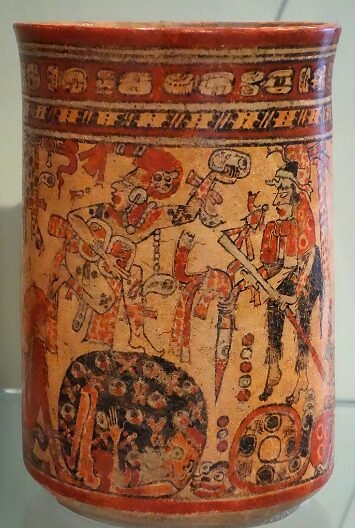
Xibalba remains a significant subject in the study of Maya mythology because it offers deep insights into ancient Maya beliefs about death, the afterlife, and the moral values upheld by the culture.
What is Xibalba according to the Popol Vuh?
Xibalba is an underworld associated with death and suffering, presided over by powerful gods or lords who inflict various forms of hardship on mortals. It is ruled primarily by Hun-Came (“One Death”) and Vucub-Came (“Seven Death”).
Who are the primary rulers of Xibalba?
The primary rulers are Hun-Came and Vucub-Came, with Hun-Came recognized as the supreme lord. These lords control Xibalba and oversee its various domains of human suffering.
What is the role of the ten other Lords of Xibalba?
These Lords are often referred to as “demons” and work in pairs, each with dominion over specific afflictions, such as sickness, pain, and death, spreading misfortune and torment among humans.
Examples of the Lords of Xibalba include Xiquiripat and Cuchumaquic, who cause sickness in people’s blood, and Ahalpuh and Ahalgana, who cause swelling and physical ailments. These paired Lords work together to inflict suffering on humans.
How is Xibalba physically structured in the Popol Vuh?
Xibalba is portrayed as a large court and city beneath the Earth, featuring a grand palace, council places, several deadly houses of trials, and a mystical ballcourt. It is a vast, dangerous underworld city.
What challenges do travelers face on their journey to Xibalba?
Travelers must cross rivers filled with scorpions, blood, and pus. They then encounter a crossroads where the roads deceive and speak, adding confusion and fear to the journey.
What is the significance of the council place within Xibalba?
The council place is where visitors first meet the seated Lords. The Lords place mannequins among themselves to confuse visitors, who may mistakenly greet them and face humiliation by sitting on a hot cooking surface disguised as a bench.
What are the “Deadly Houses” of Xibalba, and what trials do they contain?
The Deadly Houses are a series of lethal trials, including:
-
- Dark House: A house filled with total darkness.
- Cold House (Rattling House): Filled with unbearable cold and hail.
- Jaguar House: Populated by hungry jaguars.
- Bat House: Filled with dangerous bats.
- Razor House: Full of autonomous, razor-sharp blades.
- Hot House: A furnace-like environment filled with fire. Each house is designed to test and either kill or humiliate intruders.
What role does the ballcourt play in Xibalba’s mythology?
The ballcourt in Xibalba is a significant site where legendary confrontations take place. According to the Popol Vuh, the Maya Hero Twins initially lost a ballgame against the Xibalban gods due to deceit involving a deadly, bladed ball designed to kill them.
However, the twins later returned and, using their wit and cunning, defeated the gods of Xibalba in the ballcourt. This victory was a critical turning point in the narrative, highlighting themes of resilience, intelligence, and the triumph of good over evil.
How did the Hero Twins affect the power of the Xibalban gods?
The Hero Twins managed to deceive and humiliate the Xibalban gods, ultimately diminishing their power and influence over humans. By outsmarting the gods and surviving the deadly trials of Xibalba, the twins undermined the authority of the Lords of Xibalba. This led to a reduction in the need for human sacrifices and shifted the spiritual hierarchy, lessening the gods’ dominion in the lives of the Maya people.
Despite their defeat, what is the lasting significance of Xibalba in Maya mythology?
Even after their defeat by the Hero Twins, Xibalba remains an integral part of Maya cosmology as the underworld associated with death and trials. The Lords of Xibalba continue to symbolize fear and the challenges inherent in mortality.
Xibalba embodies the Maya understanding of the afterlife as a place where souls face obstacles, reinforcing themes of courage and the enduring struggle against adversity.
What themes are highlighted through the narrative of Xibalba and the Hero Twins?
The narrative emphasizes themes such as the conflict between good and evil, the importance of intelligence and cunning over brute force, and the inevitability of death. It also underscores values like bravery, perseverance, and the capacity to overcome deceit and hardship through wit and resilience.
How does Xibalba reflect the Maya conception of the afterlife and the underworld?
The realm represents the Maya belief in a complex afterlife where the soul embarks on a perilous journey filled with trials and tribulations. The underworld is not merely a place of punishment but a realm where the deceased must navigate challenges, mirroring the struggles faced in life. This reflects the cyclical nature of existence in Maya cosmology, where death is a continuation of life’s challenges.
What is the significance of the deadly houses in Xibalba’s mythology?
The deadly houses serve as symbolic tests that assess the character, endurance, and ingenuity of those who enter Xibalba. Each house presents unique and lethal challenges that individuals must overcome. These trials represent the obstacles and fears humans confront, both in life and in the spiritual journey after death, highlighting the importance of courage and cleverness.
How did people initially interact with the Lords of Xibalba?
Initially, humans revered the Lords of Xibalba and made human sacrifices to appease them, acknowledging their power over death and misfortune. This reverence and the offerings strengthened the gods’ influence and solidified their high status within the spiritual hierarchy of the Maya people.
What changes occurred in the relationship between humans and the Xibalban gods after the Hero Twins’ victory?
Following the Hero Twins’ triumph over the Xibalban gods, the necessity for human sacrifices diminished significantly. The gods’ influence over human affairs waned, and they were no longer held in the same esteem. This shift reflects a transformation in religious practices and beliefs, moving away from fear-based worship toward valuing intelligence and moral strength.
What does Xibalba symbolize in the broader context of Maya culture and belief systems?
It symbolizes the universal challenges of life and death, the inevitability of suffering, and the perpetual struggle against adversity. It embodies the Maya understanding of the cosmos, where the underworld is a crucial component of the life cycle. The trials within Xibalba reflect the belief that overcoming obstacles through courage and cunning is essential, both in life and beyond.
How does the story of Xibalba and the Hero Twins convey moral or cultural lessons?
The story imparts lessons about the virtues of intelligence, perseverance, and integrity. It teaches that deceit and malevolence can be overcome by those who are clever and brave. The Hero Twins’ victory serves as a metaphor for overcoming personal and societal challenges, encouraging individuals to face difficulties with resilience and wit.





