Sumerian literature represents the earliest known body of written works, encompassing a vast array of religious texts, traditional narratives, and other literary forms developed by the Sumerian civilization.
These literary creations were predominantly preserved by subsequent Akkadian and Babylonian empires, ensuring their transmission through the ages.
Originating in the Sumerian language during the 3rd and 2nd millennia BCE, specifically in the Middle Bronze Age, Sumerian literature laid the foundational groundwork for later Mesopotamian literary traditions.

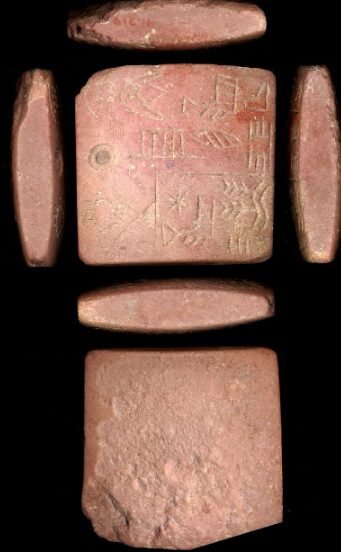
Sumerian literature is the oldest known body of written works, including religious texts and traditional stories from the Sumerian civilization. These writings were mostly preserved by the later Akkadian and Babylonian empires. Image: Schøyen Collection MS 3029: Creamy stone plaque (9.2×9.2×1.2 cm) with 12-column archaic cuneiform listing Adab’s gifts to High Priestess upon temple election.
Poetic Structure and Characteristics
Most Sumerian literary compositions are organized in left-justified lines, a structural feature that provided a clear and consistent format for scribes to record their works. These lines could exhibit organizational patterns similar to couplets or stanzas, suggesting an early form of poetic structure.
However, the precise definition of poetry in the Sumerian context remains unclear, as the Sumerians themselves did not explicitly categorize their literary works in the way modern societies do.
Unlike many contemporary poetic traditions, Sumerian literature does not employ rhyme. Instead, the texts achieve a form of musicality through the intricate patterns of similar and alternating sounds of vowels and consonants.
Additionally, the use of similar and alternating verb and noun endings contributes to a rhythmic resonance that lends a lyrical quality to the language. This phonetic harmony creates a musical effect, making the poetry engaging and memorable, even in the absence of traditional rhyming schemes.

The Sumerians developed one of the first writing systems, evolving cuneiform script from earlier proto-writing around the 30th century BC. Image: Sumerian tablet recording a bill of sale of a male slave and a building in Shuruppak, c. 2600 BC
Sumerian poetry does not utilize syllabo-tonic versification, a system based on the number of syllables and the pattern of stresses within lines.
Moreover, the cuneiform writing system, which the Sumerians developed, does not easily convey rhythm, meter, rhyme, or alliteration, making these elements difficult to detect or analyze in the written texts. As a result, the poetic qualities of Sumerian literature are primarily appreciated through the oral tradition rather than through written analysis.
Furthermore, comprehensive quantitative studies of other potential poetic features in Sumerian literature are either scarce or possibly obscured by scribes who may have intentionally hidden certain aspects when recording the texts.
This intentional obfuscation could have been motivated by a desire to maintain the integrity or sanctity of the literature, ensuring that the poetic essence was preserved primarily through oral recitation rather than written representation.
Literary Genres and Themes
Sumerian literature encompasses a diverse range of genres and topics, each reflecting different aspects of Sumerian society, religion, and culture.
These genres were not rigidly defined in Sumerian society, and many literary works incorporated poetic elements regardless of their specific classification.
However, modern assyriologists, following the categorization work of Miguel Civil, have identified several broad categories within the extant corpus of Sumerian literature:
Literary Catalogs
These catalogs were integral to scribal education, focusing on a curriculum known as the Decad. Manuscripts of these ten texts are among the best-preserved examples of Sumerian literature. Literary catalogs often listed various items, entities, or concepts, serving both educational and organizational purposes within the scribal schools.
Narratives and Mythological Compositions
- Epic of Gilgamesh: This epic includes numerous stories such as “Gilgamesh and Huwawa,” “Gilgamesh and the Bull of Heaven,” “Gilgamesh and Aga,” “Gilgamesh, Enkidu, and the Netherworld,” and “The Death of Gilgamesh.” These narratives explore themes of heroism, friendship, mortality, and the quest for immortality.
- Enmerkar and Lugalbanda: This collection includes “Enmerkar and the Lord of Aratta,” “Enmerkar and En-suhgir-ana,” and two tales of Lugalbanda during Enmerkar’s campaign against Aratta: “Lugalbanda in the Mountain Cave” and “Lugalbanda and the Anzud Bird.” These stories highlight the adventures and challenges faced by Sumerian heroes.
- Inanna’s Descent to the Underworld: This mythological composition narrates the journey of the goddess Inanna into the underworld, exploring themes of power, sacrifice, and transformation.
- The Legend of Adapa: This story revolves around Adapa, a sage who interacts with the gods, delving into themes of wisdom and divine intervention.
- Narratives Featuring Deities: Stories about gods such as Enki, Enlil, Inanna, and Ninurta (including “Lugal-e” and “Angim”) depict the interactions between gods and humans, highlighting the divine influence on earthly affairs.
- Other Myths: The “Eridu Genesis” is another example, offering a creation narrative that parallels other ancient flood myths.
Historical Compositions and Praise Poetry
- Praise Poems for Kings: These include compositions celebrating rulers from various dynasties, such as the Third Dynasty of Ur (e.g., Ur-Nammu, Shulgi, Amar-Sin, Shu-Sin, Ibbi-Sin), the Isin dynasty (e.g., Ishbi-Erra, Shu-Ilishu), and the Larsa dynasty (e.g., Gungunum, Sin-Iddinam). These poems often highlight the achievements and virtues of the kings, reinforcing their legitimacy and glorifying their reigns.
- City Laments: Texts like the “Lament for Ur” and the “Lament for Sumer and Ur” mourn the downfall of cities, reflecting the emotional and social impact of political changes.
- King Lists and Historical Compositions: These include documents such as the “Building of Ningirsu’s Temple,” which provide insights into the construction projects and administrative activities of Sumerian rulers.

Created in the Sumerian language during the 3rd and 2nd millennia BC, specifically in the Middle Bronze Age, Sumerian literature covers various genres. Image: Sumerian King List
Letters, Letter Prayers, and Laws
- Letters: Examples include the “Correspondence of the Kings of Ur” and similar texts from Isin, Larsa, and other dynasties. These letters offer glimpses into the diplomatic, administrative, and personal communications between rulers.
- Law Codes: The “Code of Ur-Nammu,” attributed to Ur-Nammu of the Third Dynasty of Ur, is one of the earliest known law codes. Other examples include the “Code of Lipit-Ishtar” and the “Code of Hammurabi.” These codes outline legal principles, punishments, and societal norms, illustrating the development of law and order in ancient Mesopotamia.
Hymns and Songs
- Hymns to Deities: These compositions praise gods like Enlil, reflecting the religious devotion and theological beliefs of the Sumerians.
- Songs Dedicated to Cities or Temples: Texts such as the “Zame Hymns,” “Temple Hymns,” and the “Kesh Temple Hymn” celebrate specific cities or religious sites, highlighting their significance and the divine protection they receive.
Disputation Poems
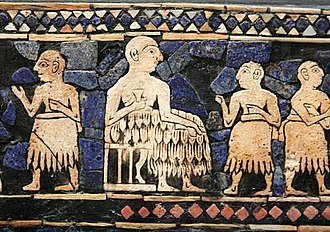
Even after the spoken Sumerian language vanished, it remained in use for official and literary purposes in Akkadian and Babylonian societies. Image: Enthroned Sumerian king of Ur, possibly Ur-Pabilsag, with attendants. Standard of Ur, c. 2600 BC.
Sumerian Disputations: These are poetic debates that personify abstract concepts or objects. Examples include:
- “Debate between the Hoe and the Plough”
- “Debate between Bird and Fish”
- “Debate between Sheep and Grain”
- “Debate between Winter and Summer”
- “Debate between Tree and Reed”
- “Debate between Silver and Copper”
These disputations explore the relationships and interactions between different elements of the natural and social world, often emphasizing the superiority or interdependence of one over the other.
Proverbs
Anthologies of proverbs from cities like Nippur, Susa, Urim, and Uruk provide insight into the wisdom, values, and societal norms of Sumerian culture. These proverbs encapsulate practical advice, moral lessons, and cultural wisdom passed down through generations.
Heterogeneous Compositions
Texts such as the “Instructions of Shuruppak” offer guidance on ethical behavior, social conduct, and practical skills, reflecting the educational and moral teachings of Sumerian society.
Works like the “Dialogue between a Man and His God” explore the relationship between humans and the divine, delving into themes of faith, obedience, and divine favor.
Oral Tradition and Written Records
While much of Sumerian literature was shared orally, the advent of writing allowed scribes to record these stories and texts, preserving them for future generations. This transition from oral to written tradition marked a significant advancement in the ability to maintain and disseminate cultural narratives, religious beliefs, and administrative information.

Undoubtedly, one of the biggest achievements of the Sumerians was writing. They used writing to keep records of inventory, especially of livestock and crops. The cuneiform script was the world’s first known writing system that was primarily used for accounting purposes and transcription. It largely remained that way for about three centuries until the coming of Enheduanna, who started using the script to produce original literary works. Image: Ancient Sumerian clay tablet inscribed with the text of the poem Inanna and Ebih
Some literary works were associated with specific musical instruments or contexts, suggesting that they were performed in particular settings, such as religious ceremonies or communal gatherings. This performative aspect highlights the integral role of literature in Sumerian social and religious life.
Lack of Titles in Sumerian Literature
Interestingly, Sumerian literary works typically do not possess formal titles. Instead, they are referred to by their opening lines or first words. This practice underscores the oral origins of these texts, where titles would be less relevant or necessary in the context of recitation and performance.
The absence of titles poses challenges for modern scholars in categorizing and referencing specific works, necessitating reliance on the initial lines or contextual clues to identify and differentiate between various compositions.
Educational Focus and Sumerian Scribal Training
Sumerian scribal education was highly structured, centered around a curriculum known as the Decad. This curriculum comprised ten texts that were meticulously copied and studied by aspiring scribes.
These manuscripts, some of the best-preserved examples of Sumerian literature, served as foundational training materials, ensuring that scribes were well-versed in the literary and administrative traditions of their culture. The focus on copying these texts highlights the importance placed on education, literacy, and the preservation of cultural knowledge in Sumerian society.
Narratives and Mythological Compositions
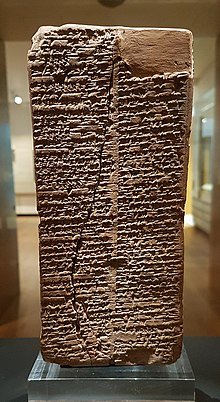
Sumerian King List – The Weld-Blundell Prism, inscribed with the Sumerian King List – The list also contains names like Gilgamesh and Dumuzi
Sumerian narratives often feature heroic figures and deities, reflecting the values, beliefs, and societal structures of ancient Mesopotamia. The Epic of Gilgamesh, one of the most renowned pieces of Sumerian literature, comprises various stories that explore profound themes such as friendship, the quest for immortality, and the inevitability of death. Stories like “Gilgamesh and Huwawa,” “Gilgamesh and the Bull of Heaven,” and “The Death of Gilgamesh” delve into the personal and existential struggles of the epic’s titular hero.
Enmerkar and Lugalbanda are other significant narratives that depict the adventures and trials of legendary kings and heroes. These tales often involve quests, battles, and interactions with divine beings, illustrating the close relationship between the divine and the royal authority. For instance, “Enmerkar and the Lord of Aratta” and “Lugalbanda in the Mountain Cave” showcase the challenges faced by these leaders in asserting their power and fulfilling their destinies.
Inanna’s Descent to the Underworld is a poignant myth that narrates the journey of the goddess Inanna as she descends into the underworld. This story explores themes of power, sacrifice, and transformation, highlighting the complex nature of Sumerian deities and their interactions with the mortal realm.
Historical Compositions and Praise Poetry
Historical compositions in Sumerian literature often take the form of praise poems dedicated to kings. These compositions celebrate the achievements, virtues, and divine favor bestowed upon the rulers, reinforcing their legitimacy and glorifying their reigns. For example, praise poems for kings like Ur-Nammu, Shulgi, and Hammurabi highlight their contributions to architecture, law, and societal order.
City Laments such as the “Lament for Ur” express sorrow over the downfall or destruction of cities, reflecting the emotional and social impact of political upheaval. These laments serve as both historical records and expressions of communal grief, providing insight into the collective psyche of the Sumerian people during times of crisis.
Letters and Laws
Sumerian literature also includes a rich collection of letters and legal texts. Letters, such as those found in the “Correspondence of the Kings of Ur,” offer valuable insights into the diplomatic and administrative practices of the time. These correspondences reveal the complexities of inter-city relations, trade negotiations, and governance.
Legal texts like the Code of Ur-Nammu, the Code of Lipit-Ishtar, and the Code of Hammurabi are foundational documents that outline the legal principles, punishments, and societal norms of ancient Mesopotamia. These codes demonstrate the sophistication of Sumerian legal thought and its influence on later legal systems in the region.
Hymns and Songs
Hymns and songs in Sumerian literature serve to praise deities, celebrate cities, and honor religious sites. Hymns dedicated to gods like Enlil and Inanna reflect the central role of religion in Sumerian society. These compositions often highlight the gods’ benevolence, power, and involvement in human affairs, reinforcing the divine authority that underpinned Sumerian kingship and governance.
Songs dedicated to specific cities or temples, such as the “Zame Hymns” and the “Temple Hymns,” celebrate the sanctity and significance of these sacred spaces. These hymns emphasize the interconnectedness of religion, politics, and urban life, showcasing how literature served to integrate various aspects of Sumerian culture.
Disputation Poems
Disputation poems are a unique genre within Sumerian literature that personify abstract concepts or objects and engage them in poetic debates. Examples include the “Debate between the Hoe and the Plough,” “Debate between Bird and Fish,” and “Debate between Winter and Summer.” These poems explore the relationships and interactions between different elements of the natural and social world, often highlighting the superiority or interdependence of one over the other.
These disputations serve as a form of literary exploration, allowing for the expression of societal values, technological advancements, and environmental understandings through metaphorical debates. They also reflect the Sumerian penchant for using literature as a means of intellectual and philosophical inquiry.
Proverbs
Proverbs in Sumerian literature encapsulate practical wisdom, moral lessons, and cultural values. Collections of proverbs from cities like Nippur, Susa, Urim, and Uruk provide a window into the everyday life and societal norms of ancient Mesopotamia. These proverbs offer succinct expressions of Sumerian ethics, advising on topics such as governance, interpersonal relationships, and personal conduct.
Literacy was widespread, and Sumerian texts copied by students greatly influenced Babylonian literature. The primary genres of Sumerian literature include literary catalogs, narrative and mythological stories, historical accounts, letters, legal documents, disputation poems, proverbs, and other miscellaneous texts. Image: A proto-literate tablet (c. 3100–2900 BC) records land transfer, now housed at Walters Art Museum, Baltimore.
Heterogeneous Compositions
Heterogeneous compositions encompass a variety of literary forms that do not fit neatly into other categories. This includes instruction literature, such as the “Instructions of Shuruppak,” which offers guidance on ethical behavior, social conduct, and practical skills. Dialogues like the “Dialogue between a Man and His God” explore theological and philosophical themes, delving into the nature of divine-human relationships and the quest for understanding within the divine framework.
Oral Tradition and Written Records
While much of Sumerian literature was shared orally, the development of writing enabled scribes to record these narratives, ensuring their preservation and transmission across generations. This transition from oral to written tradition was crucial in maintaining the continuity of Sumerian cultural and religious practices.
Some literary works were associated with specific musical instruments or performance contexts, indicating that they were recited or sung during particular ceremonies or communal gatherings. This performative aspect underscores the integral role of literature in Sumerian social and religious life.
Absence of Formal Titles
A distinctive feature of Sumerian literature is the absence of formal titles for literary works. Instead of titles, these texts are commonly identified by their opening lines or first words. This practice reflects the oral origins of Sumerian literature, where the initial lines served as mnemonic devices to aid in the recitation and performance of the texts. For modern scholars, this necessitates reliance on these opening lines for identification and categorization, as formal titles were not part of the original literary conventions.
Educational Focus and Sumerian Scribal Training
Sumerian scribal education was highly structured, centered around a curriculum known as the Decad. This curriculum comprised ten texts that were meticulously copied and studied by aspiring scribes. These manuscripts, some of the best-preserved examples of Sumerian literature, served as foundational training materials, ensuring that scribes were well-versed in the literary and administrative traditions of their culture. The emphasis on copying these texts highlights the importance placed on education, literacy, and the preservation of cultural knowledge in Sumerian society.
Influence of Sumerian Literature on Later Cultures
Sumerian literature had a profound impact on subsequent Mesopotamian civilizations, particularly the Akkadian and Babylonian empires. The Sumerian language, despite eventually being supplanted by Akkadian as the spoken language, remained in official and literary use.
Sumerian texts were extensively copied and studied, significantly influencing the literary traditions of later cultures. The themes, narratives, and literary forms established by the Sumerians provided a foundation upon which later Mesopotamian literature was built, ensuring the enduring legacy of Sumerian cultural and intellectual achievements.

The Louvre’s AO 5477 tablet from Rimush’s reign is the first known Sumerian-Akkadian bilingual text, featuring translations.
Conclusion
Sumerian literature stands as a cornerstone of human literary history, representing the earliest known corpus of recorded literary works. Its rich array of genres, from epic narratives and praise poems to legal codes and disputation poems, reflects the complexity and sophistication of Sumerian society. The blend of mythological and historical elements within these texts underscores the intertwined nature of religion, politics, and culture in ancient Mesopotamia.
The poetic structure of Sumerian literature, characterized by left-justified lines and intricate sound patterns, provided a unique form of expression that emphasized musicality and resonance over traditional rhyming schemes. Despite the absence of formal titles and the challenges posed by the cuneiform writing system in conveying rhythm and meter, Sumerian poetry remains a testament to the creative and intellectual prowess of the Sumerian scribes.
Moreover, the educational focus on the Decad and the meticulous preservation of literary catalogs ensured the transmission of Sumerian literary traditions across generations and empires. This educational legacy, combined with the profound influence of Sumerian literature on Akkadian and Babylonian cultures, highlights the enduring significance of these ancient texts in shaping the literary and cultural landscape of the ancient Near East.
As one of the earliest civilizations to develop a writing system and a structured literary tradition, the Sumerians laid the groundwork for the complex literary and administrative systems that would define subsequent Mesopotamian empires. Their contributions to literature, law, and education not only enriched their own society but also left an indelible mark on the trajectory of human civilization, influencing the development of written language, literary genres, and cultural narratives for millennia to come.
In studying Sumerian literature, modern scholars gain invaluable insights into the values, beliefs, and social structures of one of humanity’s earliest urban societies. The preservation and continued analysis of these ancient texts offer a window into the intellectual and creative endeavors of the Sumerians, celebrating their role as pioneers in the realm of recorded literature and their lasting legacy in the annals of human history.





