Ancient Mesopotamian Underworld
The ancient Mesopotamian underworld was a complex and essential part of Mesopotamian belief systems, serving as both a physical location and a spiritual realm where the souls of the dead resided. This realm was an integral component of their worldview, which intertwined religion, mythology, and daily life.
To better understand the concept of the Mesopotamian underworld, World History Edu explores its various names, geographic features, religious significance, the role of deities, and the experiences of the dead in this shadowy place.
Names and Terms of the Underworld
The Mesopotamian underworld was known by many names, each offering insight into how the ancient people viewed the afterlife.
Among the Sumerians, the underworld was called by various names such as Kur, Irkalla, Kukku, Kigal, Arali, and Ganzir. Over time, these terms were adopted by the Akkadians, reflecting how important the underworld was across different Mesopotamian cultures. Each name had its connotations and meaning, but in essence, they all referred to the same gloomy, underground realm where the dead resided.
The term “Kur” was especially significant and had multiple meanings. It could refer to “earth” or “ground,” but it was also associated with “mountain,” symbolizing both the physical world and the distant, inaccessible place of the dead. The cuneiform symbol for Kur was often depicted as a mountain, reinforcing this connection. Another name, “Kigal,” also referred to the underworld and, like “Kur,” could mean “earth” as well as “the place of the dead.” These names help us understand that the underworld was not simply a distant realm; it was also deeply connected to the natural world and the earth itself.
In Akkadian, the term erṣetu was the most common word for both “earth” and the underworld, illustrating how intertwined the living world and the afterlife were in Mesopotamian thought. Other Akkadian terms, such as kurnugû and ammatu, meant “earth of no return,” emphasizing the finality and inescapable nature of death. The use of terms like qaqqaru (ground), kukkû (darkness), and ḫaštu (desert) further illustrates how Mesopotamians associated the underworld with a barren, desolate place far removed from the living.
The Geography of the Underworld
The geography of the Mesopotamian underworld was another key component of their belief system. Unlike the verdant and abundant world of the living, the underworld was imagined as a dark, dry, and joyless place. This dismal realm was thought to lie deep beneath the earth, even below the freshwater abyss known as the Abzu. The Abzu was believed to be a massive underground sea from which all freshwater emerged. The underworld, in contrast, was farther beneath, cut off from the life-giving waters and sunlight.
While many traditions placed the underworld deep below the earth, others suggested that it might be located in a remote desert or mountainous region. This is reflected in the fact that Mesopotamians often described the underworld as a “desert” or “land of no return.” Access to this shadowy realm was said to be through a steep staircase that led down to its seven gates. These gates were heavily guarded by the god Neti, who controlled access to the realm. Each of the seven gates was bolted shut, making it impossible for souls to leave once they had entered.
Within the underworld, Ereshkigal, the queen of the dead, ruled from her palace known as Ganzir. Her messenger, the god Namtar, served as a link between the underworld and the living world, carrying out her commands and overseeing the fate of the dead.

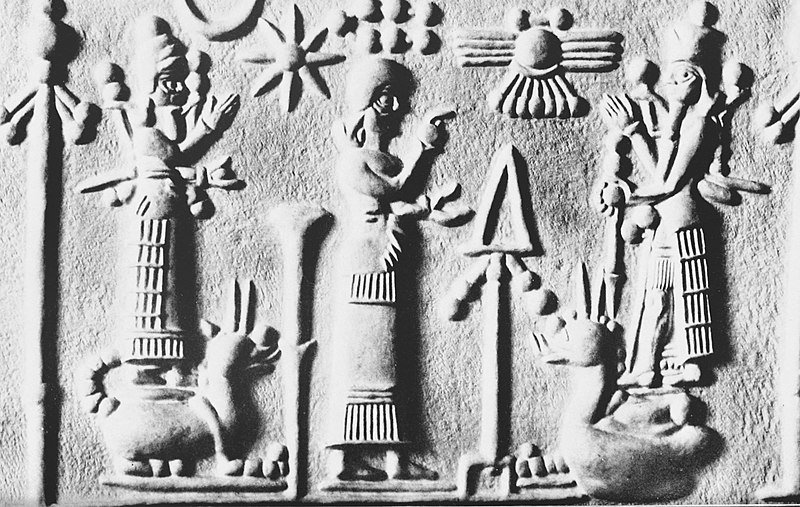
Image: A relief believed to be a depiction of Ereshkigal or Inanna, her younger sister.
The Absence of Judgment
One of the most striking aspects of Mesopotamian beliefs about the afterlife is the absence of judgment for the dead. Unlike other ancient civilizations such as the Egyptians, who believed that the deceased would be judged for their actions in life, the Mesopotamians had no such concept.
In Mesopotamian thought, all souls went to the same underworld, regardless of whether they had lived good or bad lives. There was no moral evaluation of the dead; rather, their fate was sealed when they arrived in the underworld.
When a person died, their soul was believed to descend to the underworld, where Ereshkigal would pronounce them dead. At this point, the scribal goddess Geshtinanna recorded the name of the deceased. The souls of the dead continued to exist in a shadowy, diminished state, with little sustenance or comfort.
The underworld was a bleak and joyless place, where the souls of the dead ate only dust. The absence of punishment or reward in the afterlife reflected the Mesopotamians’ view that death itself was the ultimate equalizer, rendering all people equal in the afterlife.
The Role of Offerings and Family
While the Mesopotamian underworld was a harsh and inhospitable place, the souls of the dead were not entirely without hope. Their continued existence and well-being depended heavily on the actions of their living descendants. Family members were expected to perform rituals and provide offerings to the dead, often in the form of food and drink. These offerings were made by pouring libations through clay pipes into the grave, allowing the dead to “drink” and be sustained in the underworld.
Without these offerings, the dead would suffer greatly. Those without descendants or who had been forgotten by their families would endure a particularly grim existence in the underworld.
It was believed that such souls could even become malevolent and return to haunt the living, seeking the sustenance they had been denied. This belief system placed a significant emphasis on family and the responsibility of the living to care for their ancestors. Having many children was seen as essential, ensuring that one would be cared for in the afterlife.
Burial Practices and Afterlife Treatment
The treatment of the dead in the underworld was also influenced by the way they were buried. During the Third Dynasty of Ur (c. 2112–2004 BCE), it was believed that those who had been given lavish burials, with rich offerings and treasures, would fare better in the afterlife. These individuals would be treated more favorably in the underworld, perhaps receiving better sustenance or more comfort.
In contrast, those who were buried poorly or without proper rituals, such as those who died in fires or perished alone in the desert, would cease to exist entirely. Without a proper burial, the deceased had no future in the underworld and simply vanished.
Music was believed to offer some respite to the souls of the privileged. It was thought that music could alleviate the bleak conditions of the underworld, offering a small measure of joy in an otherwise joyless realm.
Deities of the Underworld
The Mesopotamian underworld was not only home to the souls of the dead but also to a variety of gods and demons. The queen of the underworld, Ereshkigal, was its most powerful figure. She ruled over the realm from her palace and oversaw the fate of the deceased. In earlier myths, Ereshkigal’s husband was Gugalanna, the “canal inspector of Anu.” However, in later traditions, her consort became Nergal, the god of war and destruction, who eventually took over as the ruler of the underworld. Nergal was associated with death, plague, and devastation, and his presence added an even more fearsome element to the underworld.
Ninazu, the son of Ereshkigal and Gugalanna, was another deity associated with the underworld. Over time, his role was eclipsed by other gods, but he remained an important figure in Mesopotamian religion. His son, Ningishzida, was also closely linked to the underworld and was mentioned in myths as one of the deities Gilgamesh encountered after his death.
The god Neti served as the gatekeeper of the underworld, ensuring that souls could enter but never leave. Namtar, Ereshkigal’s messenger, carried out her commands and had the authority to enforce her will both in the underworld and among the living.
Other minor deities and spirits inhabited the underworld as well, including Belet-Seri, who recorded the names of the dead as they entered. Enmesarra, a lesser deity, was also believed to reside in the underworld. He was often invoked in rituals for protection.
READ MORE: Most Famous Ancient Mesopotamian Deities
Demons of the Underworld in Ancient Mesopotamia
The underworld was also populated by a variety of demons, some of which played key roles in Mesopotamian mythology. One class of demons, known as the galla, were tasked with dragging unfortunate mortals back to Kur. The galla were frequently mentioned in magical texts and were believed to be seven in number. They could be both malevolent and benevolent depending on the situation.
Lamashtu, a demonic goddess, was feared for her tendency to cause miscarriages and infant deaths. She was depicted with a lion’s head, donkey’s teeth, and a hairy body. Lamashtu was believed to feed on the blood of infants and was considered one of the most dangerous figures in Mesopotamian demonology. Protective amulets were commonly used to ward off her influence, especially for pregnant women and newborns.
Pazuzu, another well-known demon, was depicted as having a canine face, wings, and the talons of a bird. He was believed to be both a bringer of plague and a protector against Lamashtu. Amulets of Pazuzu were frequently used to protect pregnant women and infants from harm.
Myths and the Underworld
The underworld featured prominently in several important Mesopotamian myths. One of the most famous is the myth of “Inanna’s Descent into the Underworld.” In this myth, Inanna, the goddess of love and war, travels to the underworld to visit her sister, Ereshkigal. As Inanna passes through each of the seven gates, she is stripped of her clothing and power, eventually arriving naked and vulnerable before Ereshkigal. This myth highlights the inescapable power of the underworld and its queen, as well as the inevitable submission of all gods and mortals to death.
The sun god Utu also had a connection to the underworld. It was believed that Utu traveled through the underworld at night on his way to the east, where he would rise again in the morning. Some Sumerian texts describe Utu as a judge of the dead, illuminating the underworld and dispensing justice alongside other deities.
READ MORE: Most Famous Myths from Ancient Mesopotamia
Frequently Asked Questions about the Underworld in Ancient Mesopotamian Mythology
How did the Mesopotamian view of the afterlife differ from that of the Egyptians?
Unlike the ancient Egyptians, who believed in a process of judgment after death, the Mesopotamians believed all souls entered the same underworld, regardless of their actions in life. There was no formal judgment or punishment; instead, the goddess Ereshkigal simply confirmed the death, and the deceased’s name was recorded by Geshtinanna.
What role did family members play in supporting the souls of the dead in the Mesopotamian underworld?
Family members played an essential role by providing libations to the deceased. These offerings, poured through clay pipes into the grave, allowed the dead to drink in the underworld. Without descendants to provide these libations, souls would suffer and possibly haunt the living.
How did burial practices during the Third Dynasty of Ur influence the treatment of the deceased in the underworld?
During the Third Dynasty of Ur, burial practices influenced the deceased’s afterlife experience. Those who received lavish burials with treasures and offerings were believed to fare better in the underworld, while those with poor burials or those who died alone in the desert would have no afterlife and simply cease to exist.
What role did the sun god Utu play in the underworld?
Utu, the sun god, was believed to pass through the underworld at night on his journey to the east, preparing for the sunrise. Some texts depict him illuminating the underworld and acting as a judge alongside other deities, such as the Anunnaki.
What is the myth involving Utu and Inanna in the underworld?
In the myth “Inanna and Utu,” Inanna begs her brother Utu to take her to the underworld so she can taste the fruit from a tree. This fruit would reveal to her the secrets of sex. Utu agrees, and Inanna gains this knowledge after tasting the fruit in the underworld.

Image: A depiction of Inanna (right) receiving offerings.
Who ruled the Mesopotamian underworld, and what were their roles?
Ereshkigal, the goddess of the underworld, was the chief ruler. Initially, her husband was Gugalanna, but later myths replaced him with Nergal, the god of war and destruction. Together, they ruled the underworld, with Nergal associated with death, war, and devastation.
What role did Dumuzid and Geshtinanna play in Mesopotamian afterlife beliefs?
Dumuzid, a god associated with shepherds and agriculture, was thought to die during the dry summer months, symbolizing the land’s barrenness. His sister, Geshtinanna, alternated with Dumuzid, each spending half the year in the underworld. While there, Geshtinanna served as Ereshkigal’s scribe.

Image: A Sumerian cylinder seal impression depicting the god Dumuzid being tormented by galla demons in the underworld.
Who were Lugal-irra and Meslamta-ea, and what was their function in the underworld?
Lugal-irra and Meslamta-ea were twin gods thought to guard the gates of the underworld. They were believed to chop the dead into pieces as they passed through the gates. Their protective role also extended to homes during the Neo-Assyrian Period.
What types of demons were believed to inhabit the Mesopotamian underworld?
The Mesopotamian underworld was home to various demons, including the galla, whose primary purpose was to drag souls back to Kur. Some demons could also be benevolent, aiding gods like Ig-alima in their duties. Lamashtu, a fearsome demoness, was associated with infant mortality, while Pazuzu, another demon, was invoked to protect against her.
Lamashtu was a demoness with the head of a lion, believed to feed on the blood of infants and cause miscarriages. She was feared for her power and ability to act independently. People used protective amulets and talismans to ward off her evil influence.
How does the mythology surrounding Šul-pa-e connect him to the underworld?
Šul-pa-e, though his name means “youthful brilliance,” was depicted as a god associated with the underworld. In some traditions, he was thought to be the consort of Ninhursag, and offerings were made to him in the realm of the dead.





