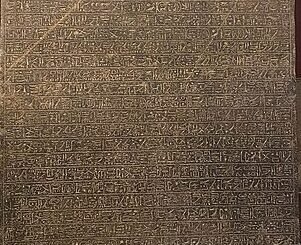
The Admonitions of Ipuwer

Ipuwer Papyrus
The Admonitions of Ipuwer is an ancient Egyptian literary text that has intrigued scholars for centuries. This text, preserved on a single papyrus housed in the Dutch National Museum of Antiquities (Leiden Papyrus I 344), presents a poetic lamentation by an elite Egyptian named Ipuwer. He vividly describes a society in chaos, marked by widespread disorder, economic collapse, and the inversion of social hierarchies.
Historical Context and Discovery
The only surviving copy of The Admonitions of Ipuwer was written during Egypt’s New Kingdom (c. 1550–1070 BCE), but linguistic and textual analysis suggests that it was originally composed during the Middle Kingdom (c. 2050–1650 BCE). Some scholars speculate that it may describe events from the First Intermediate Period (c. 2181–2055 BCE), a time of political fragmentation and social upheaval.
The Admonitions of Ipuwer belongs to the national disaster genre and is preserved on Papyrus Leiden 344 from the New Kingdom, though it was likely composed during the Middle Kingdom (c. 2050–1650 BCE).
The papyrus was acquired in the 19th century by the Dutch Museum of Antiquities and first translated in the early 20th century. Since then, numerous interpretations have emerged, ranging from viewing it as historical documentation to considering it an entirely literary or prophetic work.
Content Summary
The text consists of a monologue in which Ipuwer, a high-ranking Egyptian, addresses an unnamed king or ruler. He describes a world in turmoil, where order has collapsed, natural disasters have occurred, and the traditional social structure has been overturned. Key themes include:
- Social Inversion – The wealthy and powerful are now powerless, while the poor and slaves rule over them.
- Famine and Economic Breakdown – Crops fail, trade ceases, and hunger spreads throughout Egypt.
- Violence and Lawlessness – The country is plagued by robbery, murder, and an absence of justice.
- Religious Crisis – Temples are desecrated, and religious observances are abandoned.
- Foreign Invasion or Internal Rebellion – The text suggests that Egypt has been overrun by outsiders or revolutionaries.
While Ipuwer laments these changes, he also implies that the situation could be reversed if a just ruler restored Ma’at, the Egyptian concept of cosmic and social order.
READ MORE: Most Famous Pharaohs of Ancient Egypt
Themes and Literary Style
The Reversal of Order
One of the most striking aspects of The Admonitions of Ipuwer is its depiction of societal reversal:
- The rich have become poor: “Behold, the possessors of fine things are now in rags.”
- The poor have become rich: “Behold, the poor man has become a man of wealth.”
- Slaves rule over their former masters: “Behold, those who were in bonds now command the land.”
This theme reflects a deep anxiety about instability and the loss of traditional hierarchy.
The Breakdown of Justice and Law
The text describes a lawless society where criminals roam free, and the institutions meant to uphold order have collapsed:
- “The robber is now the possessor of riches.”
- “He who could not make a coffin for himself is now the owner of a tomb.”
This passage implies that tomb robbers, a significant problem in times of societal distress, have gained wealth by desecrating burial sites.
Famine and Environmental Disaster
Several passages suggest a natural disaster, possibly a drought or famine:
- “Behold, the river is dry, and one drinks water from wells.”
- “The storehouses are empty, and grain is lacking everywhere.”
This imagery is reminiscent of historical droughts that devastated Egypt, such as the one that contributed to the fall of the Old Kingdom.
Religious and Political Chaos
The text criticizes the collapse of religious traditions and temple rituals:
- “Behold, the sacred places are desecrated.”
- “The gods are ignored, and their shrines are without offerings.”
This could indicate a breakdown in religious faith or the inability of the state to maintain its religious institutions.
Foreign Invasion or Internal Revolt
Some lines suggest that Egypt has been overtaken by foreign invaders or internal rebels:
- “The Asiatics roam the land.”
- “Strangers have entered Egypt and made themselves at home.”
This has led to speculation that The Admonitions of Ipuwer might reference a historical invasion, possibly the Hyksos’ conquest of Egypt during the Second Intermediate Period.
Historical Interpretations
There is ongoing debate about whether The Admonitions of Ipuwer describes real historical events or if it is purely a literary creation.
A Reflection of the First Intermediate Period
Many scholars believe the text was inspired by the societal collapse that followed the decline of the Old Kingdom (c. 2181 BCE). During this period:
- Central authority broke down.
- Regional governors (nomarchs) took power.
- Famine and civil strife plagued the land.
The text’s emphasis on disorder aligns with descriptions from other sources about this time.
A Connection to the Hyksos Period
Some interpretations link The Admonitions of Ipuwer to the Second Intermediate Period (c. 1650–1550 BCE), when the Hyksos, a foreign Semitic people, ruled parts of Egypt. The reference to “Asiatics” and the lament about foreign rule could be interpreted as complaints about the Hyksos domination.
The Admonitions of Ipuwer is an ancient Egyptian literary work that describes a society in chaos, where traditional order has collapsed.
A Mythological or Literary Allegory
Other scholars argue that the text is not a historical record but a didactic or prophetic work meant to warn rulers about the dangers of neglecting Ma’at. It might have been composed as political propaganda to justify strong central rule.
Possible Parallels to Biblical Narratives
Some researchers have drawn comparisons between The Admonitions of Ipuwer and the Biblical story of the plagues in Exodus. For example:
- “The river is blood” resembles the first plague in Exodus.
- “The land is without light” could be a reference to the plague of darkness.
However, there is no direct evidence that the text was meant to describe the same events.
READ MORE: Everything that you need to know about Apep, the Ancient Egyptian Deity of Chaos
Linguistic and Stylistic Features
The text is written in Middle Egyptian and employs poetic parallelism, repetition, and imagery to emphasize its themes. It belongs to the genre of pessimistic literature, which was common in Middle Kingdom Egypt. This genre includes other works like The Prophecies of Neferti, which similarly depict chaos followed by the promise of renewal.

Did you know…?
- Egyptologist A.H. Gardiner published the first translation of the Admonitions of Ipuwer in 1909, at a time when archaeology was influenced by biblical narratives. Some early scholars misinterpreted it as historical evidence, possibly linking it to Exodus.
- In 1929, S. Luria argued that The Admonitions of Ipuwer was a fictionalized critique of societal collapse rather than a historical document. This view is now widely accepted among Egyptologists.
- Some theorists argue that it provides evidence for the biblical Exodus story. However, mainstream scholars criticize these claims for distorting historical and literary evidence.
Significance and Legacy
Despite the uncertainty about its historical accuracy, The Admonitions of Ipuwer remains one of the most important literary works from ancient Egypt. Its themes of social disorder, the fragility of civilization, and the importance of Ma’at continue to resonate.
The text reflects the Egyptian worldview that saw history as cyclical—order could be restored if the right ruler emerged.
It has been studied in the context of political philosophy, comparative literature, and even biblical studies. Some see it as a cautionary tale about leadership, while others view it as evidence of historical crises in ancient Egypt.
It provides a unique perspective on how ancient Egyptians understood chaos, order, and the role of kingship in maintaining stability.
Frequently asked questions about the Admonitions of Ipuwer
Why is the Admonitions of Ipuwer considered part of the national disaster genre?
It portrays a world in turmoil, emphasizing social upheaval, famine, religious decline, and political collapse. Such texts were popular in the Middle Kingdom and served to stress the necessity of strong central rule.
How does the text relate to the First Intermediate Period?
Egyptian scribes exaggerated the instability of the First Intermediate Period (2181–2040 BCE) to highlight the importance of a centralized government. The Admonitions of Ipuwer reflects these concerns, contrasting disorder with the ideal of a well-ordered society.
How does The Admonitions of Ipuwer compare to biblical texts?
Some Egyptologists have noted that Egyptian wisdom literature influenced Hebrew writings like Ecclesiastes, Proverbs, Psalms, and Job. Some scholars have also tried to connect The Admonitions of Ipuwer to the Exodus story, though this remains debated.
READ MORE: Doomsday and Apocalypse Myths in World History
What is didactic literature, and how does The Admonitions of Ipuwer fit within this genre?
Didactic literature aims to teach moral or philosophical lessons. In Egypt, it often took the form of Wisdom Literature, advising rulers on governance. The Admonitions of Ipuwer warns of the consequences of neglecting ma’at (order) and serves as a call for strong leadership.
What are the main themes in The Admonitions of Ipuwer?
The text emphasizes four key themes:
- Social Upheaval – The rich become poor, and servants rule over their masters.
- Famine and Natural Disaster – Crops fail, the Nile runs dry, and resources are scarce.
- Religious and Moral Decline – Temples are abandoned, and traditional beliefs are disregarded.
- Political and Military Breakdown – Foreigners invade, and anarchy replaces government control.
Is The Admonitions of Ipuwer a historical account?
No, most scholars agree it is a literary work rather than a factual report. It follows literary conventions that exaggerate chaos to emphasize the importance of a stable ruler. While it may reflect real hardships, it is not an eyewitness account.
What is the structure of The Admonitions of Ipuwer?
The text is a monologue in which Ipuwer addresses a ruler, lamenting the nation’s decline. It is filled with vivid descriptions of suffering, lawlessness, and environmental catastrophe.
What are some notable quotes from the text?
- “The river is blood, yet men drink of it.”
- “Indeed, noblemen are in distress, while the poor man is full of joy.”
- “Behold, the land turns around as does a potter’s wheel; the robber is a possessor of riches.”
What is the purpose of The Admonitions of Ipuwer?
It serves as a warning about the dangers of chaos and the absence of central authority. Rather than calling for rebellion, it advocates for a strong ruler to restore ma’at and societal balance.
How has The Admonitions of Ipuwer been misinterpreted?
Some have taken it as a literal historical record rather than a piece of literature. Misinterpretations have fueled theories about its connection to Exodus, despite a lack of supporting evidence.
What is the lasting impact of The Admonitions of Ipuwer?
It remains a powerful reflection of ancient Egyptian fears and values, illustrating concerns about leadership, social order, and justice. Though times have changed, its themes remain relevant to discussions on governance and stability.
FACT CHECK: At World History Edu, we strive for utmost accuracy and objectivity. But if you come across something that doesn’t look right, don’t hesitate to leave a comment below.