The Battle of the Windmill, 1838: History & Major Facts
The Battle of the Windmill, fought in November 1838, is a lesser-known but significant event in Canadian and American history. It occurred in the wake of the Upper Canada Rebellion of 1837 and involved a group of American-based militants called the Hunter Patriots.
These rebels attempted to invade Upper Canada and spark a new uprising to overthrow British rule. However, the invasion failed, and the ensuing battle became a critical moment in the larger context of Anglo-American relations and the evolution of Canadian nationalism.
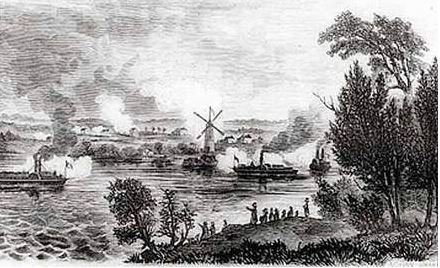
The Battle of the Windmill took place in November 1838, following the Upper Canada Rebellion. The battle played a role in shaping Canada’s identity and resistance to foreign incursions. Image: An engraving depicting the battle.
Historical Background
The origins of the Battle of the Windmill can be traced back to the Upper Canada Rebellion of 1837, a part of a broader wave of unrest across British North America. Discontent in Upper Canada (now Ontario) had been brewing for years due to grievances over the British colonial government’s control of political and economic power.
Reformers, inspired by republican ideals from the United States and the success of the American Revolution, sought to create a more democratic and representative form of government. However, the rebellion led by William Lyon Mackenzie was swiftly crushed by loyalist forces, forcing many rebels to flee to the United States.
In the aftermath of the failed rebellion, some American sympathizers believed that Canadians were eager to overthrow British rule and form a republic modeled after the U.S. One such group was the Hunter Patriots, a secret organization formed primarily in the northern U.S. border states.
The Hunters saw themselves as liberators of Canada and organized paramilitary groups with the goal of inciting a revolution. They were motivated by a combination of republicanism, anti-British sentiment, and a desire to expand American-style democracy into Canada. In reality, however, much of the Canadian population remained loyal to British institutions and did not support the idea of a violent revolution.
Lead-Up to the Battle
In November 1838, the Hunter Patriots decided to act on their revolutionary ambitions by launching an invasion of Upper Canada. Their target was the town of Prescott, located along the St. Lawrence River, a strategic location for its proximity to the river and its military importance. Prescott was home to Fort Wellington, a British military fortification that controlled access to the region and served as a supply depot for the Upper Canadian militia.
The Hunter Patriots assembled a force of about 250 men in Sackets Harbor, New York. Under the command of John Birge, a senior member of the Hunter organization, they set sail down the St. Lawrence River in civilian vessels, hoping to catch the British off guard.
However, British intelligence had already infiltrated the Hunter organization and had advanced knowledge of the attack. As a result, when the Hunter Patriots attempted to land at Prescott on November 12, they were met by a prepared and fortified militia.
The Battle Begins
The initial landing attempt by the Hunter Patriots was a failure. The town militia, forewarned of the invasion, had fortified the shore and was ready to repel the attackers. The Hunters were forced to abandon their attempt to land at Prescott and retreated to Windmill Point, a small promontory about two miles east of Prescott, where they hoped to establish a stronghold.
Windmill Point was a small hamlet that featured a prominent stone windmill, which stood about 60 feet tall on top of a 30-foot bluff. The windmill, built from thick stone, offered an ideal defensive position, providing the invaders with a clear vantage point over the surrounding landscape. From this position, they could see as far west as Brockville and as far east as the Gallop Rapids. Although the original plan had not been to use the windmill as a fortress, the Patriots quickly recognized its strategic value and fortified themselves inside it and nearby buildings.
Meanwhile, the British and Canadian forces, led by Colonel Plomer Young and several militia officers, mobilized to confront the invaders. The combined British and Canadian forces included a handful of British infantry from the 83rd Regiment, local militia units, and reinforcements from Kingston. In total, around 600 soldiers, including members of the Grenville, Dundas, and Glengarry militias, surrounded Windmill Point, preparing to attack the Patriot position.
The Battle Intensifies
On November 13, the British and Canadian forces launched their first attack on the Hunter Patriots. The thick stone walls of the windmill, however, proved to be highly effective against the attackers. Small arms fire and field artillery were largely ineffective, and the Patriots successfully repelled the first wave of attackers, inflicting casualties on the British and Canadian forces. Thirteen regulars and militiamen were killed, and around 70 were wounded in the failed assault, while the Hunters suffered approximately 18 casualties.
For the next several days, the battle became a standoff. The Patriots, led by Nils von Schoultz, a Swedish-born soldier with limited military experience, held their ground inside the windmill, while the British and Canadian forces attempted to find a way to dislodge them. Reinforcements continued to arrive for the loyalists, and on November 16, the situation took a decisive turn. British artillery from Kingston, including heavy cannons, was brought in to bombard the windmill. In addition, Royal Navy gunboats and ships from the U.S. Navy helped blockade the river, preventing the Patriots from receiving reinforcements or supplies from Ogdensburg, New York, where they had launched their invasion.
The bombardment of the windmill was intense, and the Patriots, unable to escape and with no reinforcements in sight, found their situation increasingly desperate. On November 16, von Schoultz, recognizing that further resistance would only lead to more deaths, decided to surrender unconditionally.
The Aftermath
With von Schoultz’s surrender, the Battle of the Windmill came to an end. Almost all of the Hunter Patriots were captured and taken to Kingston, where they faced trial for their involvement in the invasion. The trials were swift and harsh. Eleven of the captured Patriots, including von Schoultz, were sentenced to death and executed by hanging. Sixty others were sentenced to transportation to Australia, a common punishment in the British Empire for crimes such as treason. Forty were acquitted, while another 86 were later pardoned and released.
One notable aspect of the aftermath was the involvement of John A. Macdonald, a young lawyer from Kingston who later became Canada’s first prime minister. Macdonald served as legal counsel for Nils von Schoultz during his trial, though he was unable to prevent his execution. The experience likely shaped Macdonald’s views on law, governance, and the challenges of maintaining order in a diverse and divided society.
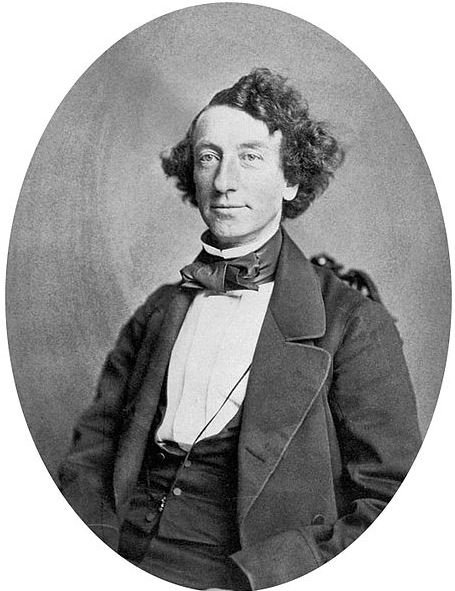
Image: John A. Macdonald in 1858.
Significance of the Battle
The Battle of the Windmill, though relatively small in scale compared to other conflicts of the time, had important consequences for both Canada and the United States. First, it underscored the loyalty of much of the Canadian population to British rule, despite the revolutionary aspirations of groups like the Hunter Patriots. The fact that the invasion failed to spark a larger rebellion highlighted the limits of American-style republicanism in Canada during this period.
Second, the battle reinforced the growing sense of Canadian nationalism and the desire for self-government within the framework of the British Empire. The successful defense of Upper Canada against external aggression helped solidify the idea that Canada could govern and defend itself, a sentiment that would later play a key role in the movement toward Confederation in 1867.
For the United States, the battle was a reminder of the delicate balance in Anglo-American relations. Although many Americans sympathized with the Patriot cause, the U.S. government was unwilling to support an invasion of a neighboring British territory, and U.S. law enforcement cooperated with the British to prevent further incursions. This cooperation marked a period of relatively peaceful relations between the two countries, setting the stage for improved diplomatic and economic ties in the decades that followed.
Finally, the Battle of the Windmill was designated a National Historic Site of Canada in 1920. The windmill itself still stands today as a symbol of the conflict, serving as a reminder of the turbulent years of rebellion and the struggles for political reform in early Canadian history.
Conclusion
The Battle of the Windmill, while not as well-known as other historical conflicts, remains an important episode in the history of both Canada and the United States. It was a turning point in the aftermath of the Upper Canada Rebellion and demonstrated the resilience of British institutions in the face of external threats. It also served as a reminder of the complexities of North American politics during the 19th century, where the ideals of revolution and republicanism often clashed with loyalty to established systems of government. Today, the battle is remembered as a key moment in the development of Canadian national identity and the broader history of Anglo-American relations.
Questions and Answers
When did the Battle of the Windmill take place?
The Battle of the Windmill occurred in November 1838, following the Upper Canada Rebellion.
Who were the Hunter Patriots, and what was their goal?
The Hunter Patriots were a paramilitary group based in the United States. Their goal was to invade Upper Canada, capture territory, and use it as a base for further attacks to overthrow British rule.
How did the British, Canadian, and American forces respond to the Hunter Patriots’ invasion?
Loyalist forces from Upper Canada, along with British, Canadian, and American troops, successfully defended the region. The Royal Navy and U.S. Navy also supported the defense, helping to thwart the invasion.
What happened to the Hunter Patriots after their invasion attempt failed?
After their invasion failed, the Hunter Patriots were forced to surrender. U.S. officials arrested those who remained in the United States.
What was the reaction in the United States following the Upper Canada Rebellion in 1837?
After the Upper Canada Rebellion was suppressed in 1837, many rebel leaders fled to the United States, where popular sentiment held that Canadians wanted to overthrow British rule and establish a republic similar to the U.S.
What strategic town did the Hunter Patriots target in November 1838, and why was it important?
The Hunter Patriots targeted Prescott, a town along the St. Lawrence River. It was important because it housed Fort Wellington, a British military stronghold and supply depot for the Upper Canadian militia.
What was the result of the Hunter Patriots’ initial attempt to land at Prescott on November 12, 1838?
The Hunter Patriots’ initial landing attempt at Prescott on November 12, 1838, failed because the British had infiltrated their group and prepared a defense. Their vessels were stranded but later freed by Bill Johnston, Admiral of the Hunter navy.
Where did the Hunter Patriots retreat after their failed landing, and why was this location strategically important?
The Hunter Patriots retreated to Windmill Point, two miles east of Prescott, and fortified themselves in a large stone windmill. The windmill’s thick walls and height provided an excellent defensive position.
What happened during the British and Canadian attack on the Patriots on November 13?
On November 13, British and Canadian forces, including 600 militiamen, attacked the Patriots at Windmill Point but were repelled, suffering significant casualties. The Patriots also lost men, and the battle reached a standoff.
Why did the situation for the Hunter Patriots become desperate after several days?
The situation became desperate for the Hunter Patriots because reinforcements and supplies from the U.S. never arrived. The U.S. Navy aided the British in blockading Ogdensburg, cutting off support.
How did the Battle of the Windmill end?
The Battle of the Windmill ended on November 16 when British and Canadian forces, reinforced with heavy artillery and regular troops, bombarded the windmill. Hunter commander Nils von Schoultz surrendered unconditionally.
What happened to the Hunter Patriots after the battle?
After the battle, most of the Hunter Patriots were captured and taken to Kingston for trial. Eleven, including von Schoultz, were executed. Sixty others were sentenced to transportation to Australia, while 40 were acquitted, and 86 were later pardoned.
Who defended Nils von Schoultz during his trial?
John A. Macdonald, who would later become Canada’s first prime minister, defended von Schoultz during his trial.
What is the historical significance of the Battle of the Windmill site today?
The site of the Battle of the Windmill was designated a National Historic Site of Canada in 1920.





