Most Influential Ottoman Princesses and their Accomplishments
The Ottoman Empire, one of the most powerful and enduring empires in world history, spanned over six centuries from the late 13th century to the early 20th century. Within this vast empire, the royal women, particularly the princesses, played significant roles both publicly and privately. Ottoman princesses, though often secluded from the formal administration of the empire, held immense influence through strategic marriages, patronage of the arts and architecture, and as figures in courtly power struggles.
These women were not just confined to the harem, but many exerted political influence, maintained strong connections with foreign courts, and promoted cultural and charitable causes. Their lives reflect the complexities of power, tradition, and gender in the Ottoman world.

The Ottoman Empire, lasting from 1299 to 1922, ruled parts of Europe, Asia, and Africa, renowned for its military, cultural, and architectural achievements. Image: Coat of Arms of the Ottoman Empire
Below is an exploration of the lives of some of the most influential Ottoman princesses, whose legacies are remembered for their beauty, intelligence, and influence.
Mihrimah Sultan (1522–1578)
Mihrimah Sultan was the daughter of one of the most powerful sultans in Ottoman history, Sultan Suleiman the Magnificent, and his beloved wife, Hürrem Sultan. Born in 1522, Mihrimah grew up in the luxurious and politically charged environment of the imperial harem. As a young girl, she was known for her beauty, intelligence, and charm, attributes that would make her a key figure in Ottoman politics.
At the age of 17, Mihrimah was married to Rüstem Pasha, a prominent Ottoman statesman who eventually became the Grand Vizier (chief minister). Through her marriage, Mihrimah gained considerable political influence, and many historians believe that she played a role in her father’s decisions, especially during the later years of his reign.
Mihrimah’s influence extended beyond politics. She was a great patron of architecture and the arts, following in the footsteps of her mother, Hürrem Sultan. Her most famous architectural contribution is the Mihrimah Sultan Mosque in Istanbul, designed by the renowned Ottoman architect Mimar Sinan. In addition to her involvement in building projects, she also engaged in philanthropy, funding charitable causes such as schools, hospitals, and public baths.
Mihrimah’s relationship with her brother, Sultan Selim II, further solidified her importance. After her father’s death, she remained an influential advisor to Selim. Despite not holding formal political office, Mihrimah Sultan’s contributions to Ottoman culture, architecture, and court politics make her one of the most famous Ottoman princesses.

Mihrimah Sultan (daughter of Suleiman the Magnificent and Hürrem Sultan) wielded considerable political influence and was a great patron of architecture. Image: A portrait of Mihrimah.
Fatma Sultan (1606–1670)
Fatma Sultan, the daughter of Sultan Ahmed I and Kösem Sultan, was one of the most prominent and politically active Ottoman princesses of the 17th century. Born in 1606, Fatma was deeply embedded in the power struggles that characterized the Ottoman court during her lifetime.
Fatma was married multiple times, often to high-ranking statesmen or military figures, in marriages that were likely politically motivated to secure alliances for the Ottoman dynasty. These marriages gave Fatma significant influence over court affairs, as she was able to leverage her relationships to advance her own power and that of her family.
Her mother, Kösem Sultan, was one of the most powerful women in Ottoman history, serving as regent for two of her sons and effectively ruling the empire for several years. Fatma, too, was deeply involved in court politics, and her influence was particularly strong during the reign of her brother, Sultan Murad IV, and later her nephew, Sultan Ibrahim.
During Sultan Ibrahim’s reign, Fatma Sultan, along with other members of the royal family, played a critical role in the politics of the palace. Ibrahim’s erratic behavior and mental instability led to power struggles within the court, and Fatma, leveraging her family connections, became a key figure in these intrigues.
Fatma Sultan’s life was shaped by the turbulent political landscape of the Ottoman Empire in the 17th century. Her marriages, alliances, and maneuvering within the imperial court exemplify the complex role that Ottoman princesses could play in shaping the empire’s destiny.
Kaya Sultan (1633–1659)
Kaya Sultan was the granddaughter of Sultan Ahmed I and the daughter of Sultan Murad IV. Born in 1633, Kaya Sultan grew up in a time of significant political upheaval in the Ottoman Empire. Her life, though tragically short, was marked by her strong personality, intelligence, and political acumen.
Kaya Sultan was married to the prominent Ottoman statesman Melek Ahmed Pasha, a union that was likely arranged to strengthen political ties. Despite the arranged nature of her marriage, Kaya was known to be deeply involved in her husband’s political career and was a trusted advisor to him. Her influence extended beyond her marriage, as she was also close to her mother, Kösem Sultan, who wielded considerable power at the court.
Kaya Sultan’s life was cut short at the age of 26 when she died in childbirth. Her untimely death shocked the court and the empire, as she was widely regarded as one of the most promising and influential women of her time. Her death left a void in Ottoman politics, as she had been poised to become one of the leading figures in the empire.
Despite her short life, Kaya Sultan’s legacy endures as a symbol of strength and political insight. Her involvement in court politics and her influence over her husband’s career make her a notable figure in Ottoman history.
Esma Sultan (1778–1848)
Esma Sultan was a daughter of Sultan Abdul Hamid I and one of the most influential women in the Ottoman Empire during the late 18th and early 19th centuries. Born in 1778, Esma grew up in the imperial harem and quickly distinguished herself as a politically astute and influential figure.
Esma Sultan was known for her sharp mind and strong character. She married Küçük Hüseyin Pasha, an admiral in the Ottoman navy, and through this marriage, she gained considerable influence over military and naval affairs. Esma played an important role in the political and social life of the empire, using her position to support her family and advance her interests.
One of Esma Sultan’s most significant contributions to Ottoman society was her patronage of the arts and architecture. She funded the construction of numerous public buildings, including mosques, schools, and fountains. Like many Ottoman princesses before her, Esma Sultan saw philanthropy and public works as a means of demonstrating her power and influence.
Esma Sultan’s influence extended well beyond her lifetime, as she left behind a legacy of cultural and architectural contributions. She is remembered as one of the most powerful and independent Ottoman princesses of her time.

Image: Esma Sultan
Adile Sultan (1826–1899)
Adile Sultan was a daughter of Sultan Mahmud II and one of the most celebrated Ottoman princesses for her contributions to literature and education. Born in 1826, Adile was raised in an intellectual environment that fostered her love of poetry and writing. She became one of the most famous poets of the Ottoman Empire, producing a significant body of work in Turkish, which was widely admired by her contemporaries.
Adile Sultan’s life was marked by personal tragedy. She was married to Mehmed Ali Pasha, a prominent Ottoman statesman, but her husband and two children died in quick succession, leaving her devastated. Despite these losses, Adile continued to focus on her literary work and her charitable efforts.
One of Adile Sultan’s most enduring legacies was her commitment to education. She founded schools for girls, including the Adile Sultan Palace, which later became a school for training teachers. Her dedication to promoting education, especially for women, was groundbreaking in the context of 19th-century Ottoman society, where educational opportunities for women were limited.
Adile Sultan’s contributions to Ottoman literature and education made her a beloved and respected figure in the empire. Her poetry and her commitment to education left a lasting impact on Ottoman culture, and she remains one of the most famous Ottoman princesses.

Melek Sultan (1813–1872)
Melek Sultan was the daughter of Sultan Mahmud II and the sister of Sultan Abdülmecid I. Born in 1813, Melek Sultan lived during a period of significant reform and modernization in the Ottoman Empire, known as the Tanzimat era.
Melek Sultan was known for her philanthropic efforts and her support of the Tanzimat reforms, which aimed to modernize the Ottoman state and society. She used her position and influence to advocate for social and educational reforms, particularly those that benefitted women and children.
One of Melek Sultan’s most significant contributions was her support for the construction of schools and hospitals. She was deeply involved in charitable work, funding numerous projects that improved the lives of the empire’s citizens. Like many Ottoman princesses, Melek saw philanthropy as a means of demonstrating her influence and contributing to the betterment of society.
Melek Sultan’s life reflects the changing role of women in the Ottoman Empire during the 19th century. Her support for modernization and her charitable efforts made her a key figure in the empire’s reform movement.
Şehzade Sultan (1876–1936)
Şehzade Sultan was one of the last Ottoman princesses to be born before the empire’s collapse. She was the daughter of Sultan Abdülhamid II, the last sultan to wield absolute power before the Young Turk Revolution of 1908, which dramatically curtailed the power of the sultanate.
Born in 1876, Şehzade Sultan witnessed the final years of the Ottoman Empire’s decline. Despite the political turmoil of the late 19th and early 20th centuries, Şehzade Sultan played an important role in Ottoman society. She was known for her intelligence and political insight, often advising her father on matters of state.
Following the abolition of the Ottoman monarchy in 1922, Şehzade Sultan went into exile with her family. Like many members of the Ottoman dynasty, she lived out the rest of her life in Europe, far from the empire she had once called home.
Şehzade Sultan’s life reflects the challenges faced by the last generation of Ottoman princesses. Her political involvement and her experience of exile highlight the dramatic changes that the Ottoman royal family underwent during the early 20th century.
Nazikeda Kadın (1866–1941)
Nazikeda Kadın was the wife of Sultan Mehmed VI, the last sultan of the Ottoman Empire. Born in 1866, Nazikeda was a Circassian by origin, a region that provided many wives and concubines to the Ottoman royal family. She married Mehmed VI in 1885 and became his most favored wife.
Nazikeda’s life was shaped by the tumultuous political events of the late Ottoman Empire. As the wife of the last sultan, she witnessed the empire’s collapse and the abolition of the monarchy in 1922. Nazikeda accompanied her husband into exile after he was deposed, and they settled in Italy, where Mehmed VI died in 1926.
Despite the hardships of exile, Nazikeda maintained her dignity and continued to support the remaining members of the Ottoman family. She lived in Italy until her death in 1941, leaving behind a legacy as one of the last royal women to experience both the grandeur and the downfall of the Ottoman Empire.
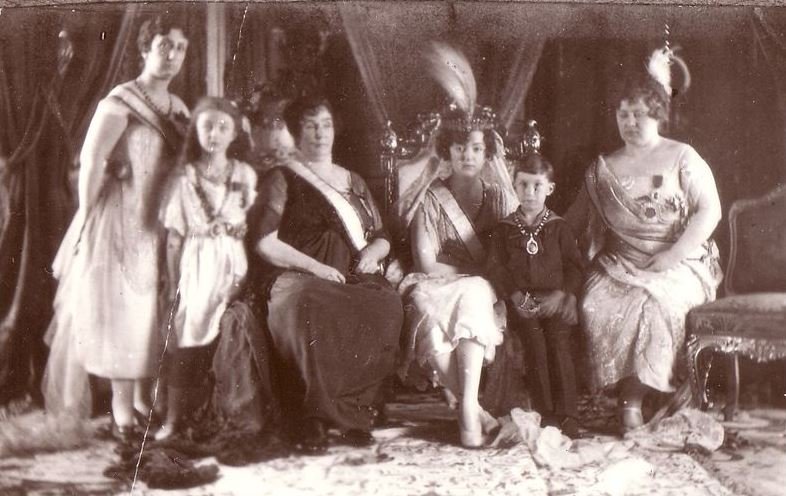
Image: A picture of Nazikeda, who is seated third from left, during the ceremony of her daughter’s wedding.
Conclusion
The lives of these famous Ottoman princesses illustrate the complex roles women played in the political, cultural, and social life of the empire. While many of them were born into privilege, their lives were often shaped by the turbulent events of Ottoman history, including wars, power struggles, and the eventual collapse of the empire.
These princesses used their positions to influence political decisions, patronize the arts, and advocate for social reforms. Some, like Mihrimah Sultan and Adile Sultan, are remembered for their architectural and literary contributions, while others, like Fatma Sultan and Kaya Sultan, were known for their involvement in court intrigues and political maneuvering.
Sinan: the Greatest Architect and Civil Engineer of the Ottoman Empire
Questions and Answers
Here are some frequently asked questions (FAQs) about Ottoman princesses, providing insights into their lives, roles, and historical significance:
What roles did Ottoman princesses play in politics?
Ottoman princesses often influenced politics through their marriages to high-ranking officials or statesmen. These strategic alliances were used to secure loyalty, strengthen family power, and maintain the stability of the empire. While some princesses wielded political power indirectly by advising their husbands or brothers, others, like Mihrimah Sultan, Fatma Sultan, and Kaya Sultan, were known for their significant influence over state matters, sometimes shaping major political decisions.
Were Ottoman princesses allowed to marry freely?
Ottoman princesses did not have the freedom to choose their spouses. Marriages were typically arranged by the sultan or influential family members for political reasons.
The marriages of Ottoman princesses were often to prominent statesmen, military leaders, or other royal figures, and these unions were intended to strengthen alliances within the empire.
Despite the arranged nature of these marriages, some princesses managed to build strong relationships with their husbands and had a say in political affairs.
Did Ottoman princesses have any influence in cultural or religious matters?
Yes, many Ottoman princesses had a significant influence on cultural and religious matters. They were patrons of the arts, literature, and architecture. Princesses such as Mihrimah Sultan and Esma Sultan commissioned the construction of mosques, schools, and public buildings.
Adile Sultan, a famous poet, also made notable contributions to literature and education. Their patronage helped shape Ottoman culture and contributed to the empire’s architectural and artistic heritage.
How was life in the imperial harem for Ottoman princesses?
The imperial harem was a secluded area within the palace where Ottoman princesses, concubines, and other royal women lived. While the harem was often seen as a place of luxury, it was also a place of political intrigue and competition.
Princesses were educated in the harem, learning the customs of the court and the arts. However, their movement and freedom were restricted, and their lives were carefully controlled.
Despite the seclusion, the harem was a place where women wielded considerable influence, especially through relationships with the sultan or male relatives.
Were Ottoman princesses involved in charity or philanthropy?
Ottoman princesses were often involved in charitable activities and philanthropy. They used their wealth and influence to fund the construction of public buildings, including schools, mosques, hospitals, and fountains.
For example, Mihrimah Sultan and Esma Sultan were known for their charitable works, sponsoring various projects to benefit the empire’s citizens. These activities allowed princesses to leave lasting legacies and demonstrate their importance in society.
Did Ottoman princesses hold formal political office?
No. Ottoman princesses did not hold formal political office or titles within the empire’s government structure. However, many princesses had considerable informal influence, especially within the palace. Through their relationships with sultans, grand viziers, and other political figures, they could sway decisions, advance their family’s interests, and participate in court intrigues.
What was the role of Ottoman princesses in marriage alliances?
Marriage was one of the most important tools for Ottoman princesses to strengthen political alliances and maintain family power. By marrying high-ranking officials or foreign dignitaries, princesses played a crucial role in diplomacy and the balance of power within the empire. These marriages helped to secure loyalty from powerful families and reinforced the legitimacy of the ruling dynasty.
Did Ottoman princesses have children, and did their children play any role in politics?
Yes, many Ottoman princesses had children, though their children were typically not in line for the throne, as only the sons of the sultan were eligible to succeed. However, the children of princesses, especially sons, could still hold important positions in the military or government.
In some cases, these children became significant political figures in their own right, using their royal lineage to climb the ranks within the empire’s power structure.
How did the fall of the Ottoman Empire affect Ottoman princesses?
The fall of the Ottoman Empire in 1922, following the defeat in World War I and the abolition of the monarchy, had a profound impact on Ottoman princesses and the entire royal family. Many members of the Ottoman dynasty, including princesses, were exiled from Turkey and lived in poverty or obscurity in various European countries. The dramatic shift from royalty to exile was difficult, and many princesses lived the rest of their lives far from the empire they once ruled.
Who was Mihrimah Sultan, and why is she significant?
Mihrimah Sultan was the daughter of Sultan Suleiman the Magnificent and his influential wife, Hürrem Sultan. She was a key figure in Ottoman politics during her father’s reign, and later that of her brother, Sultan Selim II. Known for her intelligence and political acumen, she supported her father in his campaigns and was involved in diplomatic matters.
Mihrimah was also a major patron of architecture, commissioning mosques and other public works in Istanbul. Her influence extended beyond her lifetime, making her one of the most significant Ottoman princesses.
Brief History of Istanbul and its Most Famous Historical Sites
How did Adile Sultan contribute to Ottoman literature and education?
Adile Sultan, daughter of Sultan Mahmud II, was a well-known poet and a key figure in promoting education in the Ottoman Empire. She wrote extensively in Turkish, producing a large body of poetry that was widely admired. Her works are considered an important part of Ottoman literature. Adile Sultan was also a strong advocate for education, particularly for women. She founded schools, including the Adile Sultan Palace, which later became a school for girls, contributing to the improvement of educational opportunities in the empire.
What role did Ottoman princesses play in diplomacy?
Ottoman princesses often played diplomatic roles through their marriages to foreign rulers or high-ranking officials within the empire. These marriages helped to solidify alliances with neighboring powers or strengthen internal bonds between influential families. Though not always directly involved in negotiations, their marriages were strategic tools used to maintain the empire’s political stability.
How did Ottoman princesses maintain influence after their father or brother’s death?
Many Ottoman princesses continued to wield influence even after the death of their father or brother, the reigning sultan. They often maintained strong relationships with other powerful figures in the court, such as grand viziers or members of the imperial council.
Some princesses, like Mihrimah Sultan, remained key advisors to their brothers after their father’s death, continuing to influence political decisions. Others used their wealth and connections to maintain social and cultural influence, sponsoring charitable works or architectural projects.
How were Ottoman princesses educated?
Ottoman princesses were generally educated within the imperial harem, where they learned a wide range of subjects, including literature, calligraphy, music, and religious studies. They were also trained in the customs and protocols of the court, preparing them for potential diplomatic roles or their future positions as wives of influential men. Their education focused on ensuring they could represent the Ottoman dynasty in public life, even if their roles were often behind the scenes.
Were there any Ottoman princesses who ruled as sultanas?
No, Ottoman princesses never ruled as sultanas in their own right. The Ottoman Empire followed a system of male succession, with only sons of the reigning sultan eligible to become rulers.
However, several royal women, such as Kösem Sultan and Hürrem Sultan, held immense power behind the scenes as the mothers or wives of sultans, a role known as “Valide Sultan” (Queen Mother). While these women were not princesses by birth, they wielded significant political influence and, in some cases, ruled on behalf of their sons during periods of regency.
What happened to the Ottoman princesses after the abolition of the monarchy?
After the abolition of the Ottoman monarchy in 1922, most members of the Ottoman royal family, including princesses, were exiled from Turkey. Many lived in poverty or faced financial difficulties in exile, as they had lost their wealth and privileges. Some settled in European countries, while others moved to the Middle East. The exile marked a dramatic shift from the luxurious life of the palace to a more modest existence abroad.
Abdülmecid II: the last Caliph of Islam from the Ottoman dynasty