The Late Roman Empire
The Later Roman Empire, spanning from 284 CE to 641 CE, was a period of profound transformation in governance, society, military structure, and religion. The era began with the ascension of Diocletian, whose reforms attempted to stabilize an empire that had faced decades of crisis. The legalization and eventual dominance of Christianity under Constantine the Great, along with relentless barbarian invasions, significantly altered the empire’s character. While the Western Roman Empire collapsed in 476 CE, the Eastern Roman Empire endured, evolving into the Byzantine Empire.

Imperial Aquila of the Roman Empire.
The Later Roman Empire period concluded with the Arab conquest of Egypt in 641 CE, marking the beginning of the Byzantine Dark Ages.
Governance Reforms and the Tetrarchy
Diocletian introduced the tetrarchy to address the empire’s vast territorial expanse and internal instability. Under this system, two senior emperors (Augusti) and two junior emperors (Caesars) ruled distinct regions. While this initially improved administrative efficiency, rivalries among the tetrarchs led to civil wars. Constantine the Great emerged victorious and reunified the empire, establishing a new administrative center at Constantinople. His successors continued administrative centralization, reinforcing the imperial bureaucracy.

READ MORE: Difference between an Augustus and a Caesar
The Rise of Christianity
Christianity, once a persecuted faith, gained state sponsorship under Constantine, who issued the Edict of Milan in 313 CE, granting religious tolerance. By the late 4th century, Emperor Theodosius I declared Christianity the empire’s official religion. Pagan practices were progressively outlawed, and the Church grew into a powerful institution intertwined with state affairs. Theological debates, such as Arianism versus Nicene Christianity, led to major councils like those of Nicaea (325 CE) and Constantinople (381 CE), shaping Christian doctrine.
Why did Roman Emperor Constantine the Great convert to Christianity?
Military Challenges and Barbarian Invasions
The Later Roman Empire faced relentless invasions from Germanic tribes, Huns, and Persians. The Goths, under Alaric, famously sacked Rome in 410 CE, while the Vandals captured Carthage in 439 CE. The decisive blow came in 476 CE when the Germanic chieftain Odoacer deposed Romulus Augustulus, marking the Western Roman Empire’s end. The Eastern Roman Empire, however, repelled invasions and preserved Roman traditions.
The Later Roman Empire was an era of immense change, setting the stage for medieval Europe and the Byzantine Empire.
The Transition to Byzantium
While the Western Empire fell, the Eastern Empire, later called Byzantium, adapted to new challenges. Justinian I (reign: 527-565 CE) sought to restore imperial grandeur, reconquering parts of the West and codifying Roman law through the Corpus Juris Civilis. However, the empire faced renewed threats from the Persians and later the Muslim conquests. The fall of Alexandria in 641 CE to Arab forces marked the definitive transformation from the classical Roman world to medieval Byzantium.

Western Historians’ Somewhat Biased Labeling of the Eastern Roman Empire
Timeline of the Later Roman Empire
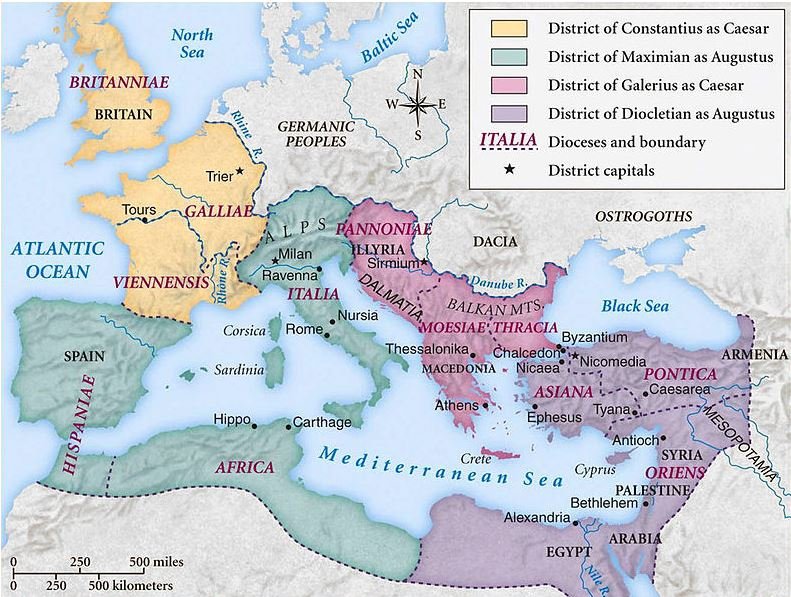
A map showing the Roman Empire during its first tetrarchy.
284 CE – Diocletian becomes emperor, initiating the Tetrarchy to stabilize governance.
303 CE – The Great Persecution of Christians begins.
313 CE – Constantine legalizes Christianity with the Edict of Milan.
324 CE – Constantine reunites the empire and establishes Constantinople as a new capital.
325 CE – The First Council of Nicaea defines Christian doctrine.
361 CE – Julian the Apostate briefly restores paganism.
378 CE – The Goths defeat Rome at the Battle of Adrianople.
395 CE – The empire permanently splits between East and West after Theodosius I’s death.
410 CE – The Visigoths sack Rome.
476 CE – The Western Roman Empire falls as Odoacer deposes Romulus Augustulus.
527 CE – Justinian I begins his reign, overseeing legal codification and military expansion.
541 CE – The Plague of Justinian devastates the empire.
636–641 CE – The Muslim conquests, including Egypt, mark the end of the Late Roman period.

Head of Diocletian.
Frequently Asked Questions
How did Christianity become the dominant religion of the empire?
Constantine I legalized Christianity with the Edict of Milan (313 CE), supported church construction, and promoted Christian leaders. Theodosius I later made Christianity the empire’s official religion, banning pagan practices in 391 CE.
What role did barbarian invasions play in the fall of the Western Roman Empire?
The empire faced repeated invasions from the Goths, Huns, and Vandals. The Visigoths sacked Rome in 410 CE, and the deposition of the last Western emperor, Romulus Augustulus, by Odoacer in 476 CE marked the fall of the Western Roman Empire.
How did historiography change in the Late Roman period?
Christian writers like Eusebius and Orosius blended religious and historical narratives, while secular historians like Ammianus Marcellinus and Procopius detailed military and political events, often with bias.
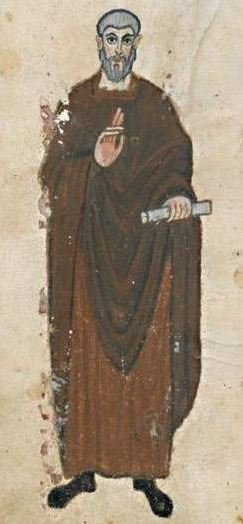
A portrait of Eusebius.
What were the key military reforms during this period?
The army was reorganized into frontier troops (limitanei) and mobile field units (comitatenses), and recruitment increasingly relied on barbarian mercenaries. Defensive strategies shifted from aggressive expansion to fortifications.
How did legal and administrative systems evolve?
Diocletian and Constantine restructured administration, dividing provinces into smaller units and creating dioceses overseen by vicars. Legal codes, like the Theodosian Code (438 CE) and Justinian’s Code (529–534 CE), centralized and preserved Roman law.
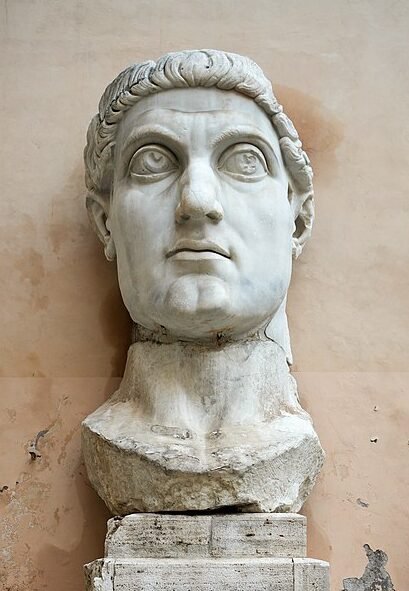
Head of the Colossus of Constantine at the Capitoline Museums in Rome, Italy.
What was the economic impact of the Late Roman period?
Heavy taxation, inflation due to currency debasement, and reliance on forced labor weakened the economy. The empire shifted toward a more rural, self-sufficient economy as urban centers declined.
What was the significance of Constantinople?
Founded by Constantine in 330 CE as the “New Rome,” Constantinople became the political and cultural heart of the Eastern Roman (Byzantine) Empire, remaining a powerful city for over a millennium.
What role did religious conflicts play in imperial politics?
Arianism, Donatism, and Nestorianism led to theological disputes, councils (like Nicaea in 325 CE), and imperial interventions. Theodosius I enforced Nicene orthodoxy, and Justinian I later suppressed heretical groups.

A sculpture work depicting the bust of Theodosius I.
How did Roman society change under Christian influence?
Christianity reshaped moral and social norms, promoting charity and monasticism while diminishing gladiatorial games and pagan rituals. Bishops gained political power, often acting as intermediaries between citizens and emperors.
How did the Eastern Roman Empire survive while the Western Empire fell?
The Eastern Empire had a stronger economy, better defenses, and more stable leadership. Its capital, Constantinople, withstood numerous sieges, and Justinian I later attempted to reconquer lost Western territories.
What marked the end of the Late Roman period?
The Arab conquest of Egypt in 641 CE signaled the end of the Late Roman era, as the Eastern Roman (Byzantine) Empire lost key provinces and transitioned into the medieval Byzantine period.





