Female Physicians in Ancient Egypt
Ancient Egypt was a civilization known for its remarkable advancements in medicine, and it stands out among early societies for its recognition of women in medical professions. Unlike many later cultures, which restricted women’s roles in healthcare, ancient Egyptian society provided opportunities for women to study, practice, and even achieve high-ranking positions in the medical field. Evidence from inscriptions, papyri, and tomb paintings suggests that female physicians played a crucial role in healthcare, particularly in gynecology, obstetrics, and midwifery. Some women attained prestigious titles, such as “Chief Physician” or “Lady Director of Physicians,” demonstrating that they were not merely assistants but leaders in their field.
Education and Training of Female Physicians
Medical education in ancient Egypt was centered around institutions called “Houses of Life,” which were part of temples and functioned as both schools and libraries.
These institutions trained priests and physicians in various medical disciplines, including diagnosis, surgery, pharmacology, and spiritual healing.
While men predominantly held high positions in priesthood and medicine, evidence suggests that women were allowed to enter these institutions under specific circumstances. Female physicians likely received their training from established practitioners, possibly within a lineage of medical professionals.
The presence of female doctors in ancient Egyptian society indicates that gender was not a barrier to education in medicine. Some scholars speculate that certain medical schools may have had separate training programs for women, particularly in fields related to childbirth and female health.
Women aspiring to become physicians probably underwent rigorous study in human anatomy, herbal medicine, and medical texts, such as the Ebers Papyrus, which contains extensive knowledge about diseases, treatments, and surgical procedures.
Prominent Female Physicians
One of the most famous female physicians of ancient Egypt was Peseshet, who held the title of “Lady Director of Physicians” during the Old Kingdom (circa 2700–2200 BCE). Her name appears in inscriptions that identify her as a supervisor of a group of medical practitioners, possibly an indication that she trained and managed other female doctors. Though details about her medical practice remain limited, her high-ranking title suggests that she had significant influence in the field. She may have specialized in obstetrics and gynecology, considering that many female physicians in ancient Egypt focused on women’s health.
Other female physicians, whose names have been lost to history, likely served in similar roles. Given the extensive knowledge recorded in medical papyri, such as the Kahun Gynecological Papyrus (circa 1800 BCE), which discusses pregnancy, contraception, and gynecological ailments, it is reasonable to infer that women contributed to the development and transmission of medical knowledge in their communities. The presence of female practitioners in medicine also suggests that they treated both women and children, fulfilling an essential societal role.
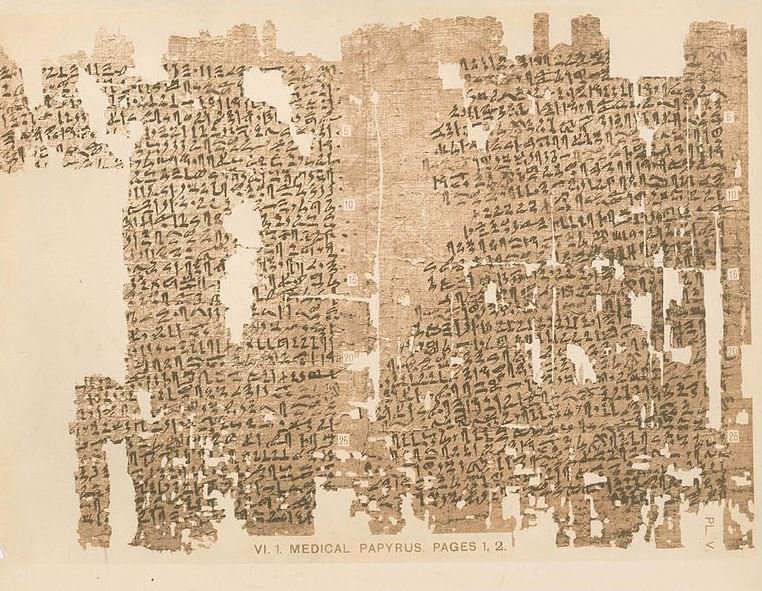
A portion of the Kahun Gynaecological Papyrus, including the entirety of page 1 and a section of page 2.
Medical Specializations and Practices
Female physicians in ancient Egypt likely specialized in areas that were considered natural extensions of their social roles. Gynecology and obstetrics were among the primary fields of practice, as women were often called upon to assist with childbirth, fertility issues, and reproductive health.
The Kahun Papyrus provides insight into treatments for menstrual disorders, pregnancy complications, and contraception, indicating that Egyptian physicians—possibly including women—developed sophisticated methods for managing female health concerns.
Midwifery was another prominent medical profession for women. Midwives were responsible for assisting pregnant women before, during, and after childbirth, and they may have also played a role in diagnosing fertility problems. Some scholars believe that midwives were distinct from female physicians, though there was likely some overlap between the two professions. Given that childbirth was considered both a medical and spiritual event, midwives may have incorporated religious rituals and prayers into their practices to ensure a successful delivery.
Beyond reproductive health, female physicians may have also been involved in pediatrics, nursing, and general healthcare. Ancient Egyptian medical texts contain descriptions of diseases affecting children, as well as treatments for ailments such as digestive disorders, infections, and fevers. Women trained in medicine may have provided remedies for these conditions, either within households or as part of a broader healthcare system.
Unlike many later civilizations that restricted women’s access to medicine, Egypt recognized the capabilities of female practitioners, allowing them to achieve high ranks and influence healthcare practices.
Status and Recognition in Society
The status of female physicians in ancient Egypt was relatively high compared to women in other professions. The existence of titles such as “Chief Physician” and “Lady Director of Physicians” suggests that women in medicine held positions of authority and respect. Unlike many ancient cultures where medical roles were exclusively male-dominated, Egypt appears to have acknowledged the competence and contributions of female doctors.
Women in ancient Egyptian society generally had more legal rights and social freedoms than their counterparts in Greece or Rome. They could own property, initiate divorce, and engage in business, which likely contributed to their ability to pursue medical careers. While female physicians may not have been as numerous as their male counterparts, they were not mere assistants; rather, they were independent practitioners who treated patients and passed on medical knowledge.
There is also evidence to suggest that some female physicians worked in royal courts, serving queens and high-ranking women. Given the importance of fertility and childbirth in the continuation of dynastic rule, royal women would have required expert medical care. Female doctors may have been appointed to oversee the health of these women, ensuring successful pregnancies and safe deliveries. This role would have placed them in close proximity to the ruling elite, further elevating their status.
Medical Texts and Female Health
Ancient Egyptian medical texts provide insight into the treatments and procedures that female physicians may have used. The Ebers Papyrus (circa 1555 BCE), one of the oldest and most comprehensive medical documents, contains numerous references to gynecological conditions, herbal remedies, and surgical techniques. The text describes treatments for uterine prolapse, contraception, and pregnancy complications, some of which involved applying medicinal herbs, oils, and honey. Many of these treatments were likely administered by female physicians, given their specialization in women’s health.
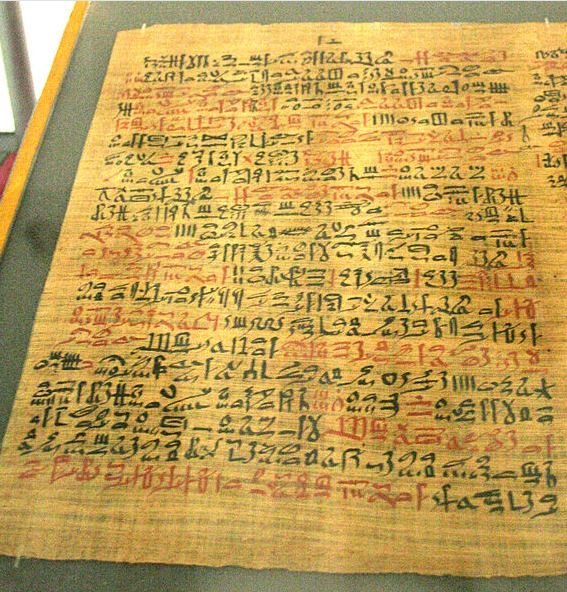
The Ebers Papyrus
The Kahun Gynecological Papyrus, written around 1810 BCE, is particularly significant as it is one of the earliest known texts dedicated exclusively to gynecology. It outlines diagnoses and treatments for reproductive disorders, pregnancy tests, and birth control methods. Some of the treatments mentioned include fumigation with herbs, application of medicinal pastes, and dietary recommendations. This text supports the idea that women were actively engaged in medical practice and that they had access to written knowledge on healthcare.
Beyond reproductive health, ancient Egyptian physicians—including women—used a variety of tools and techniques for treating illnesses. Surgical instruments made of copper or bronze have been discovered, along with depictions of medical procedures in tomb paintings.
Physicians also relied on a combination of practical medicine and religious healing, using amulets and prayers alongside herbal remedies. The integration of science and spirituality in Egyptian medicine suggests that female physicians, like their male counterparts, were trained in both physical and metaphysical healing practices.
Legacy and Influence on Later Societies
The contributions of female physicians in ancient Egypt had a lasting impact on the medical traditions of later civilizations. Although historical records on individual women in medicine remain scarce, their presence in Egyptian society set a precedent for female participation in healthcare. The medical knowledge developed in Egypt influenced Greek and Roman medicine, and some scholars believe that Egyptian practices were incorporated into the teachings of early Greek physicians, such as Hippocrates.
However, as societies became more patriarchal, the role of women in medicine gradually diminished. In classical Greece and Rome, medical practice became increasingly male-dominated, and female physicians faced greater restrictions. By the time of the Middle Ages, women in Europe were largely excluded from formal medical education, though they continued to serve as midwives and healers in their communities.
While much of their history remains obscured by time, the existence of female physicians in ancient Egypt challenges modern assumptions about gender roles in ancient medicine.
In contrast, some regions in the Islamic world preserved the tradition of female medical practitioners, drawing upon ancient Egyptian and Greco-Roman medical knowledge. Women in medieval Islamic societies sometimes worked as physicians, particularly in hospitals that accommodated female patients. The legacy of Egyptian female physicians may have contributed to these later traditions, even as restrictions on women in medicine persisted in other parts of the world.
Frequently asked questions
Who was Agnodice, and why was she significant?
Agnodice was a young woman from Athens who aspired to become a physician, but in 4th-century BCE Athens, women were forbidden from practicing medicine, facing the death penalty if caught. Determined to pursue her passion, she traveled to Alexandria, where women were allowed in the medical profession, received training, and returned to Athens disguised as a man to practice medicine.
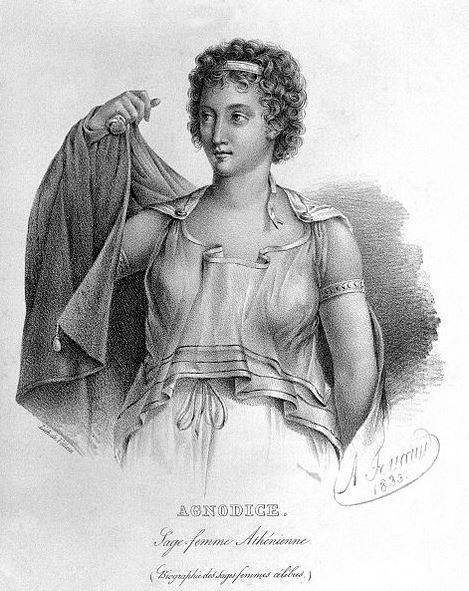
Agnodice, disguised as a male physician, is depicted here not revealing her identity by lifting her tunic but instead parting her outer garment to expose her feminine form.
What happened when Agnodice’s true identity was discovered?
Agnodice gained recognition for her medical skill, particularly among female patients. However, suspicions grew, and when her true identity was revealed, she was arrested and put on trial. Facing execution, she was saved when her female patients, including influential women, stormed the court and demanded her release. Their protest forced the authorities to change the law, allowing women to practice medicine in Athens.
Did women practice medicine elsewhere before Agnodice?
Yes, women had been practicing medicine in Egypt for centuries before Agnodice’s time. Female physicians were recorded as early as the Early Dynastic Period (c. 3150–2610 BCE), with figures such as Merit-Ptah, the first recorded female doctor in history, and evidence of a woman leading a medical school at the Temple of Neith in Sais around 3000 BCE.
Who was Merit-Ptah, and why is she important?
Merit-Ptah was a physician who lived around 2750 BCE and served as the royal court’s chief physician. She is the first recorded female doctor in history, mentioned in an inscription left by her son on a tomb in Saqqara. Her title suggests she trained and supervised other doctors, including men, and treated royal patients.
What role did Peseshet play in ancient Egyptian medicine?
Peseshet, who lived during the Old Kingdom’s 4th Dynasty (c. 2550 BCE), held the title “Lady Overseer of Female Physicians.” This indicates she supervised female doctors and possibly trained midwives and physicians, suggesting that women were actively involved in medical education.
How did Egyptian society view women in medicine?
Although men dominated the medical field, Egyptian women were not excluded from it. Egyptian society valued the feminine, as seen in religious symbols and deities. Many powerful deities, such as Neith, Isis, and Hathor, were female, and goddesses like Sekhmet and Serket were associated with healing. The presence of women in medicine was a natural extension of this cultural respect.
READ MORE: 10 Most Famous Egyptian Goddesses
Did Egyptian women have more rights compared to women in other ancient civilizations?
Yes, Egyptian women had significantly more rights than women in Greece and Rome. They could own property, initiate divorce, run businesses, serve as priestesses, and work as scribes. Since doctors needed to read and write medical texts, it is likely that female physicians were also literate and well-educated.
Goddess Isis’s Role in Shaping the Status of Women in Ancient Egypt
What kinds of illnesses and treatments were common in ancient Egypt?
Ancient Egyptians suffered from infections, digestive disorders, and joint pain. Despite artwork showing a seemingly healthy population, some Egyptologists have noted that people endured many debilitating diseases. Injuries were treated with bandages and splints, but diseases were harder to diagnose. Medical treatment combined empirical methods, such as herbal remedies and surgical procedures, with religious rituals and incantations.
What were the Houses of Life, and how did they contribute to medical education?
Houses of Life were institutions within temple complexes where medical knowledge was recorded and taught. Doctors, including women, studied and trained in these institutions, combining empirical observation with spiritual healing. By the Old Kingdom, Egyptian medicine was already highly organized.
Besides physicians, what other roles did women have in Egyptian medicine?
Women also worked as nurses, midwives, and wet nurses. Nurses were highly respected, particularly those who served royalty. Midwives played a crucial role in childbirth, and wet nurses were essential due to high maternal mortality rates, often entering legally binding agreements to care for infants if the mother died.
Did women continue to practice medicine in later periods?
Yes, during the Ptolemaic Period (323–30 BCE), Egyptian traditions influenced Greek medicine, and women continued to work in medicine. A female physician named Cleopatra wrote a book on obstetrics, later consulted by Greek doctors like Galen. Some sources mistakenly attribute this work to Cleopatra VII, the last Ptolemaic queen, but it is possible she also supported medical advancements.
READ MORE: 10 Most Famous Rulers from the Ptolemaic Dynasty
What happened to women in medicine after the spread of Christianity in Egypt?
With the Christianization of Egypt in the 4th century CE, women’s roles in medicine and other professions diminished due to more restrictive societal norms. One of the last known female scholars was Hypatia of Alexandria (c. 370–415 CE), a philosopher and scientist who was murdered by a Christian mob. After this period, opportunities for women in medicine declined sharply.

An illustration depicting Hypatia of Alexandria.
What is the significance of Egyptian female physicians in medical history?
The presence of female doctors in ancient Egypt challenges the assumption that medicine was always a male-dominated field. Figures like Merit-Ptah and Peseshet show that women held respected positions in healthcare, trained others, and contributed to medical advancements. Their legacy influenced later traditions, even as women’s opportunities in medicine declined in subsequent centuries.





