What triggered the Roman–Seleucid war?
The Roman–Seleucid War, fought between 192 and 188 BC, was a pivotal conflict that reshaped the political landscape of the Hellenistic world and cemented the Roman Republic‘s dominance in the eastern Mediterranean.
This war, also known by several names such as the Aetolian War, Antiochene War, or Syrian War, was waged between the Roman Republic and its allies against the Seleucid Empire, led by Antiochus III the Great.
The conflict occurred across southern Greece, the Aegean Sea, and Asia Minor, with significant battles determining the course of ancient Mediterranean history.
Historical Context
The roots of the Roman–Seleucid War lay in the broader geopolitical dynamics of the post-Alexandrian Hellenistic world. After the death of Alexander the Great in 323 BC, his empire was divided among his generals, giving rise to several successor states, including the Seleucid Empire. By the early 2nd century BC, the Seleucid Empire had become one of the most powerful of these states, controlling vast territories in Asia Minor, the Levant, and Mesopotamia.
Simultaneously, the Roman Republic was expanding its influence in the Mediterranean. Following its victories in the Punic Wars against Carthage and its involvement in Greek affairs during the First and Second Macedonian Wars, Rome emerged as a significant player in the eastern Mediterranean. This expansion brought Rome into contact—and ultimately conflict—with the Seleucid Empire, which also sought to extend its influence in Greece and Asia Minor.
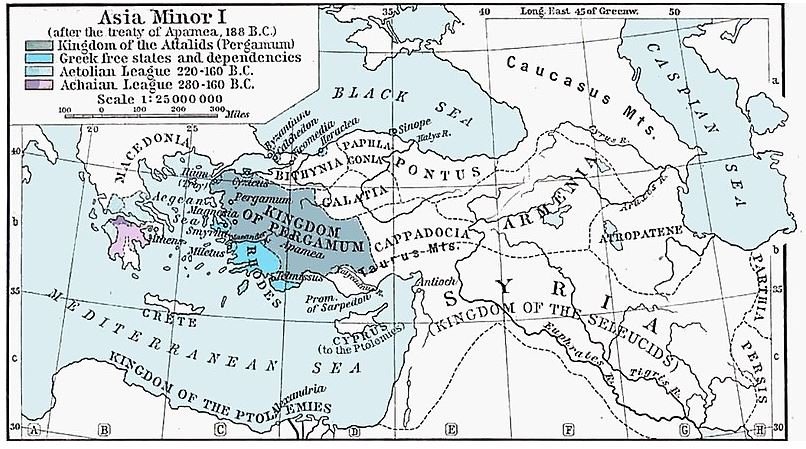
Image: Asia Minor in the aftermath of the war.
Causes of the War
The Roman–Seleucid War resulted from several interconnected causes, rooted in a combination of strategic rivalries, conflicting ambitions, and the actions of intermediary powers.
Geopolitical Rivalry
Rome and the Seleucid Empire had fundamentally different visions for the eastern Mediterranean. Rome viewed Greece as its sphere of influence, considering Asia Minor a buffer zone necessary to protect its interests. Conversely, the Seleucids saw Asia Minor as a core part of their empire and viewed Greece as a natural buffer. These opposing perspectives created tension that escalated into open conflict.
The Aetolian League’s Role
The Aetolian League, a coalition of Greek city-states dissatisfied with Rome’s growing dominance in the region, played a catalytic role in triggering the war. Frustrated by Rome’s control following the Second Macedonian War, the Aetolians invited Antiochus III to intervene in Greek affairs, hoping to use him as a counterbalance to Roman power. Antiochus accepted, seeing this as an opportunity to expand his influence.

One of the most successful Seleucid rulers was Antiochus III the Great, who reigned from 223-187 BC. Antiochus III led a series of military campaigns that extended the Seleucid Empire’s territory to include much of the Near East, including Mesopotamia, Iran, and parts of Central Asia. He also established a strong presence in Greece, where he supported the Greeks in their conflict against Rome. Image: Roman bust of Seleucid ruler Antiochus III, 100 BC-50 BC, Thorvaldsens Museum, Copenhagen, Denmark
The “Cold War” Between Rome and Seleucia
Before the outbreak of hostilities, Rome and the Seleucid Empire had engaged in a period of diplomatic maneuvering and indirect competition, often referred to as a “cold war.” This rivalry began in earnest around 196 BC when Antiochus III expanded his influence in Asia Minor and Greece while Rome worked to establish alliances with Greek city-states.
The Hannibal Factor
Hannibal Barca, the Carthaginian general defeated by Rome during the Second Punic War, found refuge in the Seleucid court. Rome perceived Antiochus’s association with Hannibal as a potential threat, heightening tensions between the two powers. While Hannibal played only a minor role in the conflict, his presence fueled Roman fears of a Seleucid-Carthaginian alliance.
Course of the War
Initial Phase: Antiochus’s Campaign in Greece
In 192 BC, Antiochus III landed in Greece with a relatively small force, presenting himself as a liberator of the Greek city-states from Roman domination. While he succeeded in gaining the support of some cities, his campaign was hindered by a lack of widespread Greek unity. Roman forces, led by the consul Manius Acilius Glabrio, confronted Antiochus in 191 BC at the Battle of Thermopylae. The Seleucid forces suffered a decisive defeat, forcing Antiochus to retreat to Asia Minor.
Naval Engagements
The war’s naval dimension was critical, as control of the Aegean Sea was vital for both sides. Roman forces, supported by their allies Pergamon and Rhodes, achieved naval superiority through a series of victories. These defeats effectively isolated Antiochus from his Greek allies and curtailed his ability to project power across the sea.
Roman Invasion of Asia Minor
In 190 BC, Lucius Cornelius Scipio, later titled Scipio Asiaticus, led a Roman army into Asia Minor with the support of Eumenes II of Pergamon. Antiochus attempted to negotiate peace, but his refusal to accept Rome’s harsh demands prolonged the conflict. The decisive encounter occurred at the Battle of Magnesia near Mount Sipylus in 190 BC. The Roman-led forces decisively defeated the Seleucid army, effectively ending Antiochus’s ambitions in the region.
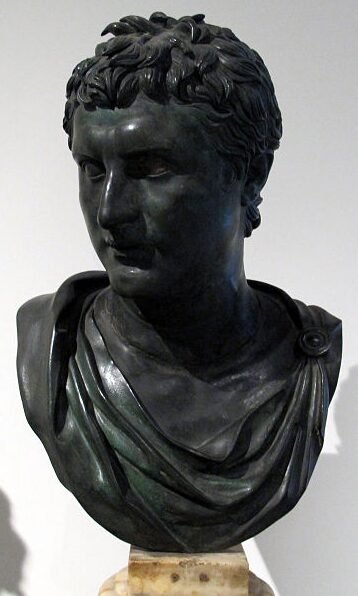
In 190 BC, Lucius Cornelius Scipio, later known as Scipio Asiaticus, led a Roman army into Asia Minor with the aid of Eumenes II, king of Pergamon. Image: Bust of Eumenes II.
Aftermath and Treaty of Apamea
The war formally concluded in 188 BC with the Treaty of Apamea. This treaty imposed severe terms on the Seleucid Empire, effectively curtailing its power:
Antiochus was forced to cede all territories north of the Taurus Mountains to Rome’s allies, particularly Pergamon and Rhodes. These regions had been integral to Seleucid power and their loss significantly weakened the empire.
The Seleucid navy was dismantled, and the empire was prohibited from maintaining war elephants. These measures aimed to ensure that the Seleucids would no longer pose a military threat to Rome or its allies.
Antiochus agreed to pay a substantial indemnity to cover Rome’s war expenses, further depleting the Seleucid treasury.
The Aetolian League, which had instigated the conflict, was reduced to a Roman client state with limited autonomy.
Significance of the Roman–Seleucid War
The Roman–Seleucid War had profound consequences for the balance of power in the ancient Mediterranean world, shaping the geopolitical landscape for decades to come.
The war solidified Rome’s dominance over Greece and Asia Minor, establishing the Republic as the preeminent power in the eastern Mediterranean. By defeating the Seleucid Empire and marginalizing its influence, Rome ensured its control over key trade routes and strategic territories.
The Treaty of Apamea marked the beginning of a steady decline for the Seleucid Empire. The loss of territories and resources weakened its ability to maintain its authority, making it increasingly vulnerable to internal revolts and external threats.
The war further diminished the autonomy of Greek city-states, many of which became Roman client states or fell under the influence of Rome’s allies. The ideal of Greek independence was replaced by a reality of Roman hegemony.
By achieving naval dominance in the Aegean Sea and securing alliances with Rhodes and Pergamon, Rome gained control over key maritime trade networks, enhancing its economic strength and strategic position.
While the war marked the decline of Seleucid influence, it also facilitated the spread of Roman power into the Hellenistic world. This interaction influenced Roman culture, particularly in art, philosophy, and governance, which absorbed elements of Greek and Hellenistic traditions.
The Roman–Seleucid War set a precedent for Rome’s further expansion into the eastern Mediterranean. Future conflicts with other Hellenistic states, including the Macedonian and Ptolemaic kingdoms, were influenced by the dynamics established during this war.
Conclusion
The Roman–Seleucid War was more than just a military conflict; it was a turning point that reshaped the ancient Mediterranean. Driven by strategic rivalries and political ambition, the war reflected the growing might of Rome and the declining fortunes of the Seleucid Empire. Its outcome not only established Rome as the dominant power in the eastern Mediterranean but also marked the beginning of a new era in which Roman influence would steadily expand across the Hellenistic world.
Frequently Asked Questions
What was the Roman–Seleucid War, and when did it take place?
The Roman–Seleucid War, also known as the Aetolian, Antiochene, Syrian, or Syrian-Aetolian War, was a military conflict between the Roman Republic and the Seleucid Empire led by Antiochus III. It occurred from 192 to 188 BC.
Where did the Roman–Seleucid War take place?
The war was fought in southern Greece, the Aegean Sea, and Asia Minor.
What caused the Roman–Seleucid War?
The war stemmed from a “cold war” starting in 196 BC, as Rome and the Seleucid Empire vied for influence over the Greek city-states. Their conflicting visions for the Aegean region escalated into open conflict.
How did the Romans and Seleucids differ in their views of the Aegean region?
The Romans considered Greece as their sphere of influence and Asia Minor as a buffer zone, while the Seleucids saw Asia Minor as central to their empire and Greece as a strategic buffer.
What role did the Aetolian League play in the conflict?
The Aetolian League, dissatisfied with Roman dominance, initiated a small conflict and invited Antiochus III to intervene in Greece, sparking the war between Rome and the Seleucids.
What was Antiochus III’s objective in Greece?
Antiochus III aimed to position himself as the liberator of Greece from Roman rule and expand his influence by forging alliances with local Greek states.
What happened at the Battle of Thermopylae in 191 BC?
Roman forces, led by consul Manius Acilius Glabrio, decisively defeated Antiochus III’s army at Thermopylae, forcing him to retreat to Asia Minor.
What impact did naval battles have on the war?
Roman-led coalitions, supported by Pergamon and Rhodes, achieved naval dominance through key victories in the Aegean Sea, isolating Antiochus and preventing reinforcements.
Who led the Roman campaign into Asia Minor in 190 BC?
Lucius Cornelius Scipio, later known as Scipio Asiaticus, led the Roman army into Asia Minor with support from Eumenes II of Pergamon.
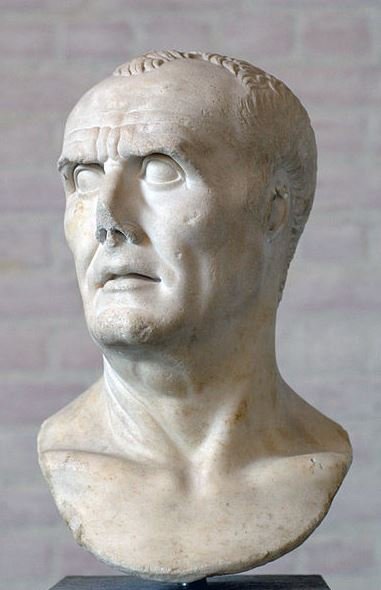
Image: Lucius Cornelius Scipio
What was the outcome of the Battle of Magnesia?
The Battle of Magnesia in 190 BC resulted in a decisive Roman victory, dismantling Antiochus III’s army and forcing him to sue for peace.
What were the terms of the Treaty of Apamea in 188 BC?
Antiochus had to cede all territories north of the Taurus Mountains to Rome’s allies, pay a large indemnity, and disarm his navy, significantly weakening the Seleucid Empire.
How did the war affect the Aetolian League?
The Aetolian League, having failed in its aims, became a Roman client state with limited autonomy.
What was the broader significance of the Roman–Seleucid War?
The war marked a shift in power, with Rome solidifying its dominance over Greece and Asia Minor, and the Seleucid Empire losing its influence in the Mediterranean.





