Twin Holy Birthdays in the Baháʼí calendar
The Festivals of the Twin Birthdays, also known as the Twin Holy Birthdays, refer to two sacred days in the Bahá’í calendar that celebrate the births of the two most central figures of the Bahá’í Faith: the Báb and Bahá’u’lláh. The birth of the Báb occurred on October 20, 1819, while Bahá’u’lláh was born on November 12, 1817. These days are observed according to a lunar reckoning and move each year within the Bahá’í calendar. The significance of these festivals is deeply rooted in the Bahá’í belief in progressive revelation, as the Báb served as the forerunner to Bahá’u’lláh, much like John the Baptist did for Jesus Christ.
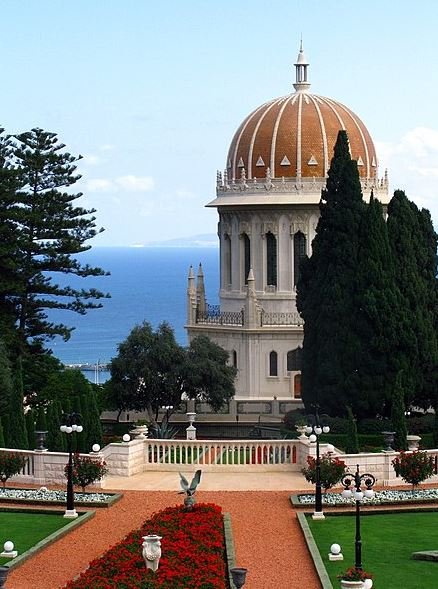
A view of the Shrine of the Báb, from its garden.
Observance of the Twin Holy Birthdays
The Twin Holy Birthdays are not fixed to specific Gregorian dates. Instead, they are determined by a lunar calculation based on the eighth new moon after Naw-Rúz (the Bahá’í New Year, which occurs on or near March 21). These dates fluctuate within the Bahá’í months of Mashíyyat, ʻIlm, and Qudrat, corresponding to mid-October to mid-November in the Gregorian calendar. This system ensures that the birthdays are celebrated according to the principles set forth by Bahá’u’lláh and further defined by the Universal House of Justice.
Before 2015, different Bahá’í communities followed varying practices regarding these holy days. In some regions, they were celebrated based on the Islamic lunar calendar, while in others, they were fixed to October 20 (Báb) and November 12 (Bahá’u’lláh). However, a decision by the Universal House of Justice standardized their observance across all Bahá’í communities, ensuring that the celebrations were harmonized worldwide.
READ ALSO: Difference between Julian Calendar and Gregorian Calendar
The Twin Manifestations of God
The concept of the Twin Manifestations of God is a cornerstone of Bahá’í theology. According to Bahá’u’lláh’s teachings, the Báb and Bahá’u’lláh were divinely sent to usher in a new era of spiritual enlightenment. The Báb’s role was to prepare humanity for the coming of “Him whom God shall make manifest”, referring to Bahá’u’lláh. This relationship is often likened to that of John the Baptist and Jesus Christ, with the Báb paving the way for Bahá’u’lláh’s teachings.
In the Kitáb-i-Aqdas, Bahá’u’lláh states that his birthday and the Báb’s are “accounted as one in the sight of God”. This reflects the inseparable nature of their missions and their profound unity in fulfilling God’s plan for humanity.

An 1868 picture of Baháʼu’lláh.
Historical Background and Early Observances
During the early years of the Bahá’í Faith, the followers of the Báb and Bahá’u’lláh celebrated their births in a variety of ways, often in secret due to persecution. In Persia, where the Faith originated, Bahá’ís had to privately observe these days to avoid attracting attention from hostile authorities. In contrast, Bahá’ís living in more tolerant societies could hold gatherings more freely, sharing prayers, readings, and festive meals.
Over time, as the Faith spread globally, celebrations became more structured and widespread. However, the different calendrical systems led to inconsistencies in observance. Some Bahá’ís followed the Islamic lunar calendar, while others adhered to the fixed Gregorian dates of October 20 and November 12. The Universal House of Justice’s 2015 decision brought about uniformity, allowing Bahá’ís around the world to celebrate these days together in accordance with the lunar calculations.
Special Bicentenary Celebrations (2017 & 2019)
Two momentous anniversaries were celebrated worldwide in recent years:
- 2017: The 200th anniversary of Bahá’u’lláh’s birth
- 2019: The 200th anniversary of the Báb’s birth
For these occasions, the Universal House of Justice organized global celebrations, calling on Bahá’ís and their communities to reflect on the lives and teachings of these Manifestations. Special artistic performances, exhibitions, public events, and interfaith gatherings took place in cities around the world. Many national and local governments also acknowledged these milestones, issuing proclamations recognizing the impact of the Bahá’í Faith on their societies.
In its 2017 letter to “all who celebrate the Glory of God,” the Universal House of Justice emphasized how Bahá’u’lláh’s teachings inspire action for global unity and justice. This message encouraged Bahá’ís to engage with their broader communities and promote the values of peace, service, and social harmony.
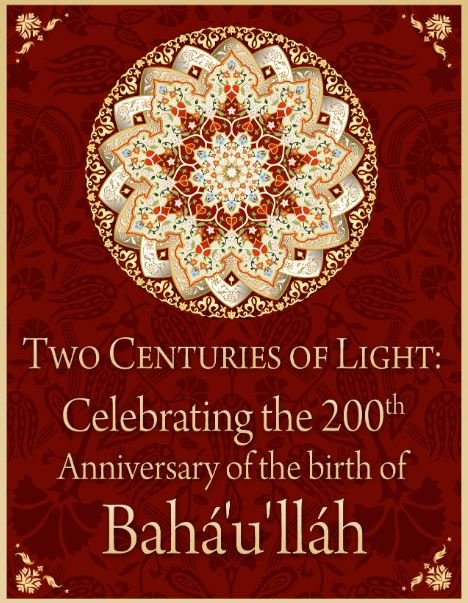
A celebration of the 200th birthday of Bahá’u’lláh. Image source.
Rituals and Customs Associated with the Twin Holy Birthdays
Bahá’ís do not follow fixed rituals for these celebrations, as the Faith emphasizes the inner spirit of devotion over formalized ceremonies. However, some common elements characterize the observance of the Twin Holy Birthdays:
Community Gatherings
Bahá’ís often come together in community centers or private homes to offer prayers, read from the writings of the Báb and Bahá’u’lláh, and share reflections on their significance. These gatherings may include music, poetry, and storytelling.
Acts of Service
Inspired by the teachings of the Faith, Bahá’ís often mark these days by engaging in acts of service to their communities, such as feeding the hungry, assisting those in need, or organizing educational programs.
Artistic and Cultural Expressions
Many communities celebrate through artistic performances, including plays, musical compositions, and visual arts that depict the lives and messages of the Báb and Bahá’u’lláh. This allows for a creative and engaging way to honor their legacies.
Public Awareness and Outreach
The festivals also provide an opportunity for interfaith dialogues and public lectures on the themes of unity, justice, and spiritual renewal. Some Bahá’ís invite neighbors and friends to join the celebrations, fostering greater understanding of the Faith.
Dates of the Twin Holy Birthdays (2015-2030)
Since the Bahá’í day begins at sunset, these dates should be understood as starting from the evening before the listed Gregorian date.
| Year | Birth of the Báb | Birth of Bahá’u’lláh |
|---|---|---|
| 2024 | 2 November | 3 November |
| 2025 | 22 October | 23 October |
| 2026 | 10 November | 11 November |
| 2027 | 30 October | 31 October |
| 2028 | 19 October | 20 October |
| 2029 | 7 November | 8 November |
| 2030 | 28 October | 29 October |

Frequently Asked Questions
How are the Twin Birthdays determined each year?
They are observed on the first and second days following the eighth new moon after Naw-Rúz, based on astronomical calculations using Tehran as the reference point.

Shrine of Baháʼu’lláh
How were these holy days observed before 2015?
Before 2015, they were observed based on the Islamic lunar calendar in the Middle East and fixed Gregorian dates (20 October and 12 November) in other countries.
Why are the Báb and Baháʼu’lláh considered “Twin Manifestations”?
The Báb and Baháʼu’lláh are viewed as Manifestations of God whose missions are linked— the Báb prepared the way for Baháʼu’lláh, similar to John the Baptist and Jesus.

How are the Twin Holy Birthdays celebrated?
Baháʼí communities worldwide mark the days with prayers, gatherings, reflections, and festive celebrations. Special global events were held for their 200th anniversaries in 2017 and 2019.
What is the significance of these holy days in Baháʼí teachings?
Baháʼu’lláh stated in the Kitáb-i-Aqdas that his birthday and the Báb’s “are accounted as one in the sight of God,” emphasizing their unity in purpose.
Do the Twin Holy Birthdays fall on the same Gregorian dates each year?
No, they shift annually within mid-October to mid-November due to the lunar-based calculation method.
What role did the Universal House of Justice play in establishing these dates?
In 2015, the Universal House of Justice standardized the observance worldwide, basing it on the eighth new moon after Naw-Rúz.