What is Drexel 5856?
Drexel 5856 is an important music manuscript containing compositions by George Frideric Handel. Copied by John Christopher Smith, a regular copyist of Handel, this manuscript is believed to have been created as a presentation copy. It is housed at the New York Public Library for the Performing Arts as part of the Music Division’s Drexel Collection. The manuscript derives its name from its call number, a standard practice in library cataloging.
Date and Historical Context
Drexel 5856 dates back to 1720–1721. Handel composed most of his keyboard music between 1710 and 1720, a fact established through handwriting and paper studies. John Christopher Smith began working as Handel’s copyist around 1716–1717. Musicologist Terence Best suggests that this manuscript was one of three created for a patron who was a close acquaintance of Handel.

Flyleaf of Drexel 5856.
Provenance
The earliest known owner of Drexel 5856 was composer and manuscript collector John Stafford Smith. In 1813, Smith gifted the manuscript to Charles Wesley, as evidenced by an inscription on the volume’s initial leaf. Below Wesley’s note, another owner, Edward Francis Rimbault, inscribed his belief that the manuscript was copied for Princess Amelia of Great Britain. However, contemporary musicologists have not substantiated this claim.
British organist and author Francis Rimbault believed Drexel 5856 was copied for Princess Amelia of Great Britain, though modern scholars do not support this claim.
Following Rimbault’s death in 1876, Drexel 5856 appeared as lot 1366 in the auction catalog of his estate. The manuscript was subsequently acquired by financier Joseph W. Drexel, a major collector of musical works. Upon Drexel’s death, his extensive music collection was bequeathed to The Lenox Library. When the Lenox Library merged with the Astor Library to form the New York Public Library, the Drexel Collection became a key component of the Music Division.

Contents of Drexel 5856
The manuscript is a critical source for Handel’s keyboard works and has been referenced in scholarly editions. The Hallische Händel-Ausgabe (HHA), the comprehensive edition of Handel’s works, acknowledges Drexel 5856 as an authoritative source.
Scholarly Significance
- The Händel-Werke-Verzeichnis (HWV), the thematic catalog of Handel’s works, includes Drexel 5856 in its list of primary sources.
- Musicologist Christopher Hogwood consulted this manuscript while researching Handel: Water Music and Music for the Royal Fireworks.
- Terence Best criticized the exclusion of Drexel 5856 from certain 1986 editions of Handel’s harpsichord suites, emphasizing its importance.
Key Musical Works in Drexel 5856
Drexel 5856 contains a variety of Handel’s compositions, ranging from operatic arias to keyboard suites and dances. Some notable entries include:
Opera Excerpts
“Vo’ far guerra, e vincer voglio” from Rinaldo (HWV 7a, No. 28) – A significant aria from Handel’s 1711 opera.
Keyboard Suites and Dances
- Chaconnes and Allemandes: Several movements from Suite de Pièces, including HWV 435, HWV 438, and HWV 432.
- Minuets and Gigues: Various minuets (HWV 553, 554, 555a) and gigues (HWV 432/5) featured prominently in Handel’s works.
- Fugues and Preludes: Important keyboard compositions such as the Prelude in G minor (HWV 572) and the Fugue in D minor (HWV 581).
Selections from Water Music
- Several movements from Water Music (HWV 348–350), including:
- Overture in F major (HWV 348/5–10)
- Air in G major (HWV 350/16–18)
- Minuet in G minor (HWV 350/19–21)
- Coro in D major (HWV 349/13)
Transcriptions and Arrangements
Drexel 5856 also contains arrangements and transcriptions of Handel’s music, suggesting it may have been used for pedagogical or performance purposes. Some sections bear marginal notes, likely written by later owners or editors.
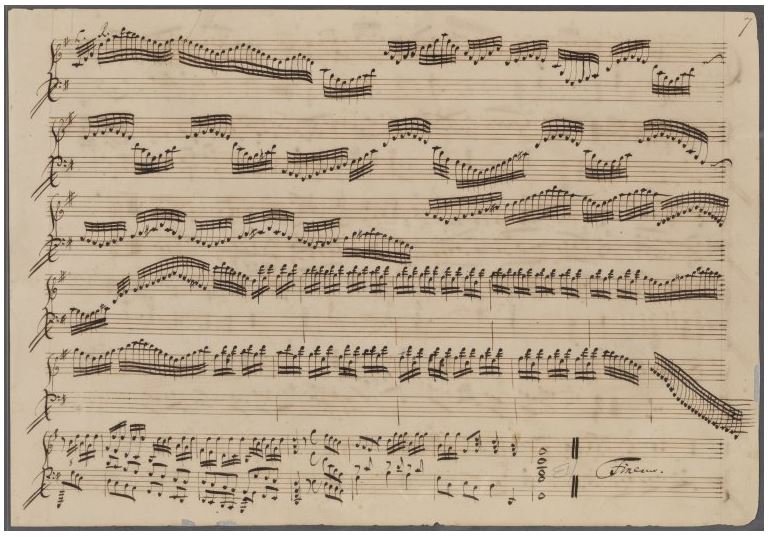
The seventh page of the Drexel 5856.
Handwriting and Notational Features
The manuscript’s notational style, including cross-outs and marginal notes, provides insights into 18th-century copying practices. Differences in clef notation, as seen in the Prelude in D minor (HWV 437), indicate possible revisions during or after the copying process.
Impact on Handel Scholarship
Drexel 5856 has significantly contributed to the study and performance of Handel’s keyboard music. Scholars and performers use it as a reference for historically informed interpretations of Handel’s works.
- Editorial Use: The manuscript has been incorporated into critical editions of Handel’s keyboard compositions.
- Performance Practice: The notation and markings in Drexel 5856 provide valuable information on ornamentation and articulation in Handel’s music.
Conclusion
Drexel 5856 is a vital primary source for Handel’s keyboard and vocal works. Its provenance, scholarly importance, and diverse musical content make it an indispensable resource for researchers, performers, and historians. As part of the New York Public Library’s Drexel Collection, it remains accessible to scholars seeking to explore Handel’s musical legacy.
Questions and Answers
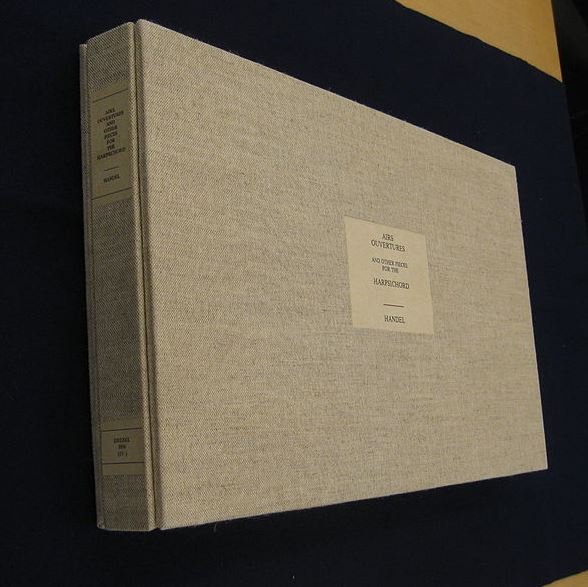
Cover of Drexel 5856
Where is Drexel 5856 housed?
It is part of the Drexel Collection in the Music Division of the New York Public Library for the Performing Arts.
When was Drexel 5856 created?
It dates from 1720 to 1721, during a period when most of Handel’s keyboard music was composed.
Who were some notable owners of Drexel 5856?
The manuscript was owned by John Stafford Smith, Charles Wesley, Edward Francis Rimbault, and later Joseph W. Drexel, who donated it to the Lenox Library.
How did Drexel 5856 become part of the New York Public Library?
After Joseph W. Drexel’s death, his collection was bequeathed to the Lenox Library, which later merged into the NYPL.
Why is Drexel 5856 significant to Handel scholars?
It is considered an important source for Handel’s keyboard works and was referenced in critical editions, including the Händel-Werke-Verzeichnis.
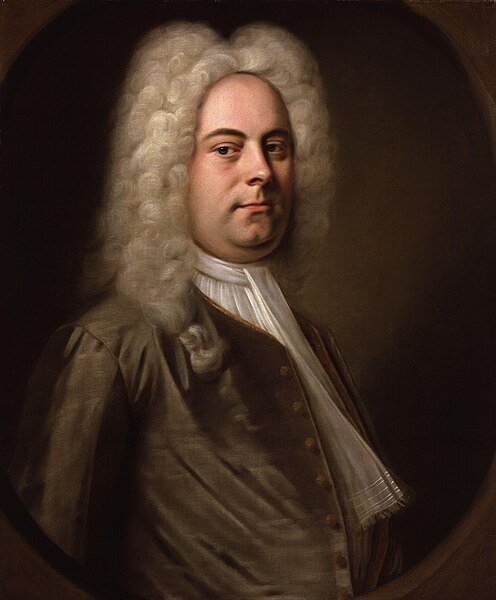
George Frideric Handel (1726–1728)
What notable works are included in Drexel 5856?
The manuscript contains pieces such as “Vo’ far guerra” from Rinaldo, selections from Water Music, and various keyboard suites.