What was France’s Cult of Reason?
The Cult of Reason was France’s first state-sponsored atheistic religion during the French Revolution, designed to replace Roman Catholicism with a civic religion focused on Reason, Liberty, and the Revolution.
Origins of the Cult of Reason
The Cult of Reason (French: Culte de la Raison) emerged during the French Revolution, a period defined by radical political, social, and cultural upheaval. Opposition to the Roman Catholic Church was deeply rooted in the revolutionary movement, as the Church was seen as a symbol of the monarchy’s oppressive power. This anti-clericalism reached its peak after the First French Republic was declared in 1792, and the government began a campaign of dechristianization.
Initially driven by political and economic motives, dechristianization efforts sought to undermine the influence of the Catholic Church. Over time, these measures were supplemented by philosophical alternatives to traditional religion, giving rise to movements like the Cult of Reason. Prominent revolutionaries such as Anacharsis Cloots, Jacques Hébert, Antoine-François Momoro, Pierre-Gaspard Chaumette, and Joseph Fouché became leading figures in defining the Cult of Reason.
Composition and Principles
The Cult of Reason was an eclectic and disorganized amalgamation of ideas rather than a unified religion. It was marked by its atheistic stance and rejection of traditional religious practices. While its central principles included Liberty, Nature, and the victory of the Revolution, its most celebrated tenet was Reason.
Antoine-François Momoro, a key proponent in Paris, emphasized the anthropocentric nature of the Cult. He argued that its ultimate aim was the perfection of humanity through the exercise of Reason. Despite adopting some outwardly religious forms, such as congregational gatherings and ceremonies, the Cult explicitly rejected idolatry. Momoro clarified that Reason, Liberty, and Truth were abstract ideals rather than deities.
Anacharsis Cloots, another prominent advocate, reinforced this perspective by proclaiming at the Festival of Reason that the people (Le Peuple) were the sole “god” of this new civic religion. Inspired by Enlightenment thinkers like Jean-Jacques Rousseau, the Cult sought to establish a “religion of man,” emphasizing human rationality and civic values over divine worship.
Role of Key Figures
Antoine-François Momoro
Momoro played a pivotal role in shaping the Cult of Reason in Paris. He organized ceremonies and promoted the idea that humanity’s liberation could only be achieved through rational thought. His philosophical stance reflected a commitment to individual and collective progress, framing the Cult as a tool for achieving Enlightenment ideals.
Joseph Fouché
Joseph Fouché, a Jacobin military commander, became notorious for his zealous enforcement of dechristianization. His actions included the removal of religious symbols from public spaces and the promotion of atheistic ideals. Fouché introduced the inscription “Death is an eternal sleep” on cemetery gates, encapsulating the Cult’s rejection of religious afterlife doctrines.
Fouché also organized his own civic ceremonies, such as the “Feast of Brutus” in September 1793, which closely aligned with the principles of the Cult of Reason. His uncompromising approach helped spread the Cult’s influence across France, although it also drew criticism for its brutality.
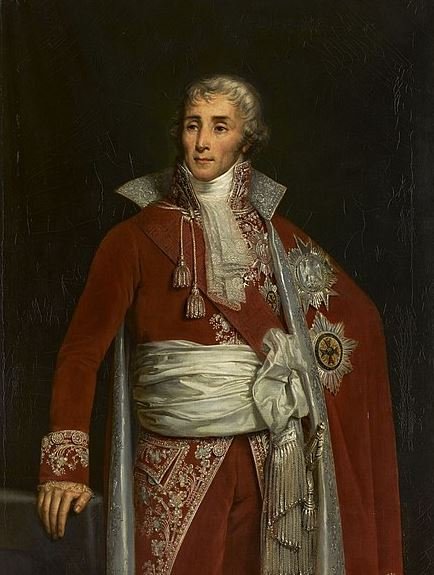
Portrait of Joseph Fouché by French painter Claude-Marie Dubufe.
Festival of Reason
The Fête de la Raison (Festival of Reason) was the most famous public celebration of the Cult. Held on 10 November 1793 (20 Brumaire, Year II) under the supervision of Jacques Hébert and Momoro, the festival transformed churches into “Temples of Reason.”
The cathedral of Notre Dame in Paris became the centerpiece of the celebrations. The Christian altar was replaced with an altar to Liberty, and the inscription “To Philosophy” was carved above the doors. Festive rituals included the participation of young women dressed in white Roman-style garments, who represented Liberty. A living woman, often referred to as the “Goddess of Reason,” personified the ideals of the Cult. In Paris, this role was famously played by Momoro’s wife, Sophie, who symbolized the triumph of Reason and Liberty.
The festival was both a symbolic and theatrical display of revolutionary ideals. A flame burned on the altar as a symbol of truth, and the event rejected traditional religious iconography in favor of human-centered imagery. While some saw the festival as an inspiring celebration of Enlightenment values, others criticized it as a vulgar and excessive spectacle.

An illustration depicting the Festival of Reason.
Reactions and Controversy
The radical nature of the Cult of Reason provoked mixed reactions. Many contemporaries, including revolutionary leader Georges Danton, criticized the dechristianization movement for its extreme measures and inflammatory rhetoric. Danton warned against the potential backlash from alienating the devout population.
The Festival of Reason, in particular, became a lightning rod for controversy. Critics accused the event of being licentious and scandalous, with exaggerated reports of “depravities” fueling opposition to the movement. While some scholars argue that these accounts were embellished, they nonetheless galvanized anti-revolutionary forces and alienated moderate revolutionaries.
Maximilien Robespierre, a leading figure of the Revolution, was particularly scornful of the Cult of Reason. He dismissed it as an atheistic and chaotic enterprise, denouncing its festivals as “ridiculous farces.” Robespierre’s opposition signaled a turning point in the Cult’s trajectory, as he sought to replace it with his own vision of a civic religion.
Decline and Replacement
In early 1794, the Cult of Reason faced increasing criticism from within the revolutionary government. Robespierre, who was consolidating power during the Reign of Terror, introduced the Cult of the Supreme Being as an alternative. Unlike the atheistic Cult of Reason, Robespierre’s religion was deistic, acknowledging the existence of a divine creator while promoting republican and moral values.
The fall of the Hébertist faction marked the decline of the Cult of Reason. On 24 March 1794, prominent Hébertistes, including Hébert, Momoro, Ronsin, and Vincent, were executed by guillotine. Days later, Chaumette and other leaders of the Cult were also executed. With its key proponents eliminated, the Cult of Reason effectively ceased to exist.
Ban and Legacy
Both the Cult of Reason and the Cult of the Supreme Being were officially banned in 1802 under Napoleon Bonaparte’s Law on Cults of 18 Germinal, Year X. Napoleon sought to restore religious stability in France, and his policies marked the end of state-sponsored atheistic and deistic religions.
The Cult of Reason also highlighted the challenges of implementing ideological reforms during periods of political instability.
Despite its brief existence, the Cult of Reason remains a significant episode in the history of the French Revolution. It represented an attempt to replace traditional religious structures with a civic religion grounded in Enlightenment ideals. While its radical nature and atheistic stance ultimately limited its appeal, the Cult’s emphasis on Reason, Liberty, and human progress reflected the revolutionary spirit of its time.
Frequently Asked Questions
Why was the Cult of Reason created?
It arose from anti-clericalism during the French Revolution, with the goal of promoting human perfection, philosophical ideals, and secular authority over religious institutions.
Who were its main proponents?
Key figures included Jacques Hébert, Antoine-François Momoro, Anacharsis Cloots, Pierre-Gaspard Chaumette, and Joseph Fouché, all radical revolutionaries.

Portrait of Antoine-François Momoro.
What practices characterized the Cult of Reason?
It encouraged congregational worship, festivals like the Festival of Reason, and symbolic displays such as replacing Christian altars with altars to Liberty and Reason.
How did the Cult of Reason handle religious opposition?
Through dechristianization campaigns, it removed crosses, statues, and religious symbols, often replacing them with revolutionary messages such as “Death is an eternal sleep.”
What was the Festival of Reason?
A nationwide celebration on November 10, 1793, where churches were transformed into Temples of Reason, featuring living “Goddesses of Reason” and ceremonies dedicated to philosophy and truth.
Why did the Cult of Reason decline?
Maximilien Robespierre denounced its perceived atheism and replaced it with his deistic Cult of the Supreme Being in 1794, leading to the execution of its leaders and eventual suppression.

A portrait of Maximilien Robespierre.
When was the Cult of Reason officially abolished?
Both the Cult of Reason and the Cult of the Supreme Being were officially banned in 1802 by Napoleon Bonaparte’s Law on Cults.