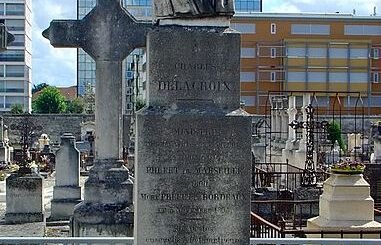
French Egyptologist Gaston Maspero
Gaston Camille Charles Maspero, born on June 23, 1846, in Paris, France, was one of the most influential Egyptologists of the 19th and early 20th centuries. His significant contributions to Egyptology, including his work on the Pyramid Texts and the discovery of royal mummies, played a crucial role in advancing the study of ancient Egypt. He is remembered for his dedication to uncovering and preserving Egypt’s historical treasures and his influence on modern archaeology.
Early Life and Education
Maspero was born into a family of Italian descent that had settled in France. His early intellectual curiosity was directed towards ancient civilizations, and from a young age, he showed an interest in Egypt. Maspero was a brilliant student who excelled in languages and history. By the time he was in his late teens, he was already reading works related to ancient Egypt, especially those by Jean-François Champollion, the French scholar who deciphered the Rosetta Stone.
In his academic pursuit, Maspero enrolled at the École Normale Supérieure in Paris, where he studied history and philology. His love for Egyptology led him to learn Egyptian hieroglyphs, a subject that had only recently become a field of systematic study thanks to the pioneering efforts of Champollion.
By his early twenties, Maspero was fluent in several languages, including ancient Egyptian, which allowed him to work with original inscriptions and texts. His skill with hieroglyphs and his passion for ancient cultures propelled him into the academic world, and soon he became one of the leading figures in French Egyptology.

Sir Gaston Camille Charles Maspero (23 June 1846 – 30 June 1916) was a renowned French Egyptologist and director general of Egypt’s excavations and antiquities. Image: Maspero in 1883.
Early Career and Academic Work
Maspero began his professional career teaching Egyptian language and history in Paris. His expertise in Egyptian texts, especially hieroglyphs, earned him a position at the Collège de France in 1874, where he succeeded Emmanuel de Rougé, another leading French Egyptologist. He was just 28 years old when he assumed this prestigious role, marking the beginning of his influential career.
One of Maspero’s early works, a translation and commentary on the Pyramid Texts, cemented his status as a rising star in Egyptology. The Pyramid Texts are a collection of ancient religious texts inscribed inside the pyramids of the Old Kingdom pharaohs. They are some of the oldest religious writings in the world and offer significant insight into the beliefs and practices of ancient Egypt. Maspero’s work on these texts, including their transcription, translation, and interpretation, was groundbreaking and helped scholars understand the evolution of Egyptian religious thought.
Maspero was also instrumental in bringing Egyptian art and culture to a broader audience. He was a prolific writer, and his publications on Egypt’s art, religion, and history helped establish the foundation of Egyptology as a scholarly discipline. His ability to synthesize vast amounts of information, combined with his deep understanding of ancient Egypt, made him a central figure in the academic world.
Egypt Exploration and the Discovery of Royal Mummies
In 1880, Maspero was appointed as head of an archaeological mission to Egypt by the French government. This mission, which later evolved into the Institut Français d’Archéologie Orientale, aimed to study and protect Egypt’s ancient monuments and artifacts. Maspero’s work in Egypt was not only academic but also practical, as he focused on organizing excavations and safeguarding Egypt’s ancient treasures from looting and decay.
One of Maspero’s most notable achievements occurred in 1881, when his investigation led to the discovery of a hidden cache of royal mummies at Dayr al-Baḥrī, near the Valley of the Kings. This tomb contained the mummies of over 40 pharaohs and high-ranking officials, including some of the most famous rulers in Egyptian history, such as Seti I, Ramses II (also known as Ramesses the Great), Thutmose III, and Amenhotep I. The discovery was monumental, providing scholars with invaluable insight into the burial practices of ancient Egypt and allowing them to examine the physical remains of these historical figures.
The discovery of the royal mummies was not only a triumph for Maspero but also a major event in the history of Egyptology. Maspero’s careful excavation and documentation of the site helped preserve these priceless artifacts for future generations. He published his findings in Les Momies royales de Deir-el-Bahari in 1889, a work that remains an important reference in the field.

The Būlāq Museum and the Foundation of the Egyptian Museum
After a brief return to Paris in the mid-1880s, Maspero was called back to Egypt to take charge of the country’s antiquities service. One of his main responsibilities was organizing Egypt’s growing collection of antiquities, much of which was housed in a makeshift museum in the Būlāq district of Cairo. Under Maspero’s direction, the museum’s collection expanded rapidly, thanks to new discoveries and acquisitions.
Maspero’s vision extended beyond mere curation; he recognized the importance of creating a permanent institution to house Egypt’s ancient heritage. His efforts culminated in the establishment of the Egyptian Museum, which opened its doors in 1902. The museum, located in Cairo’s Tahrir Square, became one of the world’s most important centers for the study and preservation of ancient Egyptian artifacts. Today, it houses tens of thousands of items, including the treasures of Tutankhamun, and remains a testament to Maspero’s commitment to Egyptology.
Second Tenure as Director General of Antiquities
In 1899, Maspero returned to Egypt as the director general of the Egyptian Antiquities Service, a position he held until 1914. During this period, he focused on regulating archaeological excavations in Egypt, ensuring that they were conducted systematically and scientifically. He also implemented measures to combat the widespread looting and illicit trade in antiquities, which had become a major problem during the late 19th century.
Maspero’s efforts to preserve Egypt’s monuments were particularly important in Nubia, where the rising waters of the Nile, due to the construction of the Aswan Dam, threatened to submerge many ancient sites.
He spearheaded an archaeological survey of the region, documenting and, in some cases, relocating artifacts and monuments to protect them from destruction. This work laid the groundwork for future preservation efforts, such as UNESCO’s Nubia Campaign in the 1960s.
Contributions to Egyptology and Scholarship
Maspero’s contributions to Egyptology were vast and varied. He was not only an archaeologist and museum curator but also a prolific writer and editor. One of his most influential works was Histoire ancienne des peuples de l’Orient classique (1895–1897), a comprehensive history of the ancient civilizations of the Near East, including Egypt, Mesopotamia, and Persia. The work was widely read and translated, and it established Maspero as one of the foremost historians of the ancient world.
In addition to his historical writing, Maspero was the first to edit and translate the Pyramid Texts, which were inscribed on the walls of pyramids during the Old Kingdom. These texts, often referred to as the “Book of the Dead,” contain hymns, prayers, and spells intended to help the deceased navigate the afterlife. Maspero’s work on the Pyramid Texts was groundbreaking, as it provided scholars with an in-depth understanding of ancient Egyptian religious beliefs and practices.
Maspero was also the editor of the Recueil de travaux relatifs à la philologie et à l’archéologie égyptiennes et assyriennes, a journal that published important scholarly work on Egypt and the Near East. His role as editor allowed him to shape the field of Egyptology, as he published and supported the work of many young scholars who would go on to become prominent figures in the field.
Personal Life and Legacy
Gaston Maspero’s personal life was intertwined with his professional pursuits. He married Louise Augustine Catherine Balluet d’Estournelles de Constant, and together they had several children. His son, Henri Maspero, became a renowned sinologist and scholar of East Asia, specializing in Chinese history and religion. The Maspero family was thus notable for its intellectual contributions across multiple fields of study.
Maspero continued to work tirelessly until his retirement in 1914. His contributions to Egyptology were widely recognized during his lifetime. He was appointed a Knight Commander of the Order of St Michael and St George (KCMG) in recognition of his services to archaeology and Egyptology. In addition, Maspero was made a member of the Académie des Inscriptions et Belles-Lettres, one of France’s most prestigious academic institutions.
Maspero passed away on June 30, 1916, in Paris, leaving behind a legacy that would influence generations of Egyptologists. His dedication to preserving Egypt’s ancient history, combined with his scholarly achievements, made him one of the most important figures in the study of ancient Egypt.
Lasting Impact on Egyptology
Gaston Maspero’s work had a profound and lasting impact on the field of Egyptology. His excavations, writings, and efforts to preserve Egypt’s monuments set new standards for archaeological research and helped shape the field into a modern scientific discipline. He was instrumental in protecting Egypt’s cultural heritage at a time when looting and destruction were common, and his work in establishing the Egyptian Museum ensured that future generations would have access to the treasures of ancient Egypt.
In addition to his practical contributions, Maspero’s scholarly work on the Pyramid Texts, Egyptian history, and art continues to be a cornerstone of Egyptological studies. His ability to synthesize vast amounts of information and his deep understanding of Egyptian culture made him a leading figure in his field.
Conclusion
Today, Maspero is remembered as one of the great pioneers of Egyptology. His discoveries, particularly the royal mummies at Dayr al-Baḥrī, remain some of the most significant in the history of archaeology. His dedication to the preservation and study of Egypt’s ancient past ensured that its history and culture would be accessible to scholars and the public for generations to come.