Who was John Gardner Wilkinson?
John Gardner Wilkinson played a crucial role in the 19th-century exploration of ancient Egyptian tombs, particularly in Thebes. Arriving in Egypt in 1821, he spent over a decade documenting the Valley of the Kings, meticulously copying inscriptions and artwork.
Though hieroglyphs were not fully deciphered during his time, Wilkinson’s work preserved valuable information about New Kingdom rulers. He also developed the tomb numbering system still in use today, laying the foundation for future Egyptological research and exploration.
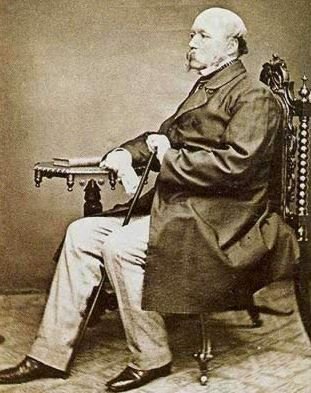
Image: John Gardner Wilkinson
In the article below, World History Edu delves into the life and major works of this Egyptologist.
Early Life and Education
John Gardner Wilkinson was born on October 5, 1797, in Little Missenden, Buckinghamshire, England. He grew up in a household influenced by intellectual curiosity, as his father, Reverend John Wilkinson, had a deep passion for antiquities. This early exposure to historical interests set the foundation for Wilkinson’s later career in Egyptology, a field in which he would become one of the most pioneering figures of the 19th century.
Wilkinson’s parents passed away when he was still young, leaving him with a modest inheritance. Despite this personal loss, his financial independence allowed him to pursue an education and career of his own choosing..
In 1813, Wilkinson was sent to Harrow School, one of the most prestigious schools in England at the time. He later attended Exeter College, Oxford, beginning in 1816.
However, due to ill health, Wilkinson left Oxford without completing his degree. His experiences at Oxford may not have directly contributed to his later work in Egyptology, but his exposure to classical studies and intellectual circles likely fostered his interest in antiquity.
Journey to Egyptology: Influence of Sir William Gell
After leaving Oxford, Wilkinson’s health remained fragile, prompting him to travel abroad in search of recovery. Italy was a popular destination for English travelers seeking artistic and intellectual enrichment, and it was here in 1819 that Wilkinson encountered Sir William Gell, a noted antiquarian. Gell, an accomplished scholar of ancient Rome and Greece, had a profound influence on Wilkinson. It was Gell who introduced him to the study of Egyptology, then an emerging field that had captured the interest of European scholars following the deciphering of Egyptian hieroglyphs by Jean-François Champollion in 1822.
This pivotal meeting with Gell redirected Wilkinson’s academic and personal ambitions. Egyptology was still in its infancy, and few had systematically studied the vast number of ancient Egyptian monuments, inscriptions, and artifacts. Wilkinson saw an opportunity to contribute to a field where much was yet to be discovered.
Arrival in Egypt and Early Work
Wilkinson first arrived in Egypt in October 1821 at the age of 24, ready to embark on a journey that would shape his life and the field of Egyptology. He spent the next 12 years exploring the country, visiting nearly every known ancient site in Egypt. His primary focus was on recording inscriptions and paintings that adorned the tombs, temples, and monuments of ancient Egypt. Wilkinson’s skill as a copyist and draftsman enabled him to meticulously document these sites, creating a detailed visual and textual record.
At this time, Egyptology lacked many of the formalized archaeological techniques that would later define the discipline. Wilkinson’s methods were far from the scientific standards of modern archaeology, yet his work was crucial in preserving information about ancient Egyptian monuments, many of which have since deteriorated or been lost entirely. He took extensive notes on the architecture, art, and hieroglyphic inscriptions, and his detailed observations laid the groundwork for future research.
One of the most notable aspects of Wilkinson’s work was his commitment to visiting a wide variety of sites, from well-known temples to remote and obscure locations that had seen little prior study. He ventured beyond the main tourist routes and into parts of Egypt that were difficult to access, offering a broader understanding of the country’s ancient civilization. Wilkinson’s exploration covered regions such as Thebes, Karnak, Luxor, Abydos, and many others, where he gathered a wealth of data on Egypt’s art and culture.
Return to England and Publication of Major Works
In 1833, Wilkinson returned to England, mainly due to ongoing health issues. His time in Egypt had been incredibly productive, and he began the process of organizing his vast collection of notes and drawings for publication. Wilkinson’s ability to convey his findings to a wider audience was one of his great strengths, and his works soon became some of the most important publications in the field of Egyptology.
One of his earliest and most influential books was The Topography of Thebes and General View of Egypt, published in 1835. This work provided readers with a comprehensive overview of the geography, monuments, and culture of Thebes, one of the most significant cities in ancient Egypt. Wilkinson’s detailed descriptions of the temples and tombs of Thebes, along with his commentary on the state of preservation of various monuments, made this book a valuable resource for both scholars and laypeople interested in ancient Egypt.
However, Wilkinson’s most famous and enduring work was Manners and Customs of the Ancient Egyptians, first published in three volumes in 1837. This monumental work offered an in-depth look at the daily life, beliefs, art, and society of ancient Egypt. Based on Wilkinson’s extensive observations and research during his time in Egypt, Manners and Customs was groundbreaking in its breadth and scope. It covered a wide range of topics, including religious practices, agricultural methods, social customs, and the roles of women in ancient Egyptian society.
What set Manners and Customs apart from previous works was its focus on the everyday life of ordinary Egyptians, not just the lives of kings and priests. Wilkinson’s approach helped to humanize the ancient Egyptians and make their civilization more accessible to a broader audience.
The book was widely acclaimed and remained a standard reference on the subject for the next half-century. It was illustrated by Joseph Bonomi, a noted artist and Egyptologist, whose drawings helped bring Wilkinson’s descriptions to life. The success of Manners and Customs earned Wilkinson widespread recognition and led to his being knighted in 1839, making him the first British Egyptologist to receive such an honor.

Image: Wilkinson during the 1860s
Later Travels and Contributions
Wilkinson did not rest on his laurels after the success of Manners and Customs. In fact, his curiosity and passion for travel continued to drive him to explore new places and make further contributions to the field of Egyptology and beyond.
In 1842, Wilkinson returned to Egypt, this time focusing on a project to map and study the Valley of the Natron Lakes. His work in this region, published as “Survey of the Valley of the Natron Lakes” in 1843, contributed to the understanding of the geography and environmental features of the area, which had religious significance to the ancient Egyptians.
That same year, he published an updated version of The Topography of Thebes, titled Moslem Egypt and Thebes. This revised edition expanded on his earlier work and incorporated new findings from his most recent travels.
Wilkinson’s interest in exploration extended beyond Egypt. In 1844, he traveled through Dalmatia, Montenegro, Bosnia, and Herzegovina, documenting the history, customs, and geography of these regions. His observations were published in 1848 as Dalmatia and Montenegro in two volumes. Although this work was not related to Egypt, it demonstrated Wilkinson’s broader interest in history and cultures outside the realm of Egyptology.
In 1848 and again in 1855, Wilkinson made subsequent visits to Egypt, continuing his research and exploring new areas. His commitment to documenting and preserving Egypt’s ancient monuments remained strong throughout his life.
Later Life, Marriage, and Legacy
In 1856, at the age of 59, John Gardner Wilkinson married Caroline Catherine Lucas, the daughter of Henry Lucas of Glamorganshire. Lady Wilkinson was an accomplished writer in her own right, publishing several books, including Weeds and Wildflowers (1858), which became one of her more popular works. She also helped her husband edit and organize his manuscripts during the later years of his life.
After his final visit to Egypt in 1855, Wilkinson spent much of his later life in England, where he turned his attention to other interests, including Cornish antiquities and zoology. Despite his shift in focus, Wilkinson remained deeply connected to Egyptology, and his earlier works continued to influence the field.
Wilkinson passed away on October 29, 1875, in Llandovery, Wales. He left behind a significant legacy, both in terms of his published works and the vast collection of notes, sketches, and observations he had amassed during his travels. His papers, which include detailed records of Egyptian monuments, are now housed in the Bodleian Library at Oxford University. These documents are an invaluable resource for Egyptologists today, as many of the monuments Wilkinson documented have since been damaged or lost.
In addition to his papers at the Bodleian Library, Wilkinson’s personal library and two folders of plans are preserved at Calke Abbey, a historic estate now managed by the National Trust. Wilkinson’s cousin, Lady Georgiana Stanhope Lovell, inherited his collections, and these materials offer further insight into his contributions to the study of ancient Egypt.
Despite his accomplishments, Wilkinson’s later years were marked by financial difficulties. His widow, Lady Wilkinson, faced financial hardship after his death. Fortunately, she received a pension arranged by then-Prime Minister Benjamin Disraeli, who persuaded Queen Victoria to grant her financial support in recognition of her husband’s contributions to British scholarship.
Wilkinson’s Enduring Legacy in Egyptology
John Gardner Wilkinson is often referred to as the “Father of British Egyptology,” a title that reflects the depth and breadth of his contributions to the field. His work was pioneering at a time when Egyptology was still developing as a formal discipline, and his meticulous documentation of ancient Egyptian sites has preserved knowledge of monuments that might otherwise have been lost.
Wilkinson’s Manners and Customs of the Ancient Egyptians remains a landmark publication in the study of ancient Egypt, and it helped to popularize Egyptology among both scholars and the general public. His detailed descriptions of Egypt’s geography, art, and culture influenced many later Egyptologists, including scholars such as Flinders Petrie and Howard Carter.
In addition to his written works, Wilkinson’s legacy endures in the artifacts and monuments he helped document and preserve. His commitment to exploration, documentation, and education has left an indelible mark on the study of ancient Egypt, and his contributions continue to shape the field to this day.
Questions and Answers
Where was John Gardner Wilkinson born?
John Gardner Wilkinson was born in Little Missenden, Buckinghamshire, in 1797.
Who influenced Wilkinson’s early interest in antiquities?
Wilkinson’s father, Reverend John Wilkinson, who had a passion for antiquities, influenced his early interest in the subject.
Where did Wilkinson go to school, and did he complete his studies?
Wilkinson attended Harrow School and later Exeter College, Oxford in 1816, but he did not complete a degree.
In 1819, Wilkinson traveled to Italy and met the antiquarian Sir William Gell, who inspired him to study Egyptology.

Image: British classical archaeologist and illustrator Sir William Gell (1777 – 1836)
When did Wilkinson first travel to Egypt, and how long did he stay?
Wilkinson first arrived in Egypt in 1821 and spent 12 years exploring and documenting ancient sites.
What was Wilkinson’s most significant work, and why was it important?
His most significant work was Manners and Customs of the Ancient Egyptians (1837), which became the authoritative reference on ancient Egypt for 50 years.
What recognition did Wilkinson receive for his contributions to Egyptology?
Wilkinson was elected to the Royal Society in 1834 and was knighted in 1839 for his contributions to Egyptology.
Where are Wilkinson’s papers housed, and why are they valuable?
Wilkinson’s papers are housed in the Bodleian Library, Oxford, and are valuable because they document monuments that have since been lost.
When did John Gardner Wilkinson pass away?
John Gardner Wilkinson passed away in 1875.





