Russian Empire: History and Major Facts
The Russian Empire was a colossal and influential state that emerged as a dominant force in northern Eurasia, extending from Eastern Europe to the far reaches of Asia and even parts of North America.
Established officially in November 1721 under the leadership of Peter the Great, it lasted until the creation of the Russian Republic in September 1917.
During its nearly two centuries of existence, the empire played a critical role in shaping global history through its vast territorial acquisitions, military campaigns, and political influence.
Below, World History Edu delves into its origins, key events, notable rulers, and unparalleled territorial expansion.
Origins of the Russian Empire
The roots of the Russian Empire trace back to the medieval period, long before its official proclamation. During the 10th century, the region that would become Russia was dominated by the Kievan Rus’, a federation of Slavic principalities. Over time, the Mongol invasion in the 13th century and the establishment of the Golden Horde fragmented these early states, leading to a period of Tatar dominance.
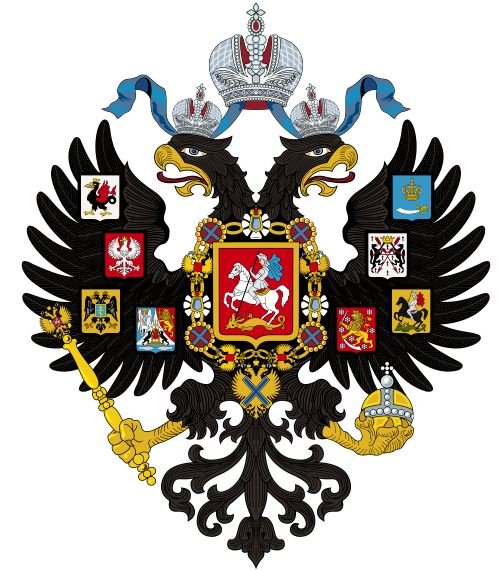
The Russian Empire’s Coat of arms
Rise of Moscow
The principality of Moscow gradually emerged as the center of resistance against the Mongols. Ivan III (the Great), who ruled from 1462 to 1505, was instrumental in consolidating power and laying the groundwork for what would become the Russian Empire. He centralized the administration, expanded Moscow’s territories, and defeated the Mongol-Tatar forces, formally ending their dominance over Russian lands.
Crowning of the Tsars
Ivan III’s grandson, Ivan IV (the Terrible), became the first Russian monarch to assume the title of Tsar in 1547, signifying a new era of centralized authority and expansion. Ivan IV implemented sweeping reforms but was also known for his autocratic and often brutal rule. His reign marked the establishment of the Tsardom of Russia, a precursor to the empire.
The Birth of the Russian Empire
The Russian Empire was formally proclaimed under Peter the Great (1682–1725), a visionary leader who transformed the Tsardom of Russia into an empire aligned with European standards. His reign is often considered a turning point in Russian history, as it introduced extensive modernization and reorganization of the state.

At its peak in the late 19th century, the Russian Empire spanned approximately 22.8 million square kilometers (8.8 million square miles), making up about one-sixth of the world’s landmass. Image: Portrait of Peter the Great by Maria Giovanna Clementi
Peter’s Reforms
Peter the Great embarked on an ambitious agenda to modernize Russia along Western European lines. This included reforms in governance, military structure, education, and industry. He established a professional standing army, revamped the navy, and reorganized the administration to centralize control.
Great Northern War and St. Petersburg
Peter’s military prowess was demonstrated in the Great Northern War (1700–1721) against Sweden, a conflict that solidified Russia’s status as a European power. The war concluded with the Treaty of Nystad, granting Russia significant territories along the Baltic Sea. To symbolize this newfound prominence, Peter relocated the capital from Moscow to Saint Petersburg, a city he founded on the Baltic coast. This move marked the beginning of the imperial era.
Expansion and Consolidation
The empire grew at an unprecedented rate, driven by conquest, diplomacy, and colonization. Between the mid-16th and late 19th centuries, Russia expanded its borders in every direction, becoming one of the largest empires in history.
The conquest of Siberia began in the late 16th century, with Russian explorers and traders pushing eastward. By the early 17th century, Siberia was fully integrated into the empire, providing vast natural resources, including furs and later oil and minerals.
During the 19th century, the empire extended its reach into the Caucasus and Central Asia, subjugating local kingdoms and tribes. These regions became critical for Russia’s strategic interests, particularly in its rivalry with the British Empire in what became known as the Great Game.
Russia also ventured into North America, establishing colonies in Alaska and along the Pacific Coast during the 18th and 19th centuries. These territories remained under Russian control until 1867, when Alaska was sold to the United States.
READ MORE: Why did the United States buy Alaska from Russia?
Notable Rulers of the Empire
The Russian Empire was defined by the reigns of its monarchs, many of whom left lasting legacies. From reformist visionaries to reactionary autocrats, the rulers of the Russian Empire shaped its trajectory.
Peter the Great (1682–1725)
Peter’s reign marked the official establishment of the empire. His emphasis on modernization and Europeanization transformed Russia into a major European power. His military victories and reforms set the stage for future expansion.
Catherine the Great (1762–1796)
Catherine II, one of Russia’s most iconic rulers, presided over a period of significant territorial expansion. She implemented reforms inspired by the Enlightenment, promoted education, and extended Russian influence into Eastern Europe, including the annexation of Crimea and parts of Poland.

Catherine II
Alexander I (1801–1825)
Alexander I was pivotal during the Napoleonic Wars, playing a key role in defeating Napoleon Bonaparte. His reign also saw the formation of the Holy Alliance, aimed at preserving monarchies in Europe.
Alexander II (1855–1881)
Known as the “Tsar Liberator,” Alexander II implemented numerous reforms, the most notable being the emancipation of serfs in 1861, which freed over 23 million peasants. However, his assassination in 1881 highlighted the growing unrest in the empire.
Nicholas II (1894–1917)
The last Tsar of Russia, Nicholas II faced immense challenges, including defeat in the Russo-Japanese War, the 1905 Revolution, and World War I. His inability to address these crises led to his abdication during the February Revolution of 1917, marking the end of the Romanov dynasty.

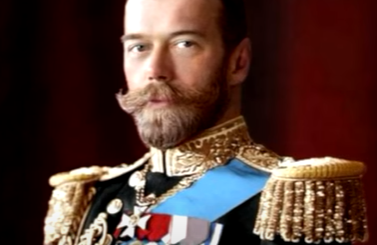
The empire’s only census in 1897 recorded a population of 125.6 million people, showcasing significant ethnic, linguistic, religious, and socioeconomic diversity across its territories. Image: Nicholas II – the last Tsar of Russia
Major Events in Imperial History
The history of the Russian Empire is punctuated by pivotal events that shaped its political, social, and economic landscape.
Great Northern War (1700–1721)
This conflict against Sweden marked Russia’s rise as a European power. Victory in the war allowed Peter the Great to secure vital territories along the Baltic Sea.
Napoleonic Wars
During the reign of Alexander I, Russia played a central role in the coalition that defeated Napoleon. The invasion of Russia in 1812 by French forces and their subsequent retreat remains one of the most significant episodes of the Napoleonic Wars.
Crimean War (1853–1856)
This war against a coalition of Western powers highlighted Russia’s military and technological weaknesses. The defeat prompted internal reforms, including the emancipation of the serfs.
Russo-Japanese War (1904–1905)
This war was a major blow to Russian prestige, as it marked the first time an Asian power defeated a European one. The loss intensified domestic unrest, leading to the 1905 Revolution.
1905 Revolution
Triggered by Bloody Sunday, when peaceful protesters were fired upon by the Imperial Guard, the revolution resulted in significant unrest. Tsar Nicholas II was forced to create the State Duma, a parliamentary body, though its powers were limited.
10 Most Influential Russian Emperors and Empresses (Tsars and Tsarinas of Imperial Russia)
Socioeconomic Challenges
The Russian Empire faced persistent social and economic difficulties throughout its existence. Despite its vast resources, the empire struggled to modernize at the same pace as its Western counterparts.
The empire remained predominantly agrarian, with the majority of its population engaged in subsistence farming. The slow pace of land reform and the persistence of feudal practices, even after the emancipation of the serfs, left rural populations impoverished.
Industrial growth occurred unevenly, concentrated in cities like Moscow and Saint Petersburg. Factory workers faced long hours, poor wages, and unsafe conditions, fueling labor unrest.
Periodic famines, such as the 1891–1892 famine, underscored the empire’s inability to address basic needs. These crises eroded public confidence in the government and radicalized many.
Decline and Collapse
The early 20th century marked the beginning of the end for the Russian Empire. Political discontent, combined with external pressures, led to its eventual downfall.
Russia’s involvement in World War I proved disastrous. Defeats on the battlefield, economic strain, and food shortages destabilized the empire. The war exposed the weaknesses of Nicholas II’s leadership.
Mass protests in Petrograd against food shortages escalated into a full-blown revolution. Nicholas II was forced to abdicate, ending centuries of Romanov rule.
The Bolsheviks, led by Vladimir Lenin, overthrew the Provisional Government in the October Revolution. This marked the beginning of Soviet rule and the establishment of the Russian Socialist Federative Soviet Republic.

Vladimir Lenin
Territorial Extent
At its zenith, the Russian Empire spanned three continents, encompassing a vast diversity of peoples, climates, and resources. Its borders stretched:
- North to the Arctic Ocean
- South to the Black Sea and Central Asia
- West to the Baltic Sea and Poland
- East to the Pacific Ocean and Alaska
The sheer scale of the empire made it difficult to govern effectively, contributing to its eventual collapse.
Legacy
The Russian Empire left an indelible mark on history. Its vast territorial acquisitions shaped the geopolitical landscape of Eurasia, while its contributions to art, literature, and science enriched global culture. However, its inability to address the demands of modernization and the grievances of its diverse population ensured its eventual collapse. The revolutionary fervor that emerged during its final years paved the way for the Soviet Union, which would dominate much of the 20th century.
Frequently Asked Questions
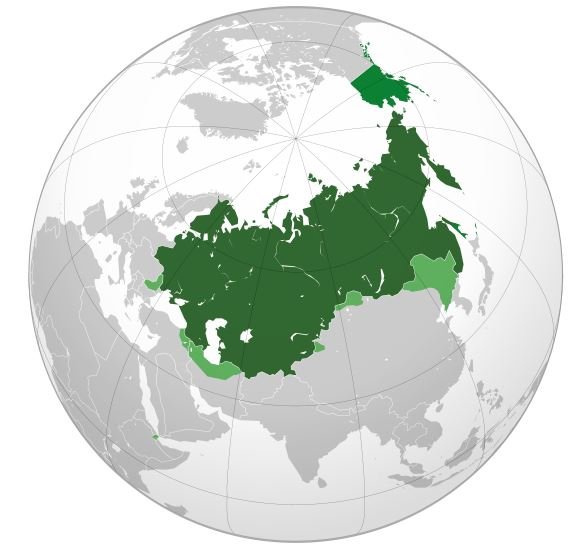
The immense size of the Russian Empire made it the third-largest empire in history, after the British and Mongol empires. Between 1799 and 1867, Russia also colonized parts of North America, notably Alaska. Image: A map showing the Russian Empire and its territories.
When was the Russian Empire established and when did it end?
The Russian Empire was established in November 1721 and ended with the proclamation of the Russian Republic in September 1917.
What was the extent of the Russian Empire at its peak?
At its peak in the late 19th century, the Russian Empire covered 22,800,000 square kilometers (8,800,000 square miles), roughly one-sixth of the Earth’s landmass, making it the third-largest empire in history.
What neighboring powers declined as the Russian Empire rose?
The decline of the Swedish Empire, Polish–Lithuanian Commonwealth, Qajar Iran, Ottoman Empire, and Qing China coincided with the rise of the Russian Empire.

The Russian Empire was a vast state that existed from November 1721 until September 1917, covering most of northern Eurasia. Image: The flag of the Russian Empire from 1858 to 1896.
Who laid the foundations of the Russian Empire, and how?
Ivan III (1462–1505) centralized governance, expanded Russian territories, and secured independence from the Mongol-Tatar Golden Horde, laying the groundwork for the empire.
Who was the first ruler to be crowned “Tsar of All Russia,” and when did this occur?
Ivan IV (Ivan the Terrible) was crowned the first “Tsar of All Russia” in 1547, marking the establishment of a unified and centralized state.
What was Peter the Great’s role in the transformation of Russia?
Peter the Great (1682–1725) transformed Russia into a European-style empire, moved the capital to Saint Petersburg, modernized the military, and introduced scientific and rationalist ideals, aligning Russia with Western Europe.
How did Catherine the Great contribute to the Russian Empire’s development?
Catherine the Great (1762–1796) expanded the empire through diplomacy, colonization, and conquest, while promoting Enlightenment principles and strengthening the autocratic system.
What role did Alexander I play in European politics?
Alexander I (1801–1825) played a pivotal role in defeating Napoleon Bonaparte during the Napoleonic Wars and formed the Holy Alliance to suppress secular and liberal movements in Europe.
What significant reform was implemented by Alexander II, and why was it important?
Alexander II (1855–1881) implemented the emancipation of serfs in 1861, freeing over 23 million peasants. This was an attempt to modernize Russian society, though it failed to resolve underlying economic and social issues.

Alexander II
What were the main socioeconomic challenges faced by the Russian Empire in the late 19th century?
The empire faced economic inequality, agrarian distress, land shortages, and poor industrial working conditions. Events like the famine of 1891–1892 further intensified grievances.
How did World War I contribute to the decline of the Russian Empire?
Russia’s defeats in World War I, coupled with food shortages, inflation, and poor leadership, eroded public confidence in Nicholas II and galvanized revolutionary movements.
What were the key events of the 1917 revolutions?
The February Revolution forced Nicholas II to abdicate, ending Romanov rule.
The October Revolution saw the Bolsheviks, led by Vladimir Lenin, seize power and establish the Russian Socialist Federative Soviet Republic.