Who was Cyaxares II?
Cyaxares II, a disputed Median king mentioned in Xenophon’s Cyropaedia, is absent from Herodotus’ account. Some scholars equate him with “Darius the Mede” from the Book of Daniel, fueling historical debate.
Summary
Cyaxares II remains one of the most debated figures in ancient Near Eastern history. His reign is described in Xenophon‘s Cyropaedia, but he is absent from the historical accounts of Herodotus and Ctesias. The question of whether he truly existed has significant implications for understanding the relationship between the Medes and the Persians during the rise of Cyrus the Great.
If Xenophon’s account is accurate, Cyaxares II played a crucial role in the peaceful transition of power between the Median and Persian empires. However, if Herodotus’ version is correct, Media was forcibly subjugated by Cyrus much earlier. This document examines the evidence for and against Cyaxares II’s existence and his possible identification with Darius the Mede from the Book of Daniel.
Cyaxares II in Xenophon’s Cyropaedia
Xenophon’s Cyropaedia presents Cyaxares II as the successor to Astyages, the last universally accepted king of the Medes. He is described as the brother of Mandane, the mother of Cyrus the Great, and thus the uncle of Cyrus.
According to Xenophon, Cyaxares II was an aging king who remained in Ecbatana while Cyrus led military campaigns, including the conquest of Babylon in 539 BC. Following this conquest, Cyaxares II was invited to reside in Babylon, where he supposedly granted his daughter’s hand in marriage to Cyrus, effectively merging the Median and Persian kingdoms through diplomacy rather than conquest.
If we accept Xenophon’s narrative, Cyaxares II nominally ruled Babylon as a symbolic figurehead for two years before his death, at which point the empire fully passed to Cyrus. This version of history suggests that the Median Empire was not violently overthrown but rather integrated into the Achaemenid Empire through a dynastic alliance.
READ ALSO: Rulers of the Achaemenid Empire: From Cyrus the Great to Artaxerxes V
The Controversy Over the Name
Some scholars argue that Xenophon’s mention of Cyaxares II results from confusion with Cyaxares I, the father of Astyages. However, the repetition of names across generations among ruling families was common in ancient Near Eastern dynasties. For instance, Cambyses I and Cambyses II, as well as Darius I and his grandson Darius III, illustrate this practice. Thus, the existence of a Cyaxares II is not inherently implausible based on nomenclature alone.

The Debate Over Cyaxares II’s Existence
The primary argument against Cyaxares II’s historicity comes from Herodotus, who states that Astyages had no male heir and that Cyrus directly overthrew him.
According to Herodotus, Cyrus led a rebellion against his grandfather, defeated Astyages, and absorbed the Median Empire into his own dominion. This view, widely accepted by modern historians, leaves no room for an intermediary ruler like Cyaxares II.
Furthermore, the Histories of Herodotus contradict Xenophon by portraying the Medes as being subjugated by the Persians rather than existing in a cooperative confederation. John Whitcomb has described Xenophon’s Cyaxares II as a “mere figment of the imagination,” a sentiment echoed by many modern scholars.
Xenophon describes Cyaxares II as the Median king who succeeded Astyages and was the maternal uncle of Cyrus the Great.
However, Cyaxares II was widely accepted as a historical figure from the time of Jerome until the 19th century. Many Jewish and Christian scholars equated him with Darius the Mede, mentioned in the Book of Daniel. Early biblical commentaries noted the similarities between Xenophon’s Cyaxares II and Daniel’s Darius the Mede, suggesting that the name “Darius” may have been a throne name rather than a personal one, as was common in Persian royal traditions.

Supporting Evidence for Cyaxares II
Several ancient sources provide indirect support for the existence of Cyaxares II or at least suggest a more complex relationship between the Medes and Persians than Herodotus describes.
The Harran Stele
The Harran Stele, dating from 542 to 540 BC, records Nabonidus’ interactions with “the kings of the Medes, the Egyptians, and the Arabs.” This text, which dates just a few years before the fall of Babylon, does not mention the Persians but instead highlights the Medes as significant adversaries. This suggests that a Median king—possibly Cyaxares II—was still prominent at that time.
The Persepolis Reliefs
Reliefs from Persepolis depict Medes and Persians as equals rather than a conquered people and their rulers. This imagery conflicts with Herodotus’ claim that the Persians enslaved the Medes, instead supporting Xenophon’s depiction of a Medo-Persian confederation.

Sculpted reliefs showcasing Persian and Median aristocrats engaged in an amicable discussion.
Aeschylus’ The Persians
Aeschylus, writing in the early 5th century BC, describes two Median kings who preceded Cyrus in ruling the Medo-Persian alliance. This contradicts Herodotus’ version, where Astyages was the last Median king. Some scholars interpret this as evidence that Cyaxares II was indeed an intermediary ruler between Astyages and Cyrus.
Berossus’ Babyloniaca
The Babylonian historian Berossus, writing in the 3rd century BC, described a king named Darius ruling at the time of Babylon’s fall. Some have interpreted this as a reference to Darius the Mede, further equating him with Cyaxares II.
Conflicting Evidence Against Cyaxares II
Babylonian Contract Texts
Numerous Babylonian contract tablets date events to the reign of Cyrus immediately after Babylon’s fall. The absence of any documents referring to a Median king reigning in Babylon undermines Xenophon’s claim that Cyaxares II ruled before Cyrus.
The Cyrus Cylinder

Cyrus Cylinder
The Cyrus Cylinder describes the Persian conquest of Babylon without any mention of a Median ruler at the time. Instead, it portrays Cyrus as directly assuming control, which aligns with Herodotus’ version of events.
The Nabonidus Chronicle
The Nabonidus Chronicle, considered one of the most reliable contemporary sources, states that Cyrus defeated Astyages and took control of Media directly. This again leaves no room for Cyaxares II.

The Identification with Darius the Mede
The Book of Daniel describes Darius the Mede as ruling Babylon immediately after its fall. Some scholars, especially in earlier centuries, equated Darius the Mede with Cyaxares II, arguing that “Darius” was a throne name. However, others contend that Darius the Mede is either a fictional character or a mistaken reference to another historical figure, possibly Gubaru (Gobryas), the general who captured Babylon for Cyrus.
Questions and answers
Why do many historians doubt the existence of Cyaxares II?
Herodotus and Ctesias do not mention Cyaxares II, and Herodotus states that Astyages had no male heir, with Cyrus taking power directly. Modern historians generally follow Herodotus, considering Cyaxares II a literary invention by Xenophon.
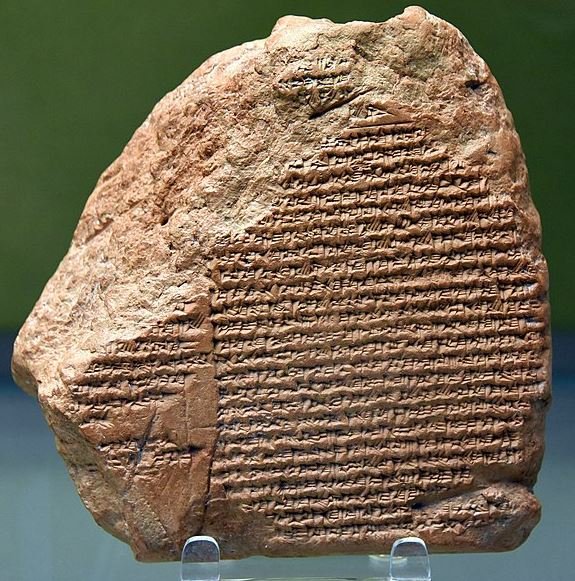
Nabonidus Chronicle
How does the Book of Daniel relate to Cyaxares II?
Some scholars equate Cyaxares II with “Darius the Mede” from the Book of Daniel, arguing that he ruled Babylon for a short period before Cyrus took full control. However, no external sources confirm such a reign.
The identification of Cyaxares II with Darius the Mede remains an intriguing but unproven hypothesis.
What evidence from ancient inscriptions might support Cyaxares II’s existence?
The Harran Stele mentions a Median king as a key enemy of Babylon shortly before its fall, without naming him. Some argue this supports Xenophon’s account of a Median ruler at the time.
How does Aeschylus’ play The Persians contribute to the debate?
Aeschylus describes two Median kings ruling before Cyrus, which some interpret as support for Cyaxares II’s existence. However, the identity of these kings remains debated.
What does the Cyrus Cylinder say about Media’s relationship with Persia?
The Cyrus Cylinder states that Cyrus made the “Umman-Manda” (often identified as Medes) submit, aligning with Herodotus’ claim that the Medes were conquered rather than ruling alongside the Persians.
Why is the absence of Cyaxares II in Babylonian records significant?
Babylonian contract texts immediately recognized Cyrus as king after Babylon’s fall, with no mention of Cyaxares II, suggesting he never ruled there.
What role does Xenophon’s Cyropaedia play in this discussion?
Cyropaedia is more of a political-philosophical work than a strict history, leading some scholars to view Cyaxares II as a narrative device rather than a historical figure.





