What Was Black Wall Street, and What Happened to It?
For a brief period during the early 20th century, a neighborhood in Tulsa, Oklahoma became one of the most remarkable centers of Black economic life in the United States. Its name was the Greenwood District. But today, it is widely remembered as Black Wall Street.
Greenwood contained Black-owned restaurants, hotels, grocery stores, theaters, professional offices and other businesses. At a time when racial segregation restricted where Black Americans could live, work, shop and even receive medical treatment, Greenwood developed an economy in which residents of African descent frequently provided goods and services to one another.
Then, in 1921, much of it was destroyed.
Over roughly 24 hours, a White mob attacked Greenwood, killing residents, looting businesses and burning homes across the district. Thousands of Black residents were displaced. The event became known as the Tulsa Race Massacre, standing as one of the worst episodes of racial violence in American history but receiving remarkably little public attention.
So how did Black Wall Street become successful in the first place? Why was Greenwood attacked? And what happened to the community afterward?
Where Was Black Wall Street?
Black Wall Street was located in the Greenwood District of Tulsa, Oklahoma. Oklahoma became a state in 1907, but Black settlement in the region had begun much earlier. The territory had a complicated racial history involving Native Americans, formerly enslaved people, White settlers and Black migrants.
Following the Civil War, some Black Americans moved west, looking for land and greater opportunities. Oklahoma became particularly notable for its all-Black towns. These communities offered some Black Americans an opportunity to establish businesses, own land and exercise greater control over their lives than was possible in many parts of the segregated South. Tulsa’s Greenwood neighborhood developed within this larger environment.
How Did Greenwood Begin?
One of the most important figures in Greenwood’s early development was O.W. Gurley. He was a Black entrepreneur who moved to Tulsa in the early 1900s. In 1906, He purchased land in what would become the Greenwood District and began selling and renting property primarily to other Black people.
Other entrepreneurs soon followed. Among the most famous was J.B. Stradford, a businessman who developed properties in Greenwood and eventually operated the Stradford Hotel.
The neighborhood grew rapidly. Tulsa itself was experiencing an economic boom driven partly by the discovery of oil. Black workers and families arrived, looking for a better. But segregation created a strange economic situation.
Black residents were excluded from many White-owned businesses and facilities. That discrimination helped create demand for Black-owned alternatives, and Greenwood entrepreneurs responded.
Why Was It Called “Black Wall Street”?
The term Black Wall Street reflected Greenwood’s reputation as a center of Black business and prosperity.
The neighborhood’s main commercial area contained a remarkable concentration of Black-owned enterprises. Residents could spend money at Black-owned restaurants. They could visit Black doctors. They could hire Black lawyers. They could shop in Black-owned stores. They could stay at Black-owned hotels. They could attend Black-owned entertainment venues. Money spent within the community could then be used by those business owners to employ other residents or purchase goods and services from one another. This created an interconnected local economy.
Booker T. Washington is often credited with describing Greenwood as “Negro Wall Street,” although the precise origins and popularization of the phrase are sometimes presented differently in historical accounts. Whatever its exact origin, the nickname endured. So eventually, “Black Wall Street” became the name by which Greenwood was remembered nationally.
How Wealthy Was Black Wall Street?
Descriptions of Greenwood sometimes make it sound as though every resident was rich. That isn’t accurate. The locality contained wealthy entrepreneurs and successful professionals, but it also housed working-class and poor residents.
What made the neighborhood extraordinary wasn’t universal wealth. It was the concentration of Black-owned businesses and institutions at a time when Black Americans faced extensive discrimination elsewhere.
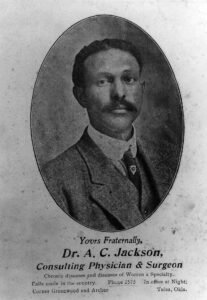
Dr. A.C. Jackson, a Black surgeon who was also unfortunately ‘the most prominent victim of the Tulsa race massacre’.
Successful residents included doctors, lawyers, business owners and real-estate investors. Among them was Dr. A.C. Jackson, a prominent Black surgeon.
Greenwood also had newspapers, churches, schools, theaters, restaurants, barbershops and other institutions that supported community life. Through its resilience and prosperity, the district demonstrated something extremely important. Even under the restrictions of Jim Crow, Black Americans could create successful businesses and institutions if given the opportunity. But segregation, ironically enough, was also part of the reason Greenwood’s economy became so self-reliant.
Segregation Helped Keep Money Within Greenwood
There is an important paradox at the center of the Black Wall Street story. Greenwood’s success should not be interpreted as evidence that segregation benefited Black Americans. Jim Crow imposed enormous economic, political and social shortcomings.
But segregation also meant that many Black consumers had few opportunities to spend their money outside their own communities. White businesses frequently refused to serve Black customers or treated them as inferior, and Black travelers faced similar restrictions.
Professional opportunities for Black doctors, lawyers and educated workers were limited by racism. As a result, Black communities needed their own businesses and professional services.
A Black doctor might treat patients of his own race who had difficulty receiving equal treatment elsewhere. A Black hotel could accommodate travelers who were unwelcome at White establishments. A Black theater could serve audiences excluded from White venues – so on and so forth. These realities created a strong local market, with Greenwood becoming one of the most-successful examples.
Tulsa Was Still a Deeply Segregated City
The prosperity of Greenwood existed alongside severe racial inequality. Tulsa was segregated. Black and white residents generally lived in their own respective areas and experienced vastly different social conditions.
Racial tensions were widespread throughout the United States during this period. The years surrounding World War I saw particularly severe racial violence. In 1919, a series of racial conflicts occurred across numerous American cities during what became known as the Red Summer.
Many Black veterans of World War I were unwilling to accept the same racial restrictions they experienced before military service. At the same time, White fears concerning Black advancement contributed to racial tensions.
Tulsa was caught up in the wider national environment. Then, an encounter between two young people set off a catastrophe.
What Started the Tulsa Race Massacre?
On 30 May 1921, a young Black man named Dick Rowland entered an elevator in the Drexel Building of downtown Tulsa. The elevator operator was a young White woman named Sarah Page. Something happened inside the elevator, but what exactly occurred remains uncertain.
Page reportedly screamed, and Rowland fled. Authorities later arrested the latter, and rumors quickly spread that he had assaulted Page.
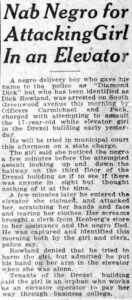
Local news report, published in the Tulsa Tribune dated 1 June 2021, illustrating how a Black man could get in trouble for interacting with a White woman in racist America.
The following day, the Tulsa Tribune published a sensational story about the alleged incident. In an era when false or exaggerated accusations involving Black men and White women could result in lynching, the situation became extremely dangerous.
A white crowd gathered around the courthouse where Rowland was being held. Black residents of Greenwood feared that he would be lynched. So some armed Black men, including veterans, went to the courthouse and offered to help authorities protect Rowland.
They were initially turned away, but as the White crowd grew, Black men returned. A confrontation followed. A shot was fired, and the situation proceeded to explode.
The Attack on Greenwood Begins
Violence spread rapidly. Outnumbered Black residents retreated toward Greenwood, while armed White groups followed. And during the night and into the following morning, White attackers entered the district.
Businesses were looted. Homes were broken into. Buildings were set on fire. Residents fled. Some attempted to defend their homes and businesses, while others were detained.
Eyewitnesses also reported aircraft flying over Greenwood during the attack. Historical investigations have examined reports that people in aircraft fired weapons or dropped incendiary materials. The exact role of the aircraft remains debated, but their presence over the district is well documented.
By the time the violence ended on 1 June, Greenwood had been devastated.
How Much of Black Wall Street Was Destroyed?
The physical destruction was enormous. Approximately 35 city blocks were burned. More than 1,000 homes were destroyed, alongside numerous businesses, churches and other buildings. Estimates of the financial losses at the time exceeded millions of dollars, which is equivalent to vastly more money today.
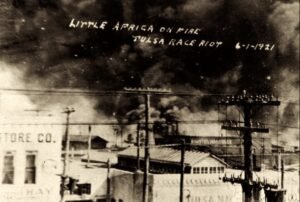
“Little Africa on Fire”, i.e. a scene of arson from the Tulsa race massacre
Thousands of Black residents were left without homes. Photographs taken afterward show block after block reduced to ruins. Buildings that had represented decades of work and stood at the foundation of Black generational wealth disappeared in a matter of hours. And the human cost was even greater.
How Many People Died in the Tulsa Race Massacre?
The exact death toll remains unknown. Estimates compiled at the time were relatively low, with historians believing the true fatality count was significantly higher.
A 2001 Oklahoma commission investigating the massacre estimated that the number of deaths ranged between 100 to 300 people. Some historical estimates differ. That uncertainty itself reveals something about the aftermath.
Records were incomplete. Families were displaced. And it’s likely that all fatalities were not officially accounted for.
In recent years, investigators have searched for possible mass graves associated with the massacre. And more than a century later, efforts to determine exactly how many people died have continued.
What Happened to the Survivors?
Surviving the violence didn’t mean Black residents were allowed to immediately return to normal life. Thousands had lost their homes. And many were detained in temporary internment centers, with some being required to have White employers or residents vouch for them before they could leave.
Families had to find shelter while attempting to determine whether relatives were still alive. Business owners returned to ruins. Homeowners discovered that property accumulated over years had vanished.
Insurance became another major problem. Many insurance policies contained clauses that excluded losses caused by riots. Consequently, a significant number of Black property owners received little or no compensation for what had been destroyed. And of course, all of these factors made rebuilding extraordinarily difficult.
Did Anyone Go to Prison for Destroying Black Wall Street?
Despite the enormous amount of destruction and loss of life, there was no meaningful prosecutions holding members of the White mob accountable. Instead, authorities initially placed considerable blame on the Black community.
Dick Rowland, the young man whose arrest had helped trigger the riots, was not prosecuted for the alleged elevator incident. Sarah Page reportedly declined to press charges. Yet by then, Greenwood had already been destroyed. That lack of accountability became one of the most disturbing aspects of the massacre’s legacy.
Greenwood Refused to Disappear
It would be easy to end the story with the destruction of 1921, but that would leave out one of its most remarkable chapters. Greenwood rebuilt. Black residents returned and reconstructed homes and businesses, despite enormous obstacles.
City officials attempted to impose new building regulations that could have made reconstruction even more difficult, but community members fought those efforts. And within several years, Greenwood’s commercial district had returned.
Into the 1930s, the district again contained a thriving collection of Black businesses. This is why the history of Black Wall Street isn’t simply a story of destruction, injustice and murder. It’s also a story of resilience. The community attacked in 1921 refused to disappear.
So Why Didn’t Black Wall Street Remain the Same?
The eventual decline of Greenwood cannot be explained by the massacre alone. Ironically desegregation, one of the developments Black Americans fought hard to achieve, also changed the economy of neighborhoods like Greenwood:
As legal segregation weakened during the Civil Rights era, Black consumers gained access to White businesses and services that had previously excluded them. What that meant, indirectly, is that Black consumers were no longer confined to businesses owned by people of their own race.
Other forces affected Greenwood as well. Suburbanization changed American cities. Urban renewal projects disrupted Black neighborhoods throughout the country. And perhaps most significantly for Greenwood, the eventual construction of Interstate 244 destroyed or isolated parts of the neighborhood. Like many Black communities across America, Greenwood experienced the effects of highway construction and urban planning decisions that disproportionately disrupted minority neighborhoods.
The Greenwood of later decades was therefore very different from the community that existed before 1921.
Why Was the Tulsa Massacre Forgotten for So Long?
One of the strangest aspects of the Tulsa Massacre is how little most Americans knew about it. For decades, it received limited attention in textbooks and classrooms. Even some people who grew up in Tulsa said they learned little or nothing about it at school.
Survivors and their descendants kept memories alive, while historians and journalists gradually recovered records and testimonies. But the massacre did not occupy the same place in mainstream American historical memory as many other major events.
That began changing during the late 20th century.
In 1997, the Oklahoma Commission to Study the Tulsa Race Riot of 1921 was formed to investigate the event. The commission’s final report, released in 2001, documented the destruction and recommended forms of restitution and recognition.
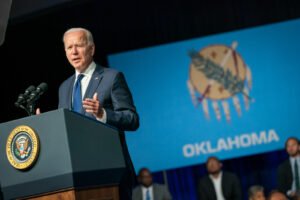
U.S. President Joe Biden commemorating the 100th anniversary of the Tulsa Massacre in 2021.
Soon thereafter, the massacre’s 100th anniversary, in 2021, brought unprecedented national and international attention. Black Wall Street had finally become a recognized part of the broader conversation about American history.
What Does Black Wall Street Have to Do With the Black Wealth Gap?
Greenwood is frequently discussed today in conversations about the racial wealth gap, and that connection is understandable.
Wealth is often accumulated across generations. A family purchases property. Then, the property increases in value.
Parents pass assets to children. Children use those assets to purchase homes, seek higher education, start businesses and invest. But what happens when those processes are violently interrupted?
Imagine a family that owned a home and business in Greenwood in 1921. Both are destroyed. Insurance doesn’t cover the losses, so the family receives no meaningful compensation. Instead of passing property onto the next generation, they’re forced to start from scratch. And now, multiply that experience across hundreds of families. The negative economic effects extend far beyond the immediate destruction.
The Tulsa massacre therefore provides a powerful example of how racial violence could destroy not merely individual lives but accumulated Black wealth and opportunities.
Black Wall Street and Foundational Black American History
The story also connects directly with the history associated with Foundational Black Americans (FBA).
Greenwood was built largely by generations of Black Americans whose families had emerged from slavery and Reconstruction. Only a few decades separate the abolition of slavery in 1865 from Greenwood’s rise during the early 20th century.
That historical timeline is remarkable. People who had been born enslaved could live long enough to witness Black communities establish their own thriving economies. Their children and grandchildren were attempting to build wealth despite Jim Crow.
And Greenwood represented that transition. It showed that the history of descendants of American slaves did not move directly from bondage to poverty. Black Americans promptly created businesses, accumulated property and developed successful communities, despite all that was against them. And it also showed how vulnerable those achievements could be when the legal and political system failed to protect them.
Was Black Wall Street the Only Successful Black Community?
No. Greenwood has become the most famous example, but successful Black business districts and communities existed elsewhere.
Black neighborhoods developed strong commercial institutions in cities including Atlanta, Durham, Richmond and Washington, D.C. Durham, North Carolina, became particularly known for Black entrepreneurship and was sometimes described as another center of Black capitalism.
There were also numerous all-Black towns and settlements. This broader history is important because Black Wall Street can sometimes be presented as though Greenwood was a miraculous exception. It wasn’t. Black Americans regularly established businesses and communities when opportunities allowed them to do so.
What makes Greenwood exceptional is the combination of its economic reputation and the catastrophic violence that struck it in 1921.
Does Black Wall Street Still Exist Today?
Greenwood still exists, but it’s not the same sprawling Black commercial district that existed during its historic peak.
Parts of the neighborhood have been preserved and commemorated. The Greenwood Cultural Center helps maintain the history of the district and massacre. The area also contains other memorials and institutions dedicated to telling the story.
The term Black Wall Street has meanwhile taken on a broader symbolic meaning. It is now frequently used when discussing Black entrepreneurship, economic independence, generational wealth and the destruction of successful Black communities.
For many Americans, Greenwood represents what Black Americans managed to build and also what racial violence could take away from them.





