Abbas the Great
Shah Abbas I (1571–1629), also known as Abbas the Great, was the fifth Safavid Shah of Iran. Ascending to the throne at the age of 16 during a period of political instability, he transformed Iran into a powerful empire. His reign marked the apex of Safavid military, political, and economic power, earning him the reputation as one of Iran’s greatest rulers.

Portrait of Abbas the Great.
Early Life and Ascension to the Throne
Abbas was born on January 27, 1571, in Herat, then a major city in the province of Khorasan. He was the third son of Shah Mohammad Khodabanda and Khayr al-Nisa Begum. His father, a son of Shah Tahmasp I, was initially overlooked for the throne due to his near-blindness. Abbas’ early years were marked by political instability and factional conflicts within the Safavid court, primarily among the Qizilbash tribal leaders who served as the military backbone of the dynasty.
During the ineffective rule of Mohammad Khodabanda, Iran faced internal strife and external threats from the Ottoman Empire and the Uzbeks. The Qizilbash factions, vying for power, assassinated Abbas’ mother and brother. In 1588, Murshid Quli Khan, a Qizilbash leader, overthrew Mohammad Khodabanda and installed the 16-year-old Abbas as the Shah. However, Abbas soon consolidated power and sidelined Murshid Quli Khan, asserting his authority as the rightful ruler.
Reforms and Military Modernization
To weaken the influence of the Qizilbash, Abbas introduced the ghulam system. He recruited thousands of Circassian, Georgian, and Armenian slave-soldiers into his military and administration. These loyal ghulams were trained as elite warriors, replacing the traditional Qizilbash cavalry as the dominant military force. By diversifying his power base, Abbas ensured that no single faction could challenge his rule.
Abbas modernized the Safavid military, introducing European-style artillery and firearms. With the aid of English advisors, particularly the Shirley brothers, he established a standing army independent of tribal influences. This modernized force enabled Abbas to reclaim lost territories and expand Iran’s borders.
Wars and Territorial Expansion
One of Abbas’ first military campaigns was against the Uzbeks, who had occupied Khorasan. In 1598, Abbas decisively defeated them at Herat and secured Iran’s northeastern frontier. He also repopulated the province by forcibly relocating Persian and Caucasian populations into the region.
The Ottoman Empire was Iran’s primary rival. Initially, Abbas signed a humiliating treaty in 1590, ceding vast territories to the Ottomans. However, after strengthening his military, he launched a counteroffensive in 1603, successfully recapturing Tabriz, Yerevan, and Ganja. By 1618, Abbas had reclaimed much of Transcaucasia and parts of Mesopotamia. His military victories established Safavid Iran as a dominant regional power.
Abbas sought to end Portuguese control over the Persian Gulf trade routes. In 1622, with the assistance of the English East India Company, he captured the strategic island of Hormuz. This victory allowed him to establish Bandar Abbas as a new trading hub, increasing Iran’s maritime influence.
Abbas’ expansionist policies also targeted the Caucasus. After installing puppet rulers in Georgia, he faced several uprisings. To suppress dissent, he deported thousands of Georgians and massacred rebellious populations. Despite this, Georgian resistance persisted, challenging Safavid control over the region.
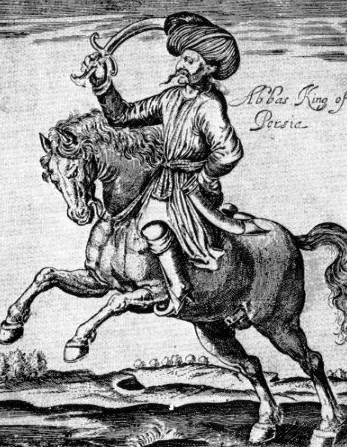
An artwork entitled “Abbas King of Persia”
Economic and Administrative Reforms
Abbas centralized the Safavid administration by reducing the power of local governors and Qizilbash chiefs. He appointed ghulam officials to key positions, ensuring loyalty to the crown. This centralization helped stabilize Iran’s economy and governance.
Under Abbas, Iran became a key player in the international silk trade. He encouraged silk production in Gilan and Mazandaran, making it a state-controlled industry. European merchants, particularly the Dutch and English, sought Iranian silk, boosting the economy.
Abbas initiated major construction projects, including roads, bridges, and caravansaries, to facilitate trade. He also introduced tax reforms to ensure efficient revenue collection.
Cultural Renaissance and the Rise of Isfahan
In 1598, Abbas moved the capital from Qazvin to Isfahan, transforming it into a grand metropolis. The city became the heart of Persian art, architecture, and culture.
Architectural Achievements
Isfahan flourished with stunning architectural projects, including:
- Naqsh-e Jahan Square – One of the largest squares in the world, surrounded by grand buildings.
- Shah Mosque – A masterpiece of Persian-Islamic architecture.
- Chehel Sotoun Palace – A royal pavilion showcasing intricate frescoes and mirror work.
- Vank Cathedral – Built for the Armenian community in New Julfa, demonstrating Abbas’ religious tolerance.
Abbas’ reign witnessed a cultural renaissance. Reza Abbasi, a renowned painter, revolutionized Persian miniature art. Calligraphy, poetry, and manuscript illustration thrived under Safavid patronage.
Foreign Relations and Diplomacy
Abbas sought European alliances against the Ottomans. He established diplomatic ties with Spain, England, and the Vatican. The Shirley brothers played a crucial role in these negotiations, introducing European military techniques to the Safavids.
Despite shared Shi’a heritage, Safavid relations with the Mughal Empire were complex. Abbas briefly seized Kandahar from the Mughals in 1622 but maintained diplomatic ties to avoid prolonged conflict.
Later Years and Legacy
In his later years, Abbas became increasingly paranoid. He suspected his sons of plotting against him and had them blinded or executed. This decision weakened the Safavid succession and contributed to the dynasty’s later decline.
Abbas died in 1629 in Mazandaran and was buried in Kashan. His grandson, Shah Safi, succeeded him but lacked Abbas’ leadership skills, leading to a gradual decline in Safavid power.
Shah Abbas I remains one of Iran’s most celebrated rulers. His military successes, economic reforms, and architectural achievements left an enduring legacy.
Though Abbas the Great’s authoritarian rule was marked by brutality, his contributions to Iranian culture and governance continue to be revered.
Timeline of Abbas the Great (1571–1629)
- 1571: Born in Herat, son of Shah Mohammad Khodabanda and Khayr al-Nisa Begum.
- 1578: His father becomes Shah; the realm is unstable due to Qizilbash factionalism.
- 1581: Proclaimed Shah in Khorasan by rebellious Qizilbash leader Ali-Qoli Khan.
- 1587: At 16, crowned Shah after Murshid Qoli Khan deposes Mohammad Khodabanda.
- 1589: Murshid Qoli Khan is assassinated, allowing Abbas to rule independently.
- 1590: Signs Treaty of Istanbul, ceding territories to the Ottomans to consolidate power.
- 1598: Moves the capital from Qazvin to Isfahan, making it a cultural center.
- 1599–1601: Establishes relations with Europe, sending envoys to Spain and Rome.
- 1603–1618: Leads war against the Ottomans, reclaiming Transcaucasia and Mesopotamia.
- 1614–1616: Suppresses Georgian revolts, deporting and massacring thousands.
- 1622: Retakes Hormuz from the Portuguese with English assistance.
- 1629: Dies in Mazandaran; buried in Kashan.
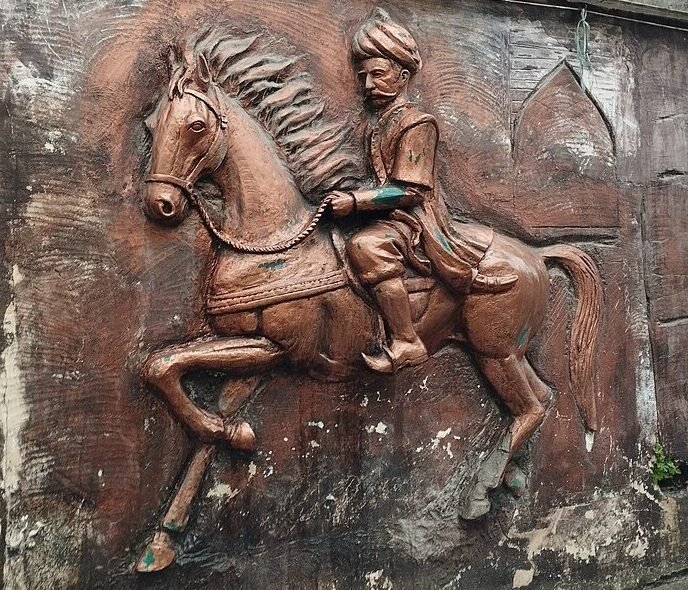
A statue depicting Abbas in Behshahr, Iran.
Frequently Asked Questions about Shah Abbas I (1571–1629)
How did Abbas I come to power?
He was placed on the throne in 1588 by the Qizilbash leader Murshid Qoli Khan after a coup against his father, Shah Mohammad Khodabanda. Abbas later took full control by eliminating Murshid Qoli Khan.
What military reforms did Abbas I implement?
He reduced Qizilbash influence and created a standing army of Caucasian slave-soldiers (ghulams), modernized the military with European help, and strengthened artillery.
What territories did Abbas I recover?
He recaptured Transcaucasia, Dagestan, Western Armenia, and Mesopotamia from the Ottomans, expelled the Portuguese from Hormuz, and briefly took Kandahar from the Mughals.
Why did Abbas I relocate the capital to Isfahan?
He moved the capital from Qazvin to Isfahan in 1598, transforming it into a cultural and architectural center of the Safavid Empire.
How did Abbas I manage the Qizilbash?
He curbed their power by replacing them with ghulams in key military and administrative roles, ensuring loyalty directly to the Shah.
What was Abbas I’s approach to foreign relations?
He sought alliances with European powers against the Ottomans, engaging with England, Spain, and the Holy Roman Empire.
What was Abbas I’s policy toward religious minorities?
He was relatively tolerant, granting privileges to Armenian Christians in Isfahan but persecuted Sunni Muslims and forcibly relocated Armenians from the Caucasus.
How did Abbas I contribute to the Persian economy?
He promoted the silk trade, monopolized production, and encouraged Armenian merchants to boost Iran’s commerce.
What happened to Abbas I’s sons?
Due to paranoia and court intrigue, he had his sons killed or blinded, leaving his grandson, Safi, as his successor.
How did Abbas I die?
He died in 1629 in Farahabad and was buried in Kashan.
Abbas the Great is remembered as a military strategist, builder, and reformer, though his policies on succession weakened the Safavid dynasty in the long run.





