Bab el-Gasus
The discovery and subsequent dispersal of Bab el-Gasus have left a lasting impact on Egyptology, inspiring both scholarly research and public fascination. Efforts such as the “Gate of the Priests” project and recent exhibitions continue to honor and preserve the legacy of this remarkable tomb.
Discovery and Historical Context
Bab el-Gasus, also known as the Priestly Cache, was discovered in 1891 at Deir el-Bahari, near the Mortuary Temple of Hatshepsut. This tomb, dating to the 21st Dynasty (c. 1070–945 BCE), was uncovered by French Egyptologists Eugène Grebaut and Georges Daressy, with assistance from Mohamed Ahmed Abd al‑Rassul, who had previously revealed the Royal Cache in 1881. The site represents a pivotal period in Egyptian history, marked by political decentralization and heightened priestly influence.
The Largest Intact Tomb
Renowned as the largest intact burial site found in Egypt, Bab el-Gasus housed an extraordinary collection of funerary artifacts. These include 254 coffins, 110 shabti boxes, wooden statuettes, steles, canopic baskets, and other ritual objects. The tomb’s size and preservation have provided scholars with invaluable data on religious practices and mummification during the Third Intermediate Period.
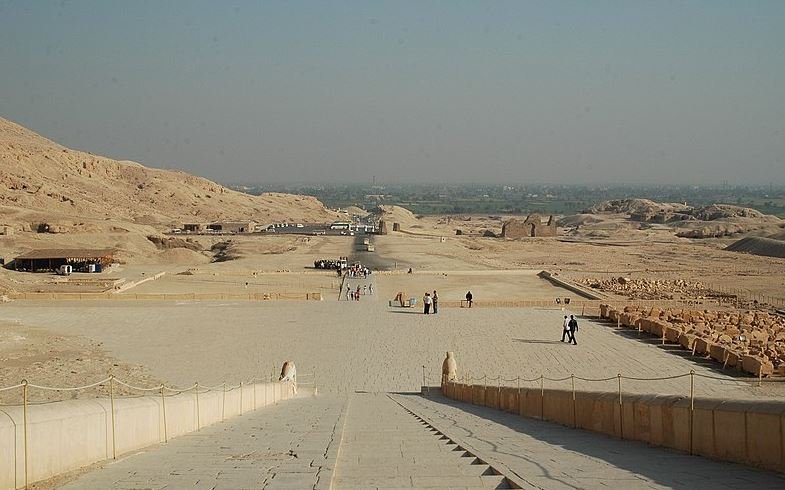
Image: A view of the entrance to the Bab el-Gasus.
Unique Craftsmanship and Materials
The coffins, mostly crafted from native fig wood (Ficus sycomorus), are richly decorated with inscriptions and religious iconography. Many coffins belonged to high-ranking priests and priestesses, reflecting the elevated status of the clergy during this period. The craftsmanship reveals insights into the economic and artistic resources available at the time.
Dispersal of Artifacts
In 1893, Khedive Abbas II of Egypt distributed the artifacts as gifts to 16 countries to mark his accession to the throne. This international dispersion saw items from Bab el-Gasus sent to 30 museums worldwide, including the Louvre, the British Museum, and the Vatican Museums. While this distribution enhanced global awareness of ancient Egyptian culture, it also fragmented the collection, limiting comprehensive scholarly study.
Contributions to Egyptology
Bab el-Gasus has significantly advanced understanding in several areas of Egyptology, including mummification techniques, coffin design, and religious iconography. The discovery highlights the role of priests in maintaining traditional religious practices during a time of political instability.
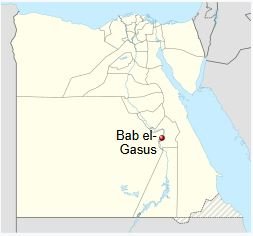
Image: Map of Bab el-Gasus in Egypt.
“Gate of the Priests” Project
In 2016, the University of Coimbra, in collaboration with institutions such as the Vatican Museums and the University of Leiden, launched the “Gate of the Priests” project. This initiative aims to digitally reconstruct the original collection and enhance the study of the tomb’s dispersed artifacts. The project underscores the importance of international collaboration in preserving cultural heritage.
New Display at the Egyptian Museum
In 2021, a renewed display of Bab el-Gasus artifacts was unveiled at the Egyptian Museum in Cairo. This exhibition, coinciding with the relocation of the Royal Cache, sought to reintroduce the tomb’s historical significance to a wider audience. It also emphasized the importance of preserving and interpreting ancient collections within their cultural context.
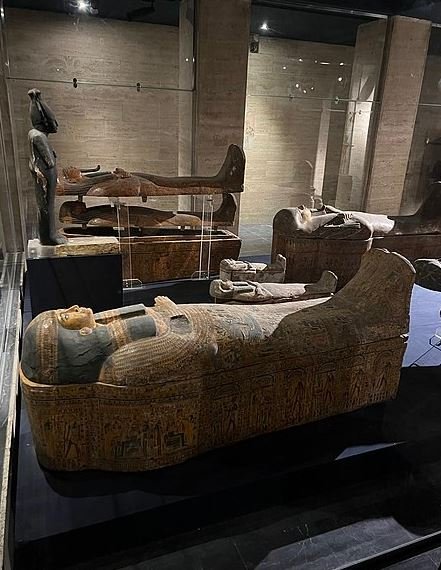
Some of the artifacts from the tomb on display at the Egyptian Museum.
Insights into Funerary Practices
The artifacts from Bab el-Gasus provide a detailed understanding of the 21st Dynasty’s funerary traditions. Items such as Osirian statuettes, canopic reed baskets, and intricately decorated coffins reveal the Egyptians’ complex belief systems regarding the afterlife. The tomb offers evidence of evolving burial practices influenced by both economic constraints and religious reforms.
A Global Legacy
The international distribution of Bab el-Gasus artifacts has created a global legacy. Museums worldwide hold pieces of this ancient collection, enabling diverse audiences to appreciate and study Egypt’s rich cultural history. However, this dispersion also poses challenges for reconstructing the tomb’s original context and understanding its full historical significance.
Unnumbered but Unforgettable
Although Bab el-Gasus is part of the Theban necropolis, it was never assigned an official tomb number. Its enduring importance lies not in its designation but in its unparalleled contribution to the study of ancient Egyptian funerary culture and its role in fostering international appreciation for Egypt’s heritage.
Frequently Asked Questions about Bab el-Gasus
Who discovered Bab el-Gasus?
It was unearthed by French Egyptologists Eugène Grebaut and Georges Daressy, with guidance from Mohamed Ahmed Abd al‑Rassul.
Where is the tomb located?
The tomb is situated near the Mortuary Temple of Hatshepsut at Deir el-Bahari.
Why is Bab el-Gasus significant?
It is the largest intact burial site found in Egypt, providing insights into ancient Egyptian religion, mummification, and coffin design.
What artifacts were found in the tomb?
The tomb contained 254 coffins, shabti boxes, Osirian statuettes, wooden steles, statues of deities, canopic reed baskets, and other items.
What material were the coffins made from?
Most coffins were crafted from native fig wood (Ficus sycomorus).
Why were the artifacts dispersed globally?
In 1893, Khedive Abbas II gifted them to 16 countries to celebrate his accession to the throne.
Which museums received artifacts from Bab el-Gasus?
Recipients include the Louvre, British Museum, Vatican Museums, and institutions in Austria, Turkey, Italy, the U.S., and others.
What efforts have been made to study the collection?
The “Gate of the Priests” project, launched in 2016, aims to digitally reconstruct the original collection.
Is the tomb part of the Theban necropolis?
Yes, but it was never assigned an official tomb number. It remains crucial for studying ancient Egyptian funerary practices.





